Wire mesh products encompass an enormous range of industrial and commercial applications — from chain-link fencing and welded wire panels to industrial shelving, machine guards, animal enclosures, and architectural screens. What unites these diverse products is a common substrate geometry that presents some of the most significant challenges in powder coating: thin wire cross-sections, numerous intersections and weld points, open mesh structures that resist electrostatic powder deposition, and vast surface areas relative to product weight.
Industrial
Powder Coating for Wire Mesh Products: Fencing, Shelving, Guards, and Industrial Screens
Sundial Powder Coating·April 23, 2026·11 min
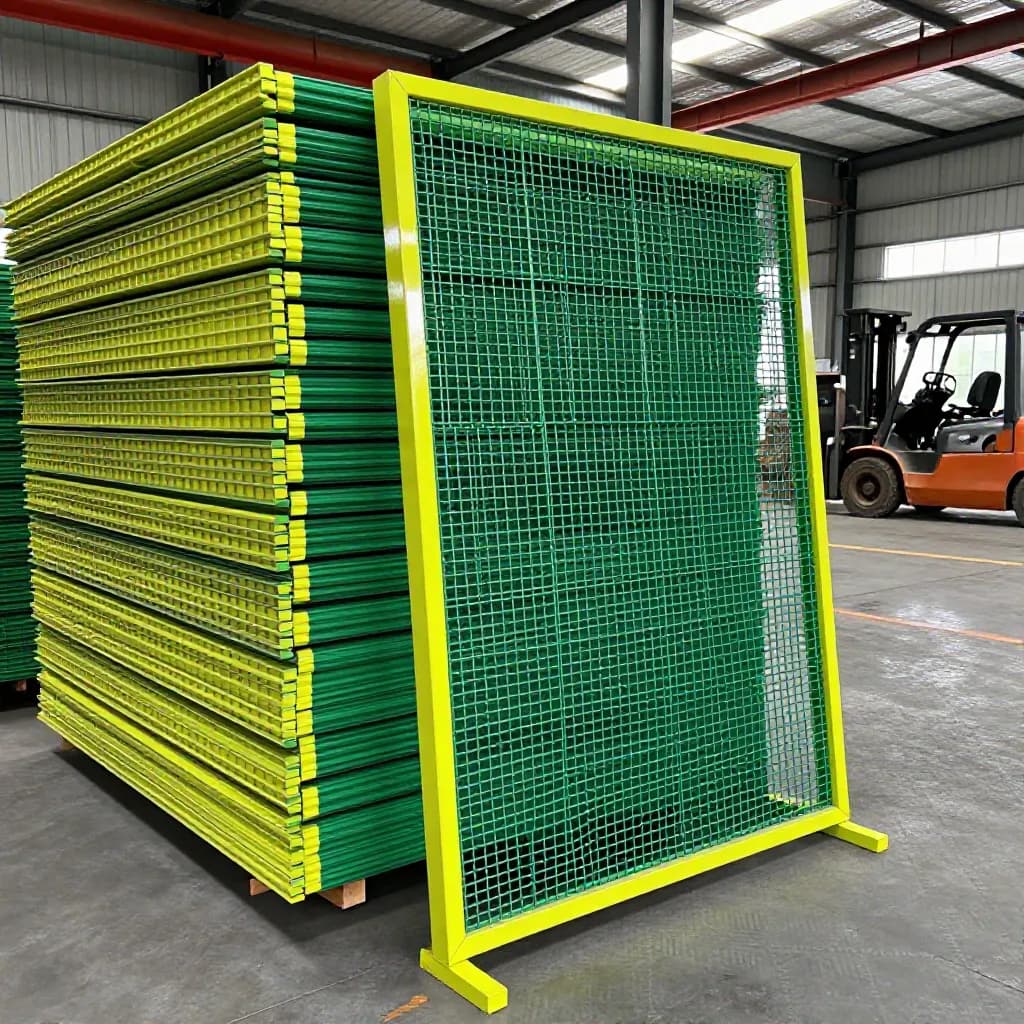
The fundamental challenge of coating wire mesh is the Faraday cage effect. An open mesh structure acts as an electromagnetic shield, preventing electrostatic field lines from penetrating into the interior of the mesh. Powder particles, which follow the electric field lines during electrostatic application, are deposited preferentially on the outer surfaces and edges of the mesh while inner surfaces and wire intersections receive inadequate coverage. For a flat mesh panel, this means the side facing the spray gun receives good coverage while the opposite side may be virtually uncoated.
Ready to Start Your Project?
From one-off customs to 15,000-part production runs — get precise pricing in 24 hours.
On This Page
Wire Mesh: A Uniquely Challenging Powder Coating Substrate
Despite these challenges, powder coating is the dominant finishing technology for wire mesh products, having largely replaced liquid dip coating and hot-dip galvanizing for many applications. The environmental advantages of powder coating (zero VOC, high material efficiency), combined with the superior appearance and color flexibility it offers, make it the preferred choice for manufacturers who can master the application techniques required for consistent mesh coating.
This article examines the specific challenges, application methods, and quality considerations for powder coating the full range of wire mesh products, from heavy industrial guards to fine architectural screens.
Understanding the Faraday Cage Effect on Mesh Structures
The Faraday cage effect is the single most important technical challenge in powder coating wire mesh, and understanding its physics is essential for developing effective application strategies. Named after Michael Faraday, who demonstrated that a conductive enclosure shields its interior from external electric fields, the effect causes electrostatic powder spray to preferentially coat the outer surfaces of a mesh structure while leaving inner surfaces and recessed areas with thin or absent coverage.
The severity of the Faraday cage effect depends on mesh geometry. Fine mesh with small openings (less than 10 mm) creates a stronger shielding effect than coarse mesh with large openings. The ratio of wire diameter to opening size determines how effectively the mesh blocks the electrostatic field — a mesh with 2 mm wire and 5 mm openings presents a much stronger Faraday cage than one with 2 mm wire and 50 mm openings.
Three-dimensional mesh products such as wire baskets, shelving units, and formed guards compound the problem. The multiple layers of mesh create nested Faraday cages that progressively attenuate the electrostatic field, making it extremely difficult to coat interior surfaces using conventional electrostatic spray techniques.
Several strategies mitigate the Faraday cage effect on mesh products. Reducing gun voltage from the typical 60-80 kV to 20-40 kV decreases the strength of the electrostatic field, allowing powder to penetrate further into the mesh before being deflected by the cage effect. The trade-off is reduced transfer efficiency on outer surfaces, requiring more powder and longer spray times.
Tribo-charging guns offer significant advantages for mesh coating. Because tribo guns charge powder through friction rather than corona discharge, they do not create the strong field lines that cause the Faraday cage effect. Powder from a tribo gun carries a surface charge but is not driven by an external electric field, allowing it to penetrate into mesh openings more effectively than corona-charged powder. Many mesh coating operations use tribo guns exclusively or in combination with low-voltage corona guns.
Multi-directional spraying — applying powder from multiple angles including both sides of a flat mesh panel — ensures that all surfaces receive direct powder deposition rather than relying on electrostatic wrap-around to coat the back side.
Fluidized Bed Coating for Wire Mesh Products
Fluidized bed coating is often the most effective method for achieving complete, uniform coverage on wire mesh products, particularly for three-dimensional items and fine mesh structures where electrostatic spray struggles with the Faraday cage effect.
In the fluidized bed process, the wire mesh product is preheated to 250-350°C (depending on wire gauge and powder type) and then immersed in a bed of powder that has been fluidized by passing air through a porous membrane at the bottom of the container. The powder melts on contact with the hot metal surface, building a coating that is determined by the part temperature, immersion time, and powder melt characteristics.
The key advantage of fluidized bed coating for mesh products is that every wire surface — regardless of orientation or position within the mesh structure — contacts the fluidized powder simultaneously. There is no Faraday cage effect because the coating mechanism is thermal rather than electrostatic. The result is uniform coverage on all surfaces, including wire intersections, weld points, and interior surfaces of three-dimensional structures.
Coating thickness in fluidized bed application is controlled primarily by part temperature and immersion time. Higher temperatures and longer immersion produce thicker coatings. For wire mesh products, typical coating thicknesses range from 200-500 microns — significantly thicker than electrostatic spray applications. This thick coating provides excellent corrosion protection but adds weight and can partially fill small mesh openings, which may be unacceptable for some applications.
The thermal mass of wire mesh products is low relative to their surface area, which means they cool rapidly after removal from the preheat oven. The time between oven exit and fluidized bed immersion must be minimized to ensure the wire temperature remains above the powder's melting point throughout the coating process. For fine wire mesh, this window may be only 10-20 seconds, requiring the fluidized bed to be positioned immediately adjacent to the preheat oven.
Post-dip curing in a separate oven completes the crosslinking reaction and ensures full coating properties are achieved. The cure cycle must account for the rapid heating of thin wire — mesh products reach oven temperature much faster than solid parts, and overcure is a risk if standard cure schedules designed for heavier parts are applied.
Fencing and Perimeter Security Applications
Powder-coated wire fencing is one of the highest-volume wire mesh coating applications, encompassing residential and commercial chain-link fencing, welded mesh panels for security fencing, and specialized products such as anti-climb and anti-cut security barriers.
Chain-link fencing fabric is typically coated using a continuous process where the woven mesh passes through a fluidized bed or electrostatic spray booth on a conveyor system. The coating must cover the entire wire surface including the knuckled edges where wires are twisted together — areas that are particularly vulnerable to corrosion because the mechanical deformation during weaving can damage any pre-applied coating on the wire.
For welded mesh fence panels, the welding process creates heat-affected zones at each wire intersection where the base metal's properties are altered and any pre-coating is destroyed. Powder coating after welding ensures that these critical intersection points receive full protection. The weld nuggets themselves — slightly raised areas of fused metal — must be adequately covered despite their tendency to attract excessive powder buildup due to their protruding geometry.
Polyester powder coatings are the standard choice for fencing applications, providing excellent UV resistance and color retention for outdoor exposure. Super-durable polyester formulations meeting Qualicoat Class 2 or equivalent specifications are recommended for fencing in high-UV environments. Common colors include black, green (RAL 6005), and gray, though the full RAL color range is available for architectural and decorative fencing.
Corrosion protection requirements for fencing vary by environment. In mild inland environments, a single polyester powder coating of 60-100 microns over clean steel provides adequate protection for 10-15 years. For coastal, industrial, or high-humidity environments, a duplex system combining hot-dip galvanizing with powder coating provides 25-40 years of protection — the zinc galvanizing provides sacrificial cathodic protection while the powder coating provides barrier protection and aesthetic appeal.
The mechanical durability of the coating is important for fencing that will be subject to impacts, climbing attempts, and vegetation contact. Flexibility testing per ASTM D522 (mandrel bend) verifies that the coating can withstand the deformation that occurs when fence fabric is tensioned during installation without cracking or delaminating.
Industrial Shelving, Racking, and Storage Systems
Wire shelving and racking systems for commercial kitchens, retail display, warehousing, and healthcare facilities represent a major application sector for powder-coated wire mesh. These products must combine corrosion resistance with food safety compliance, load-bearing capability, and attractive appearance.
Commercial kitchen wire shelving operates in a particularly demanding environment — high humidity, temperature cycling from refrigeration to ambient, exposure to food acids and cleaning chemicals, and frequent handling and reconfiguration. The powder coating must resist all of these exposures while meeting NSF International certification requirements for food equipment.
NSF/ANSI 2 (Food Equipment) certification requires that coatings on food service shelving be smooth, non-absorbent, and resistant to the cleaning and sanitizing chemicals used in commercial kitchens. The coating must not chip, crack, or peel under normal use conditions, as coating fragments could contaminate food. Epoxy and epoxy-polyester hybrid powder coatings are commonly used for NSF-certified shelving due to their excellent chemical resistance and adhesion to wire substrates.
The wire gauge used in shelving products (typically 4-8 mm diameter) is well-suited to both electrostatic spray and fluidized bed coating. Electrostatic spray is preferred for large, flat shelf decks where the relatively open wire spacing minimizes the Faraday cage effect. Fluidized bed coating is used for complex three-dimensional components such as shelf posts with multiple attachment points and corner assemblies.
For healthcare and cleanroom shelving, antimicrobial powder coatings incorporating silver ion or zinc pyrithione additives provide an additional level of hygiene protection. These coatings inhibit the growth of bacteria, mold, and mildew on the shelf surface, complementing regular cleaning and sanitization protocols. Antimicrobial efficacy is tested per JIS Z 2801 or ISO 22196, with effective formulations achieving greater than 99% reduction in bacterial populations within 24 hours.
Retail display shelving and point-of-purchase wire fixtures prioritize appearance alongside functionality. Chrome-effect powder coatings, metallic finishes, and custom colors allow wire display products to complement retail environments while providing the durability that liquid chrome plating or paint cannot match in high-traffic commercial settings.
Machine Guards, Safety Screens, and Industrial Enclosures
Wire mesh machine guards and safety screens are critical safety components in manufacturing facilities, and their powder coating must meet both corrosion protection and safety visibility requirements. These products protect workers from moving machinery, flying debris, and other hazards while allowing visibility and airflow to the guarded equipment.
Safety color coding is an important function of powder coating on machine guards. OSHA standards and ANSI Z535 safety color guidelines specify yellow for physical hazards, orange for dangerous parts of machines, and red for fire protection equipment. Powder coating provides durable, consistent safety colors that remain visible and legible throughout the guard's service life — unlike adhesive labels or liquid paint that can fade, peel, or become obscured by industrial contamination.
The mechanical durability of the coating on machine guards must withstand the industrial environment — impacts from tools and materials, vibration from adjacent machinery, exposure to cutting fluids and lubricants, and periodic removal and reinstallation during maintenance. Epoxy-polyester hybrid powder coatings provide the best combination of chemical resistance, mechanical toughness, and adhesion for indoor industrial environments where UV exposure is minimal.
For machine guards in food processing, pharmaceutical, and cleanroom environments, the coating must meet additional hygiene requirements. Smooth, non-porous coatings that resist bacterial adhesion and are compatible with washdown cleaning procedures are essential. White or light-colored coatings are preferred for visibility and cleanliness verification in these environments.
Welded wire mesh guards with frame structures present a coating challenge at the mesh-to-frame junction. The weld between the mesh and the frame creates a complex geometry where powder can accumulate excessively or bridge across small gaps, creating weak points in the coating. Proper gun technique — spraying the mesh and frame separately where possible, and using reduced voltage settings at junctions — minimizes these issues.
Perforated metal guards, while not technically wire mesh, face similar coating challenges and are often processed alongside mesh products. The holes in perforated metal create localized Faraday cage effects, and the sharp edges around each hole attract excessive powder buildup. The techniques developed for wire mesh coating — low voltage, tribo charging, and multi-directional spraying — are equally applicable to perforated metal guards.
Quality Control and Performance Testing for Coated Mesh
Quality control for powder-coated wire mesh products must address the unique challenges of verifying coating coverage and performance on a substrate where conventional measurement techniques may not apply directly.
Film thickness measurement on wire is more complex than on flat surfaces. Standard magnetic or eddy-current gauges require a flat measurement area of at least 10-20 mm diameter, which exceeds the diameter of most wire used in mesh products. Specialized small-area probes with measurement spots of 1-3 mm are available for wire measurement, though they require careful positioning to avoid edge effects. Cross-sectional microscopy — cutting a coated wire and measuring the coating thickness under magnification — provides the most accurate thickness data but is destructive and time-consuming.
Coating continuity on wire mesh is verified by holiday detection using a wet sponge method adapted for wire products. The sponge electrode is drawn along the wire surface, and any discontinuity in the coating allows current to flow to the substrate, triggering an alarm. For fluidized bed coated products with thick coatings, holiday rates are typically very low. For electrostatic spray coated products, particular attention is paid to wire intersections and the back side of the mesh where Faraday cage effects may have reduced coverage.
Salt spray testing per ASTM B117 is the standard accelerated corrosion test for coated mesh products. Test panels fabricated from the same wire and coated in the same production run as the product are exposed to continuous salt fog at 35°C. Acceptance criteria vary by application — 500 hours for general industrial use, 1000 hours for outdoor fencing, and 1500+ hours for marine or aggressive environments.
Bend and impact testing verifies the mechanical durability of the coating. Wire samples are bent around mandrels of specified diameter (typically 3-5 times the wire diameter) and examined for cracking or delamination. Impact resistance is tested per ASTM D2794 using a falling weight impact tester, with the coating required to resist a specified impact energy without cracking.
For products requiring food contact certification (NSF) or antimicrobial claims, additional testing per the relevant standards must be performed and documented. These certifications require periodic factory audits and product testing to maintain compliance.
Frequently Asked Questions
Why is wire mesh difficult to powder coat with electrostatic spray?
Wire mesh creates a Faraday cage effect that shields interior surfaces from the electrostatic field used to deposit powder. The mesh structure deflects electric field lines, causing powder to accumulate on outer surfaces and edges while inner surfaces receive inadequate coverage. Fine mesh with small openings creates a stronger shielding effect than coarse mesh.
Is fluidized bed coating better than spray for wire mesh?
For many wire mesh products, yes. Fluidized bed coating uses thermal rather than electrostatic deposition, eliminating the Faraday cage effect. Every wire surface contacts the fluidized powder simultaneously, producing uniform coverage. The trade-off is thicker coatings (200-500 microns) that add weight and may partially fill small mesh openings.
What powder coating is used for food service wire shelving?
Epoxy and epoxy-polyester hybrid powder coatings are commonly used for NSF-certified food service shelving. These formulations provide the chemical resistance needed to withstand commercial kitchen cleaning chemicals and the smooth, non-absorbent surface required by NSF/ANSI 2 food equipment standards.
How long does powder-coated wire fencing last outdoors?
Powder-coated steel fencing with super-durable polyester coating lasts 10-15 years in mild environments. For maximum durability, a duplex system combining hot-dip galvanizing with powder coating provides 25-40 years of protection in coastal, industrial, or high-humidity environments.
How is coating thickness measured on wire mesh?
Specialized small-area probes with 1-3 mm measurement spots are used for wire thickness measurement, as standard gauges require larger flat areas. Cross-sectional microscopy provides the most accurate data but is destructive. Coating continuity is verified using wet sponge holiday detection drawn along the wire surface.
Ready to Start Your Project?
From one-off customs to 15,000-part production runs — get precise pricing in 24 hours.