Wind turbines are among the largest and most exposed structures in the built environment. A modern utility-scale wind turbine stands 80-120 meters tall with rotor diameters of 120-170 meters, placing its components in some of the most aggressive atmospheric conditions on earth. The coating system on wind turbine components must provide 20-25 years of protection against UV radiation, rain, ice, salt spray, sand erosion, temperature extremes, and the constant mechanical stress of wind loading and vibration.
Industrial
Powder Coating for Wind Turbine Components: Protective Finishes for Renewable Energy Infrastructure
Sundial Powder Coating·April 22, 2026·12 min
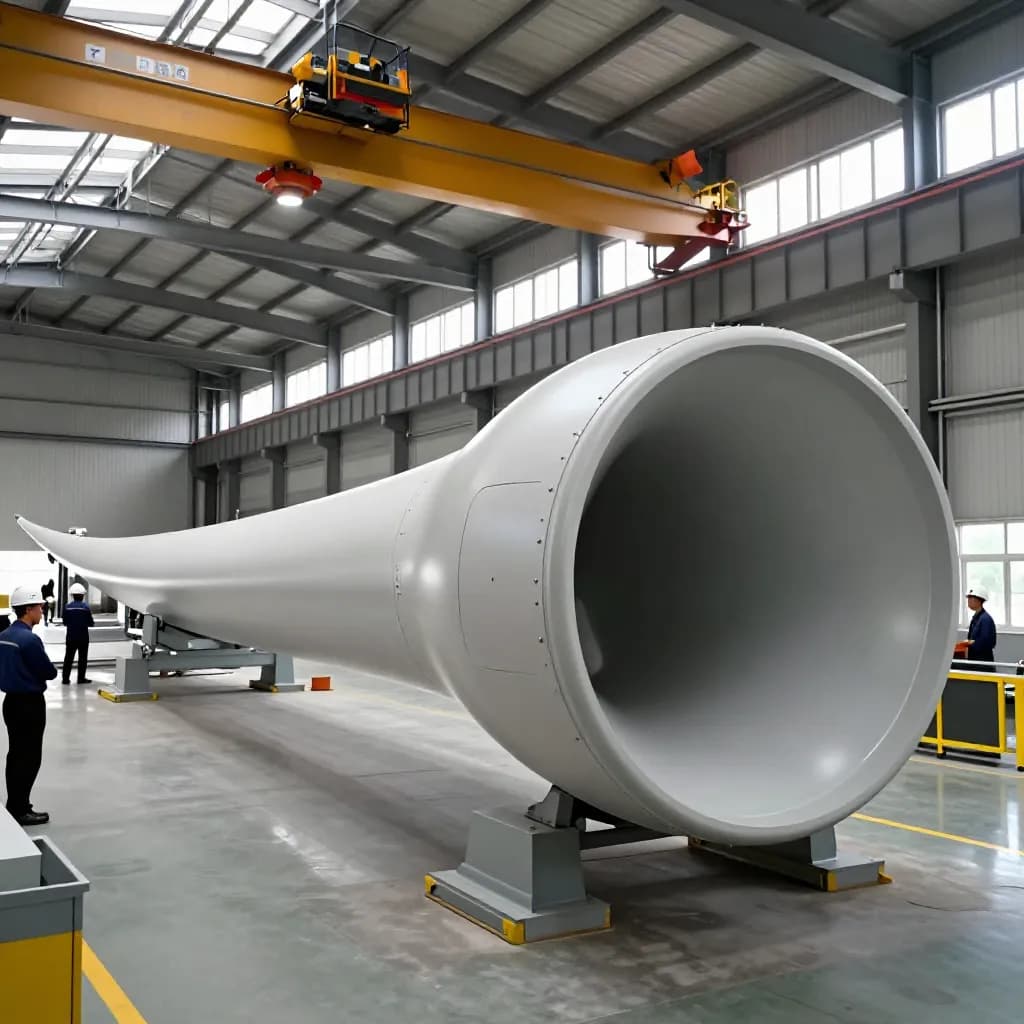
Wind turbine components that require coating include the tubular steel tower sections, the nacelle housing, the hub, internal structural components, transformer enclosures, cable trays, platforms, ladders, and various brackets and fittings. Each component has specific coating requirements based on its exposure conditions, structural function, and maintenance accessibility.
Ready to Start Your Project?
From one-off customs to 15,000-part production runs — get precise pricing in 24 hours.
On This Page
Wind Energy Infrastructure and Coating Requirements
Powder coating has gained significant market share in wind turbine component finishing, particularly for nacelle housings, internal components, and smaller structural elements. While the large tower sections are still predominantly coated with liquid paint systems due to their size (individual sections can be 20-30 meters long and 4-5 meters in diameter), powder coating is increasingly used for tower internals, flanges, and smaller tower sections that fit within available oven dimensions.
The wind energy industry's commitment to sustainability makes powder coating's environmental profile particularly attractive. Zero VOC emissions, 95-98% material utilization, and the absence of hazardous solvents align with the renewable energy sector's environmental values and simplify compliance with increasingly stringent environmental regulations at manufacturing facilities.
Corrosion Protection Standards for Wind Energy
Wind turbine coating specifications are governed by international standards that define corrosion protection requirements based on the installation environment. These standards provide a systematic framework for selecting coating systems that deliver the required service life in specific atmospheric conditions.
ISO 12944 (Corrosion Protection of Steel Structures by Protective Paint Systems) is the primary standard for wind turbine coating specification. ISO 12944-2 classifies atmospheric corrosivity into categories from C1 (very low) to CX (extreme), with most onshore wind farms classified as C3 (medium) to C4 (high) and offshore installations classified as C5-M (very high, marine) or CX. ISO 12944-5 defines coating system requirements for each corrosivity category and desired durability (low: 7-15 years, medium: 15-25 years, high: more than 25 years).
For onshore wind turbines in C3-C4 environments, ISO 12944-5 specifies coating systems with total dry film thickness of 200-320 microns for high durability. Powder coating systems can achieve these thicknesses through multi-coat application: zinc-rich epoxy primer (60-80 microns), epoxy intermediate coat (60-100 microns), and polyester or polyurethane topcoat (60-80 microns).
Norsok M-501 (Surface Preparation and Protective Coating) is the Norwegian standard widely used for offshore wind turbine coating specifications. Norsok M-501 is more demanding than ISO 12944 for marine environments, requiring specific pretreatment standards, coating system qualifications, and application procedures. System 1 of Norsok M-501 specifies a three-coat system with zinc-rich epoxy primer, epoxy intermediate, and polyurethane topcoat at a total minimum thickness of 280 microns.
DNV-GL (Det Norske Veritas - Germanischer Lloyd) standards for wind turbine certification include requirements for corrosion protection that reference ISO 12944 and Norsok M-501. DNV-GL certification is required for most commercial wind turbine installations, making compliance with these coating standards a prerequisite for market access.
IEC 61400 series standards for wind turbine design and safety include requirements for structural integrity that are supported by the coating system's corrosion protection. The coating specification must ensure that structural steel components maintain their design thickness throughout the turbine's 20-25 year design life.
Nacelle and Hub Coating with Powder Technology
The nacelle housing and hub are the most visible components of a wind turbine after the tower, and they are the components most commonly finished with powder coating. These fiberglass-reinforced plastic (FRP) or steel components are manufactured in controlled factory environments where powder coating can be applied under optimal conditions.
Steel nacelle frames and internal structural components are ideal candidates for powder coating. These components are fabricated from structural steel sections and plate, pretreated with zinc phosphate conversion coating, and powder coated with multi-coat systems that provide corrosion protection equivalent to liquid paint systems. The controlled factory environment ensures consistent pretreatment quality, application parameters, and cure conditions that are difficult to achieve with field-applied liquid coatings.
Nacelle housing panels, whether steel or FRP, require coatings that withstand the extreme conditions at nacelle height — 80-120 meters above ground where wind speeds, UV intensity, and temperature extremes are significantly more severe than at ground level. Superdurable polyester topcoats with maximum UV stabilizer loading are specified for nacelle exterior surfaces, with accelerated weathering resistance of 3000+ hours per ASTM G154.
The hub — the central component connecting the rotor blades to the drive train — is typically cast iron or cast steel, presenting outgassing challenges for powder coating. A pre-bake at 200-230°C for 20-30 minutes drives off trapped gases from the casting porosity before powder application. The hub coating must resist the extreme mechanical vibration and centrifugal forces generated during turbine operation, requiring excellent adhesion (minimum 5 MPa pull-off per ASTM D4541) and flexibility.
Color specification for nacelle and hub components follows the turbine manufacturer's brand identity and aviation safety requirements. White and light grey are the most common colors, providing good solar reflectance (reducing internal nacelle temperature) and visibility for aviation safety. Some jurisdictions require specific marking patterns — such as red tips on rotor blades — for aviation visibility, though blade coatings are typically liquid-applied due to blade size and substrate (FRP composite).
Internal nacelle components — generator frames, gearbox housings, yaw drive enclosures, and control cabinets — are powder coated for corrosion protection and identification. These components operate in a semi-enclosed environment with exposure to lubricating oils, hydraulic fluids, and condensation. Hybrid epoxy-polyester or pure epoxy powder coatings at 60-80 microns provide the chemical resistance and moisture protection needed for internal nacelle components.
Tower Section Coating: Powder Coating's Growing Role
Wind turbine towers are traditionally coated with liquid paint systems because the large size of tower sections (up to 30 meters long and 5 meters in diameter) exceeds the capacity of most powder coating ovens. However, powder coating is increasingly used for tower components where size permits, and advances in large-format powder coating equipment are expanding the range of tower components that can be powder coated.
Tower flanges — the heavy steel rings at the top and bottom of each tower section that bolt the sections together — are excellent candidates for powder coating. These critical structural components require maximum corrosion protection at the bolted joint, where moisture ingress and crevice corrosion can compromise structural integrity. Powder coating provides a thicker, more uniform film on the complex flange geometry compared to liquid paint, with better edge coverage on the bolt holes and flange faces.
Tower internal surfaces — ladders, platforms, cable trays, and internal structural stiffeners — are increasingly powder coated before installation inside the tower. These components are small enough for standard powder coating ovens and benefit from the superior corrosion protection and mechanical durability of powder coating compared to the liquid paint that was traditionally used.
Tower door frames and access hatches are powder coated for both corrosion protection and aesthetic quality, as these are the most visible and accessible parts of the tower at ground level. The coating must resist vandalism, UV exposure, and the mechanical wear of frequent opening and closing during maintenance access.
For smaller wind turbines (rotor diameter below 20 meters) used in distributed generation applications, the entire tower may be powder coated. These smaller towers are fabricated from tubular steel sections that fit within standard industrial powder coating ovens. The complete tower is pretreated, primed, and topcoated in the factory, providing consistent, high-quality corrosion protection that is difficult to achieve with field-applied liquid coatings.
Advances in large-format powder coating technology — including oversized cure ovens, high-capacity powder application systems, and automated handling equipment for heavy components — are gradually expanding the range of tower components that can be powder coated. Some tower manufacturers have invested in dedicated large-format powder coating lines capable of processing tower sections up to 15 meters long, bringing the benefits of powder coating to a larger portion of the tower structure.
Offshore Wind Turbine Coating Challenges
Offshore wind turbines face the most extreme coating challenges in the wind energy industry. The combination of continuous salt spray exposure, high humidity, intense UV radiation, wave impact in the splash zone, and the difficulty of maintenance access creates coating requirements that push the limits of available technology.
The atmospheric zone of offshore wind turbine components (above the splash zone) is classified as C5-M or CX per ISO 12944-2, requiring the most robust coating systems available. For powder-coated components in this zone, a four-coat system is typical: zinc-rich epoxy primer (75-100 microns), epoxy build coat (100-150 microns), epoxy intermediate coat (75-100 microns), and superdurable polyester topcoat (80-100 microns). Total system thickness of 330-450 microns provides the barrier and cathodic protection needed for 25+ year service life in the offshore environment.
The splash zone — the area between low water and the highest wave reach on the foundation and transition piece — is the most corrosive zone on any offshore structure. Coating systems for the splash zone must resist continuous saltwater immersion, wave impact, ice loading, and marine biological fouling. While the splash zone is typically coated with specialized liquid marine coatings or protected by cathodic protection systems, powder-coated components that extend into the splash zone (such as boat landing structures and access platforms) require maximum-thickness epoxy systems with additional mechanical protection.
Humidity and condensation inside offshore turbine nacelles and towers create a corrosive internal environment that differs significantly from onshore installations. The enclosed spaces trap moisture-laden marine air, and temperature fluctuations cause condensation on internal steel surfaces. Internal component coatings must provide moisture barrier protection equivalent to external atmospheric coatings, despite the absence of UV exposure. Epoxy powder coatings at 80-120 microns are specified for internal offshore components.
Maintenance access to offshore wind turbines is limited by weather windows, vessel availability, and safety considerations. The coating system must be designed for maximum service life with minimum maintenance, because every maintenance intervention offshore is significantly more expensive and logistically complex than onshore maintenance. This drives the specification of premium coating systems with the highest possible durability, even at increased initial cost.
Erosion Protection and Mechanical Durability
Wind turbine components are subject to erosion from rain, hail, sand, and ice particles driven by high wind speeds. At the tip of a modern wind turbine blade, relative wind speeds can exceed 300 km/h, turning rain droplets into erosive projectiles. While blade leading edge erosion is primarily a liquid coating and protective tape application, powder-coated nacelle and tower components also experience erosion from wind-driven particles.
Rain erosion testing per ASTM G73 (Standard Test Method for Liquid Impingement Erosion Using Rotating Apparatus) evaluates coating resistance to high-velocity water droplet impact. Powder coatings for wind turbine exterior surfaces should demonstrate erosion resistance comparable to or better than the liquid paint systems they replace. The dense, cross-linked film structure of powder coatings generally provides good erosion resistance, but formulation optimization for maximum hardness and adhesion further improves performance.
Sand and dust erosion is a significant concern for wind turbines in desert and semi-arid environments. Wind-driven sand particles abrade coating surfaces, gradually reducing film thickness and eventually exposing the substrate. High-hardness powder coatings with ceramic or silica additives provide enhanced sand erosion resistance. Film thickness specifications for desert installations should include an erosion allowance — additional thickness beyond the minimum required for corrosion protection to account for gradual erosion over the turbine's service life.
Ice impact and ice throw create mechanical loading on nacelle and tower surfaces during winter operation. Ice formations on rotor blades can be shed during operation, impacting the nacelle housing and tower at high velocity. The coating must resist this impact without cracking or delaminating. Impact resistance of 100+ inch-pounds (direct) per ASTM D2794 is recommended for wind turbine exterior coatings in cold climates.
Vibration fatigue is a unique challenge for wind turbine coatings. The continuous vibration from rotor rotation, wind turbulence, and mechanical drive train operation generates cyclic stress in the coating film that can cause fatigue cracking over time. Flexible coating formulations with high elongation at break (above 3%) and excellent adhesion resist vibration-induced fatigue cracking better than rigid, brittle formulations. Vibration fatigue testing — subjecting coated panels to cyclic mechanical loading at frequencies representative of turbine operation — should be part of the coating qualification process for wind turbine applications.
Sustainability and Lifecycle Assessment
Wind energy is inherently a sustainability-focused industry, and the coating system on wind turbine components should align with the sector's environmental values. Powder coating's environmental profile provides significant advantages over liquid paint systems in lifecycle assessment metrics.
Zero VOC emissions from powder coating eliminate the air pollution associated with solvent-based liquid paint systems. A single wind turbine tower coated with liquid paint can generate 50-100 kg of VOC emissions during the coating process. Multiplied across the thousands of turbines manufactured annually, the transition to powder coating represents a significant reduction in industrial air pollution.
Material efficiency of 95-98% for powder coating versus 40-65% for liquid paint reduces raw material consumption and waste generation. The overspray powder reclaimed and reused in powder coating operations would be lost as waste in liquid paint operations, requiring disposal as hazardous waste in many jurisdictions.
Energy consumption for powder coating cure (typically 180-200°C for 15-20 minutes) is comparable to or lower than liquid paint systems that require multiple coat applications with flash-off and cure cycles between coats. The single-coat or two-coat powder application process reduces total oven time compared to the three-coat or four-coat liquid systems commonly used for wind turbine components.
Lifecycle assessment (LCA) studies comparing powder coating and liquid paint systems for wind turbine components consistently show lower environmental impact for powder coating across key metrics: global warming potential, ozone depletion potential, acidification potential, and resource depletion. These LCA results support the specification of powder coating for wind turbine manufacturers with corporate sustainability commitments and environmental reporting obligations.
End-of-life considerations for wind turbine components include decommissioning and recycling after the turbine's 20-25 year service life. Steel tower sections, nacelle frames, and other powder-coated steel components are fully recyclable through standard ferrous scrap processing. The thin powder coating film does not interfere with steel recycling and is burned off during the melting process. This recyclability supports the circular economy principles that the wind energy industry increasingly embraces.
Environmental Product Declarations (EPDs) for wind turbine components increasingly include coating system data. Powder coating's favorable environmental profile contributes positively to the EPD metrics, supporting the wind energy industry's sustainability messaging and regulatory compliance.
Frequently Asked Questions
Which wind turbine components are powder coated?
Powder coating is used on nacelle housings, hubs, internal structural components, tower flanges, platforms, ladders, cable trays, transformer enclosures, and control cabinets. Large tower sections are still predominantly liquid painted due to size constraints, but powder coating's role is expanding with larger-format coating equipment.
What standards govern wind turbine powder coating?
Key standards include ISO 12944 for corrosion protection classification and coating system selection, Norsok M-501 for offshore applications, DNV-GL certification requirements, and IEC 61400 series for turbine design. These standards define corrosivity categories, coating system requirements, and minimum service life expectations.
How thick is powder coating on wind turbine components?
Onshore components typically require 200-320 microns total system thickness per ISO 12944 for high durability. Offshore components in the atmospheric zone require 330-450 microns. Multi-coat systems combine zinc-rich epoxy primer, epoxy barrier coat, and superdurable polyester topcoat.
How long does wind turbine powder coating last?
Wind turbine coating systems are designed for 20-25 year service life matching the turbine's design life. ISO 12944 'high durability' classification targets more than 25 years. Premium multi-coat systems with proper application achieve 3000+ hours of salt spray resistance and 3000+ hours of accelerated weathering resistance.
Is powder coating more sustainable than liquid paint for wind turbines?
Yes. Powder coating produces zero VOC emissions, achieves 95-98% material utilization versus 40-65% for liquid paint, and generates less hazardous waste. Lifecycle assessment studies consistently show lower environmental impact across all major metrics, aligning with the wind energy industry's sustainability commitments.
Ready to Start Your Project?
From one-off customs to 15,000-part production runs — get precise pricing in 24 hours.