Winch bumpers represent the heaviest and most purpose-built front-end protection available for off-road vehicles. Fabricated from thick steel plate and heavy-wall tubing, these bumpers are designed to mount a winch, protect the vehicle's front end from trail obstacles, and serve as a recovery point for the vehicle and others. The coating on a winch bumper must match the component's rugged purpose with durability that withstands years of hard use.
Automotive
Powder Coating Winch Bumpers: Heavy-Duty Finishes for Off-Road Recovery Equipment
Sundial Powder Coating·April 23, 2026·10 min
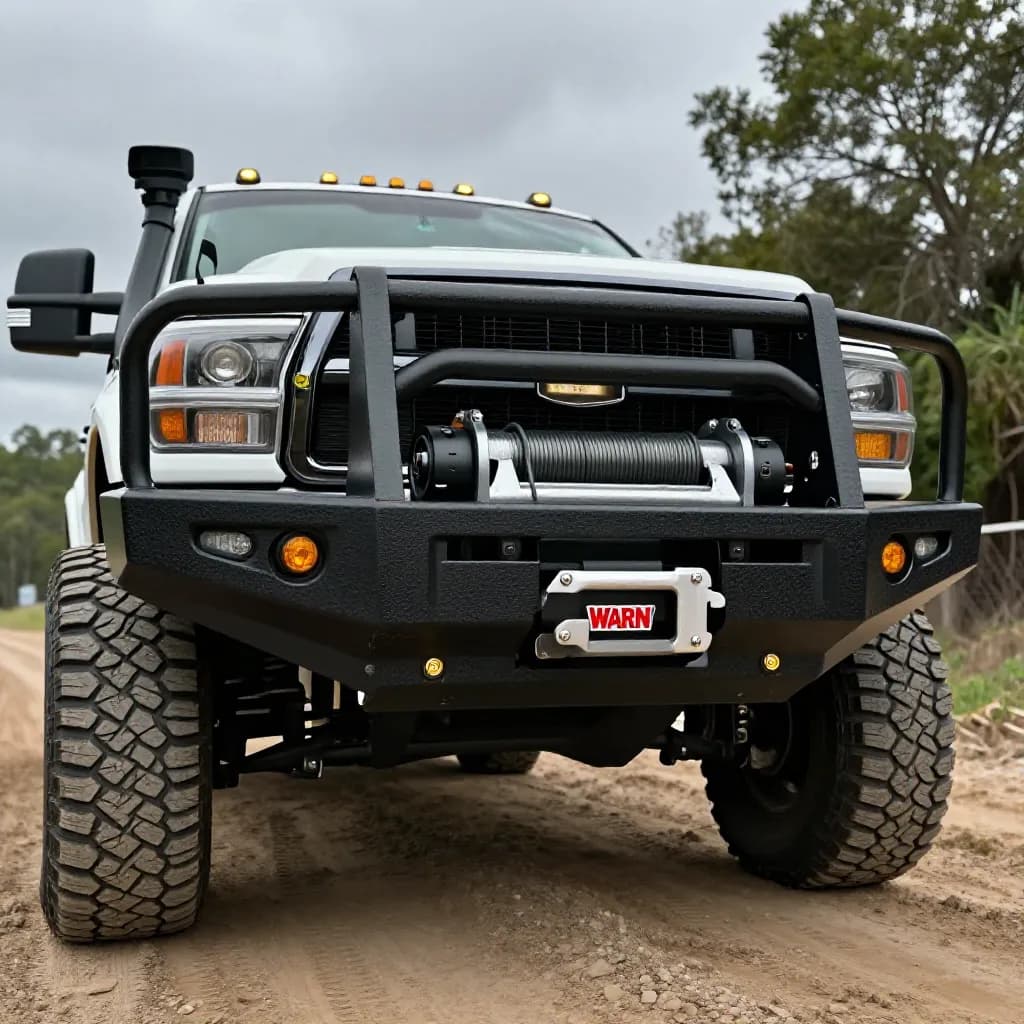
A typical winch bumper is fabricated from 6-10 millimeter steel plate with 50-75 millimeter diameter tubing for the outer hoop and light mounts. The bumper may weigh 40-80 kilograms depending on the design and vehicle application. This heavy construction means the bumper can absorb significant impacts without structural damage, but the coating takes the first hit from every rock, stump, and obstacle the vehicle encounters.
Ready to Start Your Project?
From one-off customs to 15,000-part production runs — get precise pricing in 24 hours.
On This Page
Winch Bumpers: The Ultimate Front-End Protection
Powder coating is the standard finish for quality aftermarket winch bumpers because no other coating technology matches its combination of thickness, adhesion, impact resistance, and corrosion protection on heavy steel fabrications. A well-applied powder coat transforms a raw steel bumper into a finished product that looks professional, resists the elements, and maintains its appearance through years of trail abuse.
Heavy-Duty Steel Preparation
Winch bumpers are fabricated from heavy steel plate and tubing that requires thorough preparation for a lasting powder coat finish. The thick material and extensive welding create specific challenges that must be addressed during the preparation process.
Mill scale is the primary enemy of coating adhesion on heavy steel plate. This blue-grey oxide layer forms during the hot rolling process and appears tightly bonded to the steel surface. However, mill scale is brittle and will eventually flake off, taking any coating applied over it. Complete removal of mill scale through abrasive blasting is non-negotiable for a durable finish. Use steel grit or aluminum oxide at 40-60 mesh with sufficient pressure to remove all traces of mill scale from flat surfaces, corners, and recessed areas.
The extensive welding on a winch bumper creates multiple areas that need attention. Weld spatter must be ground or chipped away, as spatter trapped under the coating creates bumps and potential corrosion sites. Weld slag and flux residue from stick welding or flux-core welding must be completely removed. Weld beads should be inspected for porosity, undercut, and cold lap, and any defects should be repaired before coating.
A pre-bake at cure temperature before powder application is strongly recommended for winch bumpers. The extensive welding creates numerous potential outgassing sites where trapped air and contaminants can escape during the cure cycle, creating pinholes and bubbles in the finish. A 20-30 minute pre-bake drives out these gases before the powder is applied.
After blasting and pre-baking, apply a zinc phosphate conversion coating for maximum corrosion resistance. The heavy steel construction of a winch bumper means it will be in service for many years, and the pretreatment quality directly affects how well the coating protects the steel over that extended service life.
Impact Resistance and Trail Durability
Winch bumpers are designed to take hits. Rock strikes, stump contacts, and minor collisions with trail obstacles are routine events for an off-road vehicle, and the bumper coating must survive these impacts without catastrophic failure. While no coating is completely immune to damage from heavy impacts, powder coating provides the best available protection for this demanding application.
The impact resistance of a powder coat is determined by its thickness, adhesion, and the mechanical properties of the cured film. A thick coating absorbs more impact energy before fracturing, strong adhesion prevents delamination at the impact site, and a film with good elongation and toughness bends rather than shatters under impact.
For winch bumpers, a two-coat system provides the best impact performance. A zinc-rich epoxy primer at 50-80 microns provides a flexible, impact-absorbing base layer with excellent adhesion to the steel substrate. A polyester topcoat at 60-80 microns provides UV resistance, color, and abrasion resistance. The total film build of 110-160 microns creates a robust coating system that absorbs significant impact energy before the steel substrate is exposed.
Textured finishes enhance the practical impact resistance of the coating by making small chips and scratches less visible. A textured black bumper that has taken a few rock hits still looks purposeful and well-maintained, while a smooth gloss bumper with the same damage looks neglected. This visual forgiveness is one of the main reasons textured finishes dominate the off-road bumper market.
The leading edges and corners of the bumper are the most vulnerable to impact damage. These areas also tend to have thinner coating due to electrostatic edge effects during application. Applying extra powder to edges and corners during the spray process, or using edge-optimized powder formulations, helps ensure adequate protection at these high-risk areas.
Textured Finishes for Off-Road Bumpers
Textured powder coat finishes are the overwhelming choice for off-road winch bumpers, and the market offers several texture options that balance appearance, durability, and practicality.
Wrinkle black is the classic off-road bumper finish. The pronounced wrinkle pattern creates a tough, industrial appearance that suits the bumper's purpose. The deep texture hides trail damage effectively and provides a non-reflective surface that does not create glare for the driver or oncoming traffic. Wrinkle finishes are available in various colors, but black accounts for the vast majority of off-road bumper applications.
Sandtex finishes provide a finer, grittier texture than wrinkle. The surface feels like fine sandpaper and provides a more refined appearance while still hiding minor damage effectively. Sandtex is popular for builds that want the practicality of a textured finish with a slightly more polished look than wrinkle.
Hammer-tone finishes create a distinctive dimpled pattern that is both visually interesting and highly durable. The deep dimples distribute impact energy effectively and make individual chips nearly invisible against the textured background. Hammer-tone is available in metallic shades like silver, bronze, and copper that add visual depth to the texture.
For premium builds, a smooth satin or semi-gloss finish provides a cleaner, more refined appearance. These finishes show trail damage more readily than textures but are preferred for vehicles that are primarily displayed rather than heavily used off-road. A smooth satin black bumper on a well-detailed vehicle creates a sophisticated, purposeful look.
Regardless of texture choice, the finish should be consistent across the entire bumper surface. Variations in texture density or pattern are visible and detract from the professional appearance. Consistent application technique and proper cure conditions are essential for uniform texture development.
Winch Cradle and Accessory Integration
A winch bumper is more than a protective bar. It integrates a winch mounting cradle, fairlead opening, light mounts, D-ring shackle mounts, and sometimes a grille guard or pre-runner hoop. Each of these features requires consideration during the coating process.
The winch cradle is a flat plate or formed channel that supports the winch body. The winch mounting bolt holes must be masked or reamed after coating to ensure proper bolt fitment. The winch body sits directly on the cradle surface, and the coating at this interface will be compressed under the winch's weight and mounting bolt clamping force. This compression is normal and does not affect the coating's protective function in the sealed area between the winch and cradle.
The fairlead opening where the winch cable or synthetic rope exits the bumper should have smooth, rounded edges to prevent cable damage. If the fairlead opening has sharp edges from plasma cutting or laser cutting, these should be ground smooth before coating. The powder coat adds a smooth layer over the edge, further reducing the risk of cable abrasion.
Light mount tabs and holes should be masked if precise fitment is required for specific light models. Powder buildup on light mount surfaces can prevent lights from sitting flush or bolts from engaging fully. After coating, verify that all light mounting hardware fits correctly.
D-ring shackle mounts are high-stress recovery points that must function reliably under extreme loads. The shackle pin holes should be masked during coating to maintain proper pin fitment and allow the shackle to rotate freely under load. After coating, apply anti-seize to the pin holes to prevent corrosion and facilitate shackle insertion during recovery situations.
Pre-runner hoops and grille guards that extend above the bumper body are typically welded to the main bumper structure. These extensions should be coated as part of the complete assembly to ensure continuous coating coverage across all welded joints.
Coating the Bumper Interior and Hidden Surfaces
The interior surfaces and hidden areas of a winch bumper are just as important to coat as the visible exterior. Moisture, mud, and road spray penetrate into the bumper's interior through the fairlead opening, drain holes, and gaps between plates, creating a corrosive environment that can weaken the bumper from the inside out.
Coating the interior surfaces of the bumper provides corrosion protection in these hidden areas. While the interior does not need a show-quality finish, it should receive adequate film thickness for corrosion resistance. A minimum of 50-60 microns on interior surfaces is recommended. Reaching these surfaces with the spray gun requires careful technique, using extension nozzles and spraying from multiple angles through openings in the bumper structure.
Box sections and enclosed tubes within the bumper structure are the most difficult areas to coat and the most vulnerable to internal corrosion. If these sections have openings large enough for a spray nozzle, coat the interior surfaces. If the sections are fully enclosed, they should be sealed by welding all joints to prevent moisture ingress. Alternatively, a rust-inhibiting oil or wax can be injected into enclosed sections through small drill holes, which are then sealed with plugs.
Drain holes in the bumper structure should be kept clear during coating. These holes allow water that enters the bumper to drain out rather than pooling inside. Plug drain holes with silicone plugs during coating and remove them after curing. Verify that all drain holes are clear and functional before installing the bumper on the vehicle.
The mounting plate where the bumper bolts to the vehicle frame should be coated on both sides. The interface between the bumper and the frame is a prime location for crevice corrosion, as moisture wicks between the two surfaces and remains trapped. Coating both surfaces and applying a bead of seam sealer during installation prevents this hidden corrosion.
Installation and Recovery-Ready Maintenance
Installing a powder-coated winch bumper is a significant mechanical task due to the bumper's weight and the precision required for proper fitment. The bumper must align correctly with the vehicle's frame mounting points, headlights, and body panels, and all mounting hardware must be properly torqued for safe operation.
Use the manufacturer's specified mounting hardware and torque values. Winch bumpers are designed to withstand significant forces during recovery operations and impacts, and the mounting hardware is a critical part of this system. Do not substitute lower-grade bolts or skip any mounting points. Apply anti-seize to all mounting bolts to prevent galvanic corrosion and facilitate future removal.
After installation, mount the winch according to the winch manufacturer's instructions. Route the winch cable or synthetic rope through the fairlead and verify smooth operation. Test the winch under light load to confirm proper function before relying on it in a recovery situation.
Maintaining a powder-coated winch bumper for recovery readiness means keeping the coating in good condition and all mechanical components functional. Inspect the coating after every off-road trip and touch up any damage promptly. Lubricate the winch fairlead and D-ring shackle pin holes periodically with anti-seize or light grease.
The winch cable or rope contact area on the fairlead and bumper edge will show coating wear from cable abrasion during winching operations. This wear is normal and expected. Touch up the worn area after each winching event to maintain corrosion protection. For vehicles that winch frequently, a replaceable fairlead insert protects the bumper coating from cable wear.
A complete coating inspection and touch-up should be performed at least annually, or more frequently for vehicles that see heavy off-road use. Address any rust spots immediately by sanding to bare metal, priming with zinc-rich primer, and applying matching touch-up paint. Catching corrosion early prevents it from spreading under the coating and causing larger-scale failure.
Frequently Asked Questions
What is the best finish for an off-road winch bumper?
Textured black, specifically wrinkle or sandtex texture, is the most popular and practical choice. The texture hides trail damage, reduces glare, and provides a rugged appearance. For maximum durability, a two-coat system with epoxy primer and polyester topcoat at 110-160 microns total is recommended.
Should I coat the inside of the winch bumper?
Yes. Interior surfaces are vulnerable to corrosion from moisture and mud that penetrates through openings. Coat interior surfaces with a minimum of 50-60 microns. Enclosed box sections should be sealed by welding or treated with rust-inhibiting oil. Keep drain holes clear during coating.
Do I need to mask the winch mounting area?
Mask the winch mounting bolt holes to ensure proper fitment. The winch cradle surface can be coated, as the winch body will compress the coating under clamping force without affecting function. Verify all bolt holes are clear and hardware fits correctly after coating.
How do I prevent rust at D-ring shackle mounts?
Mask the shackle pin holes during coating to maintain proper pin fitment. After coating, apply anti-seize compound to the pin holes to prevent corrosion and facilitate shackle insertion. Inspect and re-grease the pin holes periodically, especially after water crossings or muddy trail use.
Will the winch cable damage the powder coating?
Yes, winch cable or synthetic rope will abrade the coating at the fairlead and bumper edge during winching operations. This wear is normal. Touch up the worn area after each winching event. A replaceable fairlead insert can protect the bumper coating from cable wear on vehicles that winch frequently.
Ready to Start Your Project?
From one-off customs to 15,000-part production runs — get precise pricing in 24 hours.