The differential cover sits at one of the lowest points on a vehicle, directly exposed to road debris, water crossings, mud, salt, and rock strikes. On off-road vehicles, the diff cover is often the first component to contact obstacles during approach and departure angles. Factory stamped steel covers typically come with a thin coat of paint that chips off quickly, leaving bare steel exposed to corrosion. Aftermarket cast aluminum covers offer better heat dissipation and strength but often arrive with a raw or anodized finish that may not match the vehicle's build theme.
Automotive
Powder Coating Differential Covers: Heat Dissipation, Off-Road Protection, and Outgassing Solutions
Sundial Powder Coating·April 23, 2026·9 min
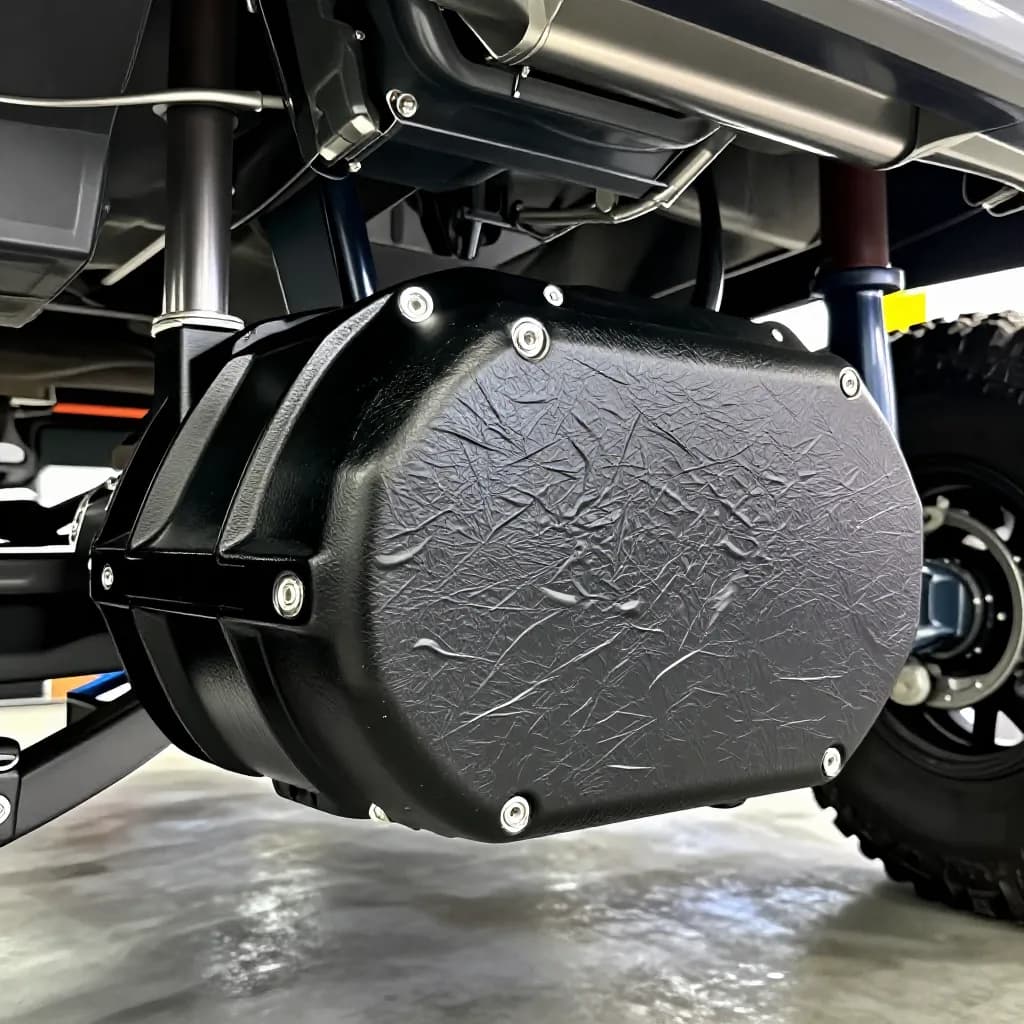
Powder coating a differential cover provides durable corrosion protection, a professional appearance, and the opportunity to color-match the cover to other underbody components. A well-applied powder coat withstands the stone impacts, chemical exposure from gear oil and road treatments, and thermal cycling that diff covers endure in service.
Ready to Start Your Project?
From one-off customs to 15,000-part production runs — get precise pricing in 24 hours.
On This Page
Why Powder Coat a Differential Cover
For off-road enthusiasts, a powder-coated diff cover is both functional and a point of pride. A clean, color-coordinated underbody signals attention to detail and proper maintenance. For show vehicles, a powder-coated diff cover in a contrasting color or metallic finish adds visual interest to an area that is often overlooked. Whether the goal is protection, appearance, or both, powder coating is the ideal finish for differential covers.
Heat Dissipation and Powder Coating Compatibility
Differential covers generate and dissipate heat during normal operation. The ring and pinion gears inside the differential housing produce friction heat that transfers through the gear oil to the cover surface, where it radiates to the surrounding air. Aftermarket finned aluminum covers are specifically designed to maximize this heat dissipation, and vehicle owners often wonder whether powder coating will insulate the cover and reduce its cooling effectiveness.
The concern is valid but largely overstated. Powder coating at standard thickness of 60-80 microns adds a very thin layer of material to the cover surface. While cured powder coat is a thermal insulator compared to bare metal, the insulating effect of such a thin film is minimal in practice. Testing by aftermarket differential cover manufacturers has shown that powder-coated covers operate within 2-5 degrees Celsius of bare or anodized covers under identical conditions, a difference that is insignificant for gear oil temperature management.
Dark-colored powder coats actually offer a slight advantage in radiative heat transfer. Black and dark grey surfaces emit thermal radiation more efficiently than bare aluminum or light-colored surfaces, partially offsetting the insulating effect of the coating layer. This is the same principle that makes black anodizing popular on heat sinks and radiators.
For vehicles that operate under extreme thermal loads, such as heavy towing or sustained high-speed off-road driving, the focus should be on gear oil quality, oil capacity, and potentially adding an external differential cooler rather than worrying about the negligible thermal impact of a powder coat finish.
Preparing Cast Aluminum Differential Covers
Cast aluminum differential covers are the most common aftermarket option, and they present specific preparation challenges that must be addressed for a successful powder coat finish. The casting process introduces porosity, surface irregularities, and trapped gases that can cause defects in the finished coating if not properly managed.
The first step is thorough cleaning to remove any machining oils, mold release agents, and handling contamination. Alkaline cleaning or solvent degreasing is effective for surface contaminants, but it does not address subsurface porosity. Cast aluminum contains microscopic voids and channels throughout its structure that trap air, moisture, and oils during the casting process. These trapped substances expand and escape as gas during the powder coating cure cycle, creating pinholes, bubbles, and craters in the finished surface.
The solution is a pre-bake or outgassing bake before powder application. The cover is heated to cure temperature, typically 200 degrees Celsius, and held for 20-30 minutes. This drives out trapped gases from the casting porosity. The cover may need multiple pre-bake cycles for heavily porous castings, with the surface inspected between cycles for evidence of continued outgassing. Once the cover completes a pre-bake cycle without visible outgassing, it is ready for powder application.
After pre-baking, the cover should be blasted with fine aluminum oxide or glass bead at moderate pressure to create a uniform surface profile. A chromate-free conversion coating provides the chemical adhesion layer that is critical for long-term coating durability on aluminum. The powder should be applied promptly after pretreatment to prevent the aluminum from re-oxidizing.
Stamped Steel Cover Preparation and Coating
Factory stamped steel differential covers are simpler to prepare than cast aluminum but still require proper attention to achieve a lasting finish. These covers are typically made from thin-gauge mild steel and may have decades of accumulated grime, rust, and old gasket material on their surfaces.
Start by removing all traces of the old gasket. RTV silicone, cork, paper, and rubber gasket materials must be completely removed from the sealing surface and the bolt holes. Gasket residue left under the powder coat will cause adhesion failure and create paths for moisture to reach the bare metal. A combination of scraping, solvent cleaning, and light blasting removes gasket material effectively.
The cover should then be blasted to remove all rust, old paint, and mill scale. Pay particular attention to the inside corners where the flat face meets the stamped sides, as these areas tend to accumulate rust and are difficult to reach with a blast nozzle. A small-diameter nozzle or detail blasting attachment helps ensure complete coverage in these recessed areas.
After blasting, apply an iron phosphate or zinc phosphate conversion coating for corrosion protection and adhesion promotion. For covers that will see heavy off-road use or salt exposure, a zinc-rich epoxy primer beneath the topcoat provides galvanic protection at any future chip or scratch sites.
The sealing surface where the gasket sits requires special consideration. Some builders prefer to mask this area to maintain a bare metal gasket surface, while others coat the entire cover and rely on the gasket to seal against the powder-coated surface. Both approaches work, but if coating the gasket surface, use a smooth finish rather than a texture to ensure proper gasket sealing.
Color and Finish Selection for Differential Covers
Differential covers offer an opportunity for visual expression in an area of the vehicle that is often neglected. The most popular finish choices balance appearance with the practical demands of the cover's location and operating environment.
Satin black and textured black are the workhorses of diff cover finishes. They hide dirt, resist showing stone chip damage, and complement any vehicle color. For off-road vehicles where the diff cover is frequently visible during trail driving, these finishes maintain a clean appearance with minimal maintenance.
Metallic finishes like silver, gunmetal, and bronze are popular for show vehicles and builds where the underbody is detailed for display. These finishes catch light and draw attention to the cover's design features, particularly on finned aluminum covers where the metallic particles highlight the fin geometry. Metallic powders require careful application technique to achieve uniform particle distribution and avoid streaking or mottling.
Color-matched finishes coordinate the diff cover with other vehicle components. Matching the cover to the valve covers, intake manifold, or wheel color creates a cohesive engine bay and underbody theme. For competition vehicles, team colors on the diff cover add a professional touch that is visible during pit stops and vehicle inspections.
High-temperature considerations are minimal for diff covers. Normal differential operating temperatures of 80-120 degrees Celsius are well within the service range of standard polyester powder coatings, which tolerate continuous exposure up to 150 degrees Celsius. High-temperature powders are not necessary for this application unless the vehicle has a known overheating issue with the differential.
Protecting the Gasket Surface and Fill Plug
The gasket sealing surface and fill plug threads are critical functional areas that require careful handling during the coating process. Improper treatment of these areas can lead to gear oil leaks, which are both messy and potentially damaging to the differential internals.
The gasket surface must be flat and smooth for proper sealing. If the surface is coated, the powder must be applied uniformly without runs, sags, or excessive buildup that could create high spots. A smooth gloss or satin finish is preferred over texture for gasket surfaces, as the flat surface provides consistent contact with the gasket material. Some builders mask the gasket surface entirely, leaving bare metal for the gasket to seal against. This is a conservative approach that guarantees sealing performance.
The fill plug and drain plug threads must be masked before coating. Powder buildup in threads prevents proper engagement and torque, and can create a false sense of tightness that leads to the plug loosening in service. Use high-temperature masking tape or silicone plugs to protect all threaded holes during the coating process. After coating, verify that plugs thread in smoothly and seat properly.
Bolt holes around the cover perimeter should also be masked or reamed after coating. Powder buildup in bolt holes reduces the effective hole diameter, which can make bolt installation difficult and affect clamping force distribution. A drill bit one size larger than the bolt diameter quickly cleans the holes without damaging the surrounding coating.
For covers that use an O-ring seal instead of a flat gasket, the O-ring groove must be kept clean and dimensionally accurate. Mask the groove before coating, or carefully remove any powder from the groove after curing using a pick or small scraper.
Installation and Long-Term Maintenance
Installing a freshly powder-coated differential cover requires care to avoid damaging the new finish during assembly. The cover bolts should be torqued in the manufacturer's specified sequence and to the correct torque value, as over-torquing can crack the coating around bolt holes and create corrosion initiation points.
Apply a thin film of anti-seize compound to the bolt threads before installation. This prevents galvanic corrosion between the bolts and the cover, particularly when using steel bolts in an aluminum cover. Anti-seize also ensures accurate torque readings and facilitates future removal without damaging the coating around the bolt holes.
For off-road vehicles, consider adding a diff cover skid plate or rock guard over the powder-coated cover. While the powder coat provides excellent corrosion protection, it cannot prevent the physical damage from direct rock strikes that can dent or crack the cover itself. A sacrificial steel skid plate absorbs these impacts and can be replaced when damaged, preserving the coated cover underneath.
Long-term maintenance is straightforward. Clean the cover periodically with a degreaser to remove accumulated road grime and gear oil residue. Inspect the coating for chips or scratches, particularly after off-road trips, and touch up any damage with matching paint to prevent corrosion. Check the fill plug and cover bolts for tightness during routine maintenance intervals.
If the cover develops a gear oil leak at the gasket surface, the coating is unlikely to be the cause. Leaks are more commonly caused by improper gasket installation, insufficient bolt torque, or a warped cover. Remove the cover, clean both sealing surfaces, and reinstall with a new gasket and proper torque to resolve the leak.
Frequently Asked Questions
Does powder coating a differential cover affect heat dissipation?
The effect is minimal. A standard 60-80 micron powder coat adds negligible thermal insulation, typically resulting in only 2-5 degrees Celsius higher operating temperature compared to bare metal. Dark-colored coatings actually improve radiative heat transfer, partially offsetting the insulating effect.
How do you prevent pinholes when coating cast aluminum diff covers?
Pre-bake the cover at cure temperature for 20-30 minutes before applying powder. This drives out trapped gases from the casting porosity that would otherwise escape during the cure cycle and create pinholes. Heavily porous castings may need multiple pre-bake cycles.
Should I mask the gasket surface before powder coating?
Either approach works. Masking the gasket surface ensures bare metal contact for sealing. If you coat the gasket surface, use a smooth finish and ensure uniform thickness without high spots. Both methods seal reliably when the gasket is properly installed and bolts are torqued to specification.
What temperature can a powder-coated diff cover handle?
Standard polyester powder coatings tolerate continuous temperatures up to 150 degrees Celsius. Normal differential operating temperatures of 80-120 degrees Celsius are well within this range. High-temperature powders are not necessary for differential cover applications under normal operating conditions.
Can I powder coat a factory stamped steel diff cover?
Yes. Stamped steel covers are straightforward to coat after removing old gasket material, blasting to bare metal, and applying a conversion coating. The thin gauge steel heats quickly and evenly in the cure oven, producing consistent results. A zinc-rich primer adds extra corrosion protection for off-road use.
Ready to Start Your Project?
From one-off customs to 15,000-part production runs — get precise pricing in 24 hours.