Welding environments subject equipment coatings to a combination of thermal, chemical, and mechanical stresses that few other applications can match. Weld spatter — molten metal droplets ejected from the weld pool — impacts surrounding surfaces at temperatures exceeding 1500 degrees Celsius, bonding to or burning through inadequate coatings. Radiant heat from the welding arc and workpiece raises surface temperatures on nearby equipment. UV radiation from the arc degrades polymer coatings over time. And the general rough handling of a fabrication shop adds impact, abrasion, and chemical exposure to the mix.
Industrial
Powder Coating for Welding Equipment: Spatter Resistance, Heat Protection, and Safety Colors
Sundial Powder Coating·April 23, 2026·11 min
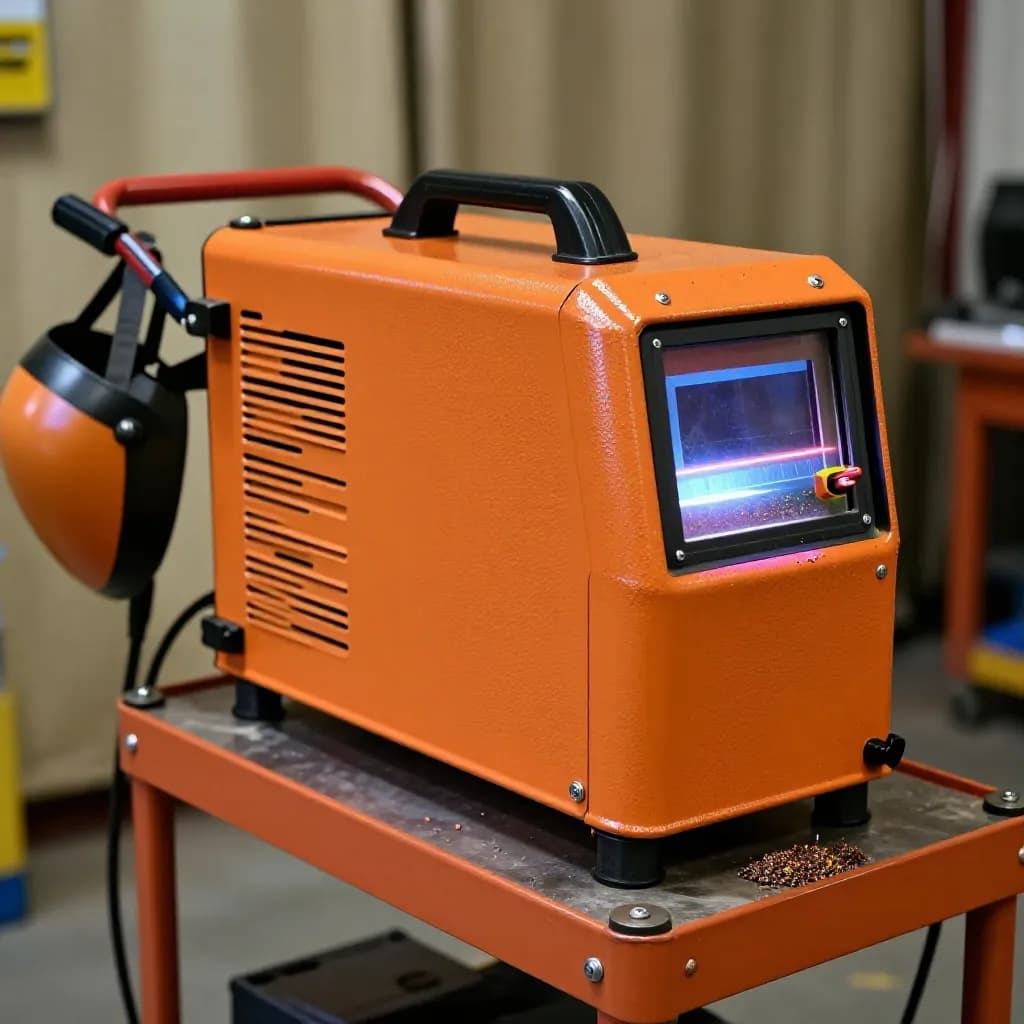
Welding equipment encompasses a broad range of products that require powder coating: welding power sources, wire feeders, plasma cutters, welding carts and tables, fume extraction units, fixture and positioner frames, electrode ovens, and safety equipment housings. Each of these products faces a different combination of the stresses described above, and the coating specification should be tailored to the specific exposure profile rather than applying a one-size-fits-all approach.
Ready to Start Your Project?
From one-off customs to 15,000-part production runs — get precise pricing in 24 hours.
On This Page
The Unique Coating Challenges of Welding Environments
Powder coating is the dominant finishing technology for welding equipment because its thermoset chemistry provides inherent advantages in this environment. The crosslinked polymer network resists heat better than thermoplastic liquid paints, the dense film structure resists spatter penetration, and the thick single-coat application provides a robust barrier against the mechanical abuse of shop environments. Major welding equipment manufacturers including Lincoln Electric, Miller, ESAB, and Fronius all use powder coating as their primary finishing technology.
The coating specification for welding equipment must balance multiple performance requirements: spatter resistance to prevent permanent adhesion of molten metal, heat resistance to maintain properties near the welding zone, impact resistance to survive shop handling, chemical resistance to withstand anti-spatter compounds and cleaning solvents, and color accuracy to maintain safety markings and brand identity throughout the equipment's service life.
Spatter Resistance: Coatings That Shed Molten Metal
Weld spatter is the defining coating challenge in welding environments. When molten metal droplets contact a coated surface, they can bond permanently if the coating softens or melts at the spatter temperature, or they can be deflected if the coating surface resists wetting by molten metal. The goal of a spatter-resistant powder coating is to create a surface with sufficiently low surface energy that spatter droplets cool and solidify without forming a permanent bond, allowing them to be brushed or wiped away.
Silicone-modified powder coatings are the primary technology for spatter resistance. The silicone component migrates to the coating surface during curing, creating a low-surface-energy layer that resists wetting by molten metal. The silicone modification reduces the surface energy from the typical 35-45 millinewtons per meter of standard powder coatings to 20-28 millinewtons per meter, significantly reducing spatter adhesion. The degree of silicone modification varies between formulations — higher silicone content provides better spatter release but can cause intercoat adhesion problems if the surface needs to be overcoated or touched up.
Film thickness plays a critical role in spatter resistance. Thicker coatings provide more thermal mass to absorb the heat of spatter impact, preventing the heat from reaching the coating-substrate interface where adhesion failure would be most damaging. For surfaces directly exposed to heavy spatter — such as welding table surfaces and fixture frames — film builds of 100-150 microns are recommended. Equipment housings that face lighter, incidental spatter exposure can use standard 70-90 micron film builds with silicone-modified formulations.
Anti-spatter compounds — liquid sprays applied to surfaces before welding to prevent spatter adhesion — are commonly used in conjunction with powder-coated surfaces. The powder coating must be compatible with these compounds, which are typically silicone-based, petroleum-based, or water-based formulations. Some anti-spatter compounds can stain or soften certain powder coatings with prolonged contact, so compatibility testing with the specific anti-spatter product used in the shop is advisable.
It is important to note that no coating provides complete spatter immunity. Heavy spatter from high-current MIG welding or flux-cored arc welding will eventually damage any coating through repeated thermal shock and mechanical impact. Spatter-resistant coatings extend the time between maintenance interventions but do not eliminate the need for periodic coating inspection and touch-up in heavy welding environments.
Heat Zones and Thermal Management
Welding equipment operates across a wide temperature range, from ambient shop temperature to localized hot spots exceeding 200 degrees Celsius near the welding arc. The powder coating specification must account for these thermal zones, with different coating chemistries or film builds applied to different areas based on their thermal exposure.
The welding power source housing experiences moderate thermal loads. Internal transformers, rectifiers, and power electronics generate heat that is dissipated through the housing walls and ventilation system. Surface temperatures on power source housings typically range from 40-80 degrees Celsius during operation — well within the capability of standard polyester powder coatings. However, ventilation grille areas and surfaces adjacent to internal heat sinks may reach 90-110 degrees Celsius, approaching the lower end of the polyester service range. These localized hot spots should be identified during product development and verified with thermal imaging during prototype testing.
Welding carts and tables face more severe thermal exposure because they are positioned close to the welding arc and workpiece. A welding table surface can reach 150-200 degrees Celsius when supporting a large, hot workpiece, and radiant heat from the arc adds to the thermal load. For welding table surfaces, high-temperature powder coatings based on silicone-modified polyester or silicone-epoxy chemistry provide continuous service capability at 200-300 degrees Celsius. These coatings sacrifice some color range and mechanical properties compared to standard formulations but maintain their protective function at temperatures that would destroy conventional coatings.
Wire feeder housings and torch connection panels experience thermal cycling as the welding process starts and stops. The thermal mass of these components is relatively low, so they heat and cool quickly, creating cyclic thermal stress in the coating. Flexible polyester formulations with good thermal cycling resistance — verified by repeated heating to 100 degrees Celsius and cooling to ambient for 500 or more cycles without cracking or adhesion loss — are appropriate for these components.
Color stability at elevated temperatures is a practical concern. Standard pigments may shift color when exposed to sustained heat, with yellowing being the most common manifestation. For equipment where color accuracy is important for brand identity or safety marking, heat-stable pigment systems should be specified for surfaces that experience elevated temperatures.
Welding Cart and Frame Coating Specifications
Welding carts, tables, and fixture frames are the workhorses of any fabrication shop, and their powder coating must survive years of rough handling, spatter exposure, and chemical contact. These products are typically fabricated from mild steel tube and sheet, welded into robust structures that support heavy welding equipment and workpieces.
The coating specification for welding carts should address several specific wear scenarios. The cart top surface supports the welding power source and may also serve as a temporary work surface for grinding, cutting, and part staging. This surface needs maximum abrasion and impact resistance — a minimum of 120 inch-pounds direct impact and Taber abrasion loss below 80 milligrams per 1000 cycles with CS-17 wheels. The cart frame tubes experience impact from being bumped into workbenches, walls, and other equipment during shop movement. The lower frame and casters accumulate grinding dust, coolant, and floor debris that create a corrosive environment.
For welding tables, the top surface specification is the most demanding. The table surface directly contacts hot workpieces, receives weld spatter, and is subjected to grinding and chipping operations. A silicone-modified epoxy-polyester hybrid at 100-120 microns provides the best combination of spatter resistance, heat tolerance, and chemical resistance for table surfaces. The table legs and frame can use standard polyester at 70-90 microns since they face less severe exposure.
Fixture frames and positioner structures face cyclic loading from workpiece clamping and manipulation, combined with spatter exposure and heat radiation from the welding process. The coating on fixture components must maintain adhesion under the compressive stress of clamp contact points and the thermal cycling of repeated welding operations. Masking clamp contact surfaces and toggle clamp mounting areas ensures metal-to-metal contact for secure workholding, while the surrounding surfaces are coated for corrosion protection.
Gas cylinder storage areas on welding carts require coating that resists the abrasion of cylinder insertion and removal. The repeated sliding contact of heavy steel cylinders against the cart's cylinder retainer surfaces wears through coatings quickly. Reinforcing these contact areas with welded wear strips or specifying extra-thick coating builds of 120-150 microns extends the coating life in these high-wear zones.
Safety Color Requirements for Welding Equipment
Welding equipment uses color coding to communicate safety information, identify functional components, and maintain brand identity. The powder coating must deliver accurate, durable colors that remain legible throughout the equipment's service life in the harsh welding environment.
Safety yellow is the most commonly specified safety color on welding equipment, used to identify hazard zones, pinch points, and areas requiring caution. On welding power sources, safety yellow typically marks the wire drive access door, the voltage adjustment area, and any exposed moving parts. On welding carts, safety yellow may identify the gas cylinder restraint area and the cart's tipping hazard zone. The safety yellow must conform to the chromaticity coordinates specified in ANSI Z535.1 or ISO 3864-4 to ensure consistent recognition.
Red is used for emergency stop buttons, fire extinguisher locations, and electrical disconnect indicators. The red must be clearly distinguishable from the orange and yellow tones that may also be present on the equipment, requiring careful color specification within the defined chromaticity boundaries. High-chroma red pigments with good heat stability ensure that the red remains vivid and distinct even after years of thermal exposure in the welding environment.
Brand colors are a significant consideration for welding equipment manufacturers. Lincoln Electric's distinctive red, Miller's blue, ESAB's yellow, and Fronius's green-gray are instantly recognizable in any fabrication shop. These brand colors must be consistent across product lines and production batches, requiring spectrophotometric color control with Delta E tolerances typically below 1.5. The brand color must also maintain its identity under the shop lighting conditions where the equipment will be used — fluorescent, LED, and natural lighting can all affect color perception.
High-visibility colors on portable welding equipment improve safety in construction and field welding environments where equipment may be positioned in traffic areas or low-visibility conditions. Fluorescent orange or yellow-green powder coatings provide enhanced visibility under both daylight and artificial lighting, reducing the risk of trips, collisions, and equipment damage in busy work sites.
Pretreatment and Application for Welded Steel Fabrications
Welding equipment is fabricated from welded steel assemblies that present specific pretreatment challenges. Weld joints, heat-affected zones, mill scale, and forming lubricants must all be addressed before powder coating to ensure uniform adhesion and corrosion protection across the entire assembly.
Mill scale — the dark oxide layer formed during hot rolling of steel — is the most common pretreatment challenge on welding equipment fabrications. Mill scale is loosely adherent and will eventually flake off, taking the powder coating with it. Complete removal of mill scale is essential, either by abrasive blasting to Sa 2.5 (near-white metal) per ISO 8501-1, or by acid pickling in hydrochloric or sulfuric acid solution. Abrasive blasting is the more common method for welding equipment fabrications because it simultaneously removes mill scale, weld spatter, and surface contaminants while creating an anchor profile for coating adhesion.
Weld areas require particular attention. Weld spatter must be removed by grinding or chipping before blasting, as blasting alone may not remove firmly adhered spatter. Weld flux residues from stick welding or submerged arc welding are hygroscopic and will cause coating blistering if not completely removed — hot water washing or steam cleaning after blasting effectively removes flux residues. Weld porosity and undercut defects should be repaired before coating, as these surface discontinuities will telegraph through the powder coating and create corrosion initiation sites.
After blasting, the steel surface must be conversion coated within 4-8 hours to prevent flash rusting, particularly in humid environments. Iron phosphate conversion coating is the minimum acceptable treatment, providing basic adhesion promotion and mild corrosion resistance. Zinc phosphate conversion coating is preferred for welding equipment that will face aggressive chemical exposure, providing superior adhesion and corrosion resistance that justifies the additional process complexity.
Powder application on welded fabrications requires attention to weld bead geometry. Weld beads create raised features with sharp edges that are difficult to coat uniformly. The electrostatic field concentrates at sharp edges, causing excessive powder deposition on the bead crown while leaving thin spots in the adjacent valleys. Manual touch-up of weld bead areas with reduced gun voltage and increased powder flow helps achieve uniform coverage across these challenging features.
Durability Testing and Field Performance
Validating the durability of powder coatings for welding equipment requires testing protocols that simulate the specific stresses of the welding environment. Standard industrial coating tests provide a baseline, but supplementary application-specific tests are necessary to predict real-world performance accurately.
Spatter resistance testing involves directing controlled weld spatter at coated test panels and evaluating the ease of spatter removal and any coating damage. A standardized test method uses a MIG welding gun positioned at a fixed distance from the test panel, running a specified number of weld beads to generate a consistent spatter pattern. After cooling, the spatter is removed by scraping with a plastic spatula, and the coating surface is evaluated for permanent spatter adhesion, burn marks, and coating damage. A good spatter-resistant coating allows removal of 90 percent or more of spatter without coating damage.
Thermal cycling testing simulates the repeated heating and cooling that welding equipment experiences during daily use. Test panels are cycled between ambient temperature and the maximum expected service temperature — typically 100-150 degrees Celsius for equipment housings and 200-250 degrees Celsius for table and fixture surfaces — for a minimum of 500 cycles. The coating is evaluated for cracking, adhesion loss, color change, and gloss loss after cycling. No cracking or adhesion loss should be observed, and color change should be within Delta E 3.0.
Salt spray testing per ASTM B117 validates corrosion protection, with welding equipment coatings typically requiring 500-750 hours without blistering or creep from scribed lines. This level of protection is adequate for indoor shop environments but may be insufficient for field welding equipment exposed to outdoor weather. Field equipment should target 1000 hours or more of salt spray resistance.
Chemical resistance testing should include immersion in anti-spatter compounds, common shop solvents (acetone, MEK, mineral spirits), and any cleaning chemicals specified in the equipment's maintenance manual. A minimum of 24 hours immersion without softening, blistering, or adhesion loss confirms adequate chemical resistance for shop environments.
Field performance monitoring through warranty claim analysis and customer feedback provides the most reliable long-term durability data. Tracking coating-related warranty claims by product model, coating specification, and operating environment helps identify performance gaps and drives continuous improvement in coating specification and application quality.
Frequently Asked Questions
What makes powder coating spatter-resistant?
Silicone-modified powder coatings create a low-surface-energy surface (20-28 mN/m) that resists wetting by molten metal. Weld spatter droplets cool and solidify without forming a permanent bond, allowing them to be brushed or wiped away. Thicker film builds of 100-150 microns provide additional thermal mass to absorb spatter impact heat.
Can powder coating handle the heat near a welding arc?
Standard polyester powder coatings handle temperatures up to 120-150 degrees Celsius, suitable for equipment housings. For surfaces near the welding arc — tables and fixtures reaching 200-300 degrees Celsius — high-temperature silicone-modified coatings are required. These maintain their protective function at temperatures that would destroy conventional coatings.
What safety colors are required on welding equipment?
Safety yellow marks hazard zones and pinch points per ANSI Z535.1 or ISO 3864-4. Red identifies emergency stops and electrical disconnects. The main body typically uses the manufacturer's brand color or neutral gray. High-visibility fluorescent colors are recommended for portable field welding equipment used in construction environments.
How long does powder coating last on a welding cart?
With proper steel pretreatment and appropriate coating selection, powder coating on welding carts typically lasts 5-10 years in a production fabrication shop. High-wear areas like the cart top surface and cylinder storage zones may need touch-up sooner. Spatter-resistant formulations extend maintenance intervals by preventing permanent spatter adhesion.
Should welding table surfaces be powder coated?
Yes, but with specialized high-temperature, spatter-resistant formulations. Silicone-modified epoxy-polyester hybrid coatings at 100-120 microns provide the best combination of spatter release, heat tolerance, and chemical resistance for welding table surfaces. The coating protects the steel from corrosion and makes spatter cleanup significantly easier.
Ready to Start Your Project?
From one-off customs to 15,000-part production runs — get precise pricing in 24 hours.