Welded assemblies are the most common substrate type in industrial powder coating. From structural steel frames and equipment enclosures to automotive subassemblies and architectural metalwork, the majority of fabricated metal products involve welding — and the quality of the weld preparation directly determines the quality of the finished coating.
Industrial
Powder Coating for Welded Assemblies: Weld Preparation, HAZ Treatment, and Multi-Material Challenges
Sundial Powder Coating·April 23, 2026·11 min
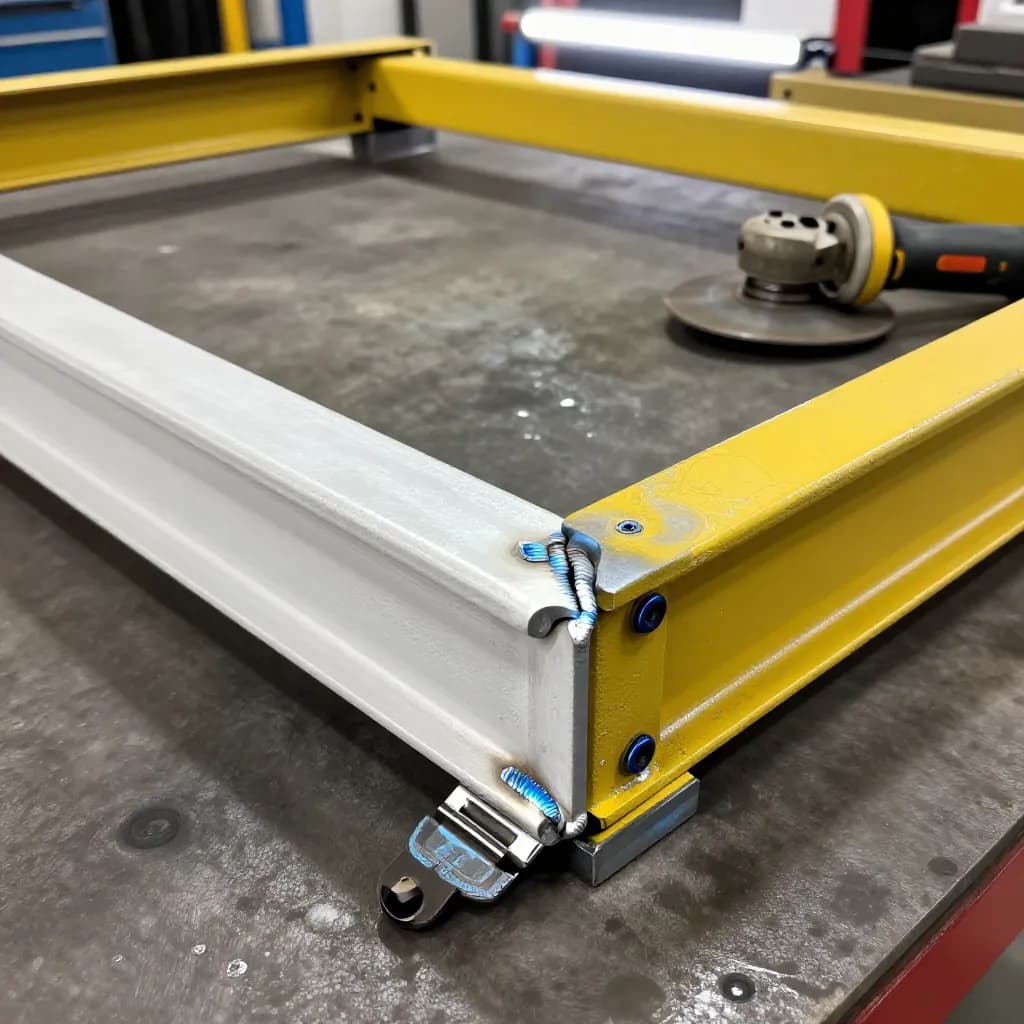
Welding creates a unique set of surface conditions that challenge powder coating adhesion and appearance. The weld zone itself contains fused metal with a different microstructure and surface chemistry than the parent material. The heat-affected zone (HAZ) surrounding the weld has altered metallurgy and surface oxides. Weld spatter — droplets of molten metal ejected during welding — adheres to adjacent surfaces and creates raised defects that telegraph through the coating. And the thermal distortion caused by welding can create gaps, misalignments, and stress concentrations that affect both coating coverage and long-term performance.
Ready to Start Your Project?
From one-off customs to 15,000-part production runs — get precise pricing in 24 hours.
On This Page
Welded Assemblies: Where Fabrication Quality Meets Coating Performance
Despite these challenges, powder coating is the ideal finishing technology for welded assemblies. Its ability to build thick, uniform films that bridge minor surface irregularities, combined with its excellent adhesion to properly prepared steel and aluminum, makes it the standard choice for fabricated metal products worldwide.
The key to success is thorough preparation of the weld zone before coating. This article provides a detailed guide to weld preparation, HAZ treatment, spatter removal, and the special considerations that apply when coating multi-material welded assemblies.
Weld Spatter: Prevention, Removal, and Coating Impact
Weld spatter is the most visible and most common weld-related coating defect. These droplets of molten metal, ejected from the weld pool during MIG, flux-cored, and stick welding processes, adhere to the parent material surface adjacent to the weld and create raised bumps that are difficult to coat uniformly and impossible to hide under a smooth powder coating finish.
Spatter prevention is always preferable to spatter removal. Optimizing welding parameters — wire feed speed, voltage, shielding gas composition, and travel speed — minimizes spatter generation. Short-circuit transfer MIG welding produces more spatter than spray transfer or pulsed MIG modes, so selecting the appropriate transfer mode for the joint configuration reduces spatter significantly. Anti-spatter compounds applied to the workpiece surface before welding prevent spatter adhesion, making subsequent removal much easier.
When spatter is present, it must be removed before powder coating. Loosely adhered spatter can be removed by scraping, chipping, or wire brushing. Firmly adhered spatter — which has metallurgically bonded to the parent material surface — requires grinding or abrasive blasting for removal. The goal is a smooth surface free of raised defects that would telegraph through the coating.
The impact of residual spatter on coating quality is significant. Each spatter droplet creates a raised point that attracts excessive powder buildup on its peak while the surrounding area receives normal or thin coverage. After curing, the spatter bump is visible through the coating as a raised defect, and the thin coating at the base of the bump is vulnerable to chipping and corrosion. For visible surfaces where appearance is important, 100% spatter removal is mandatory.
For structural and industrial applications where appearance is secondary to corrosion protection, minor residual spatter may be acceptable provided the coating covers the spatter completely without holidays or thin spots. The acceptance criteria for residual spatter should be defined in the coating specification and agreed between the fabricator and the coating applicator before production begins.
Anti-spatter compounds themselves can cause coating defects if not properly removed. Silicone-based anti-spatter sprays are particularly problematic — even trace silicone residues cause cratering and fisheye defects in powder coatings. Water-based or ceramic-based anti-spatter compounds are preferred for parts that will be powder coated, as they are easier to remove during the standard alkaline cleaning process.
Heat-Affected Zone Treatment and Weld Oxide Removal
The heat-affected zone surrounding a weld undergoes metallurgical changes and surface oxidation that affect coating adhesion and corrosion resistance. Proper treatment of the HAZ is essential for long-term coating performance, particularly in corrosive environments.
On carbon steel, the HAZ develops a thick oxide scale (heat tint) that ranges from straw yellow to dark blue-purple depending on the peak temperature reached during welding. This oxide layer is thicker and less adherent than the mill scale on the parent material, and it must be removed before coating. Abrasive blasting is the most effective removal method, and the blast cleaning specification for the weld zone should be at least as stringent as for the parent material — typically SSPC-SP 6 (Commercial Blast) or SSPC-SP 10 (Near-White Blast).
On stainless steel, the HAZ develops a chromium-depleted zone where the protective chromium oxide passive layer has been disrupted by the welding heat. This sensitized zone is susceptible to intergranular corrosion and must be treated to restore corrosion resistance before coating. Pickling with a mixture of nitric and hydrofluoric acid (per ASTM A380) dissolves the chromium-depleted layer and allows a new passive layer to form. Alternatively, mechanical removal by grinding or abrasive blasting removes the affected layer.
On aluminum, the HAZ experiences overaging of the precipitation-hardened microstructure (in heat-treatable alloys like 6061-T6), resulting in reduced strength and altered surface chemistry. The surface oxide in the HAZ is thicker and more porous than the natural aluminum oxide on unaffected material, and it may contain welding fume deposits and flux residues (if flux-cored or gas-welded). Chemical cleaning with alkaline or acid etchants removes the contaminated oxide layer and prepares the surface for conversion coating.
Weld flux residues from stick welding (SMAW), submerged arc welding (SAW), or flux-cored arc welding (FCAW) are highly hygroscopic and corrosive if left on the surface. These residues must be completely removed by chipping, wire brushing, and alkaline cleaning before coating. Even small amounts of residual flux trapped in weld undercuts or at the weld toe can absorb moisture and initiate corrosion beneath the coating.
The weld bead profile affects coating coverage. Convex weld beads with sharp toes create stress concentrations in the coating at the weld-to-parent-material transition. Grinding the weld bead to a smooth, slightly convex or flush profile improves coating coverage and reduces the risk of coating cracking at the weld toe under mechanical loading.
Multi-Material Welded Assemblies
Modern fabrication increasingly involves welded assemblies that combine different materials — carbon steel with stainless steel, steel with aluminum (in mechanical joints), or different grades of the same material. These multi-material assemblies present specific pretreatment and coating challenges that must be addressed for reliable coating performance.
Carbon steel welded to stainless steel is common in industrial equipment where corrosion-resistant stainless steel is used for process-contact surfaces while carbon steel provides structural support. The pretreatment challenge is that the optimal cleaning and conversion coating chemistry differs for each material. Alkaline cleaning is compatible with both materials, but acid pickling solutions that are appropriate for carbon steel (phosphoric or hydrochloric acid) can damage the passive layer on stainless steel, while stainless steel pickling solutions (nitric-hydrofluoric acid) are too aggressive for carbon steel.
The solution for mixed carbon-stainless assemblies is typically a compromise pretreatment that is acceptable for both materials. Alkaline cleaning followed by a mild phosphoric acid treatment and iron phosphate conversion coating provides adequate preparation for both substrates. Alternatively, the assembly can be selectively treated — masking the stainless steel during carbon steel pickling and vice versa — though this adds significant labor and complexity.
Galvanic corrosion at dissimilar metal joints is a concern that the coating must address. When carbon steel is welded or mechanically joined to stainless steel or aluminum, the dissimilar metals create a galvanic cell in the presence of an electrolyte (moisture). The coating must provide a continuous barrier over the joint area to prevent electrolyte contact with both metals simultaneously. Any coating defect at a dissimilar metal joint will initiate accelerated galvanic corrosion of the less noble metal.
Assemblies that combine welded steel structures with bolted aluminum or zinc-coated components require careful sequencing of the coating process. The steel structure may be coated first, then the aluminum or zinc components are attached. Alternatively, the entire assembly is coated after mechanical assembly, but the pretreatment must be compatible with all materials present.
Thermal expansion differences between dissimilar materials in a welded assembly can stress the coating at the joint during temperature cycling. The coating must have sufficient flexibility to accommodate the differential expansion without cracking. Flexible powder coating formulations with elongation values of 5% or greater are recommended for multi-material assemblies that will experience significant temperature variations in service.
Weld Joint Design for Optimal Coating Performance
The design of weld joints significantly affects the ability to achieve uniform, defect-free powder coating on the finished assembly. Designers who consider coating requirements during the joint design phase can eliminate many of the preparation and application challenges that arise with poorly designed joints.
Continuous welds are preferred over intermittent (stitch) welds for coated assemblies. Intermittent welds leave gaps between weld segments where moisture and contaminants can accumulate and where the coating bridges an unsupported gap. These bridged areas are vulnerable to cracking under mechanical stress or thermal cycling, creating pathways for corrosion to reach the underlying joint. Where intermittent welding is structurally sufficient, sealing the gaps between welds with a continuous seal weld or adhesive before coating prevents moisture entrapment.
Lap joints create crevices between the overlapping plates that are impossible to coat internally and are prone to crevice corrosion. For coated assemblies in corrosive environments, butt joints or fillet joints that eliminate crevices are preferred. When lap joints are unavoidable, sealing the joint edges with weld or sealant before coating prevents moisture ingress into the crevice.
Internal corners and tight radii at weld joints are difficult to coat uniformly due to the Faraday cage effect. Designing joints with minimum internal radii of 3-5 mm improves powder penetration into corners. Where sharp internal corners are unavoidable, the weld bead itself can serve as a radius that improves coating coverage at the joint.
Access for blasting and coating must be considered during assembly design. Enclosed box sections, narrow channels, and deep recesses that cannot be reached by blast media or powder spray will have inadequate surface preparation and coating coverage. Providing access holes for blasting and coating — or designing the assembly to be coated before final closure welding — ensures that all surfaces receive adequate treatment.
Weld-on brackets, gussets, and stiffeners should be designed with drainage in mind. Horizontal surfaces that trap pretreatment chemicals or rinse water create coating defects and corrosion initiation points. Orienting brackets to allow drainage, or providing drain holes in enclosed sections, prevents chemical entrapment during the pretreatment process.
The weld sequence can affect coating quality by controlling distortion. Welding sequences that minimize thermal distortion produce assemblies with better fit-up and fewer gaps that would require filling before coating. Tack welding the entire assembly before completing full welds distributes heat more evenly and reduces distortion.
Surface Preparation Sequences for Welded Assemblies
The surface preparation sequence for welded assemblies must address the diverse surface conditions present on a single part — mill scale on hot-rolled steel, clean surfaces on cold-rolled or laser-cut components, weld oxide and spatter in the weld zone, and potentially different materials at different locations on the assembly.
The recommended preparation sequence for carbon steel welded assemblies begins with mechanical preparation: grinding weld beads to the specified profile, removing spatter by grinding or chipping, and deburring sharp edges. This mechanical work is performed before any chemical treatment because grinding and chipping generate debris that would contaminate the cleaning solution.
Abrasive blast cleaning follows mechanical preparation. For assemblies with mixed surface conditions (mill scale on some areas, clean laser-cut surfaces on others), blasting to a uniform standard — typically SSPC-SP 6 or SP 10 — creates a consistent surface condition across the entire assembly. The blast profile of 40-75 microns provides mechanical anchoring for the coating on all surfaces.
Alkaline cleaning removes any remaining oils, greases, and water-soluble contaminants. For assemblies that have been blasted, the cleaning step also removes blast dust and any residual anti-spatter compound. Spray cleaning at 55-65°C with alkaline detergent, followed by clean water rinsing, is standard.
Conversion coating — iron phosphate for general industrial applications, zinc phosphate for demanding corrosion environments — provides the adhesion-promoting layer for powder coating. The conversion coating must form uniformly across all surfaces of the assembly, including the weld zone where the surface chemistry differs from the parent material. Process parameters (concentration, temperature, contact time) may need adjustment to ensure adequate conversion coating weight on both weld metal and parent material.
Drying after conversion coating must be thorough, particularly for assemblies with enclosed sections, lap joints, or horizontal surfaces where water can pool. Residual moisture trapped in joints or recesses will cause blistering and adhesion failure when the assembly enters the curing oven. Forced-air drying at 100-120°C for sufficient time to evaporate all trapped moisture is essential.
The time between surface preparation and powder application should be minimized to prevent flash rusting, particularly in humid environments. For carbon steel assemblies, coating should occur within 4-8 hours of preparation. If longer delays are unavoidable, a temporary protective treatment (such as a thin conversion coating or rust inhibitor) can extend the preparation-to-coating window.
Common Defects and Troubleshooting for Welded Assembly Coating
Coating defects on welded assemblies often trace directly to weld-related causes. Understanding the relationship between weld conditions and coating defects enables rapid diagnosis and corrective action.
Pinholes and bubbles along the weld line indicate outgassing from the weld zone. Weld porosity (gas pockets trapped in the weld metal), flux inclusions, and moisture absorbed into porous weld defects all release gas during the curing cycle. The solution is improved weld quality (reducing porosity through proper welding technique and shielding gas coverage) and, for existing assemblies, a degas bake at 230-260°C before powder application.
Coating delamination at the weld toe — the transition between the weld bead and the parent material — indicates inadequate surface preparation in this critical zone. The weld toe is a stress concentration point where the coating is most vulnerable to cracking and peeling. Thorough blasting of the weld toe area, grinding to a smooth transition profile, and ensuring adequate conversion coating coverage at the transition all reduce the risk of toe delamination.
Color variation between the weld zone and parent material can occur because the different surface chemistries and textures of weld metal and parent material affect powder flow, leveling, and gloss during cure. The weld zone may appear slightly different in color or texture even when the same powder is applied uniformly. Thorough blasting to create a uniform surface texture across both zones minimizes this effect.
Cracking at weld joints during service indicates that the coating lacks sufficient flexibility to accommodate the stress concentrations and thermal movements at the joint. Specifying a more flexible powder formulation, increasing the weld toe radius by grinding, or reducing the coating thickness at the joint (which increases flexibility) can resolve cracking issues.
Corrosion initiation at weld joints despite apparently intact coating suggests moisture entrapment in joint crevices, inadequate conversion coating in the weld zone, or coating holidays at complex joint geometries. Improving joint design to eliminate crevices, verifying conversion coating coverage on weld metal, and performing holiday detection on coated joints identifies and addresses these root causes.
For fabricators experiencing persistent weld-related coating defects, a systematic approach — coating test assemblies with controlled weld conditions and evaluating the results — identifies the specific weld parameters and preparation steps that produce acceptable coating quality. This process qualification approach is more effective than ad hoc troubleshooting on production assemblies.
Frequently Asked Questions
How should weld spatter be removed before powder coating?
Loosely adhered spatter is removed by scraping or wire brushing. Firmly bonded spatter requires grinding or abrasive blasting. For visible surfaces, 100% spatter removal is mandatory. Prevention is preferable — optimizing welding parameters, using pulsed MIG transfer modes, and applying water-based anti-spatter compounds minimize spatter generation.
Do heat-affected zones need special treatment before coating?
Yes. The HAZ develops thick oxide scale and altered surface chemistry that must be treated. On carbon steel, abrasive blasting to SSPC-SP 6 or SP 10 removes HAZ oxides. On stainless steel, acid pickling per ASTM A380 restores the passive layer. On aluminum, chemical etching removes contaminated oxide. Weld flux residues must be completely removed from all materials.
Why does powder coating crack at weld joints?
Cracking at weld joints results from stress concentrations at the weld toe, thermal expansion differences between weld and parent metal, and insufficient coating flexibility. Solutions include grinding the weld toe to a smooth radius, specifying flexible powder formulations (5%+ elongation), and ensuring adequate but not excessive coating thickness at the joint.
How should multi-material welded assemblies be pretreated?
Multi-material assemblies require compromise pretreatment compatible with all materials present. Alkaline cleaning followed by mild phosphoric acid and iron phosphate conversion coating works for carbon steel-stainless steel combinations. Alternatively, selective treatment with masking can optimize preparation for each material but adds significant labor.
What weld joint designs are best for powder coating?
Continuous welds are preferred over intermittent welds to prevent moisture entrapment. Butt and fillet joints are preferred over lap joints to eliminate crevices. Internal corners should have minimum 3-5 mm radii for powder penetration. Access holes for blasting and coating should be provided in enclosed sections, and drainage provisions prevent chemical entrapment.
Ready to Start Your Project?
From one-off customs to 15,000-part production runs — get precise pricing in 24 hours.