Vending machines are among the most exposed commercial equipment in daily life. Positioned in lobbies, break rooms, outdoor plazas, transit stations, and factory floors, they endure constant human contact, temperature fluctuations, UV exposure, cleaning chemicals, and occasional vandalism. The exterior finish must maintain brand appearance and structural protection under conditions that would rapidly degrade conventional liquid paint.
Commercial
Powder Coating for Vending Machines: Durable Finishes for High-Traffic Commercial Equipment
Sundial Powder Coating·April 22, 2026·11 min
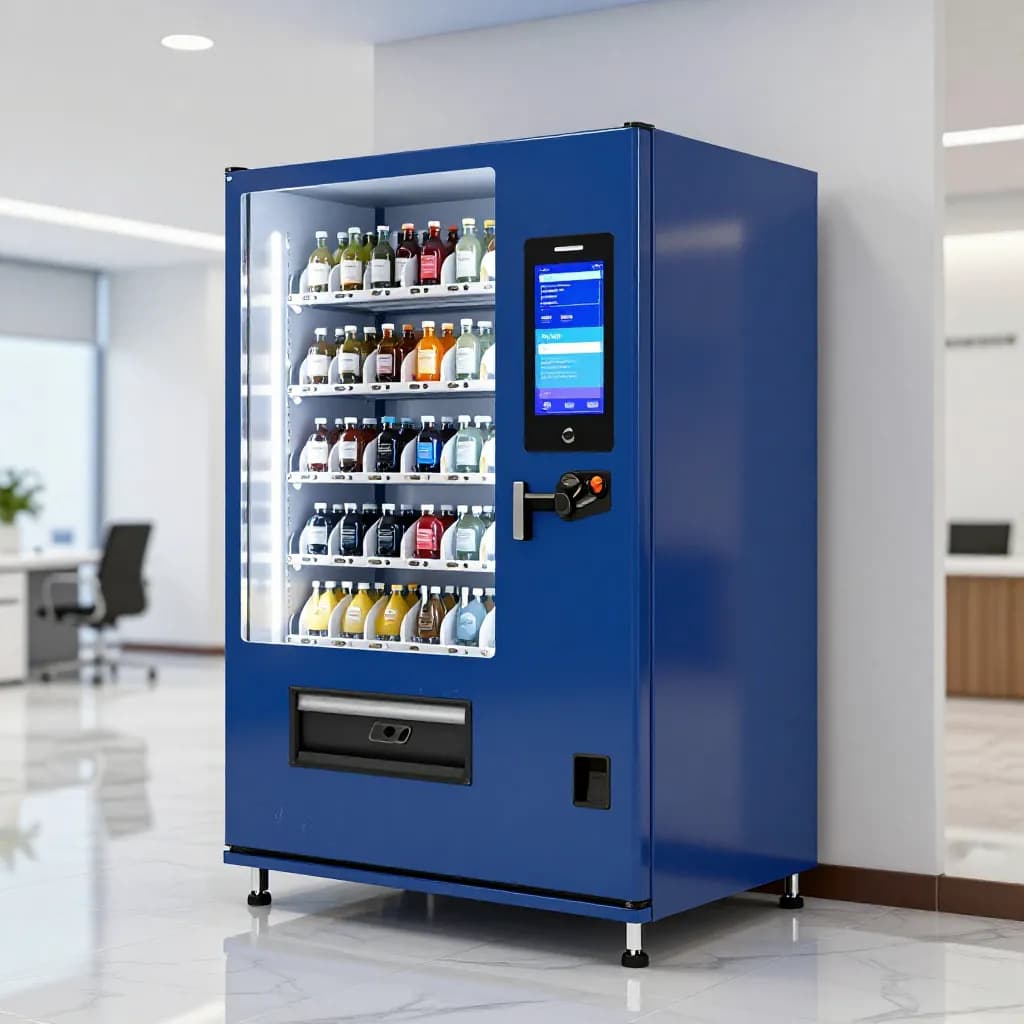
Powder coating has been the dominant finishing technology for vending machine enclosures since the 1990s, replacing the enamel and alkyd paint systems that preceded it. The transition was driven by powder coating's superior durability, environmental compliance, and production efficiency. A single-coat powder application achieves 60-80 microns of dense, cross-linked film that outperforms multi-coat liquid systems in scratch resistance, chemical resistance, and color retention.
Ready to Start Your Project?
From one-off customs to 15,000-part production runs — get precise pricing in 24 hours.
On This Page
Why Vending Machines Rely on Powder Coating
The global vending machine market encompasses beverage dispensers, snack machines, combination units, coffee machines, and specialized dispensers for everything from electronics to fresh food. Each category has specific coating requirements, but all share the fundamental need for a finish that withstands years of public interaction while maintaining the brand identity that drives consumer engagement. Major manufacturers including Crane Merchandising Systems, SandenVendo, Azkoyen, and Fuji Electric specify powder coating as their standard exterior finish.
Substrate Preparation for Vending Machine Enclosures
Vending machine enclosures are predominantly fabricated from cold-rolled steel (CRS) in gauges ranging from 18 to 22 gauge (1.2-0.8 mm). The sheet steel is cut, formed, welded, and assembled into cabinet panels, doors, and structural frames before entering the coating line. Proper substrate preparation is critical because vending machines are expected to perform for 7-12 years in service with minimal coating maintenance.
The pretreatment process for vending machine steel follows a multi-stage spray or immersion sequence. Alkaline cleaning at 50-65°C removes forming oils, welding residues, and handling contamination. Two water rinse stages follow to prevent chemical carryover. Iron phosphate or zinc phosphate conversion coating creates a crystalline layer that promotes coating adhesion and provides a secondary corrosion barrier. A final seal rinse with chromium-free or zirconium-based chemistry enhances corrosion protection and improves powder coating adhesion.
Zinc phosphate pretreatment is preferred for vending machines destined for outdoor or semi-outdoor locations where moisture exposure is significant. The heavier zinc phosphate crystal structure (coating weight 2-4 g/m²) provides superior corrosion protection compared to iron phosphate (0.3-0.8 g/m²), justifying the additional process complexity and cost for equipment that must perform in uncontrolled environments.
Weld seam preparation deserves special attention. MIG and spot welds on vending machine cabinets create heat-affected zones with mill scale and spatter that resist chemical pretreatment. Mechanical preparation — grinding, sanding, or blasting of weld areas — is necessary to ensure uniform coating adhesion across the entire panel surface. Incomplete weld preparation is the most common cause of premature coating failure on vending machine enclosures.
Powder Chemistry and Performance Specifications
Vending machine manufacturers specify powder coating chemistries based on the intended deployment environment. Indoor machines in climate-controlled locations use different formulations than outdoor machines exposed to direct sunlight, rain, and temperature extremes.
TGIC-free superdurable polyester powders are the standard specification for vending machines deployed in outdoor or semi-outdoor locations. These formulations achieve less than 50% gloss retention loss after 2000 hours of accelerated weathering per ASTM G154 (UVA-340 cycle), ensuring that the machine's appearance remains acceptable throughout its service life. Color shift (Delta E) after weathering should not exceed 3.0 units for standard colors and 5.0 units for metallics and special effects.
Hybrid epoxy-polyester powders are used for indoor-only vending machines where UV exposure is minimal. These formulations offer excellent chemical resistance and mechanical properties at lower material cost than superdurable polyester. The epoxy component provides superior adhesion and corrosion resistance, while the polyester component contributes flexibility and overbake tolerance that simplifies production scheduling.
Mechanical performance specifications for vending machine coatings are demanding. Minimum requirements typically include pencil hardness of H-2H, direct impact resistance of 80 inch-pounds per ASTM D2794, reverse impact resistance of 40 inch-pounds, cross-cut adhesion of 4B-5B per ASTM D3359, and conical mandrel bend pass at 1/8 inch per ASTM D522. These specifications ensure the coating survives the mechanical stresses of transportation, installation, restocking, and daily use without chipping or cracking.
Salt spray resistance per ASTM B117 is specified at a minimum of 500 hours for indoor machines and 1000 hours for outdoor machines, with no blistering beyond the scribe line and corrosion creep not exceeding 3 mm. Humidity resistance per ASTM D2247 at 100% relative humidity and 38°C is typically specified at 500-1000 hours without blistering or adhesion loss.
Anti-Graffiti and Vandal-Resistant Coating Systems
Vending machines in public locations are frequent targets for graffiti, sticker application, and intentional surface damage. Anti-graffiti powder coating systems allow operators to remove graffiti without damaging the underlying finish, significantly reducing maintenance costs and preserving brand appearance.
Sacrificial anti-graffiti coatings work by providing a clear topcoat that is removed along with the graffiti during cleaning, then reapplied. While effective, this approach requires ongoing maintenance and reapplication, making it less practical for vending machines that may be serviced infrequently. Permanent anti-graffiti powder coatings are preferred for vending applications because they allow repeated graffiti removal without reapplication of the protective layer.
Permanent anti-graffiti powder coatings achieve their performance through ultra-low surface energy, typically below 20 mN/m. This is accomplished by incorporating fluoropolymer or silicone-modified additives into the powder formulation. The low surface energy prevents paint, ink, and adhesive from bonding to the coating surface, allowing removal with mild solvents or even warm soapy water. These coatings can withstand 50 or more graffiti removal cycles without significant degradation of the anti-graffiti properties.
Vandal-resistant coating specifications also address scratch and gouge resistance. High-hardness polyester formulations with ceramic or silica additives achieve pencil hardness ratings of 3H-4H, making it difficult to scratch or engrave the surface with keys, coins, or other common implements. The combination of anti-graffiti properties and enhanced hardness provides comprehensive vandal resistance for vending machines in high-risk locations such as transit stations, parking structures, and outdoor public spaces.
For machines in extremely high-vandalism locations, a two-coat system consisting of a corrosion-resistant primer and a high-hardness anti-graffiti topcoat provides the ultimate protection. The primer ensures that even if the topcoat is breached by severe vandalism, the substrate remains protected from corrosion until repairs can be made.
Brand Identity and Custom Color Matching
Vending machines are powerful brand ambassadors, and the powder coating finish is the primary vehicle for brand expression. Coca-Cola red, Pepsi blue, and the distinctive color schemes of other major brands must be reproduced with absolute consistency across thousands of machines manufactured over multiple years and production facilities.
Custom color development for vending machine manufacturers begins with a physical color standard — typically a painted metal panel or plastic chip provided by the brand owner. The powder coating supplier formulates a match using spectrophotometric analysis, targeting Delta E values below 0.5 for critical brand colors. Multiple formulation iterations may be required to achieve an acceptable match, particularly for colors with metallic, pearlescent, or high-chroma characteristics that are difficult to reproduce in powder coating.
Color consistency in production is maintained through rigorous batch-to-batch quality control. Each production batch of powder is measured against the approved master standard using a multi-angle spectrophotometer (for metallic and effect colors) or a standard 0°/45° geometry instrument (for solid colors). Batch acceptance criteria are typically Delta E ≤ 1.0 for solid colors and Delta E ≤ 1.5 for metallics, with tighter tolerances for critical brand colors.
Graphics and branding elements on vending machines are typically applied as vinyl decals or screen-printed overlays on top of the powder-coated base color. The powder coating surface must provide adequate adhesion for these secondary graphics while maintaining a smooth, defect-free appearance in areas not covered by graphics. Surface energy of the cured powder coating should be above 38 mN/m to ensure reliable adhesion of pressure-sensitive vinyl graphics without the need for adhesion promoters.
Multi-color powder coating is technically feasible but rarely used on vending machines due to the masking complexity and production cost. Instead, manufacturers apply a single base color and rely on applied graphics for multi-color brand expression.
Production Efficiency and Coating Line Design
Vending machine manufacturing is a high-volume operation where coating line efficiency directly impacts production cost and throughput. Major manufacturers produce thousands of units per month, requiring coating systems optimized for speed, consistency, and minimal waste.
Automatic electrostatic spray systems with reciprocating or robotic guns are standard for vending machine coating lines. The large, flat panel geometry of vending machine cabinets is well-suited to automatic application, with transfer efficiency typically exceeding 70% on first-pass application. Reclaim systems collect overspray powder for reuse, bringing total material utilization to 95-98% — a significant advantage over liquid paint systems that achieve only 40-65% transfer efficiency.
Conveyor line speed is typically set at 3-5 meters per minute for vending machine panels, with cure ovens sized to provide 15-20 minutes at metal temperature of 180-200°C depending on the powder chemistry. Infrared pre-gel zones before the convection cure oven accelerate the initial melt and flow phase, improving surface finish quality and reducing overall cure time.
Color change efficiency is a critical consideration for vending machine coating lines that process multiple brand colors. Quick-color-change booth systems with automated gun purging, booth wall cleaning, and powder feed system flushing can achieve color changes in 10-15 minutes, compared to 30-60 minutes for conventional booth designs. This capability is essential for manufacturers producing machines for multiple brands on the same production line.
Quality control stations are positioned at key points along the coating line. Pre-coating inspection verifies substrate preparation quality. Post-application inspection checks for coverage, film thickness, and surface defects before parts enter the cure oven. Post-cure inspection evaluates final appearance, color, gloss, and film properties. Automated film thickness measurement using non-contact laser or thermal sensors provides 100% inspection capability that manual gauging cannot match.
Environmental Durability and Outdoor Performance
Outdoor vending machines face the full spectrum of environmental challenges: UV radiation, rain, humidity, temperature cycling, salt spray in coastal locations, and pollution in urban environments. The powder coating must maintain protective and aesthetic performance under these conditions for the machine's expected 7-12 year service life.
UV resistance is the primary concern for outdoor vending machines. Superdurable polyester powders incorporate UV absorbers (typically hydroxyphenyl benzotriazole or hydroxyphenyl triazine types) and hindered amine light stabilizers (HALS) that protect the polymer matrix from photodegradation. These stabilizers are consumed over time, so the formulation must contain sufficient stabilizer loading to provide protection throughout the expected service life. Accelerated weathering testing per ASTM G154 or ISO 16474-3 provides comparative data, but real-world Florida exposure testing per ASTM G7 remains the gold standard for predicting outdoor performance.
Temperature cycling causes thermal expansion and contraction of the steel substrate, generating stress in the powder coating film. In extreme climates, surface temperatures on dark-colored vending machines can range from -30°C to +80°C, creating thermal stress cycles that can cause cracking in brittle coatings. Flexible polyester formulations with glass transition temperatures (Tg) below the minimum expected service temperature maintain film integrity through these thermal cycles.
Moisture resistance is critical for outdoor machines, particularly at panel joints, fastener penetrations, and bottom edges where water can accumulate. The powder coating provides the primary moisture barrier, but design features such as drip edges, sealed joints, and adequate drainage are equally important. Coating specifications for outdoor machines typically require 1000+ hours of salt spray resistance per ASTM B117 and 1000+ hours of humidity resistance per ASTM D2247.
Coastal and marine environments add salt spray exposure that accelerates corrosion at any coating defect. Vending machines deployed within 5 km of the coast should specify zinc phosphate pretreatment, epoxy primer at 25-40 microns, and superdurable polyester topcoat at 60-80 microns for a total system thickness of 85-120 microns.
Frequently Asked Questions
How long does powder coating last on vending machines?
Powder coating on vending machines typically lasts 7-12 years depending on the deployment environment. Indoor machines in climate-controlled locations achieve the longest service life, while outdoor machines in harsh environments may require touch-up or recoating sooner. Superdurable polyester formulations provide the best outdoor longevity.
Can graffiti be removed from powder-coated vending machines?
Yes. Anti-graffiti powder coatings with ultra-low surface energy allow graffiti removal with mild solvents or warm soapy water. Permanent anti-graffiti formulations can withstand 50 or more removal cycles without degradation, making them ideal for vending machines in public locations prone to vandalism.
What powder coating is used for outdoor vending machines?
Outdoor vending machines use TGIC-free superdurable polyester powder coatings with UV absorbers and HALS stabilizers. These formulations maintain color and gloss through years of sun exposure, achieving less than 50% gloss loss after 2000 hours of accelerated weathering per ASTM G154.
How is brand color consistency maintained across vending machines?
Brand color consistency is maintained through spectrophotometric color matching with Delta E tolerances below 1.0 for solid colors. Each powder batch is measured against an approved master standard before production use, and multi-angle spectrophotometers verify metallic and effect colors from multiple viewing angles.
Is powder coating more durable than liquid paint on vending machines?
Yes. Powder coating achieves 60-80 microns in a single coat versus 25-40 microns for liquid paint, providing a thicker, denser protective film. Powder coating also offers superior scratch resistance, chemical resistance, and UV stability, with material utilization rates of 95-98% compared to 40-65% for liquid paint.
Ready to Start Your Project?
From one-off customs to 15,000-part production runs — get precise pricing in 24 hours.