Valve bodies are among the most demanding substrates in industrial powder coating. These components regulate the flow of fluids and gases across virtually every process industry — from petrochemical refineries and power generation plants to water treatment facilities and pharmaceutical manufacturing. The coating applied to a valve body must withstand the same chemical environment, temperature extremes, and mechanical stresses as the valve itself, often for service lives measured in decades.
Industrial
Powder Coating for Valve Bodies: Protection for Process Industry Components
Sundial Powder Coating·April 23, 2026·12 min
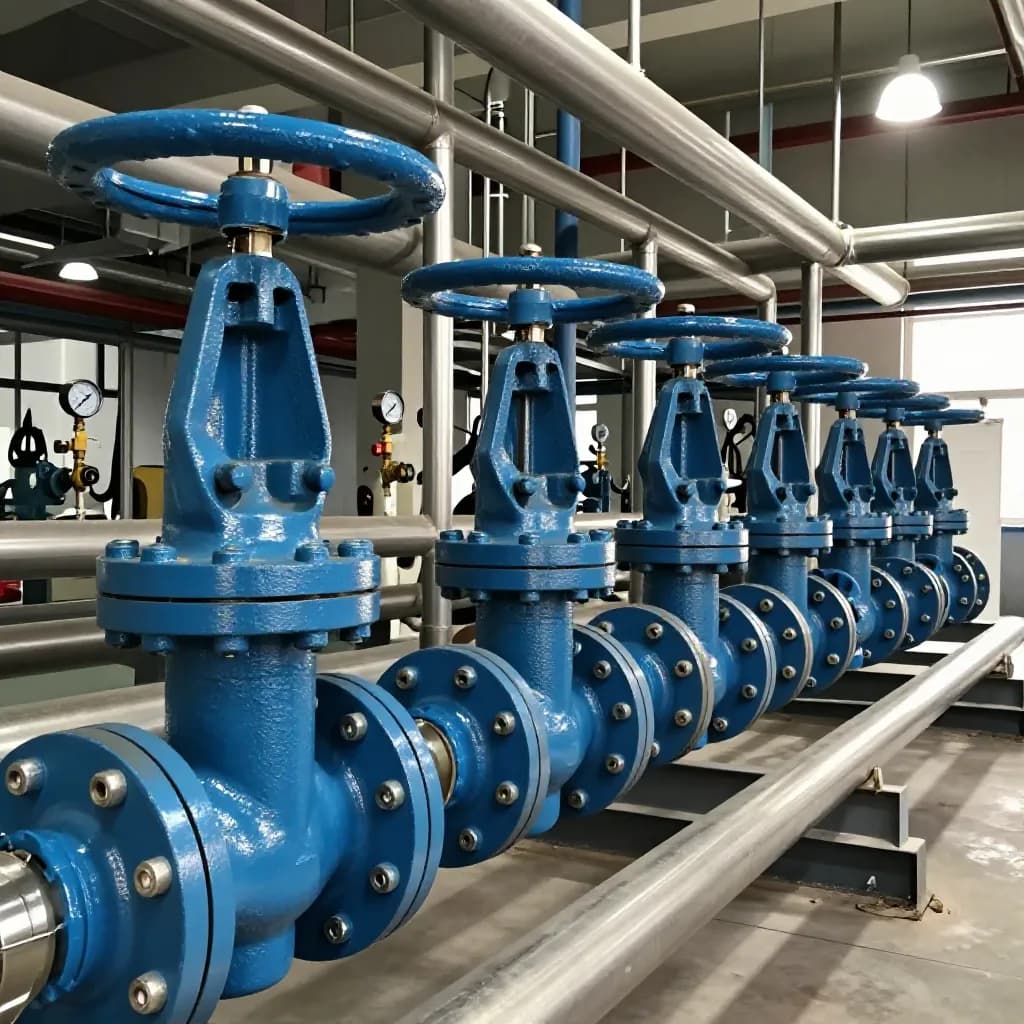
The challenge begins with the substrate. Valve bodies are typically manufactured from cast iron (gray iron, ductile iron), cast steel, stainless steel, or specialty alloys depending on the service conditions. Cast substrates present inherent surface porosity — microscopic voids and gas pockets trapped during the casting process — that can cause coating defects if not properly addressed during pretreatment and application.
Ready to Start Your Project?
From one-off customs to 15,000-part production runs — get precise pricing in 24 hours.
On This Page
Valve Bodies: Critical Components Requiring Engineered Coatings
Beyond substrate challenges, valve body geometry is complex. Internal passages, bonnet flanges, packing glands, and body-to-bonnet bolting surfaces all require careful consideration during the coating process. Some surfaces must be coated for corrosion protection, while others must remain uncoated to maintain dimensional tolerances for sealing and assembly.
Powder coating has become the preferred finishing technology for valve bodies across a wide range of applications, replacing traditional liquid paint systems that struggled with the porosity, geometry, and performance demands of these components. This article examines the specific requirements, challenges, and best practices for powder coating valve bodies in process industry service.
Cast Iron Valve Bodies: Managing Porosity and Outgassing
Cast iron is the most common material for valve bodies in water distribution, HVAC, and general industrial service. Gray iron (ASTM A126) and ductile iron (ASTM A536) valve bodies offer excellent pressure-containing capability and machinability, but their cast microstructure presents the single greatest challenge for powder coating: outgassing.
During the casting process, gases become trapped in the iron matrix, and the surface contains microscopic pores that absorb moisture, oils, and contaminants during machining and storage. When a cast iron valve body enters the curing oven at 180-200°C, these trapped gases and volatiles expand and escape through the coating film, creating pinholes, craters, and bubbles that compromise both appearance and corrosion protection.
The industry-standard solution is a pre-bake or degas cycle. Before powder application, cast iron valve bodies are heated to 230-260°C — above the curing temperature of the powder — and held at temperature for 15-30 minutes to drive out trapped gases and volatiles. The parts are then cooled to the optimal application temperature (typically 20-40°C for electrostatic application) before powder is applied and the assembly enters the curing oven for a normal cure cycle.
Alternatively, some applicators use a hot-coat technique where powder is applied to the preheated casting immediately after the degas cycle, while the part is still at 150-180°C. The powder melts on contact, flows into surface pores, and begins to gel before significant outgassing can occur. This technique requires careful temperature control and rapid application but can produce excellent results on heavily porous castings.
Powder formulations designed for cast substrates incorporate degassing additives — typically benzoin or similar compounds — that allow trapped gases to escape through the molten film without leaving permanent defects. These formulations are standard for valve body coating and should always be specified when coating cast iron or cast steel components.
Steel Valve Bodies and High-Temperature Service
Cast and forged steel valve bodies serve in the most demanding process industry applications — high-pressure steam systems, hydrocarbon processing, and power generation — where temperatures and pressures exceed the capabilities of cast iron. Powder coating these components requires formulations that maintain their protective properties at sustained operating temperatures well above ambient.
Standard polyester powder coatings are suitable for valve bodies operating at continuous temperatures up to 120°C, covering a wide range of water, HVAC, and low-temperature process applications. For intermediate temperatures of 120-200°C, silicone-modified polyester or epoxy-polyester hybrid formulations provide improved heat resistance while maintaining acceptable corrosion protection and mechanical properties.
For high-temperature service above 200°C, silicone-based powder coatings are the primary option. These formulations withstand continuous operating temperatures of 400-600°C, making them suitable for steam valve bodies, exhaust system components, and furnace-related equipment. The trade-off is reduced corrosion protection compared to epoxy or polyester systems, as silicone coatings are more permeable to moisture. In many high-temperature applications, however, the operating temperature itself inhibits aqueous corrosion, making the heat resistance more critical than barrier properties.
Ceramic-filled powder coatings represent the extreme end of thermal performance, withstanding temperatures above 600°C for applications such as valve bodies in flue gas systems and thermal processing equipment. These specialized formulations require higher curing temperatures (typically 300-350°C) and produce a matte, textite finish rather than the smooth gloss of conventional powder coatings.
For steel valve bodies in corrosive chemical service at moderate temperatures, fusion-bonded epoxy provides the best combination of chemical resistance and barrier properties. FBE coatings resist a wide range of acids, alkalis, solvents, and process chemicals, making them the standard choice for valve bodies in chemical processing, pulp and paper, and mining applications.
Chemical Resistance Requirements by Industry Sector
The chemical resistance requirements for powder-coated valve bodies vary dramatically across industry sectors, and selecting the correct powder chemistry is essential for long-term performance. A coating that performs excellently in a water treatment plant may fail catastrophically in a chemical processing facility.
In the petrochemical industry, valve bodies are exposed to crude oil, refined hydrocarbons, hydrogen sulfide, carbon dioxide, and various process chemicals. Fusion-bonded epoxy coatings are the standard choice, offering excellent resistance to aliphatic and aromatic hydrocarbons, moderate acids and alkalis, and the cathodic protection systems used on buried or submerged installations. For valve bodies in sour gas service (containing hydrogen sulfide), coating integrity is critical because H2S promotes sulfide stress cracking in susceptible steel alloys — the coating serves as both a corrosion barrier and a means of preventing direct contact between the corrosive medium and the metal substrate.
Water and wastewater treatment facilities expose valve bodies to chlorinated water, ozone, ferric chloride, sodium hypochlorite, sulfuric acid, and sodium hydroxide — often in the same plant. Novolac epoxy powder coatings provide superior chemical resistance compared to standard bisphenol-A epoxy formulations, with enhanced resistance to strong oxidizers and concentrated acids. Film thicknesses of 300-500 microns are typical for immersion service in chemical dosing and treatment systems.
The food and beverage industry requires coatings that resist organic acids, cleaning chemicals (caustic soda, nitric acid, peracetic acid), and steam sterilization cycles. FDA-compliant powder coatings meeting 21 CFR 175.300 are available for incidental food contact applications, though direct food contact surfaces on valve internals typically use stainless steel or specialized linings rather than powder coating.
Mining and mineral processing present perhaps the most aggressive combination of chemical attack and mechanical abrasion. Valve bodies handling slurries, leach solutions, and process water require coatings that resist both chemical degradation and erosive wear from suspended solids.
Masking and Dimensional Control for Valve Assemblies
Valve bodies contain numerous critical surfaces where coating buildup would interfere with assembly, sealing, or operation. Effective masking is essential to protect these surfaces while ensuring that all corrosion-prone areas receive adequate coating coverage.
Flange faces are the most obvious masking requirement. Raised-face, ring-type joint, and flat-face flange configurations all require precise gasket seating surfaces free of coating material. Standard practice is to mask flange faces with high-temperature silicone discs or custom-machined metal masks that protect the seating area and bolt holes while allowing coating of the flange outer diameter and back face.
Body-to-bonnet joints require similar attention. The machined surfaces where the bonnet mates to the body must remain uncoated to maintain the metal-to-metal seal or gasket compression required for pressure containment. Packing gland areas, stem bores, and seat pockets are also masked to preserve dimensional tolerances critical for valve operation.
For threaded valve bodies (common in small-bore applications), internal threads must be protected from coating buildup that would prevent assembly. Expandable silicone plugs or precision-machined metal plugs are inserted into threaded ports before coating. The plugs must seal tightly enough to prevent powder infiltration during application while being easily removable after curing.
The masking process adds significant labor to valve body coating operations, and the cost of masking materials and fixtures is a meaningful component of the total finishing operation. For high-volume production, investment in custom masking fixtures — CNC-machined from aluminum or fabricated from silicone rubber — pays dividends through reduced labor time, improved consistency, and lower reject rates compared to manual masking with tape and plugs.
After coating and curing, all masking must be removed and masked surfaces inspected to verify that no coating has migrated onto critical sealing or assembly surfaces. Any coating encroachment on masked areas must be carefully removed without damaging the machined surface beneath.
Pretreatment Processes for Valve Body Substrates
Effective pretreatment is the foundation of durable powder coating performance on valve bodies, and the pretreatment process must be tailored to the substrate material, casting quality, and intended service environment.
For cast iron valve bodies, the pretreatment sequence typically begins with thermal degreasing or alkaline cleaning to remove machining oils, cutting fluids, and handling contamination. Solvent-based cleaning is increasingly restricted due to environmental regulations, making aqueous alkaline cleaners the standard choice. The cleaning stage must be thorough enough to remove oils from surface pores — a particular challenge with cast iron's inherent porosity.
Abrasive blasting follows cleaning for most industrial valve body applications. Steel grit blasting to SSPC-SP 6 (Commercial Blast Cleaning) or SSPC-SP 10 (Near-White Blast Cleaning) removes mill scale, casting skin, and surface oxides while creating the anchor profile needed for coating adhesion. Blast media selection matters — angular steel grit produces a sharper profile than round shot, and aluminum oxide is preferred for stainless steel substrates to avoid iron contamination that could initiate corrosion.
Chemical conversion coating follows blasting to enhance adhesion and provide an additional corrosion barrier. Iron phosphate is the standard conversion coating for general industrial valve bodies, producing a crystalline phosphate layer of 1-3 g/m² that improves coating adhesion and provides mild corrosion protection during the interval between pretreatment and coating. Zinc phosphate conversion coatings, producing heavier crystal layers of 5-15 g/m², are specified for valve bodies in aggressive environments where maximum underfilm corrosion resistance is required.
For valve bodies destined for immersion service or aggressive chemical environments, chromate-free pretreatments based on zirconium or titanium chemistry are increasingly specified as replacements for traditional chromate conversion coatings. These newer chemistries provide comparable adhesion promotion and corrosion protection without the environmental and health concerns associated with hexavalent chromium compounds.
Application Methods and Curing Considerations
The application of powder coating to valve bodies requires careful selection of equipment and parameters to achieve consistent coverage on complex three-dimensional geometries. Both electrostatic spray and fluidized bed methods are used, with the choice depending on valve size, production volume, and coating thickness requirements.
Electrostatic spray application is the most common method for valve bodies. Corona-charging guns operating at 60-80 kV provide good transfer efficiency on external surfaces, but the Faraday cage effect limits penetration into internal cavities and recessed areas. Reducing gun voltage to 30-50 kV and increasing air flow can improve internal coverage, though at the expense of transfer efficiency on external surfaces. Tribo-charging guns, which impart charge through friction rather than corona discharge, are less affected by Faraday cage geometry and often produce better results on complex valve body shapes.
Fluidized bed application is preferred for valve bodies requiring thick coatings (500+ microns) or complete internal and external coverage. The preheated valve body is immersed in a bed of fluidized powder, which melts on contact with the hot surface and builds a thick, uniform coating. This method is particularly effective for small to medium valve bodies in water and wastewater service, where internal corrosion protection is as important as external appearance.
Curing valve bodies presents thermal mass challenges similar to other heavy castings. A large gate valve body may weigh 50-200 kg, requiring extended oven dwell times to bring the entire mass to curing temperature. Oven profiling using thermocouples attached to the thickest and thinnest sections of the valve body establishes the minimum dwell time needed to achieve full cure throughout. Undercured coatings exhibit reduced chemical resistance, adhesion, and flexibility — deficiencies that may not become apparent until the valve enters service.
Conveyor speed, oven temperature, and part orientation must be optimized together. Valve bodies are typically hung from the bonnet flange or body lugs, with orientation chosen to minimize powder pooling in horizontal surfaces and ensure drainage of any condensation during the early stages of oven heating.
Testing, Certification, and Industry Acceptance
Powder-coated valve bodies must meet rigorous testing and certification requirements before acceptance for process industry service. The specific tests and acceptance criteria depend on the intended application, but a core set of performance evaluations applies across most industrial sectors.
Film thickness verification is the most basic acceptance test. Measurements are taken at multiple locations on each valve body using calibrated magnetic (for ferrous substrates) or eddy-current (for non-ferrous substrates) gauges. Minimum and maximum thickness requirements are defined by the applicable specification — typically 250-500 microns for FBE coatings in pipeline service, 60-120 microns for decorative polyester coatings, and 500-1000+ microns for fluidized bed applications.
Adhesion testing per ASTM D4541 (pull-off method) or ASTM D3359 (cross-cut method) verifies the bond between coating and substrate. For industrial valve bodies, pull-off adhesion values of 5-10 MPa are typical acceptance criteria, with cohesive failure within the coating preferred over adhesive failure at the interface.
Chemical resistance testing is critical for process industry valve bodies. ASTM D1308 (spot test method) or full immersion testing in the specific chemicals the valve will contact provides application-specific performance data. Standard test durations range from 24 hours for screening tests to 1000+ hours for qualification testing.
Salt spray testing per ASTM B117 remains a common accelerated corrosion test, though its correlation with real-world performance is limited. More representative cyclic corrosion tests such as ASTM G85 (Prohesion) or ISO 12944-6 cyclic testing are increasingly specified for valve bodies in outdoor or aggressive environments.
For valve bodies in regulated industries — nuclear power, pharmaceutical manufacturing, food processing — additional documentation requirements apply. Material certificates, batch traceability, cure verification records, and inspection reports must be maintained and provided to the end user as part of the valve's quality documentation package.
Frequently Asked Questions
How do you prevent outgassing defects when powder coating cast iron valve bodies?
Cast iron valve bodies require a pre-bake or degas cycle at 230-260°C for 15-30 minutes before powder application. This drives out trapped gases and moisture from the porous casting. Additionally, powder formulations containing degassing additives such as benzoin help gases escape through the molten film without leaving permanent defects.
What powder coating chemistry is best for high-temperature valve bodies?
For continuous service up to 120°C, standard polyester is suitable. Silicone-modified polyester handles 120-200°C. Silicone-based powder coatings withstand 400-600°C for steam and exhaust applications. Ceramic-filled formulations extend capability above 600°C for extreme thermal environments.
Which surfaces on a valve body must be masked during powder coating?
Critical masking areas include flange gasket faces, body-to-bonnet joint surfaces, packing gland areas, stem bores, seat pockets, and threaded ports. These surfaces require precise dimensional tolerances for sealing and assembly. Custom silicone or machined metal masks provide the most consistent protection.
What standards govern powder coating of valve bodies for water service?
Valve bodies for potable water service must meet NSF/ANSI 61 certification for drinking water contact safety. AWWA C550 covers protective interior coatings for valves and hydrants. Fusion-bonded epoxy coatings per AWWA C213 are commonly specified, with film thicknesses of 250-400 microns for immersion service.
Can powder-coated valve bodies withstand chemical immersion?
Yes, with the correct powder chemistry. Fusion-bonded epoxy and novolac epoxy formulations provide excellent resistance to acids, alkalis, hydrocarbons, and process chemicals in immersion service. Film thicknesses of 300-500 microns are typical, and chemical resistance testing per ASTM D1308 verifies performance against specific process fluids.
Ready to Start Your Project?
From one-off customs to 15,000-part production runs — get precise pricing in 24 hours.