Truck bumpers take more punishment than almost any other vehicle component. Whether you are running a heavy steel front bumper on a work truck or a tubular aluminum rear bumper on a weekend trail rig, the finish has to stand up to gravel impacts, road salt, mud, UV exposure, and the occasional brush with rocks and trees. Powder coating has become the dominant finish for aftermarket and custom truck bumpers because it delivers the thickness, hardness, and adhesion that these demanding conditions require.
Automotive
Powder Coating for Truck Bumpers: Steel vs Aluminum, Off-Road Protection, and Finish Options
Sundial Powder Coating·April 22, 2026·9 min
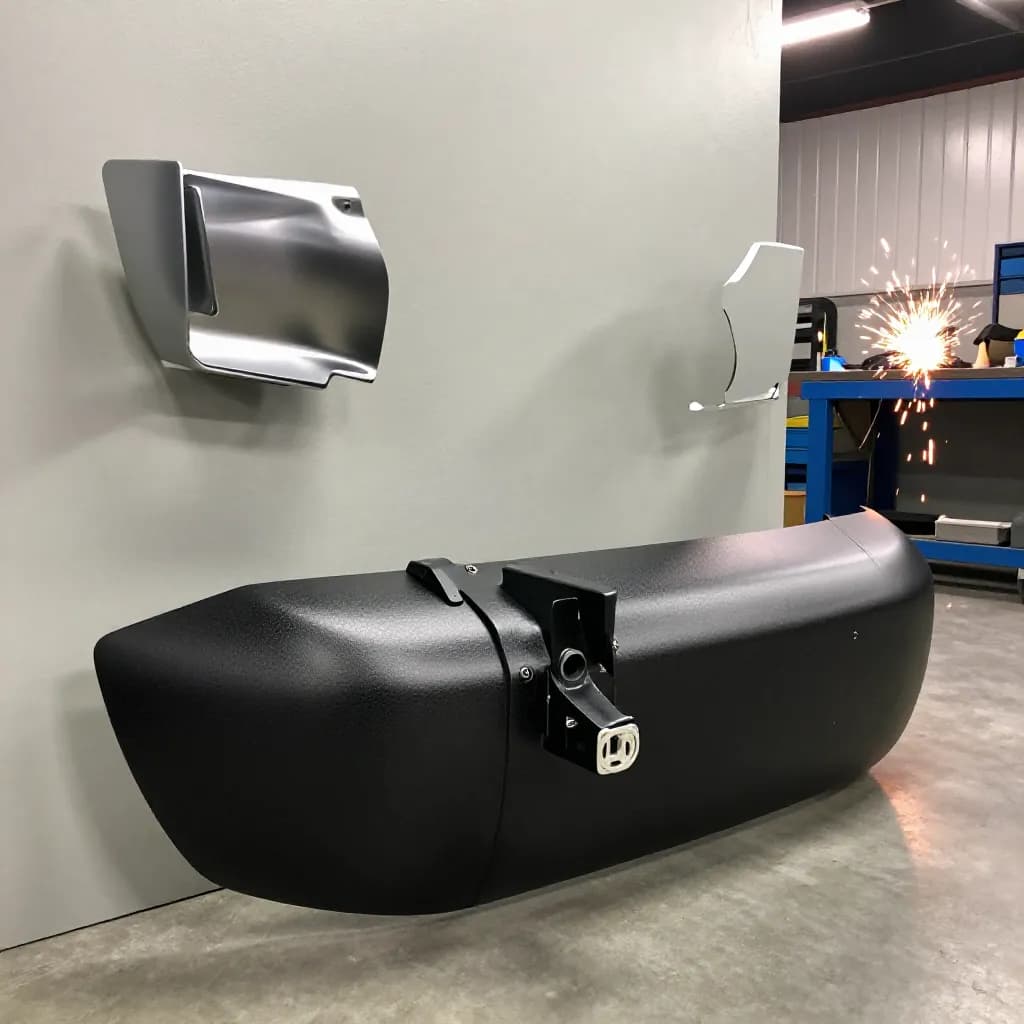
Unlike liquid paint, which typically builds to 25 to 50 microns per coat, powder coating achieves 60 to 120 microns in a single application. That extra film thickness translates directly into better stone chip resistance, improved corrosion protection, and a finish that holds up season after season without the peeling and flaking that plagues thinner coatings. The electrostatic application process also ensures complete coverage of complex bumper geometries, including tight bends, gussets, and weld seams that are difficult to coat evenly with a spray gun.
Ready to Start Your Project?
From one-off customs to 15,000-part production runs — get precise pricing in 24 hours.
On This Page
Why Powder Coating Is the Go-To Finish for Truck Bumpers
For truck owners who invest in quality aftermarket bumpers, powder coating protects that investment. A well-applied powder coat keeps a bumper looking sharp for years, even under daily driving conditions that would destroy a rattle-can finish in months. The combination of durability, appearance, and corrosion resistance makes powder coating the clear choice for anyone serious about their truck.
Steel Bumpers: Preparation and Coating Considerations
Steel is the most common material for heavy-duty truck bumpers, and it is also the ideal substrate for powder coating. Mild steel and high-strength steel alloys are electrically conductive, accept electrostatic powder application uniformly, and tolerate the 180 to 200 degree Celsius curing temperature without any structural concern. The key to a long-lasting finish on a steel bumper is thorough surface preparation before the powder ever touches the metal.
New fabricated steel bumpers should be abrasive blasted to remove mill scale, welding discoloration, and any surface contaminants. Blasting creates a surface profile of 50 to 75 microns, which gives the powder coating mechanical teeth to grip. After blasting, the bumper should be treated with an iron phosphate or zinc phosphate conversion coating to enhance adhesion and provide an additional layer of corrosion protection beneath the powder.
Weld quality matters significantly for powder coating results. Porosity in welds can trap air that expands during curing, creating pinholes or bubbles in the finished coating. Grinding welds smooth and filling any porosity before blasting ensures a clean, defect-free finish. Edges should be radiused rather than left sharp, as powder coating tends to pull away from sharp edges during the melt and flow phase of curing, leaving thin spots that become corrosion initiation points. A minimum edge radius of 0.5 millimeters is recommended for optimal coating coverage.
Aluminum Bumpers: Special Requirements for Coating
Aluminum bumpers are popular for weight savings, particularly on trucks where owners want to reduce unsprung mass or keep total vehicle weight manageable for payload capacity. Powder coating aluminum bumpers is absolutely feasible, but the process requires different preparation steps compared to steel. The most important difference is the conversion coating — aluminum requires a chromate or chrome-free conversion coating specifically formulated for aluminum alloys, not the iron phosphate used for steel.
Aluminum's thermal conductivity is roughly three times higher than steel, which means aluminum bumpers heat up faster in the curing oven. This can cause the powder to gel and flow more quickly than expected, potentially leading to orange peel texture or sag on vertical surfaces if the oven profile is not adjusted. Experienced coaters compensate by using slightly lower cure temperatures with extended hold times, or by selecting powder formulations with wider cure windows that are more forgiving of temperature variations.
Outgassing is another consideration with cast aluminum components. Cast aluminum bumper brackets and mounting hardware can contain trapped gases from the casting process that release during curing, creating pinholes in the coating. A degassing bake at cure temperature before powder application drives out these trapped gases and prevents defects. Extruded and fabricated aluminum bumpers are less prone to outgassing but still benefit from proper pretreatment to ensure maximum adhesion and corrosion resistance.
Stone Chip Resistance and Off-Road Durability
Stone chip resistance is arguably the most important performance characteristic for a truck bumper coating. Front bumpers are constantly bombarded by gravel, sand, and road debris kicked up by the tires, and off-road bumpers face additional impacts from rocks, branches, and trail obstacles. Powder coating's inherent thickness and flexibility give it a significant advantage over liquid paint in resisting these impacts.
The chip resistance of a powder coating depends on several factors: film thickness, coating chemistry, substrate preparation, and the specific powder formulation used. Polyester and polyester-epoxy hybrid powders offer the best combination of flexibility and hardness for bumper applications. Pure epoxy coatings are extremely hard but can be brittle under impact, while pure polyester coatings offer better flexibility and UV resistance. Hybrid formulations split the difference, providing good impact resistance with reasonable outdoor durability.
For maximum stone chip protection on off-road bumpers, many coaters apply a thicker-than-standard film build of 80 to 120 microns. Some bumper manufacturers specify a two-coat system with an epoxy primer followed by a polyester topcoat, which provides both excellent adhesion and corrosion protection from the primer layer and UV resistance and chip resistance from the topcoat. This dual-layer approach is particularly valuable for bumpers that will see heavy off-road use where the coating is subjected to repeated high-energy impacts.
Textured Finishes: The Practical Choice for Truck Bumpers
Textured powder coatings have become the most popular finish choice for truck bumpers, and for good reason. Textures like wrinkle, sand, and river vein create a surface that hides minor scratches, scuffs, and imperfections far better than a smooth gloss finish. For a component that is going to get scratched and dinged in normal use, a textured finish maintains its appearance much longer than a glossy one that shows every mark.
Wrinkle texture is the classic choice for off-road bumpers. The deep, irregular surface pattern is extremely forgiving of surface imperfections in the underlying metal and disguises the minor scratches and rub marks that accumulate during trail use. Wrinkle finishes are available in various degrees of coarseness, from fine wrinkle that looks almost like a matte finish to heavy wrinkle with pronounced peaks and valleys. Black wrinkle is by far the most popular color and texture combination for truck bumpers.
Sand texture provides a finer, more uniform surface that splits the difference between smooth and wrinkle. It has a slightly gritty feel and a matte to low-satin sheen that looks clean and purposeful. Splatter and hammer-tone textures create a multi-toned appearance with flecks of contrasting color, which can add visual interest while still providing the scratch-hiding benefits of a textured surface. For truck owners who want a more refined look than heavy wrinkle but still need practical durability, sand texture in black, charcoal, or dark bronze is an excellent choice.
Color Options Beyond Black
While black dominates the truck bumper market, powder coating opens up a world of color possibilities for owners who want their truck to stand out. Color-matched bumpers that coordinate with the truck's factory paint create a cohesive, integrated appearance that looks like a factory option rather than an aftermarket addition. Most powder coating shops can match any automotive paint code, allowing bumpers to blend seamlessly with the vehicle's body color.
Contrast colors are another popular approach. A bright red or orange bumper on a black truck, or a gunmetal bumper on a white truck, creates a bold visual statement that highlights the bumper as a design feature rather than hiding it. Metallic finishes add depth and visual interest, with options like bronze, copper, and dark silver offering a premium look that elevates the truck's overall appearance.
For military-inspired builds, olive drab, desert tan, and flat dark earth powder coatings replicate the matte, non-reflective finishes used on military vehicles. These colors pair well with other tactical accessories and create a cohesive theme. Camo patterns are achievable through multi-step masking and coating processes, though the labor involved makes them significantly more complex than single-color applications. Whatever the color choice, powder coating ensures the finish will maintain its appearance far longer than liquid paint under the harsh conditions truck bumpers endure.
Maintaining a Powder-Coated Truck Bumper
One of the biggest advantages of powder coating on truck bumpers is the minimal maintenance required to keep the finish looking good. Regular washing with mild soap and water removes road grime, mud, and salt deposits that can degrade any finish over time. For off-road trucks, a thorough wash after trail runs removes abrasive dirt and debris that can scratch the coating if left to dry and harden on the surface.
Avoid using harsh chemical cleaners, degreasers, or abrasive compounds on powder-coated surfaces. While powder coating is chemically resistant, prolonged exposure to strong solvents or acidic cleaners can dull the finish or cause discoloration. Pressure washing is fine at a reasonable distance, but avoid holding the nozzle closer than 12 inches from the surface, as the concentrated water stream can damage the coating at close range, particularly at edges or areas where the coating may be thinner.
Inspect the bumper periodically for chips or scratches that expose bare metal, particularly after off-road use or impacts. Touching up damage promptly with a matching touch-up paint prevents corrosion from starting at the damage site. For steel bumpers, even small chips can become rust spots if left untreated, especially in regions where road salt is used. Aluminum bumpers are more forgiving of minor coating damage but still benefit from prompt repair for cosmetic reasons. With basic care, a powder-coated truck bumper will maintain its appearance and protection for many years of hard use.
Frequently Asked Questions
Is powder coating better than spray paint for truck bumpers?
Powder coating is significantly more durable than spray paint for truck bumpers. The 60 to 120 micron film thickness provides far superior stone chip resistance, corrosion protection, and UV stability compared to the thin film achieved with aerosol or liquid spray paint. Powder coating also bonds more tenaciously to properly prepared metal surfaces.
Can you powder coat a chrome bumper?
Chrome must be completely stripped before powder coating. The smooth, non-porous chrome surface does not provide adequate adhesion for powder coating. Chemical stripping or reverse electroplating removes the chrome layer, after which the underlying steel or copper can be blasted and powder coated normally.
How long does powder coating last on a truck bumper?
A properly applied powder coating on a truck bumper typically lasts five to ten years under normal driving conditions, and longer with good maintenance. Off-road use and heavy stone chip exposure will reduce the coating's lifespan. Textured finishes tend to show wear less visibly than smooth gloss finishes.
What is the best powder coating texture for off-road bumpers?
Wrinkle texture is the most popular choice for off-road bumpers because it hides scratches, scuffs, and minor impacts better than any other finish. The deep texture pattern disguises wear from trail use and maintains its appearance far longer than smooth or gloss finishes under harsh conditions.
Can you powder coat a bumper with integrated lights?
All lights, wiring, and electrical components must be removed before powder coating. The curing oven temperature of 180 to 200 degrees Celsius will destroy any plastic lenses, wiring insulation, or electronic components left on the bumper. Light mounting holes and threaded inserts should be masked to maintain proper fit during reassembly.
Ready to Start Your Project?
From one-off customs to 15,000-part production runs — get precise pricing in 24 hours.