Transformer enclosures protect critical electrical infrastructure from environmental damage, physical intrusion, and safety hazards. These enclosures house distribution transformers, pad-mounted transformers, substation equipment, and switchgear that form the backbone of electrical power distribution networks. The coating on these enclosures must provide decades of weather protection while maintaining the safety markings and utility branding that identify the equipment.
Industrial
Powder Coating for Transformer Enclosures: Weatherproof Finishes for Electrical Infrastructure
Sundial Powder Coating·April 22, 2026·12 min
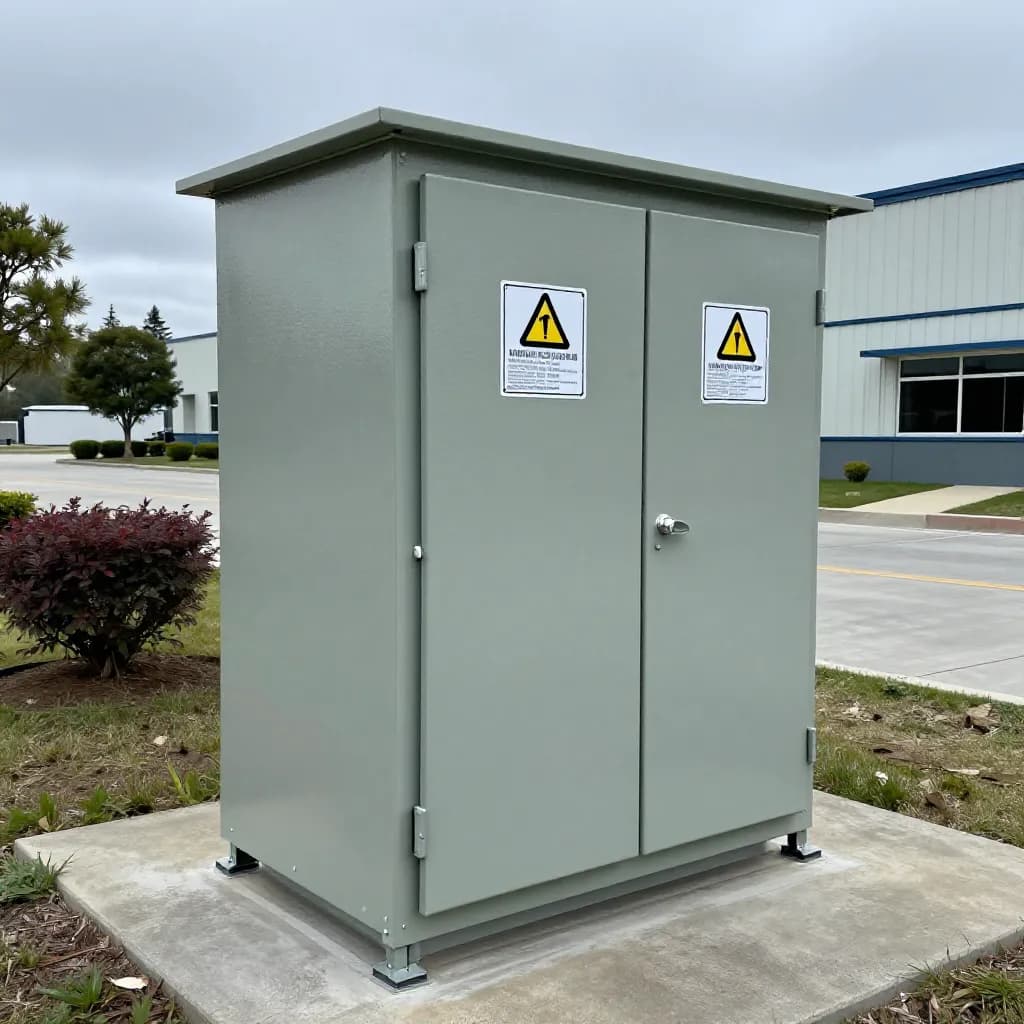
Transformer enclosures are deployed in every conceivable outdoor environment — from arctic tundra to tropical coastlines, from desert installations to urban streetscapes. They must withstand UV radiation, rain, snow, ice, salt spray, industrial pollution, and temperature extremes ranging from -50°C to +60°C ambient. The coating is the primary barrier between these environmental stresses and the steel enclosure that protects the electrical equipment within.
Ready to Start Your Project?
From one-off customs to 15,000-part production runs — get precise pricing in 24 hours.
On This Page
Critical Role of Coatings in Transformer Enclosure Protection
The consequences of coating failure on transformer enclosures extend beyond aesthetics. Corrosion can compromise the structural integrity of the enclosure, creating safety hazards from sharp edges and potential access points for unauthorized entry. Corroded enclosures may fail to meet the environmental sealing requirements that protect the transformer from moisture ingress, leading to electrical failures and service interruptions. And visible corrosion on utility equipment diminishes public confidence in the reliability of the electrical infrastructure.
Powder coating has become the dominant finishing technology for transformer enclosures, replacing the alkyd and epoxy liquid paint systems that were standard through the 1990s. Major transformer and enclosure manufacturers including Eaton, ABB, Siemens, Schneider Electric, and Howard Industries specify powder coating for its superior durability, environmental compliance, and production efficiency.
Steel Substrates and Heavy-Duty Pretreatment
Transformer enclosures are fabricated from steel in gauges ranging from 14 gauge (1.9 mm) for standard distribution transformer enclosures to 10 gauge (3.4 mm) or heavier for substation enclosures and high-security applications. The steel is cut, formed, welded, and assembled into enclosure panels, doors, and frames before entering the coating process.
Pretreatment for transformer enclosures follows a rigorous multi-stage process designed to provide maximum corrosion protection for equipment with expected service lives of 25-40 years. The standard pretreatment sequence includes alkaline cleaning at 55-65°C, two water rinse stages, zinc phosphate conversion coating at 2.5-4.0 g/m² coating weight, a post-rinse with deionized water, and a chromium-free seal rinse. Zinc phosphate is universally specified for transformer enclosures due to its superior corrosion protection compared to iron phosphate — the additional process cost is justified by the extended service life requirement.
Weld seam preparation is critical for transformer enclosures because the welded joints are the most vulnerable points for corrosion initiation. MIG welds on enclosure panels create heat-affected zones with mill scale and spatter that resist chemical pretreatment. Mechanical preparation — grinding flush welds smooth and removing spatter — is required before the chemical pretreatment process. Incomplete weld preparation is the most common root cause of premature coating failure on transformer enclosures.
For enclosures destined for coastal or highly corrosive environments, additional pretreatment measures may be specified. These include abrasive blasting to Sa 2.5 before chemical pretreatment, application of a zinc-rich primer as a first coat, or specification of hot-dip galvanizing before powder coating for a dual-protection system. The choice of enhanced pretreatment depends on the specific corrosivity classification of the installation site per ISO 9223.
Coating Systems for Extended Outdoor Service Life
Transformer enclosures require coating systems designed for 25-40 years of outdoor service — among the longest service life requirements in any powder coating application. Achieving this performance requires carefully engineered multi-coat systems with each layer contributing specific protective properties.
The standard coating system for transformer enclosures consists of an epoxy primer at 25-50 microns and a superdurable polyester topcoat at 60-80 microns, providing a total system thickness of 85-130 microns. The epoxy primer provides maximum adhesion to the zinc phosphate pretreatment and excellent barrier protection against moisture and corrosive ions. The superdurable polyester topcoat provides UV resistance, color retention, and the aesthetic quality required for visible utility equipment.
For coastal installations (within 5 km of saltwater) and industrial environments with corrosive atmospheric pollutants, an enhanced three-coat system is specified. A zinc-rich epoxy primer at 50-75 microns provides cathodic protection at any coating breach. An epoxy barrier coat at 40-60 microns provides additional moisture and chloride resistance. A superdurable polyester topcoat at 60-80 microns provides UV protection and aesthetics. Total system thickness of 150-215 microns provides comprehensive protection for the most demanding environments.
Salt spray resistance requirements for transformer enclosures are defined by the installation environment. IEEE C57.12.28 (Standard for Pad-Mounted Equipment Enclosure Integrity) references corrosion resistance requirements that translate to minimum 1500 hours of salt spray resistance per ASTM B117 for standard installations and 3000+ hours for coastal installations. These requirements drive the coating system specification.
Accelerated weathering resistance per ASTM G154 (UVA-340 cycle) is specified at minimum 3000 hours for transformer enclosure topcoats, reflecting the extended outdoor service life requirement. At 3000 hours, the topcoat should maintain at least 50% of its original gloss and show color change (Delta E) of less than 3.0 units. Premium superdurable polyester formulations with maximum UV stabilizer loading are required to meet these demanding weathering requirements.
Electrical Safety and Functional Coating Requirements
Transformer enclosures have specific electrical safety requirements that influence the coating specification. The coating must provide electrical insulation where required, maintain grounding continuity where specified, and not interfere with the electromagnetic performance of the enclosed equipment.
Electrical insulation properties of the powder coating contribute to the enclosure's safety performance. Standard powder coatings provide dielectric strength of 20-40 kV/mm, which adds a supplementary insulation layer to the enclosure surface. This is particularly relevant for pad-mounted transformer enclosures that are accessible to the public — the coating provides an additional barrier against electrical contact in the event of internal insulation failure.
Grounding continuity must be maintained at specific points on the enclosure despite the insulating properties of the powder coating. Ground bus connections, equipment grounding conductor attachment points, and bonding jumper locations must be masked during powder application to maintain bare metal contact for reliable electrical connections. These masking locations are defined in the enclosure's electrical design and must be precisely maintained during the coating process.
Thermal performance of the coating affects the transformer's operating temperature and efficiency. Transformer enclosures dissipate heat generated by the transformer's core and winding losses. The coating's thermal emissivity and solar absorptance influence the enclosure's ability to radiate heat and its tendency to absorb solar radiation. Light-colored coatings (ANSI 61 grey, ANSI 70 grey, or white) are specified for transformer enclosures because they reflect solar radiation, reducing the thermal load on the enclosed transformer. Dark colors that absorb solar radiation can increase transformer operating temperature by 5-15°C, reducing efficiency and accelerating insulation aging.
IEEE C57.12.28 specifies that pad-mounted transformer enclosures must maintain their integrity under specified environmental conditions, including resistance to corrosion, UV degradation, and mechanical damage. The coating system is a critical component of the enclosure's ability to meet these integrity requirements throughout its service life.
For enclosures housing oil-filled transformers, the coating must resist transformer oil (mineral oil or natural ester fluid) that may leak or splash during maintenance operations. Epoxy-based primer systems provide excellent resistance to transformer oils, maintaining adhesion and barrier properties after prolonged oil contact.
Utility Color Standards and Safety Markings
Transformer enclosures are finished in standardized colors defined by utility industry specifications. These colors serve functional purposes — identification, safety, and visual integration with the surrounding environment — and must be maintained consistently across thousands of enclosures deployed over decades.
ANSI 61 Light Grey (similar to Munsell N 7.0) is the most widely specified color for pad-mounted transformer enclosures in North America. This neutral grey provides good solar reflectance (reducing thermal load), blends with most urban and suburban environments, and shows dirt and contamination less than lighter colors. ANSI 70 Medium Grey (Munsell N 5.5) is an alternative specification used by some utilities.
Green colors — typically ANSI 74 Green or custom utility-specified greens — are specified for transformer enclosures in residential and landscaped areas where visual integration with vegetation is desired. These greens must be formulated with UV-stable pigments because green organic pigments are among the most UV-sensitive colors, prone to fading and color shift under prolonged outdoor exposure.
Safety markings on transformer enclosures include high-voltage warning labels, utility identification, and emergency contact information. These markings are typically applied as vinyl decals or screen-printed graphics on the powder-coated surface. The powder coating must provide adequate surface energy (above 38 mN/m) for reliable adhesion of pressure-sensitive vinyl graphics without adhesion promoters. The coating surface must also be smooth and free of texture that could cause graphic lifting at edges.
Animal guard coatings are a specialized requirement for transformer enclosures in areas with wildlife activity. Squirrels, raccoons, and other animals can cause electrical faults by contacting energized components inside transformer enclosures. Some utilities specify textured or slippery coatings on enclosure surfaces to discourage animal climbing. Low-friction coatings with PTFE or silicone additives reduce the surface friction coefficient, making it difficult for animals to gain purchase on the enclosure surface.
Color consistency across production batches and over time is a significant quality concern for utilities that deploy thousands of enclosures across their service territory. Spectrophotometric color control with Delta E tolerances of ≤1.0 ensures that new enclosures are visually compatible with existing installations. Powder suppliers maintain dedicated formulations for utility colors, with batch-to-batch consistency verified before shipment.
Environmental and Regulatory Compliance
Transformer enclosure coating operations must comply with environmental regulations that govern air emissions, waste management, and material safety. The electrical utility industry also imposes specific requirements related to equipment reliability and public safety.
EPA regulations under 40 CFR Part 63 (NESHAP) govern coating operations, though powder coating's zero-VOC profile simplifies compliance significantly. Cure oven emissions are generally below regulatory thresholds for powder coating operations, but facilities should verify compliance with state and local air quality regulations that may be more stringent than federal requirements.
RoHS and REACH compliance is required for transformer enclosures exported to the European Union. All powder coating materials must be free of restricted substances including lead, cadmium, hexavalent chromium, and certain phthalates. This requirement has driven the industry transition from chromate-based pretreatments to chromate-free alternatives (zirconium, titanium, and silane-based systems).
IEC 62271-1 (High-Voltage Switchgear and Controlgear) and IEC 60076 (Power Transformers) series standards define requirements for electrical equipment enclosures that influence coating specifications. These international standards are referenced by utilities worldwide and include requirements for corrosion resistance, UV stability, and mechanical durability of enclosure coatings.
NEMA 250 (Enclosures for Electrical Equipment) defines enclosure types based on their environmental protection capabilities. Type 3R (outdoor, rain-tight) is the most common classification for transformer enclosures. The coating system must support the enclosure's ability to meet NEMA 250 Type 3R requirements throughout its service life, including resistance to rain, sleet, snow, and external ice formation.
Utility-specific specifications often exceed industry standards. Major utilities including Duke Energy, Southern Company, Pacific Gas & Electric, and Consolidated Edison maintain detailed coating specifications for transformer enclosures that define pretreatment, powder chemistry, film thickness, adhesion, cure, color, gloss, and environmental resistance requirements. These specifications are developed through decades of field experience and reflect the specific environmental conditions of each utility's service territory.
Quality Assurance and Field Performance Monitoring
Transformer enclosure coating quality assurance encompasses both factory quality control and field performance monitoring to ensure that the coating system delivers its intended service life.
Factory quality control follows a comprehensive inspection protocol. Incoming powder material is verified for color, gloss, particle size distribution, and gel time before acceptance. Pretreatment bath chemistry is monitored continuously with automatic titration systems and verified by manual testing at defined intervals. Film thickness is measured on every production batch using calibrated magnetic gauges per SSPC-PA 2, with minimum, maximum, and average values recorded. Adhesion is verified per ASTM D3359 (cross-cut tape test) with a minimum rating of 4B. Cure is confirmed through solvent rub testing (minimum 50 MEK double rubs for polyester topcoats) or DSC analysis.
Holiday detection using a high-voltage spark tester (per NACE SP0188) is performed on enclosures destined for coastal or highly corrosive environments. This test identifies pinholes and discontinuities in the coating film that could initiate corrosion. Any detected holidays are repaired and re-tested before the enclosure is released for shipment.
Field performance monitoring involves periodic inspection of installed transformer enclosures to assess coating condition and correlate with laboratory test predictions. Utilities typically inspect a representative sample of enclosures at 5, 10, 15, and 20 years of service, documenting coating condition using standardized rating systems (ASTM D610 for rust grade, ASTM D659 for chalking, ASTM D523 for gloss retention). This field data informs coating specification updates and identifies any systemic coating performance issues.
Warranty requirements for transformer enclosure coatings vary by utility but typically specify 10-15 years of coating performance without blistering, peeling, or corrosion exceeding defined limits. Some utilities require 20-year coating warranties for coastal installations. These warranty periods drive the coating system specification and quality control rigor, as warranty claims on thousands of installed enclosures represent significant financial exposure for the coating supplier.
Accelerated aging correlation studies compare laboratory test results (salt spray, weathering, humidity) with actual field performance data to validate the predictive value of accelerated testing. These studies are essential for establishing confidence in coating specifications for new formulations or modified coating systems. The correlation between accelerated testing and field performance is imperfect, making long-term field monitoring an indispensable complement to laboratory testing.
Frequently Asked Questions
How long should powder coating last on transformer enclosures?
Transformer enclosure powder coating systems are designed for 25-40 years of outdoor service. Standard two-coat systems (epoxy primer plus superdurable polyester topcoat) achieve 1500+ hours of salt spray resistance. Enhanced three-coat systems for coastal installations achieve 3000+ hours and support the longest service life requirements.
Why are transformer enclosures usually grey or green?
ANSI 61 Light Grey is the most common color because it reflects solar radiation (reducing transformer operating temperature), blends with urban environments, and shows dirt less than lighter colors. Green is specified for residential areas where visual integration with landscaping is desired.
What standards govern transformer enclosure coatings?
Key standards include IEEE C57.12.28 for pad-mounted enclosure integrity, NEMA 250 for environmental protection classification, IEC 62271-1 and IEC 60076 for international requirements, and utility-specific specifications. These standards define corrosion resistance, UV stability, and mechanical durability requirements.
Does coating color affect transformer performance?
Yes. Dark coatings absorb more solar radiation, potentially increasing transformer operating temperature by 5-15°C. Light colors like ANSI 61 grey reflect solar radiation, reducing thermal load and improving transformer efficiency. This is why light grey is the standard specification for transformer enclosures.
How is coating quality verified on transformer enclosures?
Quality verification includes film thickness measurement per SSPC-PA 2, adhesion testing per ASTM D3359, cure verification through MEK solvent rub testing, color and gloss measurement, and holiday detection using high-voltage spark testing for coastal installations. Statistical process control tracks all parameters.
Ready to Start Your Project?
From one-off customs to 15,000-part production runs — get precise pricing in 24 hours.