The Toyota Tacoma has established itself as one of the most popular platforms for overlanding and off-road builds in North America, and powder coating plays a central role in protecting and finishing the aftermarket accessories that define these builds. The Tacoma's reputation for reliability and its strong aftermarket support have created a massive ecosystem of bumpers, skid plates, bed racks, and armor components that are prime candidates for powder coating.
Automotive
Powder Coating for Toyota Tacoma Parts: Skid Plates, Bumpers, Bed Racks, and Overlanding Builds
Sundial Powder Coating·April 22, 2026·13 min
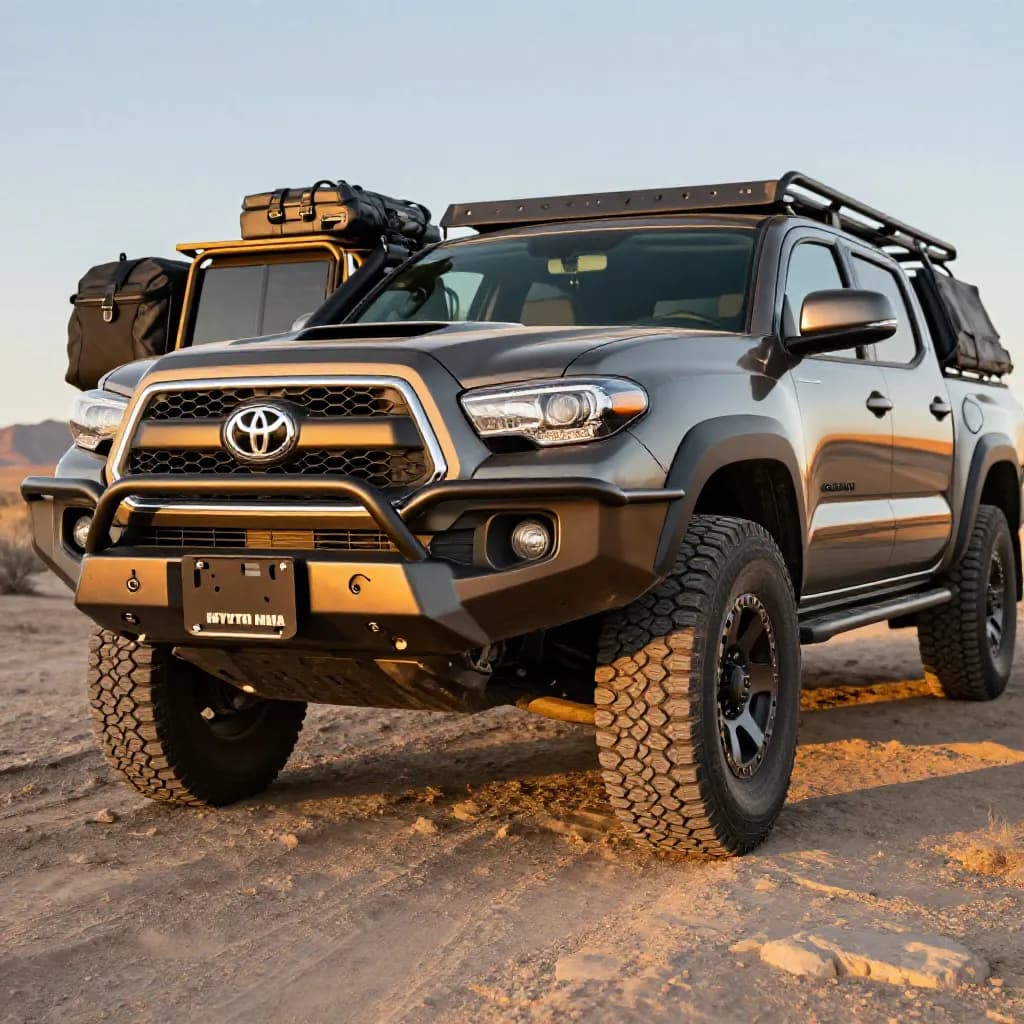
Tacoma owners invest heavily in their vehicles, often building them over months or years with carefully selected components. Powder coating is valued in this community not just for its durability but for its ability to create a cohesive visual theme across components from different manufacturers. When bumpers, sliders, bed rack, and skid plates are all finished in the same color and texture, the result is a professional, purpose-built appearance that elevates the entire vehicle.
Ready to Start Your Project?
From one-off customs to 15,000-part production runs — get precise pricing in 24 hours.
On This Page
The Tacoma Overlanding and Off-Road Ecosystem
The third-generation Tacoma (2016-2023) and the fourth-generation (2024-present) both have extensive aftermarket support, though the newer generation is still building its accessory ecosystem. Most powder coating guidance applies equally to both generations, with the primary differences being in component fitment and mounting details rather than coating requirements.
Corrosion protection is a particularly important consideration for Tacoma owners in northern climates where road salt is used during winter months. The Tacoma's frame has been the subject of corrosion concerns in some model years, making protective coatings for undercarriage components and accessories a functional priority rather than merely an aesthetic choice.
Skid Plates and Undercarriage Protection
Skid plates are among the most functionally important powder-coated components on an off-road Tacoma. These plates protect the engine oil pan, transmission, transfer case, and fuel tank from rock impacts during trail driving. The combination of mechanical impact, road debris, water exposure, and road salt makes skid plate coating durability a genuine performance requirement.
Factory Tacoma TRD Off-Road and TRD Pro models include aluminum skid plates from the factory, but many owners upgrade to thicker steel skid plates from aftermarket manufacturers like RCI Metalworks, C4 Fabrication, and Pelfreybilt. These steel skid plates are typically 3/16-inch to 1/4-inch plate steel and arrive in bare metal, primed, or with a basic factory coating that owners often replace with custom powder coating.
For skid plates, textured black powder coating is the most practical finish choice. The texture conceals trail damage, provides a non-reflective surface that does not attract attention to the undercarriage, and hides the inevitable accumulation of mud and road grime between cleanings. Wrinkle black is an alternative that provides even better damage concealment.
Film thickness for skid plates should be at the upper end of the standard range — 80-120 microns — to provide maximum impact protection. The additional material thickness gives the coating more capacity to absorb rock impacts without exposing the steel substrate to corrosion. Even with increased film thickness, the coating will eventually sustain damage during aggressive off-road use, but thicker films extend the time before touch-up or recoating is needed.
Preparation of skid plates requires thorough degreasing and media blasting to remove mill scale, surface rust, and any existing coatings. Weld areas should be ground smooth and inspected for porosity. An iron phosphate or zinc phosphate conversion coating after blasting provides additional corrosion protection under the powder coating — an important step for components that will be exposed to water, mud, and road salt throughout their service life.
Bumpers and Front-End Armor
Aftermarket steel bumpers are a defining feature of built Tacomas, and powder coating is the standard finishing method for these components. Front bumpers from manufacturers like C4 Fabrication, Coastal Offroad, Southern Style Offroad, and Relentless Fabrication are designed for the Tacoma platform and are typically delivered with a powder coat finish or in bare steel for custom coating.
Tacoma front bumpers range from low-profile designs that maintain the factory approach angle to full-width designs with integrated winch mounts, light bar provisions, and recovery points. The bumper's design affects the powder coating process — complex geometries with recesses, gussets, and multiple welded joints require more careful spray technique to achieve uniform coverage than simple flat-plate designs.
Rear bumpers for the Tacoma often incorporate swing-out tire carriers, which add complexity to the powder coating process. The pivot mechanism, latch hardware, and bearing surfaces must be masked to ensure free operation after coating. Some owners choose to coat the swing-out carrier in a contrasting color or finish to create visual interest at the rear of the vehicle.
Bull bars and light bars are smaller front-end accessories that benefit from powder coating. These tubular steel or aluminum components are straightforward to coat and can be finished to match the bumper and other accessories. Coordinating the finish across all front-end components creates a unified appearance.
For Tacoma bumpers that will see regular off-road use, the same finish recommendations apply as for other off-road components: textured or wrinkle finishes in dark colors provide the best combination of durability and appearance. For Tacomas that are primarily street-driven, smooth satin or matte finishes provide a cleaner appearance while still offering excellent protection.
Toyota Tacoma factory paint codes for color matching include Lunar Rock (code 6X3), Army Green (code 6V7), Cement (code 1H5), Magnetic Grey Metallic (code 1G3), Barcelona Red Metallic (code 3R3), Super White (code 040), and Midnight Black Metallic (code 218). These codes can be provided to powder coating manufacturers for custom color matching on bumpers and accessories.
Bed Racks and Overlanding Accessories
Bed racks are essential components for overlanding Tacoma builds, providing elevated mounting points for rooftop tents, awnings, storage containers, and recovery gear. These large structural components are ideal candidates for powder coating, which provides both corrosion protection and a finished appearance that complements the overall build.
Popular Tacoma bed rack manufacturers include Leitner Designs, CBI Offroad, Cali Raised LED, and Prinsu. These racks are typically fabricated from steel or aluminum tubing and plate, with designs ranging from low-profile systems that sit just above the bed rails to full-height racks that support rooftop tents and multiple accessory mounting points.
Bed rack powder coating requires attention to the rack's mounting interface with the truck bed. The mounting points — typically clamps or bolts that attach to the bed rails — must be masked to ensure proper fitment and prevent coating interference with the clamping mechanism. Rubber or plastic isolation pads between the rack and the bed rails should be removed before coating and reinstalled afterward.
Aluminum bed racks require different pretreatment than steel racks. Aluminum needs a chromate-free conversion coating for proper adhesion, while steel racks use iron phosphate or zinc phosphate. Mixing up the pretreatment chemistry will result in poor adhesion and premature coating failure. Confirm the rack material with the powder coating shop before work begins.
Overlanding accessories that mount to the bed rack — including awning brackets, light mounts, jerry can holders, and Hi-Lift jack mounts — can be powder coated to match the rack for a coordinated appearance. These smaller components are easy to coat and can often be included in the same batch as the rack itself, reducing cost and ensuring color consistency.
For Tacoma owners who use their bed racks to support rooftop tents, the rack's load-bearing surfaces should remain uncoated or coated with a textured finish that provides friction. Smooth powder coating on load-bearing surfaces can allow the tent mounting hardware to shift during driving, potentially creating noise or loosening over time. Textured finishes or strategic masking of load-bearing surfaces addresses this concern.
Corrosion Protection Strategy for Tacoma Builds
Corrosion protection is a primary motivation for powder coating Tacoma components, particularly for owners in northern climates where road salt accelerates metal corrosion. A comprehensive corrosion protection strategy considers not just the powder coating itself but the entire coating system including pretreatment, primer, and topcoat.
The Tacoma's steel frame has been subject to corrosion concerns in certain model years, with some owners reporting significant frame rust in salt-belt states. While powder coating the frame itself is impractical on an assembled vehicle, powder coating aftermarket frame-mounted accessories — bumpers, sliders, skid plates — with proper corrosion protection helps prevent these components from becoming additional corrosion sources.
Pretreatment is the foundation of corrosion protection. Zinc phosphate conversion coating provides the best under-film corrosion resistance for steel components, creating a crystalline zinc phosphate layer that inhibits corrosion even if the powder coating is damaged. Iron phosphate is a less expensive alternative that provides adequate protection for moderate environments but may not be sufficient for severe salt exposure.
For maximum corrosion protection on steel components, a two-coat system — epoxy primer followed by polyester topcoat — provides significantly better performance than a single topcoat alone. The epoxy primer provides excellent adhesion and barrier protection, while the polyester topcoat provides UV resistance and the desired color and finish. This two-coat approach is standard practice for industrial corrosion protection and is recommended for Tacoma components that will be exposed to road salt.
Galvanic corrosion is a concern when dissimilar metals are in contact — for example, when a steel bumper is bolted to an aluminum mounting bracket. Powder coating can help prevent galvanic corrosion by electrically isolating the dissimilar metals, but only if the coating remains intact at the contact points. Using isolation washers or bushings in addition to powder coating provides more reliable galvanic corrosion prevention.
Regular inspection and touch-up of powder-coated components extends their service life in corrosive environments. After off-road use, inspect coated components for chips, scratches, and areas where the coating has been worn through. Touch-up paint or powder coating touch-up products can be applied to damaged areas to prevent corrosion from initiating at these points.
Wheels and Brake Components for Tacoma
Wheel powder coating is a popular modification for Tacoma owners seeking to customize their vehicle's appearance or refresh worn factory wheels. The Tacoma's factory wheels and popular aftermarket options present specific considerations for powder coating.
Factory Tacoma wheels are available in 16-inch and 17-inch sizes depending on the trim level. The TRD Off-Road and TRD Pro models feature distinctive wheel designs that are popular candidates for color changes. Aftermarket wheels from Method, Relations Race Wheels, SCS, and Stealth Custom Series are commonly specified for Tacoma builds and can be powder coated in custom colors before or after purchase.
For off-road Tacomas, wheel finish selection should consider the same durability factors as other off-road components. Satin and matte finishes show trail damage less than high-gloss finishes. Dark colors conceal brake dust and trail grime better than light colors. Textured wheel finishes are uncommon but available for owners who prioritize maximum damage concealment.
Brake caliper powder coating is less common on Tacomas than on performance vehicles, but some owners choose to coat their calipers for corrosion protection and appearance. The Tacoma's brake calipers are relatively small and operate at moderate temperatures during normal driving, but high-temperature powder coating formulations should still be used to ensure the coating withstands the heat generated during sustained braking or towing.
Differential covers are a popular powder coating target for Tacoma owners. Aftermarket differential covers from companies like ARB and Nitro Gear are available in cast aluminum or steel and can be powder coated to match the vehicle's accessory color scheme. These components operate in the harsh undercarriage environment and benefit from the corrosion protection that powder coating provides.
Drive shaft components, U-joint caps, and other undercarriage hardware can be powder coated for corrosion protection during a build. While these small components are often overlooked, coating them during the initial build prevents the corrosion that can make future maintenance and disassembly difficult.
Selecting Finishes and Planning a Tacoma Build
Planning the powder coating for a Tacoma build involves coordinating finishes across multiple components from different manufacturers to create a cohesive visual package. A systematic approach to finish selection ensures that all components work together aesthetically while meeting the durability requirements of their specific applications.
Start by choosing a primary finish that will be used on the majority of components — bumpers, sliders, bed rack, and skid plates. Textured black is the most popular choice and coordinates with all Tacoma body colors. Satin black, wrinkle black, and textured gunmetal are alternatives that provide slightly different aesthetics while maintaining broad compatibility.
Consider accent finishes for components where visual contrast adds interest. Some builders coat their bed rack crossbars in a contrasting color, use a different finish on recovery points, or add color accents to bumper end caps. These accent touches personalize the build without overwhelming the overall design.
Coordinate with your component manufacturers and powder coating shop to plan the coating schedule. Ideally, all components that will share the same finish should be coated in the same batch to ensure perfect color and texture matching. If components arrive at different times, request that the shop retain a sample panel from the first batch for reference when coating subsequent components.
Budget for the powder coating as part of the overall build cost. Powder coating individual components as they are purchased may seem economical in the short term, but batching multiple components together is more cost-effective and ensures better color consistency. Many Tacoma builders accumulate components and send them for coating as a complete package.
Document your finish specifications — product name, color code, texture type, and gloss level — so that future components can be matched to the existing finish. If you add accessories to your build months or years later, having the original finish specification makes it possible to achieve a consistent match across all components.
Frequently Asked Questions
What is the best powder coating finish for Tacoma skid plates?
Textured black at 80-120 micron film thickness provides the best combination of impact protection, damage concealment, and corrosion resistance for skid plates. Wrinkle black is an alternative that provides even better damage concealment. Both finishes hide trail wear and mud accumulation between cleanings.
Should I use a primer under powder coating on Tacoma steel parts?
For maximum corrosion protection, especially in salt-belt climates, a two-coat system with epoxy primer and polyester topcoat provides significantly better performance than a single topcoat. The epoxy primer adds barrier protection and adhesion that extends the coating's service life in corrosive environments.
Can I match my Tacoma's factory color in powder coating?
Yes. Provide the powder coating shop with your Toyota paint code from the door jamb label. Solid colors like Super White (040) are straightforward to match. Metallic colors like Magnetic Grey (1G3) and Barcelona Red (3R3) require bonded metallic formulations and are more challenging but achievable.
How do I prevent galvanic corrosion on mixed-metal Tacoma builds?
Powder coating helps by electrically isolating dissimilar metals, but use isolation washers or bushings at contact points for reliable prevention. This is particularly important where steel bumpers or sliders bolt to aluminum mounting brackets or the truck's aluminum body panels.
Should I powder coat all my Tacoma accessories at once?
Batching components together is recommended for cost efficiency and color consistency. Components coated in the same batch will have identical color and texture. If you must coat in stages, have the shop retain a sample panel from the first batch for reference when matching subsequent components.
Ready to Start Your Project?
From one-off customs to 15,000-part production runs — get precise pricing in 24 hours.