Tow hooks and recovery points are safety-critical components that must perform reliably under extreme loads. Whether pulling a stuck vehicle from a mud hole, winching up a steep incline, or providing an attachment point for a snatch strap during a dynamic recovery, these components experience forces measured in tonnes. The coating on a recovery point must protect the steel from corrosion without compromising the component's structural integrity or load rating.
Automotive
Powder Coating Tow Hooks and Recovery Points: Durable Finishes for Off-Road Safety Equipment
Sundial Powder Coating·April 23, 2026·9 min
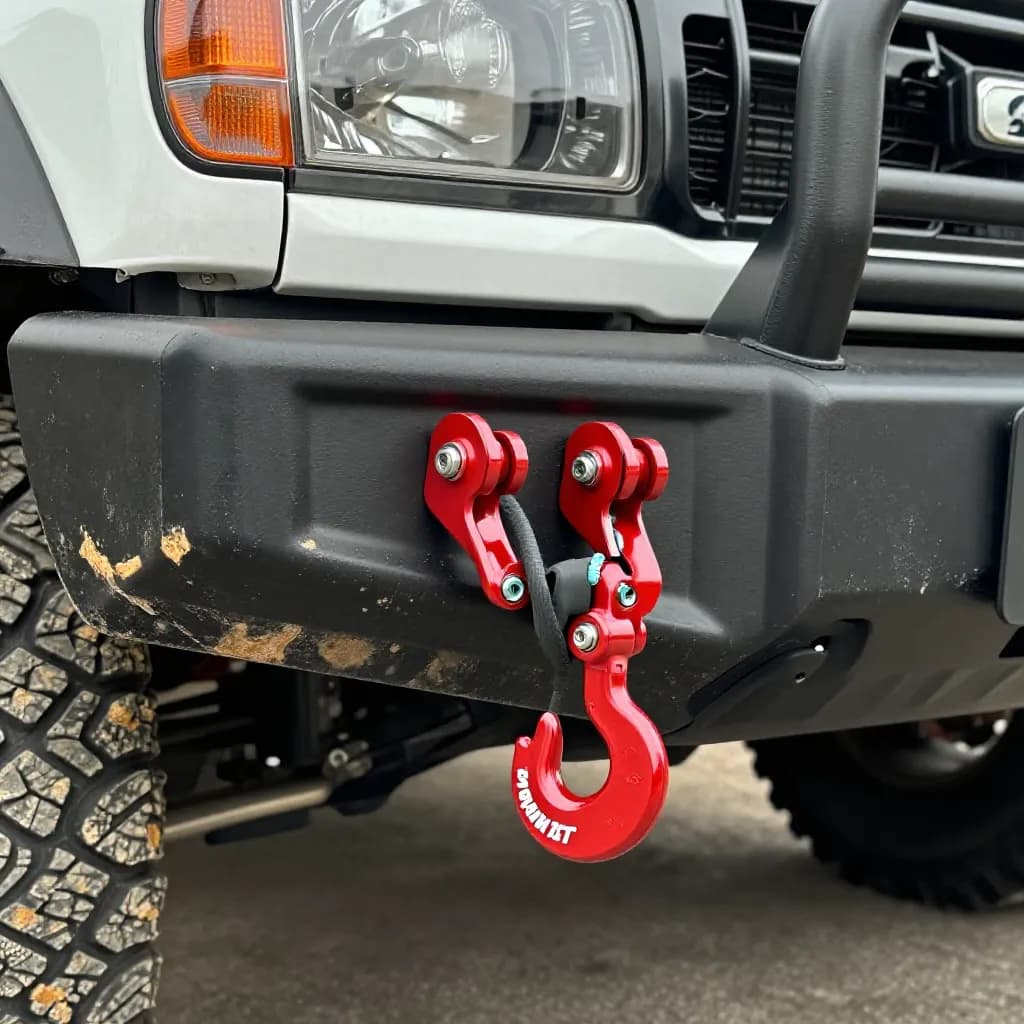
Factory tow hooks on many vehicles come with a basic paint or e-coat finish that chips and rusts quickly, especially on vehicles used off-road. Aftermarket recovery points from reputable manufacturers are typically better finished, but even quality coatings can be damaged during the rough handling that recovery equipment endures. Dragging through mud, contact with shackles and straps, and exposure to salt water and road chemicals all take their toll.
Ready to Start Your Project?
From one-off customs to 15,000-part production runs — get precise pricing in 24 hours.
On This Page
Why Recovery Points Need Quality Coatings
Powder coating provides the thick, hard, and well-adhered finish that recovery points demand. A properly applied powder coat resists the abrasion from shackle pins, the impact from accidental contact with rocks and obstacles, and the chemical exposure from mud, salt, and road treatments. For off-road enthusiasts who rely on their recovery equipment in remote locations, a durable coating means the equipment is ready when needed, without the corrosion and degradation that can weaken components over time.
Material Considerations and Load Ratings
Recovery points and tow hooks are manufactured from high-strength steel, typically grades like 4140, 4340, or equivalent alloys that have been heat-treated to achieve specific strength and toughness properties. Understanding how the powder coating process interacts with these materials is essential for maintaining the component's rated capacity.
The primary concern is whether the cure temperature affects the heat treatment of the steel. Recovery points are typically quenched and tempered to achieve their rated strength, and the tempering temperature determines the final hardness and toughness balance. Standard powder coating cure temperatures of 190-200 degrees Celsius are below the tempering temperature of most recovery point steels, which are typically tempered at 400-600 degrees Celsius. This means the brief powder coating cure cycle does not affect the mechanical properties or load rating of the component.
However, some lower-grade recovery points may be tempered at lower temperatures, and in these cases, the cure cycle could theoretically affect the heat treatment. If the specific tempering temperature of the component is unknown, consult the manufacturer before coating. Reputable recovery point manufacturers can confirm whether their products are compatible with standard powder coating cure temperatures.
The coating thickness does not affect load ratings. At 60-100 microns, the powder adds negligible material to the component cross-section. Shackle pin holes should be masked or reamed after coating to maintain proper pin fitment, as even slight coating buildup in the pin hole can affect the shackle's ability to rotate freely under load.
Safety Colors and High-Visibility Finishes
Recovery points are increasingly finished in high-visibility safety colors that serve a practical purpose beyond aesthetics. A brightly colored recovery point is easier to locate in low-light conditions, under the vehicle in mud or water, and during the stress of an actual recovery situation where quick identification of attachment points is critical.
Red is the most popular safety color for recovery points, following the convention used in motorsport and industrial applications where red indicates a rated recovery or tie-down point. Bright red powder coat is immediately visible against the dark underbody of a vehicle and clearly communicates the component's purpose to anyone assisting with a recovery.
Orange and yellow are also used as safety colors, particularly in commercial and fleet applications where standardized color coding helps operators quickly identify the correct attachment points. These colors stand out in muddy, dusty, and low-light conditions where darker colors would be difficult to see.
For vehicles where a high-visibility recovery point does not suit the build aesthetic, satin black and gunmetal grey provide a more subtle appearance while still offering the corrosion protection benefits of powder coating. Some builders compromise by coating the recovery point body in black and painting the shackle pin hole area in red as a visual indicator.
The powder coat finish should be a smooth or fine texture rather than a heavy wrinkle or coarse texture. Recovery straps and shackles need to slide and rotate freely against the recovery point surface during use, and a rough texture can impede this movement and create wear points on the strap material. A satin or semi-gloss smooth finish provides the best balance of durability and functional surface characteristics.
Abrasion Resistance and Wear Zones
Recovery points experience concentrated abrasion in specific areas during use. The shackle pin bore, the strap contact surfaces, and the mounting bolt interfaces all see metal-on-metal or strap-on-metal contact that wears through coatings over time. Understanding these wear patterns helps in selecting the right coating approach.
The shackle pin bore is the highest-wear area. Every time a shackle is inserted, rotated, or loaded, the pin abrades the bore surface. No powder coating will survive indefinite shackle use without showing wear in this area. Accepting this wear as normal and touching up the bore periodically with a rust-inhibiting paint is the practical approach. Some builders leave the bore uncoated and apply a light film of anti-seize or grease to prevent corrosion and facilitate shackle insertion.
Strap contact surfaces where recovery straps, tree trunk protectors, or winch cables wrap around the hook experience abrasion during every recovery. The coating in these areas should be as thick and hard as practical. A two-coat system with an epoxy primer and a hard polyester topcoat provides the best abrasion resistance. The smooth surface also reduces wear on the recovery strap itself, extending the life of both the hook and the strap.
Mounting bolt interfaces are compressed under high clamping force and may see micro-movement during recovery loads. The coating at these interfaces will crack under the clamping force, which is normal and expected. The compressed area is sealed between the recovery point and the vehicle chassis, so corrosion risk is minimal. Applying anti-seize to the mounting bolts prevents galvanic corrosion and facilitates future removal.
For maximum durability in the highest-wear areas, some builders apply a secondary coating of bed liner or rubberized undercoating over the powder coat at strap contact zones. This sacrificial layer absorbs the initial abrasion and can be reapplied as needed.
Preparation and Coating Process
Preparing recovery points for powder coating follows standard steel preparation procedures with a few application-specific considerations. The components are typically forged or fabricated from thick steel plate, which responds well to aggressive blasting and standard pretreatment chemistry.
Blast the component to white metal using aluminum oxide or steel grit at 40-60 mesh. The heavy cross-section of most recovery points means they can withstand aggressive blasting without distortion. Remove all mill scale, rust, and any factory coating completely. Pay attention to the interior of the shackle pin bore and any recessed areas where the blast nozzle may not reach easily.
After blasting, apply a zinc phosphate conversion coating for maximum corrosion resistance. Recovery points are exposed to some of the harshest conditions on the vehicle, including submersion in water during river crossings, prolonged mud contact, and salt spray. The zinc phosphate layer provides a robust foundation for the powder coat and improves salt spray resistance significantly compared to iron phosphate.
For the coating itself, a two-coat system is recommended. Apply a zinc-rich epoxy primer at 50-60 microns for galvanic corrosion protection, followed by a polyester topcoat at 60-80 microns for UV resistance, color, and abrasion resistance. The total film build of 110-140 microns provides excellent protection for the demanding environment these components operate in.
Mask the shackle pin bore with a silicone plug or tight-fitting bolt during coating. After curing, remove the masking and verify that the bore is clean and dimensionally correct for the shackle pin. A light coat of anti-seize or corrosion inhibitor on the bore surface protects the uncoated area.
Rated Hardware and Certification Considerations
Recovery points are rated components, meaning they are designed and tested to withstand specific loads. The rated capacity is typically stamped or engraved on the component and must remain legible after coating. This is both a safety requirement and, in some jurisdictions, a legal requirement for vehicles used on public roads.
Before coating, photograph and document all rating stamps, part numbers, and manufacturer markings on the component. After coating, verify that these markings are still legible through the powder coat. A standard 60-80 micron coating is thin enough that stamped markings remain readable, but if the markings are shallow or the coating is applied thickly, they may become obscured. In this case, the markings can be re-engraved through the coating or a label can be attached.
Some recovery point manufacturers void their warranty or rating certification if the component has been modified, which could include stripping and recoating. Check with the manufacturer before proceeding. Most reputable manufacturers confirm that powder coating does not affect the structural rating, but having this confirmation in writing protects the vehicle owner.
For competition vehicles subject to technical inspection, recovery points must meet the sanctioning body's requirements for visibility, accessibility, and rated capacity. Verify that the chosen color and finish comply with any specific requirements. Many sanctioning bodies require recovery points to be a contrasting color to the vehicle body for visibility, which aligns well with the safety color approach.
When reinstalling coated recovery points, use the manufacturer's specified mounting hardware and torque values. Do not substitute hardware grades or sizes, as the recovery point's rated capacity assumes specific bolt grades and clamping forces. Apply anti-seize to mounting bolts and retorque after the first off-road trip to account for any initial settling.
Frequently Asked Questions
Does powder coating affect the load rating of recovery points?
No. Standard powder coating cure temperatures of 190-200 degrees Celsius are well below the tempering temperature of the high-strength steels used in recovery points. The brief cure cycle does not affect the mechanical properties or rated capacity of the component. Verify compatibility with the manufacturer if the specific steel grade is unknown.
What color should recovery points be?
Red is the most popular and widely recognized safety color for recovery points, following motorsport and industrial conventions. Orange and yellow are also used for high visibility. The key consideration is that the recovery point should be easily identifiable in low-light, muddy, or stressful recovery situations.
Will the coating wear off where the shackle goes?
Yes, the shackle pin bore is a high-wear area that will show coating wear with regular use. This is normal and expected. Touch up the bore periodically with rust-inhibiting paint or apply anti-seize to prevent corrosion. Some builders leave the bore uncoated and protect it with grease instead.
Should I use a smooth or textured finish on recovery points?
A smooth or fine satin finish is recommended. Recovery straps and shackles need to slide and rotate freely against the recovery point surface, and a rough texture can impede movement and create wear points on strap material. Smooth finishes also clean more easily after muddy recoveries.
Can I powder coat factory tow hooks?
Yes. Factory tow hooks can be removed, stripped, blasted, and powder coated like any other steel component. This is a popular upgrade for vehicles where the factory finish has deteriorated. Verify that the hook's rating stamps remain legible after coating and reinstall using the original hardware and torque specifications.
Ready to Start Your Project?
From one-off customs to 15,000-part production runs — get precise pricing in 24 hours.