Tesla vehicles have created a distinctive community of owners who invest in personalizing and protecting their cars, and powder coating has become one of the most popular modifications across all Tesla models. The combination of Tesla's minimalist design aesthetic, limited factory color options, and the enthusiast community's desire for differentiation has driven strong demand for powder coating services tailored specifically to Tesla vehicles.
Automotive
Powder Coating for Tesla Owners: Wheels, Brake Calipers, Interior Trim, and Color Matching
Sundial Powder Coating·April 22, 2026·14 min
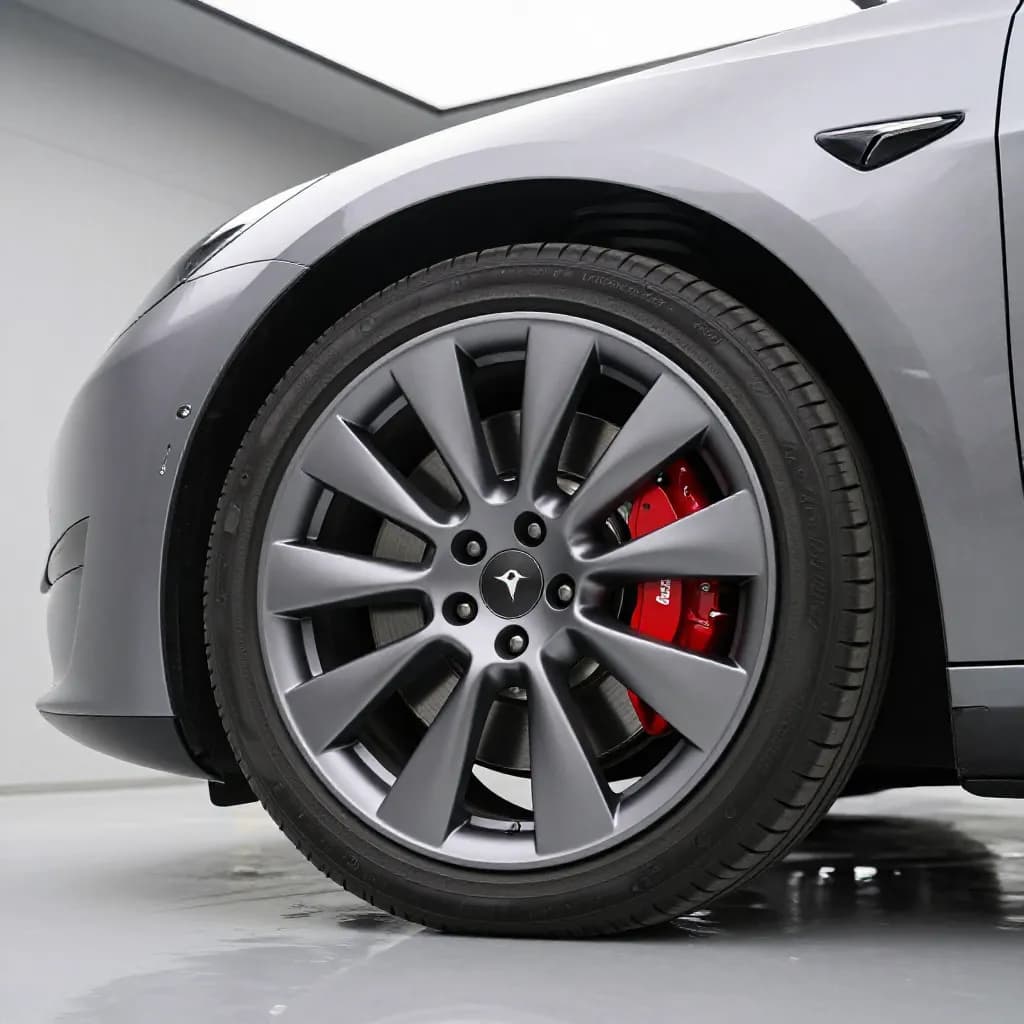
Wheels are the most common powder coating application for Tesla owners. Tesla's factory wheel finishes — while attractive — are susceptible to curb rash, brake dust etching, and road salt corrosion that can diminish their appearance over time. Powder coating provides a significantly more durable finish than the factory paint, with better resistance to stone chips, chemical exposure, and UV degradation. Many Tesla owners also use powder coating as an opportunity to change their wheel color, creating a custom look that distinguishes their vehicle.
Ready to Start Your Project?
From one-off customs to 15,000-part production runs — get precise pricing in 24 hours.
On This Page
Why Tesla Owners Choose Powder Coating
Brake calipers are the second most popular powder coating application for Tesla owners. Tesla's performance models feature large, visible brake calipers that are prime candidates for color customization. Powder coating brake calipers in red, yellow, or a color matched to the vehicle creates a striking visual accent that is visible through the wheel spokes. The high-temperature resistance of properly formulated powder coatings makes them well-suited for brake caliper applications.
Interior and exterior trim pieces offer additional powder coating opportunities. Tesla's chrome delete trend — replacing chrome trim with satin black or body-colored finishes — can be achieved through powder coating on removable metal trim components. Charge port covers, door handles, and other small metal accessories are also candidates for powder coating customization.
Tesla's electric drivetrain creates specific considerations for powder coating. The absence of engine vibration reduces the mechanical stress on coated components, while the regenerative braking system means brake calipers may operate at different temperature profiles than conventional vehicles. Understanding these Tesla-specific factors helps ensure optimal powder coating results.
Tesla Wheel Powder Coating: Model-Specific Considerations
Each Tesla model uses different wheel designs and materials that require specific preparation and coating approaches. Understanding the characteristics of your specific Tesla wheels is essential for achieving a high-quality powder coating result.
Model 3 and Model Y wheels are typically cast aluminum alloy in 18-inch, 19-inch, or 20-inch sizes depending on the trim level. The Aero wheel covers on base Model 3 and Model Y vehicles are plastic and cannot be powder coated — only the underlying alloy wheel is suitable for powder coating. The 19-inch Sport wheels and 20-inch Performance wheels are popular candidates for color changes, with satin black, gunmetal, and bronze being the most requested finishes.
Model S wheels range from 19-inch to 21-inch depending on the configuration. The 21-inch Arachnid wheels on Performance models feature a complex multi-spoke design that requires careful masking and spray technique to achieve uniform coverage in all recesses. The Tempest and other aero-style wheels have smoother surfaces that are more straightforward to coat.
Model X wheels include 20-inch and 22-inch options. The larger 22-inch wheels present specific challenges due to their size — they require larger curing ovens and more powder material per wheel. The Turbine wheel design with its deep concave profile requires attention to film thickness in the recessed areas.
Cybertruck wheels are stainless steel rather than aluminum, which requires different pretreatment chemistry. The stainless steel substrate needs specialized surface preparation to achieve proper adhesion, and the pretreatment process differs from the standard aluminum preparation used for other Tesla models.
For all Tesla wheel applications, the powder coating shop should remove the tire, valve stem, and any wheel weights before coating. The wheel should be inspected for curb damage and repaired if necessary before surface preparation begins. Any existing clear coat or paint must be completely removed through chemical stripping or media blasting to ensure proper adhesion of the new powder coating.
OEM Tesla Color Matching in Powder Coating
Matching Tesla's factory vehicle colors in powder coating format is a common request from owners who want their wheels, calipers, or trim to coordinate with their car's body color. Tesla's color palette has evolved over the years, and understanding the specific color codes helps ensure accurate matching.
Tesla's current production colors include Pearl White Multi-Coat (PPSW), Solid Black (PBSB), Midnight Silver Metallic (PMNG), Deep Blue Metallic (PPSB), Red Multi-Coat (PPMR), and Ultra White (PPSW on newer models). The Midnight Cherry Red (PPTI) and Quicksilver (replaced Mercury Silver) have been added to newer models. Each color has a specific paint code that powder coating manufacturers can use as a reference for color matching.
Matching Tesla's multi-coat colors — Pearl White and Red Multi-Coat — in powder coating presents specific challenges. These factory colors use multiple liquid paint layers with different pigments and effects to create their distinctive depth and appearance. A single-layer powder coating cannot perfectly replicate the multi-layer liquid paint effect, but skilled color matchers can develop powder formulations that provide a close visual match under most lighting conditions.
Metallic colors like Midnight Silver and Deep Blue require bonded metallic powder formulations to replicate the metallic flake effect. The size, density, and orientation of metallic flakes in the powder coating must be carefully matched to the factory paint to achieve a convincing color match. Viewing angle sensitivity — where the color appears to shift slightly depending on the angle — is characteristic of metallic finishes and should be expected in both the factory paint and the powder coating match.
For brake caliper color matching, Tesla Performance models come with red calipers from the factory. Matching this specific red in powder coating requires a high-temperature resistant formulation that maintains its color at the elevated temperatures brake calipers experience during driving. Standard powder coating formulations may discolor or degrade at brake caliper operating temperatures, so specifying a caliper-rated powder is essential.
When requesting OEM color matching, provide the powder coating shop with your vehicle's paint code (found on the driver's door jamb sticker) and ideally a physical color sample such as a painted body panel or touch-up paint sample. Digital photos are unreliable for color matching due to variations in screen calibration and lighting conditions.
Brake Caliper Powder Coating for Tesla
Powder coating Tesla brake calipers is a popular modification that adds visual impact and provides long-lasting protection against brake dust, road grime, and corrosion. The process requires specific preparation and product selection to ensure the coating withstands the thermal demands of brake system operation.
Tesla brake calipers operate at temperatures that vary significantly depending on driving style and conditions. During normal driving with regenerative braking doing most of the deceleration work, caliper temperatures remain relatively moderate. However, during aggressive driving, track use, or sustained downhill braking, caliper temperatures can reach 200-400 degrees Celsius. The powder coating must be formulated to withstand these temperatures without discoloring, cracking, or losing adhesion.
High-temperature powder coatings designed specifically for brake caliper applications use modified resin systems — typically silicone-polyester or ceramic-modified formulations — that maintain their integrity at sustained temperatures up to 300-500 degrees Celsius. Standard decorative powder coatings are not suitable for brake calipers and will fail prematurely if used in this application.
Preparation of Tesla brake calipers for powder coating involves complete disassembly — removing the caliper from the vehicle, removing brake pads, pistons, seals, bleeder valves, and brake lines. The bare caliper body is then media blasted to remove any existing coating and create a surface profile for adhesion. All machined surfaces, piston bores, and seal grooves must be carefully masked to prevent powder from contaminating these critical areas.
After powder coating and curing, the caliper must be reassembled with new seals and properly bled. This is a safety-critical operation that should only be performed by qualified technicians. The brake system must be thoroughly tested before the vehicle is returned to service.
Popular caliper colors for Tesla include red (matching Performance model factory calipers), yellow (a common upgrade for non-Performance models), satin black (for a subtle stealth look), and body-color matching. Some owners choose contrasting colors that complement their vehicle's exterior color — blue calipers on a white Tesla, for example.
Interior Trim and Accessories
Beyond wheels and calipers, Tesla owners can powder coat various interior and exterior trim pieces and accessories to customize their vehicle's appearance. The key requirement is that the component must be metal — powder coating requires an electrically conductive substrate for electrostatic application and must withstand curing temperatures of 180-200 degrees Celsius.
Chrome delete is one of the most popular Tesla modifications, replacing the factory chrome trim with satin black or matte finishes. On older Model 3 and Model S vehicles with chrome window trim, door handles, and badges, powder coating provides a durable alternative to vinyl wrapping for achieving the chrome delete look. The metal trim pieces must be carefully removed from the vehicle, stripped of their chrome plating, and then powder coated in the desired finish.
Tesla's metal charge port door is a candidate for powder coating in body color or a contrasting accent color. This small component is easy to remove and coat, making it an accessible entry point for Tesla owners new to powder coating customization.
Aftermarket Tesla accessories — including tow hitch covers, license plate frames, and pedal covers — are often available in raw aluminum or steel and can be powder coated to match the vehicle's color scheme. These small components are ideal for powder coating due to their simple geometry and easy handling.
For Tesla owners who have installed aftermarket suspension components, control arms, subframe braces, or other metal performance parts, powder coating provides both corrosion protection and a finished appearance. These components should be coated before installation, as the curing temperatures required for powder coating would damage rubber bushings, bearings, and other heat-sensitive components.
It is important to note that many Tesla interior trim pieces are plastic or composite materials that cannot be powder coated. The center console trim, dashboard panels, and most interior surfaces are not suitable for powder coating. For these components, alternative finishing methods such as vinyl wrapping, hydro-dipping, or specialized paint are more appropriate.
Preparation and Process for Tesla Components
Proper preparation is the foundation of a successful powder coating result on any Tesla component. The preparation process varies depending on the substrate material and the component's previous finish, but the fundamental principles of cleanliness, surface profile, and pretreatment apply universally.
For aluminum wheels, the preparation process typically begins with chemical stripping to remove the factory clear coat and any existing paint or powder coating. Media blasting with aluminum oxide or glass bead follows to create a uniform surface profile and remove any remaining contaminants. The blasted surface is then treated with a chrome-free conversion coating that promotes adhesion and provides under-film corrosion resistance.
For brake calipers, which are typically cast iron or aluminum depending on the Tesla model, media blasting is the primary surface preparation method. The blasting media and pressure must be appropriate for the substrate — too aggressive and the surface can be damaged; too gentle and the existing coating may not be fully removed. After blasting, the caliper is cleaned with solvent to remove any residual blasting media and contaminants.
For chrome-plated trim pieces, the chrome plating must be removed before powder coating. Chrome is extremely smooth and does not provide adequate adhesion for powder coating. Chemical stripping or reverse electroplating can remove the chrome layer, exposing the underlying nickel and copper plating layers, which are then blasted to create a suitable surface profile.
Outgassing is a concern with cast aluminum wheels and cast iron calipers. These cast components can contain trapped gases in their porous structure that escape during the curing process, creating pinholes or bubbles in the powder coating surface. A pre-bake cycle — heating the component to curing temperature before applying powder — drives out trapped gases and prevents outgassing defects in the final finish.
Masking is critical for components with areas that must remain uncoated. Wheel mounting surfaces, lug nut seats, valve stem holes, and hub center bores must be masked to maintain proper fitment. Caliper piston bores, seal grooves, and bleeder valve threads must be masked to prevent powder contamination. High-temperature masking tape and silicone plugs are used for these applications.
Choosing Finishes and Colors for Tesla
Selecting the right finish and color for powder-coated Tesla components involves balancing aesthetic preferences with practical considerations. The finish choice affects not only appearance but also maintenance requirements, durability, and how well the coating conceals minor imperfections.
Gloss levels range from high gloss (90+ gloss units) to deep matte (less than 10 gloss units), with satin (30-50 gloss units) being the most popular choice for Tesla wheel applications. Satin finishes provide a contemporary, sophisticated appearance that complements Tesla's design language while being more forgiving of minor surface imperfections than high-gloss finishes. High-gloss finishes show every flaw but deliver maximum visual impact when the surface preparation is flawless.
Solid colors — particularly satin black, gloss black, and gunmetal grey — are the most commonly requested finishes for Tesla wheels. These colors complement all Tesla body colors and provide a clean, modern appearance. Bronze and copper tones have gained popularity as accent colors, particularly on white and grey Tesla vehicles.
Metallic finishes add visual depth and sparkle that solid colors cannot achieve. Metallic gunmetal, metallic bronze, and metallic black are popular choices that add subtle visual interest while maintaining a sophisticated appearance. Metallic finishes are more complex to apply consistently than solid colors, so choosing an experienced applicator is important.
Clear coat systems — where a colored base coat is applied first, followed by a transparent clear coat — provide the highest level of gloss, depth, and protection. Two-coat systems are more expensive and time-consuming than single-coat applications but deliver a finish quality that approaches automotive paint standards. For Tesla owners seeking the ultimate wheel finish, a two-coat metallic with clear coat system is the premium option.
For brake calipers, color selection is primarily aesthetic. Red remains the most popular choice, followed by yellow, orange, and satin black. The color should be specified in a high-temperature formulation — standard colors are not suitable for caliper applications regardless of how appealing they look on a color chart.
Finding a Qualified Powder Coating Shop for Tesla Work
Not all powder coating shops have experience with automotive wheel and caliper applications, and the quality of the finished product depends heavily on the shop's expertise, equipment, and attention to detail. Tesla owners should evaluate potential shops carefully before committing to work.
Experience with automotive wheels is the most important qualification. Ask the shop how many wheels they coat per month, whether they have experience with Tesla-specific wheels, and whether they can show examples of completed Tesla wheel projects. A shop that primarily coats industrial parts or furniture may not have the expertise needed for the precision work that automotive wheels demand.
Equipment matters. The shop should have a curing oven large enough to accommodate Tesla's larger wheel sizes (up to 22 inches for Model X). They should use electrostatic spray equipment capable of producing the smooth, consistent finish that automotive applications require. Media blasting equipment should include options appropriate for aluminum substrates.
Pretreatment capability is a key differentiator. Shops that use chemical pretreatment systems — rather than relying solely on media blasting — generally produce better long-term adhesion and corrosion resistance. Ask about the shop's pretreatment process and whether they use conversion coatings appropriate for aluminum substrates.
For brake caliper work, the shop should have experience with caliper disassembly and reassembly, or work with a qualified brake technician who handles the mechanical work. Brake calipers are safety-critical components, and improper reassembly can have serious consequences. Ask whether the shop performs the brake work in-house or partners with a brake specialist.
Turnaround time is a practical consideration for Tesla owners who rely on their vehicle for daily transportation. Wheel powder coating typically requires 3-7 business days, during which the vehicle will need temporary wheels or will be out of service. Some shops offer loaner wheels to minimize downtime. Caliper work may require additional time for disassembly, coating, reassembly, and brake bleeding.
Ask for references from other Tesla owners and check online Tesla community forums for shop recommendations in your area. The Tesla owner community is active and vocal about their experiences with service providers, making it relatively easy to identify shops with strong reputations for Tesla work.
Frequently Asked Questions
Can Tesla Aero wheel covers be powder coated?
No. Tesla Aero wheel covers are made of plastic and cannot be powder coated. Only the underlying aluminum alloy wheel can be powder coated. The Aero covers can be removed to expose the alloy wheel, which can then be coated in any color or finish.
What powder coating is safe for Tesla brake calipers?
Brake calipers require high-temperature powder coatings formulated with silicone-polyester or ceramic-modified resins that withstand sustained temperatures of 300-500 degrees Celsius. Standard decorative powder coatings will discolor and fail at brake caliper operating temperatures and should never be used for this application.
How do I match my Tesla's body color in powder coating?
Provide the powder coating shop with your vehicle's paint code from the driver's door jamb sticker and ideally a physical color sample. Tesla multi-coat colors like Pearl White and Red Multi-Coat use multiple liquid paint layers that cannot be perfectly replicated in single-layer powder, but skilled color matchers can achieve close visual matches.
Will powder coating void my Tesla warranty?
Powder coating wheels, calipers, or trim pieces is an aftermarket modification. While powder coating itself does not void the overall vehicle warranty, any damage caused by the modification or the removal and reinstallation process would not be covered. Consult your Tesla service center for specific warranty guidance.
How long does Tesla wheel powder coating last?
A properly applied powder coating on Tesla wheels typically lasts 5-10 years or more, significantly outlasting factory wheel paint. Longevity depends on preparation quality, powder product selection, application technique, and exposure conditions. Regular cleaning and avoiding harsh wheel cleaners helps maximize coating life.
Can Cybertruck stainless steel wheels be powder coated?
Yes, but stainless steel requires different pretreatment chemistry than aluminum. The stainless steel surface needs specialized preparation to achieve proper adhesion. Not all powder coating shops have experience with stainless steel substrates, so confirm the shop's capability before proceeding.
Ready to Start Your Project?
From one-off customs to 15,000-part production runs — get precise pricing in 24 hours.