Suspension components operate in the harshest environment on any vehicle. Positioned beneath the body and directly behind the tires, they are bombarded with stones, gravel, road salt, mud, water, and chemical road treatments every time the vehicle moves. Factory coatings on suspension parts are often minimal — a thin e-coat or phosphate coating that provides basic protection during shipping and initial service but degrades rapidly under real-world conditions.
Automotive
Powder Coating Suspension Components: Springs, Control Arms, and Sway Bars
Sundial Powder Coating·April 23, 2026·10 min
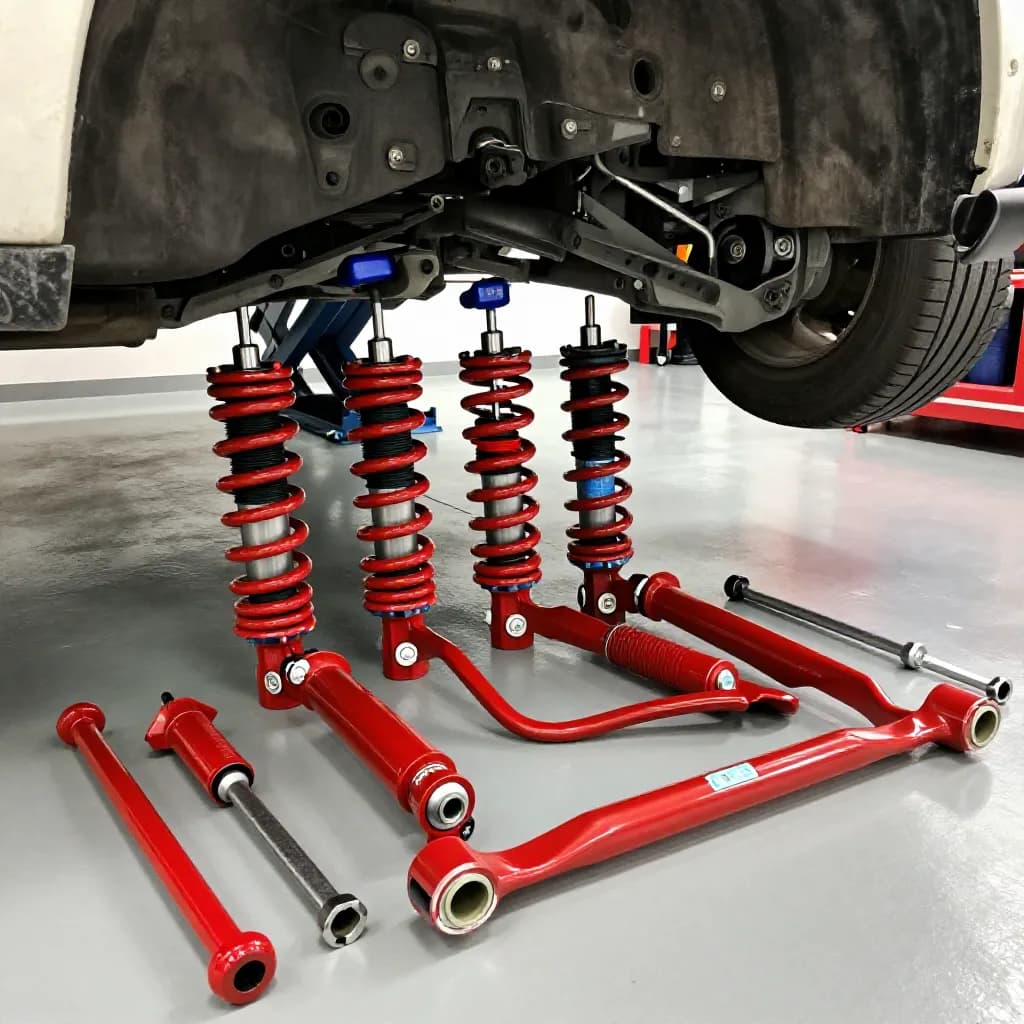
Corrosion on suspension components is more than a cosmetic issue. Rust weakens springs, thins control arm walls, and pits the surface of sway bars, all of which compromise the structural integrity of parts that are critical to vehicle safety and handling. A corroded coil spring can fracture without warning, a rusted control arm can fail at a ball joint or bushing mount, and a pitted sway bar can develop stress cracks at corrosion sites.
Ready to Start Your Project?
From one-off customs to 15,000-part production runs — get precise pricing in 24 hours.
On This Page
Why Suspension Components Need Superior Coatings
Powder coating provides a thick, durable barrier that dramatically extends the service life of suspension components. Applied at 80-120 microns with proper surface preparation, a quality powder coat resists stone chips, salt spray, and chemical exposure far better than factory coatings. For vehicle owners in rust-belt regions, coastal areas, or anyone who wants their suspension to look as good as it performs, powder coating is the definitive solution.
Coating Coil Springs: Challenges and Techniques
Coil springs are among the most challenging suspension components to powder coat due to their geometry, material properties, and the extreme stresses they endure in service. The tightly wound coil shape creates Faraday cage effects that make it difficult to achieve uniform coating thickness in the inner coil areas, and the spring steel material requires careful thermal management during the cure cycle.
Surface preparation for springs begins with complete removal of the factory coating, which is typically a thin epoxy e-coat. Abrasive blasting with steel grit or aluminum oxide removes the old coating and any surface corrosion while creating an ideal profile for powder adhesion. Springs should be blasted from multiple angles to ensure complete coverage of the inner coil surfaces.
The cure cycle for springs requires attention to the metallurgical properties of spring steel. Coil springs are heat-treated to achieve their specific spring rate and fatigue resistance, and excessive heat can alter these properties. Standard powder coating cure temperatures of 190-200 degrees Celsius for 10-15 minutes at metal temperature are generally safe for automotive coil springs, as these temperatures are well below the tempering range of spring steel. However, extended cure times or temperatures above 220 degrees Celsius should be avoided.
To address the Faraday cage effect in the inner coils, experienced coaters use a combination of techniques: reducing the electrostatic voltage, using a tribo-charging gun instead of a corona gun, and applying powder from multiple angles including through the center of the coil. Some coaters also use a fluidized bed dipping process for springs, which provides more uniform coverage than electrostatic spray on complex geometries.
Control Arms and A-Arms: Preparation and Protection
Control arms are fabricated from stamped steel, forged steel, cast aluminum, or tubular steel depending on the vehicle and application. Each material requires a tailored preparation approach, but the coating requirements are similar across all types: maximum corrosion resistance, stone chip durability, and chemical resistance.
Stamped and forged steel control arms are the most common and respond well to standard preparation. Blast to bare metal with aluminum oxide or steel grit, apply an iron phosphate or zinc phosphate conversion coating, and coat with a durable polyester powder. For maximum corrosion protection in salt-belt environments, a zinc-rich epoxy primer beneath the polyester topcoat provides galvanic protection at chip and scratch sites.
Cast aluminum control arms, found on many modern performance and luxury vehicles, require the same outgassing management as other cast aluminum components. Pre-bake at cure temperature before powder application to drive out trapped gases from the casting porosity. Aluminum control arms also benefit from a chromate-free conversion coating for adhesion promotion.
Tubular steel aftermarket control arms are popular in the off-road and performance markets. These are typically fabricated from DOM or ERW tubing with welded joints. Weld areas should be cleaned of spatter and slag before blasting, and a pre-bake cycle helps prevent outgassing from weld porosity. The tube interiors should be sealed or treated with a rust-inhibiting oil before the ends are capped, as internal corrosion is invisible but can weaken the arm over time.
Bushing and ball joint mounting areas require masking. Powder buildup in bushing bores affects press-fit tolerances, and coating on ball joint tapers prevents proper seating. Mask these areas with silicone plugs or high-temperature tape before coating.
Sway Bars and End Links
Sway bars, also known as anti-roll bars or stabilizer bars, are solid or hollow steel bars that connect the left and right suspension to resist body roll during cornering. Their exposed position beneath the vehicle makes them highly susceptible to corrosion, and their smooth, round cross-section makes them relatively straightforward to powder coat.
Preparation involves stripping the factory coating, which is usually a thin paint or phosphate treatment, and blasting to bare steel. The smooth, round profile of a sway bar is ideal for electrostatic powder application, as there are no sharp edges or recessed areas that create coating challenges. The result is a uniform, consistent finish with excellent coverage.
The bushing mounting areas require careful consideration. Sway bars rotate within polyurethane or rubber bushings, and the coating surface affects bushing wear and noise. A smooth powder coat finish works well with polyurethane bushings, which are typically lubricated with grease during installation. For rubber bushings, some builders prefer to leave the bushing contact area uncoated or lightly sanded to prevent squeaking, as rubber can grip a smooth powder coat surface and generate noise during bar rotation.
End links connect the sway bar to the suspension or chassis. These are typically small steel or aluminum components with ball joints or rubber bushings at each end. They can be powder coated for a coordinated appearance, but the ball joint and bushing areas must be masked. The threaded adjustment sections on adjustable end links should also be masked to maintain thread engagement.
For a complete suspension refresh, coating the sway bar, end links, and mounting brackets in the same color creates a clean, unified appearance. Satin black is the most common choice, but colored finishes like red, blue, or yellow are popular for performance builds where the sway bar is visible through open wheel wells.
Stone Chip and Salt Spray Resistance
The underbody environment subjects suspension components to constant bombardment from stones, gravel, and road debris. Salt spray in winter climates adds a chemical attack vector that accelerates corrosion at any point where the coating is compromised. A powder coating system for suspension components must excel at both impact resistance and chemical barrier performance.
Stone chip resistance is primarily a function of coating thickness, adhesion, and flexibility. Thicker coatings absorb more impact energy before fracturing, well-adhered coatings resist delamination at chip edges, and flexible coatings bend rather than crack under impact. For suspension components, a minimum film build of 80-100 microns is recommended, with 100-120 microns preferred for vehicles that see regular gravel road or off-road use.
A two-coat system with an epoxy primer and polyester topcoat provides the best combination of stone chip resistance and corrosion protection. The epoxy primer is inherently more flexible and impact-resistant than polyester, absorbing the initial impact energy. The polyester topcoat provides UV resistance, color stability, and chemical resistance. Together, the two layers create a coating system that is significantly tougher than either layer alone.
Salt spray resistance is tested using ASTM B117 or equivalent accelerated corrosion tests. A well-prepared and coated suspension component should withstand 500-1000 hours of salt spray exposure without significant corrosion at scribe marks or edges. Zinc phosphate pretreatment and zinc-rich primers dramatically improve salt spray performance compared to iron phosphate pretreatment alone.
Flexibility is particularly important for springs and sway bars, which flex continuously during vehicle operation. The coating must accommodate this movement without cracking or delaminating. Polyester powders formulated for flexible substrates are available and should be specified for components that experience significant deflection in service.
Color Choices and Underbody Aesthetics
While most suspension components are hidden beneath the vehicle, the growing popularity of lifted trucks, lowered show cars, and vehicles displayed at events has made underbody aesthetics increasingly important. A freshly powder-coated suspension transforms the view from beneath the vehicle and signals meticulous attention to detail.
Satin black and gloss black are the most popular choices for suspension components, providing a clean, factory-fresh appearance that complements any vehicle color. These finishes hide dirt and brake dust effectively and maintain their appearance with minimal cleaning.
For show vehicles and competition builds, colored suspension components make a bold statement. Red springs and sway bars are a classic performance look, while blue, yellow, and orange are popular for builds with a specific color theme. Matching the suspension color to the brake calipers, valve covers, or interior accents creates a cohesive build identity.
Metallic and chrome-look powder coats can replicate the appearance of polished or chrome-plated components without the corrosion vulnerability of actual chrome plating. A super chrome or mirror chrome powder coat on suspension components provides a striking visual effect, though these finishes are less durable than standard colors and may show wear more quickly in the harsh underbody environment.
Textured finishes like wrinkle and sandtex are practical choices for off-road vehicles where the suspension is frequently visible and subject to trail damage. The texture hides minor chips and scratches, and the matte surface does not show dirt as readily as gloss finishes. Textured black or dark grey provides a rugged, purposeful appearance that suits the character of an off-road build.
Reassembly and Alignment Considerations
After powder coating suspension components, reassembly requires attention to several details that affect both the coating longevity and the vehicle's handling characteristics. Rushing the reassembly can damage the fresh finish or create alignment issues that affect tire wear and driving dynamics.
Bushing installation is the most critical step. Press-fit bushings must be installed with proper tooling to avoid damaging the coating on the control arm or sway bar. Lubricate polyurethane bushings with the manufacturer's recommended grease before installation. For rubber bushings, ensure the bushing bore is clean and free of powder overspray that could prevent proper seating.
Ball joint tapers must be clean and free of coating for proper seating and clamping. If the taper was masked during coating, remove the masking and verify the taper surface is smooth and clean. If powder was inadvertently applied to the taper, remove it completely with fine sandpaper or a wire brush. An improperly seated ball joint is a serious safety hazard.
After reassembly, a four-wheel alignment is mandatory. Even if the same components are reinstalled in the same positions, the process of removal, coating, and reinstallation can introduce small changes in bushing preload and component positioning that affect alignment settings. Verify camber, caster, and toe are within specification and adjust as needed.
Brake lines, ABS sensors, and other components that route along or attach to suspension parts must be properly secured after reassembly. Verify that all clips, brackets, and fasteners are in place and that no lines or wires are contacting moving suspension components where they could chafe through the coating and the line itself.
Frequently Asked Questions
Does powder coating affect coil spring rates?
No. The standard powder coating cure temperature of 190-200 degrees Celsius for 10-15 minutes does not affect the heat treatment or spring rate of automotive coil springs. The temperatures are well below the tempering range of spring steel. Avoid extended cure times or temperatures above 220 degrees Celsius.
What coating thickness is best for suspension components?
A minimum of 80-100 microns is recommended for suspension components, with 100-120 microns preferred for vehicles in harsh environments. A two-coat system with epoxy primer and polyester topcoat provides the best combination of stone chip resistance and corrosion protection.
Should I mask bushing and ball joint areas before coating?
Yes. Bushing bores and ball joint tapers must be masked to maintain proper press-fit tolerances and taper seating. Powder buildup in these areas can prevent proper installation and compromise the safety and function of the suspension system.
Do I need an alignment after reinstalling powder-coated suspension parts?
Yes. A four-wheel alignment is mandatory after removing and reinstalling suspension components, even if the same parts go back in the same positions. The removal and reinstallation process can introduce small changes that affect camber, caster, and toe settings.
Can powder coating prevent rust on suspension parts in salt-belt regions?
A properly applied powder coat with zinc phosphate pretreatment and zinc-rich epoxy primer provides excellent salt spray resistance, typically withstanding 500-1000 hours of accelerated salt spray testing. This dramatically extends the service life of suspension components compared to factory coatings in salt-belt environments.
Ready to Start Your Project?
From one-off customs to 15,000-part production runs — get precise pricing in 24 hours.