Stainless steel's reputation as a maintenance-free, corrosion-resistant material leads many to question why it would ever need a coating. The answer lies in the gap between stainless steel's theoretical corrosion resistance and its real-world performance in architectural applications — and in the design possibilities that powder coating unlocks for architects working with this premium material.
Architecture
Powder Coating for Stainless Steel in Architecture: Color, Protection, and Tea Staining Prevention
Sundial Powder Coating·April 23, 2026·11 min
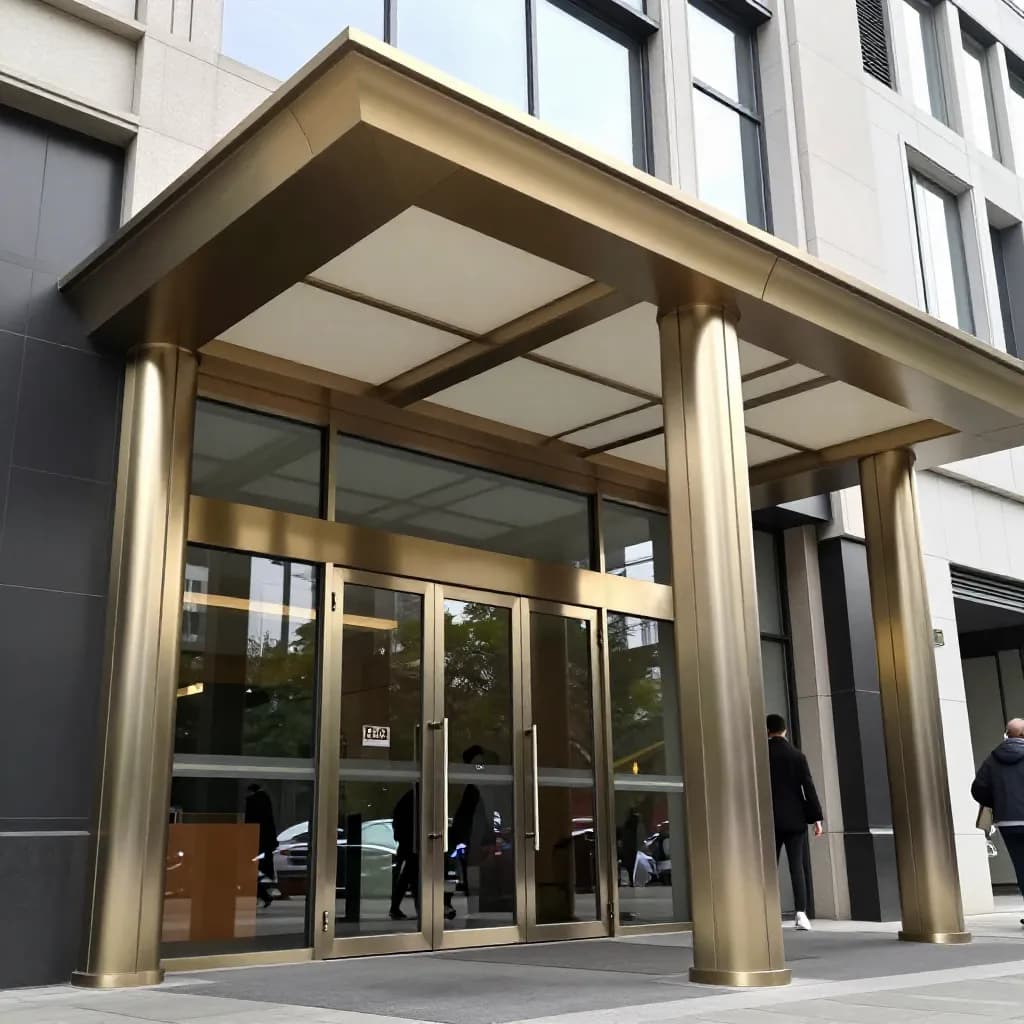
Stainless steel resists corrosion through a self-healing chromium oxide passive layer that forms spontaneously on the surface. This passive layer is remarkably effective in clean, dry environments, but it can be compromised by chloride exposure, atmospheric pollution, crevice conditions, and inadequate maintenance. In coastal environments, the phenomenon known as tea staining — brown discoloration caused by surface corrosion in chloride-laden atmospheres — affects even high-grade stainless steels and has been the subject of extensive industry research and concern.
Ready to Start Your Project?
From one-off customs to 15,000-part production runs — get precise pricing in 24 hours.
On This Page
Why Coat a Material That Does Not Rust?
Beyond corrosion protection, powder coating stainless steel opens a world of color and texture options that the natural metallic finish cannot provide. Architects can specify any RAL color, metallic effect, textured finish, or wood-grain sublimation on stainless steel substrates, combining the structural and corrosion advantages of stainless steel with the unlimited design palette of powder coating.
The combination is particularly valuable for coastal and marine architecture, where the structural properties of stainless steel are needed but the natural finish is vulnerable to tea staining. Powder coating provides a barrier that prevents chloride contact with the stainless surface, eliminating tea staining while adding color and design flexibility.
This article examines the technical considerations, pretreatment requirements, and design opportunities for powder coating stainless steel in architectural applications.
Tea Staining: The Coastal Stainless Steel Challenge
Tea staining is the most common form of corrosion affecting stainless steel in architectural applications, and it is the primary driver for specifying powder coating on stainless steel in coastal environments. The phenomenon manifests as brown or rust-colored discoloration on the stainless steel surface, caused by the breakdown of the passive chromium oxide layer in the presence of airborne chlorides.
The mechanism involves chloride ions from sea spray depositing on the stainless steel surface and penetrating the passive layer at weak points — grain boundaries, inclusions, and surface defects. Localized corrosion initiates at these points, producing iron oxide corrosion products that stain the surrounding surface. The staining is primarily cosmetic rather than structural, but it is aesthetically unacceptable on architectural facades, railings, and cladding.
The severity of tea staining depends on several factors: distance from the coast (more severe within 1 km of the shoreline), stainless steel grade (lower grades like 304 are more susceptible than higher grades like 316), surface finish (rougher finishes trap more chloride deposits), orientation (sheltered surfaces that are not rain-washed accumulate more deposits), and maintenance frequency (regular cleaning removes chloride deposits before they cause staining).
Industry guidelines from organizations such as the International Stainless Steel Forum (ISSF) and the Nickel Institute recommend specific grade and finish combinations for different coastal exposure zones. For severe coastal exposure (within 200 m of the surf zone), even grade 316 with a fine surface finish may require regular maintenance to prevent tea staining.
Powder coating eliminates the tea staining problem entirely by providing a continuous barrier between the stainless steel surface and the chloride-laden atmosphere. The coating prevents chloride deposition on the metal surface, and the stainless steel's inherent corrosion resistance provides backup protection at any coating defects. This duplex approach — barrier protection from the coating plus inherent corrosion resistance from the substrate — provides exceptional long-term performance in coastal environments.
For architects, powder coating stainless steel in coastal applications eliminates the need to specify expensive super-duplex or high-molybdenum grades solely for tea staining resistance. A standard grade 304 or 316 substrate with powder coating can outperform a higher-grade bare stainless steel in terms of both appearance retention and lifecycle cost.
Pretreatment Challenges for Stainless Steel Substrates
Achieving reliable powder coating adhesion on stainless steel is more challenging than on carbon steel or aluminum because the very property that makes stainless steel corrosion-resistant — its tenacious chromium oxide passive layer — also resists chemical bonding with coatings.
The passive layer on stainless steel is extremely thin (1-5 nm) but remarkably stable and chemically inert. Standard iron phosphate conversion coatings, which work well on carbon steel, do not react effectively with the stainless steel surface because the passive layer prevents the phosphoric acid from attacking the underlying metal. The result is a thin, poorly adherent conversion coating that provides inadequate adhesion promotion for the powder coating.
Mechanical preparation is the most reliable method for achieving coating adhesion on stainless steel. Abrasive blasting with aluminum oxide (never steel grit, which would contaminate the stainless surface with iron particles) creates a surface profile of 25-50 microns that provides mechanical anchoring for the coating. The blast media must be iron-free to prevent iron contamination that could initiate galvanic corrosion beneath the coating.
For architectural stainless steel where blasting may not be acceptable (due to surface finish requirements or part geometry), chemical etching provides an alternative surface activation method. Acid etching with phosphoric acid, citric acid, or proprietary stainless steel pretreatment solutions removes the passive layer and creates a micro-roughened surface that improves coating adhesion. The etched surface must be coated promptly (within 4 hours) before the passive layer regenerates.
Chromate-free conversion coatings based on zirconium or titanium chemistry have shown improved performance on stainless steel compared to traditional iron phosphate. These newer chemistries form a thin but adherent conversion layer on the stainless surface that provides better adhesion promotion for powder coating. Some formulations are specifically optimized for stainless steel and can achieve adhesion results comparable to mechanical preparation.
Silane-based adhesion promoters represent another approach for stainless steel pretreatment. Organosilane compounds form covalent bonds with both the metal oxide surface and the organic coating, creating a molecular bridge that provides excellent adhesion. Silane pretreatments are applied as a thin rinse or spray after cleaning and before powder application.
Regardless of the pretreatment method, the stainless steel surface must be scrupulously clean before treatment. Fingerprints, protective film adhesive residues, and fabrication lubricants can all prevent effective pretreatment and cause adhesion failures. Solvent wiping followed by alkaline cleaning is the standard cleaning sequence for architectural stainless steel.
Color and Design Options for Coated Stainless Steel
Powder coating transforms stainless steel from a material limited to metallic silver finishes into a substrate that can express virtually any color, texture, or visual effect. This design freedom is one of the primary reasons architects specify powder-coated stainless steel, even in environments where the bare metal would perform adequately.
The full RAL Classic and RAL Design color ranges are available for stainless steel, along with custom color matching to any reference sample. Metallic powder coatings that incorporate aluminum, mica, or glass flake pigments create effects ranging from subtle shimmer to bold sparkle, complementing the inherent metallic character of the stainless substrate.
Textured finishes — fine texture, coarse texture, wrinkle, and hammertone — add tactile and visual interest to stainless steel surfaces. These textures also provide practical benefits: they hide minor surface imperfections, reduce visible fingerprinting on touch surfaces, and improve coating edge coverage compared to smooth gloss finishes.
Wood-grain sublimation transfer on stainless steel creates the appearance of natural timber with the durability and fire performance of metal. This combination is particularly valuable for architectural applications where timber aesthetics are desired but fire regulations, maintenance requirements, or environmental conditions preclude the use of actual wood. Stainless steel with wood-grain powder coating provides a maintenance-free, non-combustible alternative that is virtually indistinguishable from real wood at normal viewing distances.
Matte and satin finishes have become increasingly popular in contemporary architecture, and powder coating provides these finishes with greater consistency and durability than mechanical finishing of bare stainless steel. A matte powder coating maintains its appearance indefinitely, while a mechanically finished matte stainless surface can become uneven over time due to differential wear and cleaning.
Dual-finish applications — different colors or textures on different faces of the same component — are achievable through masking and multi-stage coating. This technique allows architects to specify different appearances for interior and exterior faces of window frames, door handles, and cladding panels, coordinating with different design schemes on each side.
For projects requiring color consistency across large facade areas, powder coating provides better batch-to-batch color consistency than anodizing or electrochemical coloring of stainless steel. The powder coating color is determined by the powder formulation rather than the substrate condition, eliminating the color variation that can occur with surface-dependent finishing processes.
Structural and Facade Applications
Powder-coated stainless steel is specified for a growing range of architectural structural and facade applications where the combination of structural performance, corrosion resistance, and design flexibility justifies the premium material cost.
Curtain wall mullions and transoms in stainless steel provide superior structural performance compared to aluminum, allowing larger spans and more slender profiles for the same structural capacity. Powder coating these profiles in colors that match the overall facade design integrates the structural system with the architectural vision. The stainless steel substrate provides fire resistance that aluminum cannot match, an increasingly important consideration in high-rise facade design.
Rainscreen cladding panels in powder-coated stainless steel combine the flatness and formability of stainless sheet with the color and texture options of powder coating. The panels resist denting and impact damage better than aluminum, and the stainless substrate provides inherent corrosion resistance at panel edges and fastener penetrations where the coating may be compromised during installation.
Balustrades and handrails in coastal environments are a primary application for powder-coated stainless steel. The structural requirements for balustrade loading (typically 0.75-1.5 kN/m horizontal load per building codes) favor stainless steel over aluminum, and powder coating eliminates the tea staining that would otherwise require frequent maintenance in coastal locations.
Canopy and entrance structures benefit from powder-coated stainless steel's combination of structural efficiency, corrosion resistance, and design flexibility. Complex curved and welded structures that would be difficult to maintain in bare stainless steel can be powder coated to provide both protection and color, with the stainless substrate ensuring structural integrity even if the coating is locally damaged.
Street furniture and urban infrastructure — bollards, benches, litter bins, cycle racks — in powder-coated stainless steel provide vandal resistance, corrosion durability, and design integration with the urban environment. The hardness and impact resistance of stainless steel resists the denting and deformation that affects aluminum street furniture, while powder coating provides the color options needed to complement urban design schemes.
For all structural applications, the coating specification must account for the thermal expansion of stainless steel (approximately 17 × 10⁻⁶ /°C for austenitic grades), which is higher than carbon steel and can stress the coating at connections and joints during temperature cycling.
Specification and Quality Standards
Specifying powder coating on stainless steel requires attention to standards and quality marks that address the specific challenges of this substrate. The standard architectural powder coating specifications developed for aluminum (Qualicoat, AAMA) can be applied to stainless steel with modifications for pretreatment and adhesion testing.
Qualicoat specifications can be applied to stainless steel substrates, though the pretreatment requirements differ from those for aluminum. The Qualicoat-approved pretreatment processes for aluminum (chromate or chromate-free conversion coating) must be replaced with stainless steel-compatible alternatives. Some Qualicoat licensees have developed and validated pretreatment processes specifically for stainless steel that achieve the adhesion and corrosion resistance requirements of the Qualicoat specification.
Adhesion testing is particularly important for powder-coated stainless steel because the smooth, passive surface presents greater adhesion challenges than aluminum or carbon steel. Cross-cut adhesion testing per ISO 2409 should achieve Class 0 (no detachment) or Class 1 (less than 5% detachment) on properly pretreated stainless steel. Pull-off adhesion testing per ISO 4624 should achieve minimum values of 5 MPa, with cohesive failure within the coating preferred over adhesive failure at the coating-substrate interface.
Boiling water adhesion testing — immersing coated test panels in boiling water for 2 hours and then performing cross-cut adhesion testing — is a demanding test that reveals pretreatment deficiencies not apparent in dry adhesion testing. This test is recommended for stainless steel coating qualification because the smooth substrate surface is more susceptible to adhesion loss under wet conditions than rougher substrates.
Weathering performance of powder coating on stainless steel follows the same standards as on aluminum — ASTM G154 or G155 accelerated weathering, with evaluation of gloss retention, color change, chalking, and blistering. The stainless steel substrate does not affect the weathering performance of the coating, so the same powder formulations and performance expectations apply.
For coastal applications where tea staining prevention is the primary motivation for coating, the specification should include salt spray testing (ASTM B117) with evaluation of both the coating surface and the stainless steel substrate at any intentional defects. The stainless steel should show no tea staining or pitting at defect sites after the specified exposure period, confirming that the substrate grade is appropriate for the environment even without coating protection.
Fire performance of powder-coated stainless steel is governed by the same standards as other coated metals. The thin organic powder coating on a non-combustible stainless steel substrate achieves A1 or A2 Euroclass fire ratings, making it suitable for facade applications subject to fire safety regulations.
Maintenance and Lifecycle Considerations
One of the key advantages of powder-coated stainless steel in architecture is the dramatic reduction in maintenance requirements compared to bare stainless steel in challenging environments. Understanding the maintenance profile and lifecycle performance helps architects and building owners make informed specification decisions.
Bare stainless steel in coastal environments requires regular cleaning — typically every 3-6 months — to remove chloride deposits before they cause tea staining. This maintenance is often neglected, leading to progressive staining that becomes increasingly difficult to remove. Powder-coated stainless steel requires only annual cleaning with mild detergent and water to maintain its appearance, the same maintenance regime as any powder-coated surface.
The lifecycle cost comparison between bare and coated stainless steel depends on the environment and maintenance assumptions. In mild inland environments where bare stainless steel performs well without maintenance, the additional cost of powder coating may not be justified on corrosion protection grounds alone (though color and design benefits may still warrant coating). In coastal environments where regular maintenance of bare stainless steel is required, the reduced maintenance cost of powder-coated stainless steel typically recovers the coating cost within 5-10 years.
Repair of damaged powder coating on stainless steel follows standard powder coating repair procedures — cleaning the damaged area, applying a compatible touch-up coating (typically a two-component liquid system), and blending the repair into the surrounding coating. The stainless steel substrate simplifies repair because there is no risk of substrate corrosion spreading beneath the coating during the interval between damage and repair, unlike carbon steel where prompt repair is essential to prevent rust creep.
End-of-life recyclability is an important consideration for sustainable architecture. Stainless steel is one of the most recycled materials, with recycling rates exceeding 80% for architectural applications. Powder coating does not significantly affect the recyclability of stainless steel — the organic coating is burned off during the melting process, and the stainless steel is recovered at full value. This contrasts with some other finishing processes (such as PVD coating with exotic metals) that can complicate recycling.
For projects targeting green building certifications (LEED, BREEAM, DGNB), powder-coated stainless steel contributes to multiple credit categories: recycled content (stainless steel typically contains 60-70% recycled material), durability and maintenance reduction, low-emitting materials (zero VOC powder coating), and end-of-life recyclability.
Frequently Asked Questions
Why would you powder coat stainless steel if it already resists corrosion?
Powder coating stainless steel prevents tea staining in coastal environments, provides unlimited color and texture options for architectural design, and reduces maintenance requirements. In coastal locations, even high-grade stainless steel can develop brown discoloration from chloride exposure that powder coating completely prevents.
Is it difficult to get powder coating to adhere to stainless steel?
Yes, stainless steel's passive chromium oxide layer resists chemical bonding with coatings. Reliable adhesion requires mechanical preparation (abrasive blasting with aluminum oxide) or chemical activation (acid etching, zirconium conversion coating, or silane adhesion promoters). Standard iron phosphate pretreatment used for carbon steel is ineffective on stainless steel.
What is tea staining on stainless steel?
Tea staining is brown discoloration caused by localized corrosion of stainless steel in chloride-laden coastal atmospheres. It is primarily cosmetic but aesthetically unacceptable on architectural surfaces. It is more severe within 1 km of the coast, on rougher surface finishes, and on lower grades like 304 compared to 316.
Can powder-coated stainless steel achieve fire safety ratings for facades?
Yes. The thin organic powder coating on a non-combustible stainless steel substrate achieves A1 or A2 Euroclass fire ratings, classifying it as non-combustible. This makes powder-coated stainless steel suitable for facade applications subject to the most stringent fire safety regulations.
How does the lifecycle cost of coated vs. bare stainless steel compare?
In coastal environments where bare stainless steel requires cleaning every 3-6 months to prevent tea staining, powder-coated stainless steel (requiring only annual cleaning) typically recovers the coating cost within 5-10 years through reduced maintenance. In mild inland environments, the cost benefit depends primarily on the value of color and design flexibility.
Ready to Start Your Project?
From one-off customs to 15,000-part production runs — get precise pricing in 24 hours.