Rear-mounted spare tire carriers are essential equipment for serious off-road vehicles. Whether it is a swing-out carrier on a rear bumper, a roof-mounted carrier on a rack, or a tailgate-mounted hoist system, the carrier must support a heavy spare tire and wheel assembly while enduring the same environmental abuse as any other exterior vehicle component. The coating on a spare tire carrier must provide long-term corrosion protection in an application that sees constant vibration, road spray, and physical contact.
Automotive
Powder Coating Spare Tire Carriers: Corrosion Protection for Rear-Mounted Off-Road Equipment
Sundial Powder Coating·April 23, 2026·9 min
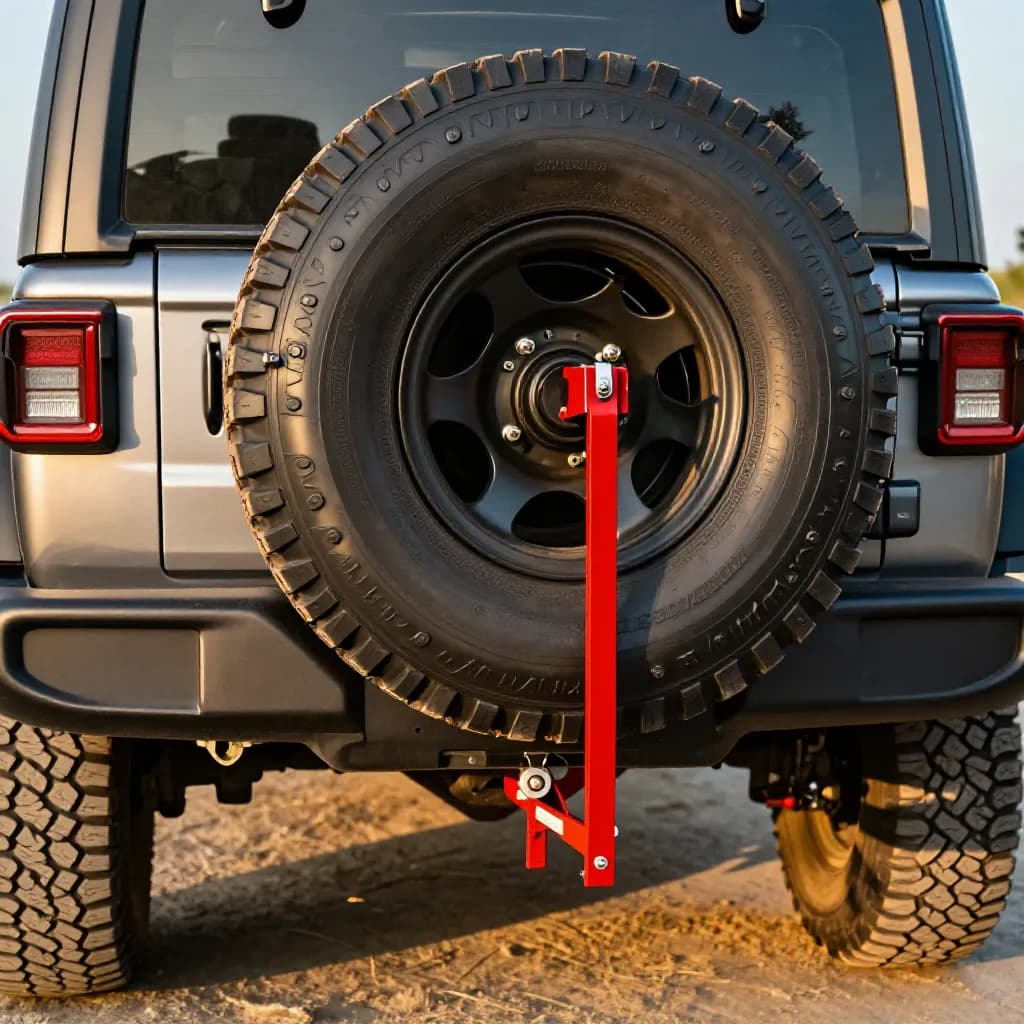
Spare tire carriers are particularly vulnerable to corrosion because of their rear-mounted position. They catch the full spray from the rear tires, which includes water, mud, salt, and road debris. The carrier's complex geometry, with tubes, plates, hinges, and latches, creates numerous crevices and joints where moisture can collect and corrosion can initiate. The weight of the spare tire and wheel, typically 25-40 kilograms for an off-road setup, creates constant stress on the carrier structure and its coating.
Ready to Start Your Project?
From one-off customs to 15,000-part production runs — get precise pricing in 24 hours.
On This Page
Spare Tire Carriers and Their Coating Demands
Powder coating is the standard finish for quality aftermarket spare tire carriers, and for good reason. The thick, uniform coating provides excellent corrosion protection across the carrier's complex geometry. The hard, cross-linked film resists the abrasion from tire contact, strap hardware, and trail debris. And the range of available finishes allows the carrier to match the vehicle's bumper, sliders, and other accessories for a cohesive build appearance.
Swing-Out Carrier Design and Coating Challenges
Swing-out spare tire carriers are the most popular design for off-road vehicles because they allow full access to the tailgate or rear cargo area without removing the spare tire. These carriers pivot on a heavy-duty hinge assembly and latch securely in the closed position. The hinge and latch mechanisms present specific coating challenges that must be addressed for reliable long-term operation.
The hinge pin and bushing interface is a high-wear area where metal-on-metal contact occurs every time the carrier is opened or closed. Powder coating this interface creates a smooth bearing surface initially, but the coating will wear through with repeated use. The practical approach is to mask the hinge pin and bushing bore during coating, leaving bare metal at the bearing surface, and protect these areas with grease or anti-seize compound during assembly.
The latch mechanism must engage and disengage reliably after coating. Powder buildup on latch pins, striker plates, and engagement surfaces can prevent proper latching, which is a safety hazard when the carrier is loaded with a heavy spare tire. Mask all latch engagement surfaces during coating, or test the latch function after coating and carefully remove any powder that interferes with operation.
The pivot point where the carrier swings must be properly lubricated after coating. The powder coat surface provides a smooth, low-friction base, but the weight of the loaded carrier requires grease at the pivot to prevent binding and excessive wear. Install grease fittings at the pivot point if the carrier design allows, and establish a regular greasing schedule as part of vehicle maintenance.
The carrier's structural welds should be inspected before coating. Swing-out carriers experience significant dynamic loads from the cantilevered spare tire, and weld quality is critical to safety. Any weld defects should be repaired before the coating process conceals them.
Weight Considerations and Structural Integrity
Spare tire carriers support significant weight in a cantilevered position, creating substantial stress on the carrier structure, its mounting points, and the vehicle's rear body or frame. The powder coating process must not compromise the carrier's ability to safely support this load.
The cure temperature of standard powder coatings, 190-200 degrees Celsius, does not affect the mechanical properties of the mild steel and structural steel alloys used in spare tire carrier fabrication. These steels are not heat-treated to the same degree as spring steel or tool steel, and the brief thermal cycle of powder coating is well within their safe operating range. The carrier's load capacity is unchanged after coating.
Coating weight is negligible relative to the carrier's structural capacity. A typical spare tire carrier coating adds 200-400 grams of powder, which is insignificant compared to the 25-40 kilogram tire and wheel assembly it supports. The coating does not affect the carrier's center of gravity or dynamic behavior in any meaningful way.
The mounting hardware that attaches the carrier to the vehicle bumper or frame must be properly torqued after coating. Powder buildup on mounting bolt holes can reduce the effective hole diameter and affect clamping force. Ream or chase bolt holes after coating to ensure proper hardware fitment. Use the manufacturer's specified bolt grades and torque values, as the carrier's rated capacity assumes specific clamping forces at the mounting points.
For carriers that mount to the vehicle's tailgate or body panel rather than the bumper, the mounting point must be reinforced to handle the cantilevered load. This reinforcement should be completed before coating so the entire assembly is coated as one piece, providing continuous corrosion protection across all welded joints.
Corrosion Protection for Rear-Mounted Components
The rear of a vehicle is one of the most corrosive environments for any mounted accessory. Tire spray from the rear wheels deposits a continuous stream of water, mud, salt, and road chemicals onto everything behind the rear axle. The spare tire carrier, positioned at the very back of the vehicle, catches all of this spray plus additional debris kicked up by the vehicle's own passage.
A multi-layer coating system provides the best corrosion protection for spare tire carriers. Start with thorough blasting to white metal, removing all mill scale, rust, and fabrication contamination. Apply a zinc phosphate conversion coating for maximum pretreatment performance. Follow with a zinc-rich epoxy primer at 50-60 microns for galvanic corrosion protection, then a super-durable polyester topcoat at 60-80 microns for UV resistance and abrasion durability.
Crevice corrosion is a particular concern on spare tire carriers due to their complex geometry. Tube joints, gusset plates, hinge assemblies, and latch mechanisms all create crevices where moisture can collect and remain in contact with the metal surface for extended periods. Ensuring complete coating coverage in these crevice areas is critical. After coating, inspect all joints and crevices for thin spots or bare areas and touch up as needed.
The tire contact surface where the spare tire rests against the carrier experiences constant abrasion from tire vibration during driving. This area will show coating wear over time, which is normal. A rubber or plastic isolator between the tire and the carrier protects both the coating and the tire sidewall. Many carrier designs include a rubber pad at the tire contact point for this purpose.
Drain holes in the carrier structure should be kept clear during coating to prevent water from pooling inside tubes and channels. Trapped water accelerates internal corrosion that is invisible from the outside and can weaken the carrier structure over time.
Finish Options and Build Coordination
Spare tire carriers are a prominent visual element on the rear of an off-road vehicle, and the finish should complement the overall build aesthetic. The carrier is typically visible from behind and from the sides, making it one of the most noticed accessories on the vehicle.
Textured black is the dominant finish for off-road spare tire carriers. It matches the most common bumper and slider finishes, hides trail damage and dirt, and provides a rugged appearance that suits the vehicle's purpose. Wrinkle black and sandtex black are both popular texture options, with wrinkle providing a more pronounced pattern and sandtex offering a finer, grittier surface.
For builds with a coordinated color theme, matching the carrier to the bumper, sliders, and roof rack creates a unified appearance. Coating all of these components in the same batch ensures identical color and texture. Popular coordinated colors include satin black, gunmetal grey, and flat dark earth for military-inspired builds.
Some builders choose a contrasting accent color for the carrier to make it a visual feature. A red or orange carrier on a black bumper creates a bold look that draws attention to the rear of the vehicle. This approach works well for competition vehicles and show builds where visual impact is a priority.
The spare tire itself can be coordinated with the carrier finish. Matching wheel color to the carrier color, or using a contrasting wheel color that complements the carrier, adds another layer of visual coordination to the build. Powder-coated steel wheels in a matching or complementary color complete the rear-end presentation.
Maintenance and Trail Damage Repair
Spare tire carriers on off-road vehicles will inevitably sustain coating damage from trail use. Rocks, branches, and obstacles contact the carrier during approach and departure, and the constant vibration of off-road driving causes the spare tire to abrade the carrier surface. A practical maintenance approach keeps the carrier protected and looking good despite this wear.
After every off-road trip, inspect the carrier for coating damage. Pay particular attention to the lower edges and corners that are most likely to contact obstacles, the tire contact surface, and the hinge and latch areas. Clean mud and debris from all surfaces and crevices, as trapped moisture accelerates corrosion at any coating damage sites.
Touch up chips and scratches promptly with a zinc-rich primer followed by matching touch-up paint. For small chips, a brush-on application is sufficient. For larger damaged areas, a spray can of matching color provides better coverage and appearance. The goal is to seal the exposed metal before corrosion can start, not to achieve a perfect cosmetic repair.
The hinge and latch mechanisms require periodic lubrication to maintain smooth operation. Apply grease to the hinge pin and pivot bushings every few months or after water crossings. Verify that the latch engages fully and holds securely, as vibration and wear can cause the latch to loosen over time. A carrier that does not latch securely is a serious safety hazard.
For carriers that have sustained significant coating damage from heavy trail use, a complete strip and recoat restores the carrier to like-new condition. This is typically needed every 3-5 years for vehicles that see regular aggressive off-road use, and less frequently for vehicles used primarily on maintained trails and gravel roads.
Frequently Asked Questions
Does powder coating affect the load rating of a spare tire carrier?
No. The standard powder coating cure temperature does not affect the mechanical properties of the steel used in spare tire carriers. The coating adds negligible weight, and the carrier's rated capacity is unchanged after coating. Ensure mounting bolt holes are reamed after coating for proper hardware fitment.
Should I mask the hinge and latch on a swing-out carrier?
Yes. The hinge pin bore, bushing surfaces, and latch engagement surfaces should be masked during coating. Powder buildup on these surfaces can cause binding at the hinge and prevent proper latch engagement, which is a safety hazard when the carrier is loaded with a spare tire.
What is the best coating system for a spare tire carrier?
A multi-layer system with zinc phosphate pretreatment, zinc-rich epoxy primer, and super-durable polyester topcoat provides the best corrosion protection. This system offers both barrier protection from the topcoat and galvanic protection from the zinc primer at any chip or scratch sites.
How often should I maintain a powder-coated spare tire carrier?
Inspect after every off-road trip and touch up any coating damage promptly. Lubricate the hinge and latch every few months or after water crossings. Clean mud and debris regularly to prevent moisture-related corrosion. A complete strip and recoat may be needed every 3-5 years for heavily used off-road carriers.
Can I coat the carrier and bumper in the same batch?
Yes, and this is the recommended approach. Coating the carrier, bumper, and other accessories in the same batch ensures identical color and texture across all components. This eliminates the slight variations that can occur between different powder lots or coating sessions.
Ready to Start Your Project?
From one-off customs to 15,000-part production runs — get precise pricing in 24 hours.