For small businesses and startups manufacturing metal products, the finish quality can make or break market success. Consumers and buyers judge product quality instantly by its appearance, and a professional, durable finish communicates that the product is well-made and worth its asking price. Powder coating delivers that professional finish at a level that is difficult to achieve with other methods accessible to small manufacturers.
Commercial
Powder Coating for Small Business Products: Prototyping, Small Batch, and Finding a Coater
Sundial Powder Coating·April 22, 2026·12 min
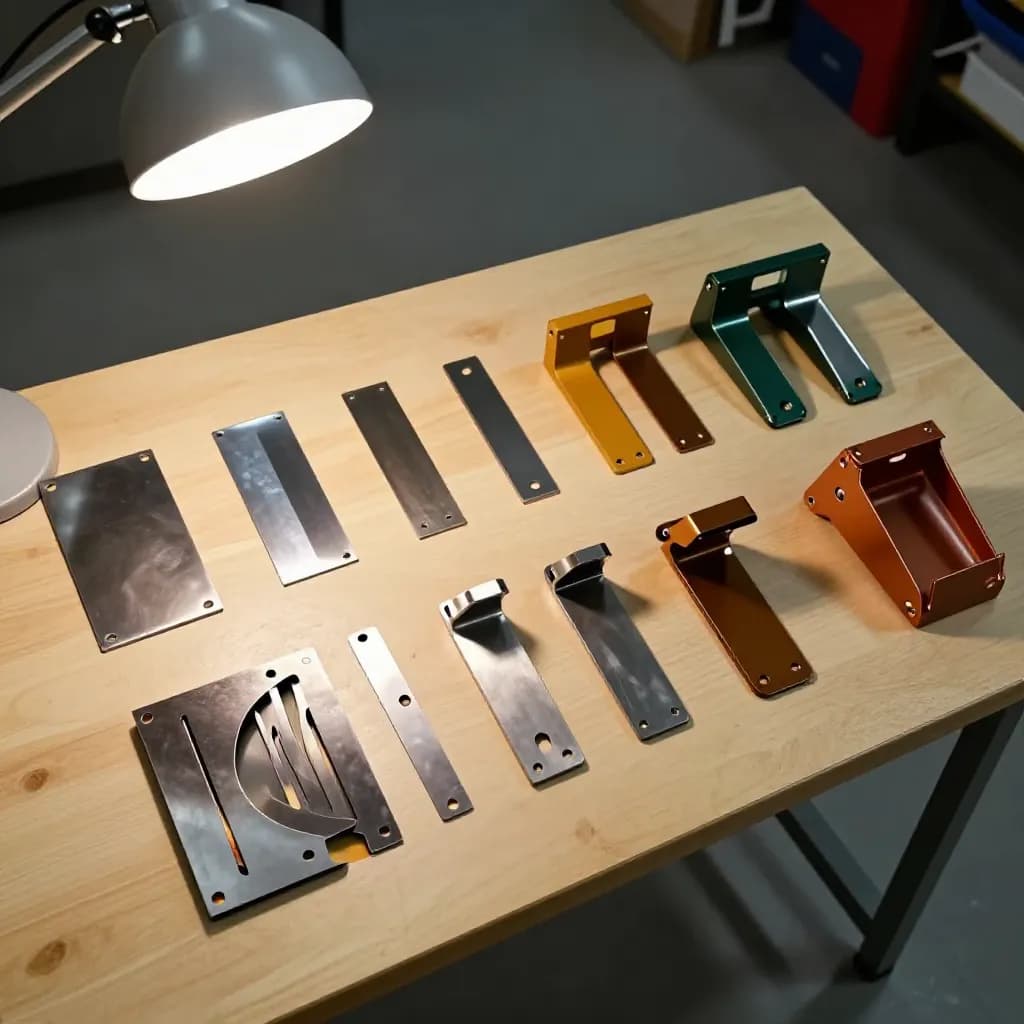
Powder coating provides small businesses with the same finish quality used by major manufacturers. The smooth, uniform, durable coating on a small-batch product from a startup can be indistinguishable from the finish on a mass-produced product from an established brand. This levels the playing field, allowing small businesses to compete on product quality and design rather than being disadvantaged by inferior finishing.
Ready to Start Your Project?
From one-off customs to 15,000-part production runs — get precise pricing in 24 hours.
On This Page
Why Powder Coating Matters for Small Business Products
Beyond aesthetics, powder coating's durability protects small businesses from quality complaints and returns. A product that chips, fades, or corrodes prematurely damages the brand reputation that small businesses work hard to build. Powder coating's resistance to chipping, scratching, fading, and corrosion means products maintain their appearance through shipping, handling, and years of customer use.
The environmental profile of powder coating is also increasingly important for small businesses. Zero VOC emissions, high material efficiency, and the absence of hazardous solvents align with the sustainability values that many small business customers prioritize. Being able to state that your products are finished with an environmentally responsible process adds value to your brand story.
Prototyping: Getting Your First Parts Coated
The prototyping phase is where many small businesses first encounter the powder coating process, and navigating it successfully sets the foundation for production-quality finishing.
Start with a clear understanding of what you need from the finish. Define the color (RAL number or physical reference sample), the finish type (gloss, matte, satin, textured), the performance requirements (outdoor exposure, chemical resistance, food contact, heat resistance), and any areas that must remain uncoated (threads, mating surfaces, electrical contacts). The more precisely you define your requirements upfront, the better the result and the fewer iterations needed.
For prototype quantities — typically 1-10 parts — finding a coating shop willing to handle small jobs is the first challenge. Many production-oriented shops have minimum order quantities or minimum charges that make single-part jobs uneconomical. Look for custom coating shops, job shops, or shops that specifically advertise small-batch and prototype services. Automotive and motorcycle custom coating shops are often good options for prototype work because they are accustomed to handling individual parts with high quality expectations.
Expect to pay a premium for prototype quantities. The setup time for a powder coating job — cleaning the gun, loading the powder, adjusting settings, and cleaning up afterward — is roughly the same whether you are coating one part or fifty. This fixed setup cost spread across a single part makes the per-unit cost much higher than production quantities. This is normal and expected; the goal at the prototype stage is to validate the finish, not to optimize cost.
Use the prototype phase to evaluate not just the color and appearance but also the coating's performance. Test the coated prototype under the conditions it will experience in use — handle it, expose it to weather if it is an outdoor product, test chemical resistance if relevant, and assess how well the finish holds up. Identifying coating performance issues at the prototype stage is far less expensive than discovering them after a production run.
Document everything about the prototype coating — the shop that did it, the specific powder product used, the color code, the cure schedule, and any special preparation steps. This documentation ensures you can replicate the exact same finish when you move to production quantities.
Small Batch Production: 10 to 500 Parts
Small batch production is the sweet spot where powder coating becomes both practical and economical for small businesses. At quantities of 10-500 parts, the per-unit coating cost drops significantly from prototype pricing, and the process becomes efficient enough to be a viable component of your product cost structure.
At this scale, establishing a relationship with a coating shop that understands your product and quality requirements is important. Rather than shopping for the lowest price on each batch, find a shop that delivers consistent quality, communicates well, and is willing to work with your production schedule. A reliable coating partner becomes an extension of your manufacturing process.
Consistency is the primary quality concern at small batch scale. Every part in a batch should look identical — same color, same gloss, same texture, same film thickness. Variations between parts are immediately noticeable when products are displayed together or when customers compare units. A quality coating shop achieves consistency through standardized processes, calibrated equipment, and quality checks throughout the batch.
Fixturing and hanging become important considerations at batch quantities. How parts are hung on the coating line affects coverage, film thickness distribution, and the location of hang marks (small uncoated spots where the hanging hook contacts the part). Discuss hanging orientation with the coating shop to ensure that hang marks are located in inconspicuous areas and that all critical surfaces receive proper coverage.
Lead time planning is essential for small batch production. Build the coating shop's turnaround time — typically 3-7 business days for standard service — into your production schedule, plus buffer time for any quality issues that require rework. If your product has seasonal demand peaks, communicate your anticipated schedule to the coating shop in advance so they can plan capacity.
Quality inspection of coated parts should be systematic. Establish acceptance criteria — minimum film thickness, acceptable gloss range, color tolerance, and defect limits — and inspect each batch against these criteria before accepting delivery. A simple inspection protocol catches issues early and establishes quality expectations with the coating shop.
Finding the Right Coating Shop for Your Business
Selecting a powder coating partner is one of the most important decisions a small business makes in its manufacturing process. The right shop delivers consistent quality, meets deadlines, communicates proactively, and grows with your business. The wrong shop causes quality problems, missed deadlines, and customer complaints.
Start by identifying shops in your region that handle the type and volume of work you need. General-purpose job shops handle a wide variety of parts and are often the best fit for small businesses with diverse product lines. Specialty shops that focus on specific industries — automotive, architectural, furniture — may be a better fit if your products align with their expertise.
Evaluate potential shops on several criteria. Quality systems: does the shop have documented quality procedures, calibrated equipment, and inspection processes? Ask about their quality control steps and whether they perform film thickness testing, adhesion testing, and visual inspection on every batch. Capacity and flexibility: can the shop handle your current volumes and scale with you as your business grows? A shop that is perfect for 50-part batches may not be able to accommodate 500-part orders without significant lead time increases.
Visit the shop in person before committing to a production relationship. A clean, organized shop with well-maintained equipment is a strong indicator of quality work. Look at parts in process — are they hung carefully, is the spray booth clean, are cured parts being handled with care? Talk to the operators and see if they take pride in their work.
Request references from other small business customers. A shop that successfully serves other product manufacturers understands the quality expectations and communication needs of business customers, which differ from individual consumer jobs. Ask references about consistency, turnaround reliability, and how the shop handles quality issues when they arise.
Discuss pricing structure openly. Understand how the shop prices work — per part, per square foot, by weight, or by batch — and what factors affect pricing. Ask about setup charges, color change fees, minimum order charges, and volume discounts. Transparent pricing helps you accurately calculate your product cost and set appropriate retail pricing.
Establish clear communication channels. Know who your point of contact is at the shop, how to submit orders, how quality issues are reported and resolved, and how schedule changes are communicated. Good communication prevents most problems before they occur.
Quality Expectations and Specifications
Setting clear quality expectations with your coating shop prevents misunderstandings and ensures your products meet the standards your customers expect. Quality specifications should be documented and agreed upon before production begins.
Film thickness is the most fundamental quality parameter. Specify a target thickness and acceptable range — for example, 70 microns target with a 60-80 micron acceptable range. Film thickness affects appearance, durability, and cost. Too thin and the coating may not provide adequate protection or coverage; too thick and the coating may orange peel, sag, or obscure fine details. The coating shop should measure film thickness on every batch using a calibrated coating thickness gauge.
Color consistency should be defined using a measurable standard. Delta E (ΔE) is the standard metric for color difference — a ΔE of 1.0 or less is generally imperceptible to the human eye, while a ΔE of 2.0-3.0 is noticeable but often acceptable for industrial products. Specify the maximum acceptable ΔE between production parts and the approved color standard. For products where color matching is critical — consumer goods displayed side by side — tighter tolerances are necessary.
Gloss level should be specified and measured. Gloss is measured in gloss units (GU) at a 60-degree angle. High gloss is typically above 80 GU, semi-gloss is 40-80 GU, satin is 20-40 GU, and matte is below 20 GU. Specify the target gloss and acceptable range for your product.
Surface defect limits define what is acceptable and what requires rework. Common defects include orange peel (textured surface on a smooth coating), inclusions (particles trapped in the coating), thin spots, runs, sags, and contamination. Define which defects are acceptable at what size and frequency, and which require rejection. For consumer products, the standard is typically stricter than for industrial equipment.
Adhesion testing verifies that the coating is properly bonded to the substrate. Cross-hatch adhesion testing (ASTM D3359) should be performed on sample parts from each batch, with a minimum rating of 4B (less than 5 percent coating removal). This simple test catches preparation and curing problems that would lead to coating failure in service.
Create a written quality specification document that covers all of these parameters and share it with the coating shop. This document becomes the reference for quality discussions and ensures both parties have the same expectations.
Scaling Up: From Small Batch to Production Volume
As your business grows, your powder coating needs will evolve from small batches to larger production volumes. Planning for this transition ensures that coating quality and supply keep pace with your business growth.
Volume increases change the economics of powder coating. At higher volumes, per-unit coating costs decrease because setup costs are spread across more parts, the shop can optimize its process for your specific parts, and you may qualify for volume pricing. Discuss volume pricing tiers with your coating shop so you can factor anticipated cost reductions into your business planning.
At production volumes, consider whether your current coating shop can scale with you. A shop that handles 50-part batches excellently may struggle with 1000-part orders due to capacity constraints, scheduling conflicts, or quality control challenges at higher throughput. Evaluate whether your shop has the physical capacity, staffing, and equipment to handle your projected volumes.
Developing a second coating source is prudent risk management as your volumes grow. Relying on a single coating shop creates a single point of failure — if the shop has equipment problems, staffing issues, or closes, your production stops. Qualifying a backup shop and periodically running small orders through them ensures you have an alternative if your primary shop cannot deliver.
At higher volumes, investing in your own powder coating capability may become economically justified. A basic powder coating setup — spray booth, oven, gun, and compressor — can be acquired for a modest investment, and the per-unit cost of in-house coating drops well below outsourced pricing at sufficient volumes. However, in-house coating requires space, equipment maintenance, operator training, and quality control infrastructure. The break-even point depends on your specific parts, volumes, and the outsourced pricing you are currently paying.
Regardless of whether you scale with an external shop or bring coating in-house, maintain the quality specifications and inspection procedures established during your small batch phase. Quality discipline becomes more important, not less, as volumes increase, because the cost of a quality failure — in rework, returns, and reputation damage — scales with volume.
Cost Management and Budgeting for Product Finishing
For small businesses, powder coating cost is a direct component of product cost that affects pricing, margins, and competitiveness. Understanding the cost structure and managing it effectively is essential for business viability.
Powder coating cost is driven by several factors: part size and complexity (larger and more complex parts cost more to coat), surface preparation requirements (rusty or previously coated parts cost more than clean bare metal), color and finish (standard colors cost less than custom matches; specialty finishes cost more than standard), quantity (higher volumes reduce per-unit cost), and turnaround time (rush orders cost more than standard service).
To minimize coating cost without sacrificing quality, design your parts with coating in mind. Smooth surfaces with generous radii on edges and corners coat more easily and consistently than parts with sharp edges, deep recesses, and complex geometry. Parts that can be hung efficiently on the coating line — with natural hanging points that do not require custom fixtures — cost less to process than parts that need special handling.
Deliver parts to the coating shop as clean and ready to coat as possible. If your fabrication process leaves parts relatively clean and free of heavy scale or contamination, communicate this to the shop — they may be able to reduce preparation steps and cost. Conversely, if your parts arrive rusty, oily, or with heavy weld spatter, the shop will charge for the additional preparation work required.
Batch orders strategically. Combining multiple product lines that use the same color into a single batch order reduces setup charges and may qualify for volume pricing. If you have products in different colors, schedule orders so that each color is batched together rather than sending mixed-color orders that require multiple setups.
Build coating cost into your product pricing from the start. Include not just the per-unit coating charge but also transportation to and from the shop, inspection time, touch-up materials, and an allowance for occasional rework. Underestimating finishing costs is a common mistake that erodes margins for small product businesses.
Track coating costs over time and review them periodically with your coating shop. As your volumes grow and your relationship matures, there may be opportunities to reduce costs through process optimization, volume commitments, or adjusted specifications that maintain quality while reducing unnecessary steps.
Frequently Asked Questions
Can a small business get just a few parts powder coated?
Yes. Many custom coating shops and job shops accept small orders, including single prototype parts. Expect to pay a premium for very small quantities due to fixed setup costs. Look for shops that advertise small-batch or prototype services, or automotive custom shops that are accustomed to individual part work.
How do I find a powder coating shop for my product business?
Search for local job shops and custom coating services. Visit potential shops in person to evaluate cleanliness, equipment, and organization. Ask for references from other product manufacturers. Evaluate quality systems, capacity, communication, and pricing transparency. A good coating partner understands business customer needs and delivers consistent quality.
What quality specifications should I set for powder-coated products?
Key specifications include film thickness target and range, color consistency measured by Delta E, gloss level in gloss units, surface defect limits, and adhesion test requirements. Document these specifications and share them with your coating shop before production begins. Inspect each batch against these criteria before accepting delivery.
When should a small business consider in-house powder coating?
In-house coating becomes economically viable when your volumes are high enough that the per-unit cost of owning and operating equipment is lower than outsourcing. This break-even point varies but is typically reached at several hundred to several thousand parts per month. Consider space, equipment, training, and quality control requirements before investing.
How can I reduce powder coating costs for my products?
Design parts with coating in mind — smooth surfaces, generous edge radii, natural hanging points. Deliver parts clean and ready to coat. Batch orders by color to reduce setup charges. Use standard colors instead of custom matches. Negotiate volume pricing as your quantities grow. Build coating cost accurately into product pricing from the start.
Ready to Start Your Project?
From one-off customs to 15,000-part production runs — get precise pricing in 24 hours.