Safes and security cabinets protect valuables, documents, firearms, data media, and hazardous materials from theft, fire, and environmental damage. The powder coating on these products serves multiple functions beyond aesthetics: it provides corrosion protection for the heavy-gauge steel construction, contributes to fire resistance ratings, enhances tamper evidence, and communicates the quality and reliability that buyers expect from security products.
Industrial
Powder Coating for Safes and Security Cabinets: Protective Finishes for High-Value Storage
Sundial Powder Coating·April 22, 2026·11 min
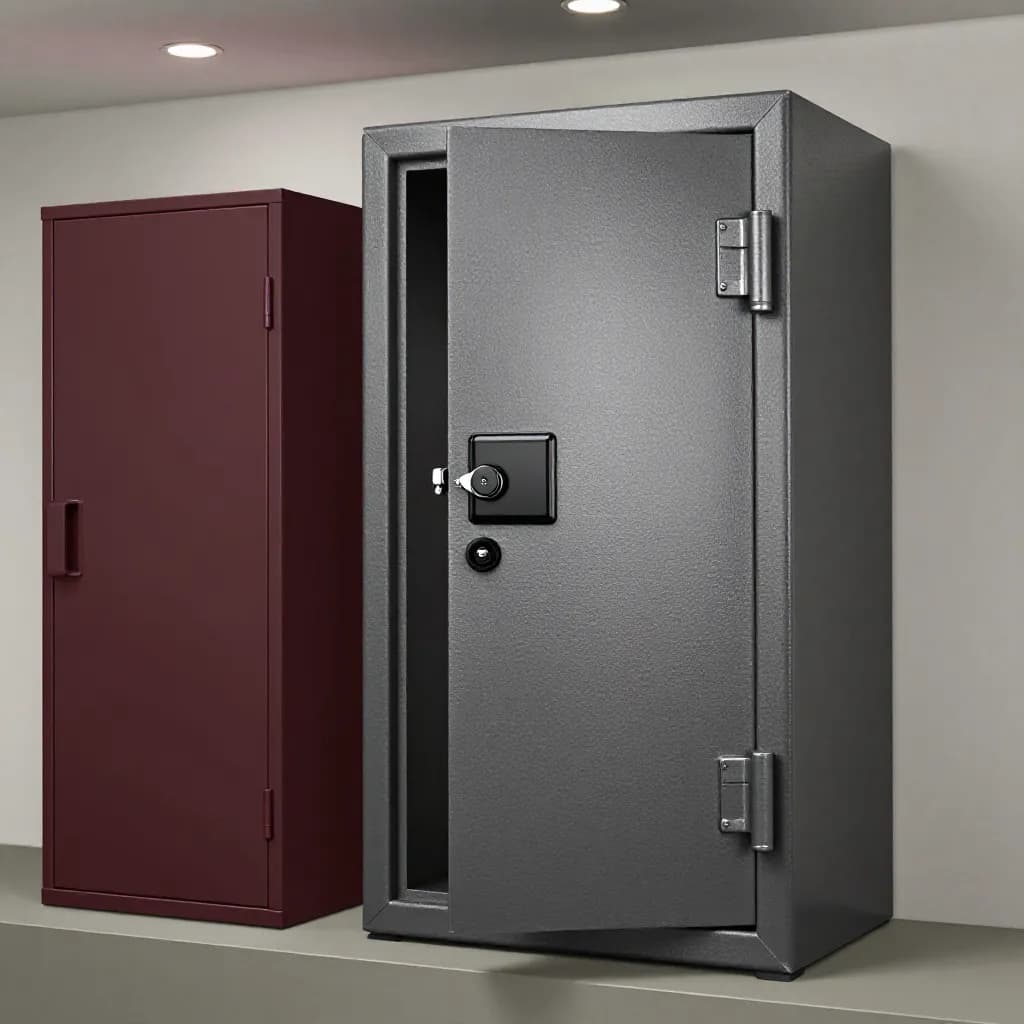
The safe and security cabinet market spans residential fire safes, commercial burglary safes, gun safes, data media safes, depository safes, and hazardous material storage cabinets. Each category has specific coating requirements driven by the product's intended use, regulatory certifications, and customer expectations. A residential fire safe must project trustworthiness and blend with home décor. A commercial burglary safe must convey impenetrability. A hazardous material cabinet must be immediately identifiable by its safety color.
Ready to Start Your Project?
From one-off customs to 15,000-part production runs — get precise pricing in 24 hours.
On This Page
Why Safes and Security Cabinets Demand Premium Powder Coating
Powder coating is the universal finishing technology across all safe and security cabinet categories. Major manufacturers including Liberty Safe, Amsec, Gardall, Sentry Group, Justrite, and Eagle Manufacturing specify powder coating for its combination of durability, aesthetic quality, and production efficiency. The dense, cross-linked powder coating film provides a hard, scratch-resistant surface that maintains its appearance through years of use while protecting the steel substrate from corrosion in environments ranging from climate-controlled offices to humid basements and garages.
Heavy-Gauge Steel Substrates and Pretreatment Challenges
Safe construction uses some of the heaviest gauge steel in any powder coating application. Burglary-rated safe bodies use 6-12 mm steel plate, with some high-security models incorporating composite walls of steel, concrete, and copper or ceramic armor layers. Fire safe bodies use lighter gauge steel (1.5-3 mm) but incorporate fire-resistant insulation materials (gypsum, vermiculite, or proprietary composites) between inner and outer steel shells.
Pretreatment of heavy-gauge safe steel presents unique challenges. The thick material retains significant heat during welding, creating extensive heat-affected zones with heavy mill scale and weld discoloration. Abrasive blasting to Sa 2.5 (near-white metal) per ISO 8501-1 is the standard surface preparation method, using steel grit or aluminum oxide media to remove mill scale and create a surface profile of 50-75 micrometers for optimal coating adhesion.
The mass of safe components creates thermal challenges during powder coating cure. A safe door weighing 50-200 kg requires significantly longer oven time to reach cure temperature compared to lighter sheet metal components. Cure ovens must be sized and programmed to ensure that the heaviest components reach the specified metal temperature (typically 180-200°C) for the required duration (10-20 minutes at temperature). Undercure is a common defect on heavy safe components and must be verified through solvent rub testing or DSC analysis.
Fire safe construction introduces additional pretreatment considerations. The fire-resistant insulation materials between inner and outer shells can release moisture and volatile compounds during powder coating cure, causing blistering and adhesion failure. A pre-bake cycle at 200-230°C for 20-30 minutes before powder application drives off these volatiles and prevents outgassing defects. The pre-bake temperature and duration must be carefully controlled to avoid damaging the fire-resistant insulation materials.
Fire-Resistant Coating Systems for Rated Safes
Fire-rated safes must maintain their protective function during fire exposure, and the powder coating plays a role in the overall fire resistance system. While the primary fire protection comes from the insulation materials within the safe walls, the exterior coating must not compromise fire performance and ideally should contribute to it.
UL 72 is the primary fire resistance standard for safes in North America, defining test methods and performance criteria for fire endurance. Safes are classified by the duration and temperature of fire exposure they can withstand while maintaining interior temperatures below specified limits (typically 177°C for paper documents, 66°C for magnetic media, and 52°C for digital media). The powder coating on the exterior surface is exposed to furnace temperatures of 843-1010°C during UL 72 testing.
Standard powder coatings decompose at temperatures above 300-400°C, well below the fire test temperatures. However, the thin coating film (60-100 microns) represents negligible fuel load and does not significantly affect the safe's fire performance. The coating's primary contribution during fire exposure is maintaining the structural integrity of the outer steel shell by preventing pre-fire corrosion that could weaken the steel.
Intumescent powder coatings represent an advanced option for fire-rated safes. These coatings expand when exposed to heat, forming an insulating char layer that can be 20-50 times the original coating thickness. The char layer provides additional thermal insulation to the safe wall, potentially improving fire resistance ratings. Intumescent powder coatings are available in limited colors and textures and add significant material cost, but they offer measurable fire protection enhancement for premium safe products.
EN 15659 and EN 14450 are the European standards for fire-resistant and burglary-resistant storage units, respectively. These standards have different test methods and classification systems than UL 72 but impose similar requirements on the coating system. Manufacturers selling globally must ensure their coating specifications support certification under both North American and European standards.
Security-Enhanced Coating Technologies
The powder coating on a safe or security cabinet can incorporate technologies that enhance physical security beyond the structural strength of the steel construction.
High-hardness coatings with ceramic or carbide additives achieve pencil hardness ratings of 4H-6H, significantly increasing resistance to drilling, grinding, and cutting attacks. The abrasive particles in the coating dull drill bits and cutting discs, adding valuable time to any physical attack. While the coating alone cannot prevent a determined attack with power tools, it contributes to the overall attack resistance that determines the safe's burglary rating.
Tamper-evident coatings provide visual indication of attempted break-in. Thermochromic pigments permanently change color when exposed to the heat generated by drilling, grinding, or torch cutting. Mechanochromic coatings change color under mechanical stress from prying or impact. These color changes are irreversible and cannot be concealed, providing clear evidence of tampering for insurance and forensic purposes.
Anti-pry coatings with ultra-low friction coefficients make it difficult to gain purchase with prying tools on the safe's door edges and body seams. These coatings incorporate PTFE or silicone-modified additives that reduce the surface friction coefficient to below 0.15, causing pry bars and wedges to slip rather than grip. This technology is particularly effective at door edges where prying attacks are most commonly attempted.
UV-fluorescent security markings can be incorporated into the powder coating formulation, visible only under ultraviolet light. These markings serve as covert identification features for asset tracking, theft recovery, and authentication. The fluorescent pigments are distributed throughout the coating thickness, making them impossible to remove without destroying the coating.
For gun safes subject to California DOJ approval, the coating must not interfere with the locking mechanism's operation or the safe's ability to meet the attack resistance requirements of California Penal Code Section 23650. The coating specification must be documented as part of the safe's type approval submission.
Aesthetic Finishes for Consumer and Commercial Safes
Safe aesthetics have evolved significantly from the utilitarian grey boxes of previous decades. Today's residential and commercial safes are designed to complement interior décor, and the powder coating finish is the primary vehicle for aesthetic expression.
Gun safes represent the most aesthetically diverse segment, with manufacturers offering finishes that range from traditional matte black to elaborate multi-color designs with graphics, textures, and metallic effects. High-gloss finishes in deep colors — burgundy, forest green, midnight blue — project luxury and craftsmanship. Textured finishes in earth tones provide a rugged, tactical aesthetic. Some manufacturers offer custom graphics and camouflage patterns applied through sublimation transfer over the powder coating base.
Residential fire safes increasingly feature finishes designed to blend with home furniture. Wood-grain sublimation transfers over powder-coated steel create the appearance of a wooden cabinet, allowing the safe to integrate seamlessly into a bedroom, office, or living room. These wood-effect finishes are applied as a secondary process after the base powder coating is cured, using heat and pressure to transfer a photographic wood-grain image onto the coating surface.
Commercial safes and security cabinets typically use more conservative finishes — semi-gloss or satin in neutral colors (grey, black, beige) that project professionalism and blend with office environments. Consistency across product lines is important for commercial customers who may purchase multiple units over time and expect visual uniformity.
Hazardous material storage cabinets are color-coded per OSHA and NFPA standards: yellow for flammable liquids (NFPA 30), red for combustible liquids and paints, blue for corrosive materials, and green for pesticides and insecticides. These safety colors must meet specific chromaticity coordinates defined in ANSI Z535.1 to ensure immediate recognition. Powder coating formulations for safety cabinet colors are carefully controlled to maintain compliance with these color standards across production batches.
Texture selection for safes balances aesthetics with functionality. Fine textures hide fingerprints and minor handling marks, which is important for products that are frequently touched during daily use. Heavier textures provide a more rugged appearance appropriate for industrial and tactical products.
Production Processes for Safe and Cabinet Coating
Safe and security cabinet manufacturing presents unique production challenges for powder coating operations due to the size, weight, and thermal mass of the products. Coating lines must be designed to handle components that may weigh hundreds of kilograms and require extended cure times.
Conveyor systems for safe coating use heavy-duty overhead monorail or floor-mounted power-and-free designs rated for the weight of assembled safe bodies and doors. Conveyor speed is typically slower than general industrial coating lines — 1-3 meters per minute — to accommodate the longer cure times required for heavy components. Some manufacturers use batch ovens rather than continuous conveyors for the largest safe models, loading individual safes into the oven on wheeled carts.
Powder application for safes requires careful attention to the complex geometry of assembled safe bodies. The interior corners, hinge pockets, bolt work recesses, and door frame edges are all recessed areas where the Faraday cage effect can cause thin coating. Manual touch-up application after the automatic spray pass ensures complete coverage in these critical areas. Some manufacturers coat safe components (body, door, frame) separately before assembly to ensure uniform coverage, then touch up assembly marks after final assembly.
Cure verification is particularly important for heavy safe components. The thermal mass of thick steel plate means that the interior of the steel may not reach cure temperature even when the surface temperature appears adequate. Thermocouple profiling — attaching temperature sensors to the heaviest sections of the safe body and recording the temperature profile through the cure oven — verifies that all areas reach the specified cure temperature for the required duration. This profiling should be performed during initial process validation and repeated periodically to confirm ongoing compliance.
Post-cure operations include hardware installation, lock mounting, and final inspection. The powder coating must be sufficiently cured and cooled before hardware installation to prevent damage from assembly tools and fastener torque. Protective masking of critical surfaces during assembly prevents scratches and marks that would require touch-up.
Quality Standards and Certification Requirements
Safe and security cabinet manufacturers operate under quality management systems that ensure consistent coating performance across production. The coating specification is part of the overall product certification and must be maintained to preserve the product's safety and security ratings.
UL 72 (fire resistance), UL 687 (burglary resistance), and UL 1037 (anti-theft) certifications require that the safe's construction — including the coating — matches the configuration tested during certification. Any change to the coating specification (chemistry, thickness, pretreatment, or cure schedule) may require re-testing to maintain UL certification. This creates a strong incentive for manufacturers to establish and maintain stable coating processes.
EN 1143-1 (burglary resistance) and EN 15659 (fire resistance) are the corresponding European standards. These standards classify safes into resistance grades based on attack resistance testing, and the coating specification is documented as part of the type approval. European certification bodies (VdS, ECB-S, CNPP) conduct periodic factory audits that include verification of coating process compliance.
ISO 9001 quality management system certification is standard for safe manufacturers and extends to the coating operation. Process documentation, incoming material inspection, in-process monitoring, and final inspection procedures must be established and maintained. Statistical process control of critical coating parameters — film thickness, adhesion, cure, color, and gloss — provides objective evidence of process capability.
Environmental compliance requirements include RoHS and REACH for products sold in the European Union. All powder coating materials must be free of restricted substances, and the manufacturer must maintain documentation demonstrating compliance. For safes containing electronic locks or digital components, the coating must not interfere with electromagnetic compatibility (EMC) requirements under applicable standards.
Customer-specific quality requirements may exceed industry standards. Government and military safe procurement specifications often include additional coating requirements such as specific pretreatment chemistries, minimum film thickness values, extended salt spray resistance, and chemical agent resistance testing. These specifications must be reviewed and incorporated into the coating process before production begins.
Frequently Asked Questions
Does powder coating affect a safe's fire rating?
Standard powder coatings decompose at fire test temperatures but represent negligible fuel load and do not compromise fire ratings. Intumescent powder coatings can actually enhance fire resistance by expanding to form an insulating char layer when exposed to heat, providing additional thermal protection to the safe wall.
What security features can be built into powder coating for safes?
Security-enhanced powder coatings include high-hardness formulations with ceramic additives that dull cutting tools, tamper-evident coatings that change color when attacked, anti-pry coatings with ultra-low friction, and UV-fluorescent markings for covert identification and theft recovery.
Why are hazardous material cabinets specific colors?
OSHA and NFPA standards require color coding: yellow for flammable liquids per NFPA 30, red for combustible liquids, blue for corrosives, and green for pesticides. These colors must meet ANSI Z535.1 chromaticity specifications for immediate hazard recognition.
How thick is powder coating on safes?
Powder coating on safes is typically applied at 60-100 microns depending on the product category. Heavy-duty commercial and burglary-rated safes may specify 80-100 microns for maximum protection, while residential fire safes typically use 60-80 microns. Two-coat systems with primer add 25-40 microns of additional protection.
Can gun safe powder coating be customized?
Yes. Gun safe manufacturers offer extensive customization including custom colors, metallic and textured finishes, wood-grain sublimation transfers, and multi-color designs with graphics. High-gloss deep colors, tactical matte textures, and camouflage patterns are all achievable with modern powder coating technology.
Ready to Start Your Project?
From one-off customs to 15,000-part production runs — get precise pricing in 24 hours.