Running boards and side steps serve a dual purpose on trucks and SUVs: they provide a stepping surface for easier vehicle entry and exit, and they protect the lower body panels from road debris and trail hazards. The coating on these components must balance aesthetic appeal with the functional demands of a surface that is stepped on, kicked, scraped by boots, and exposed to every environmental hazard the road presents.
Automotive
Powder Coating Running Boards and Side Steps: Non-Slip Finishes for Trucks and SUVs
Sundial Powder Coating·April 23, 2026·9 min
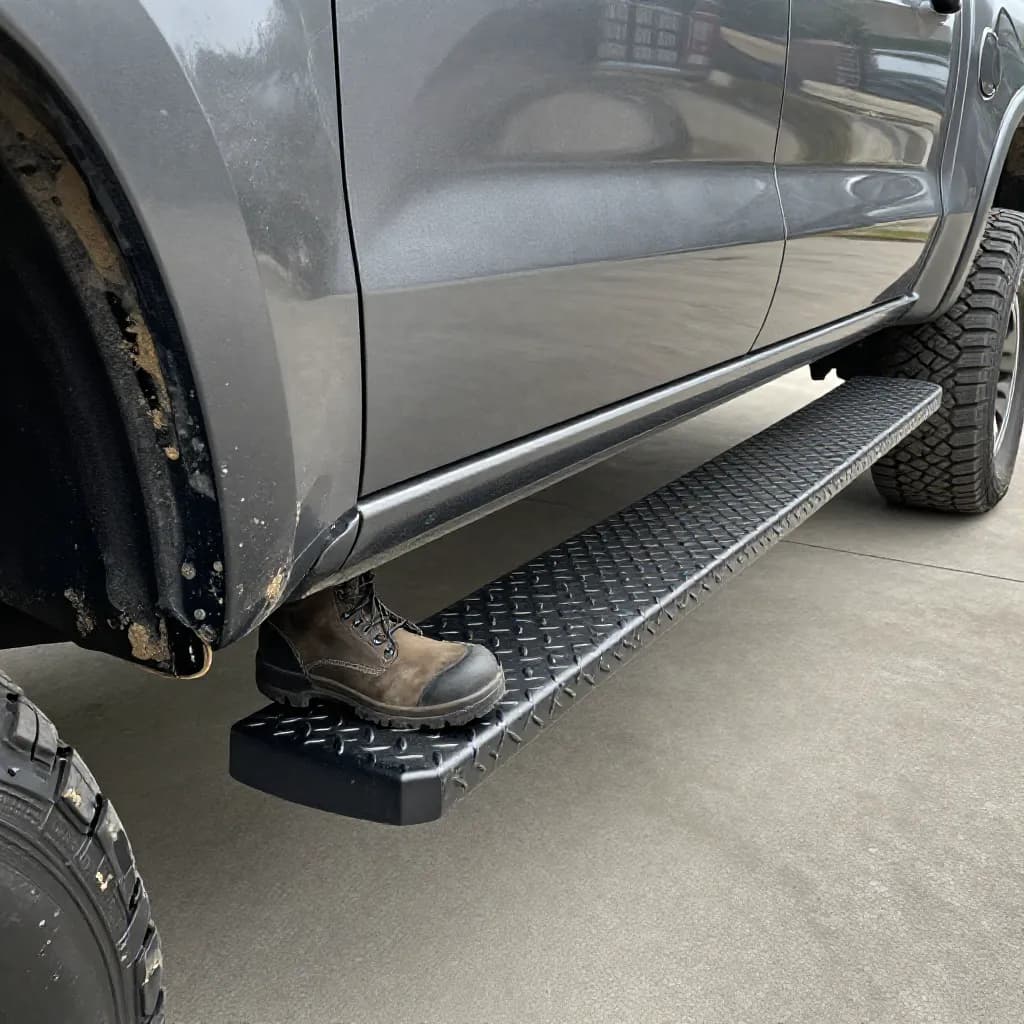
Factory running boards on trucks and SUVs typically come with a painted or powder-coated finish that varies in quality by manufacturer and price point. Premium factory boards often have a durable textured finish that holds up well, while budget options may arrive with thin coatings that chip and peel within the first year. Aftermarket running boards and rock sliders from the off-road market are frequently sold in bare steel or with a basic primer, leaving the final finish to the vehicle owner.
Ready to Start Your Project?
From one-off customs to 15,000-part production runs — get precise pricing in 24 hours.
On This Page
Running Boards: Function Meets Finish
Powder coating running boards provides a finish that is thicker, harder, and more chemically resistant than most factory coatings. The ability to choose from textured, smooth, and specialty finishes allows vehicle owners to match the running board appearance to their build theme while ensuring the coating can withstand the daily abuse these components endure. For fleet vehicles, a uniform powder coat finish across all running boards ensures a consistent, professional appearance.
Textured Non-Slip Finishes
The stepping surface of a running board must provide reliable traction in all conditions, including wet, muddy, icy, and oily environments. Textured powder coat finishes are specifically designed to provide this non-slip characteristic while also delivering the durability and corrosion protection benefits of powder coating.
Sandtex and fine texture finishes create a gritty, sandpaper-like surface that provides excellent grip for boot soles. These textures are achieved through specific powder formulations that contain texture-creating additives which cause the coating to form a controlled rough surface during curing. The resulting texture is integral to the coating, not a surface treatment that can wear off, which means the non-slip property is maintained throughout the coating's service life.
Wrinkle finishes provide a coarser texture with a distinctive wrinkled pattern. While visually appealing and durable, wrinkle finishes may not provide as much traction as sandtex finishes because the wrinkle pattern creates broader, smoother peaks rather than the fine grit of a sandtex surface. Wrinkle finishes are better suited for running boards that serve primarily as body protection rather than as primary stepping surfaces.
For maximum traction, some coaters offer a non-slip additive that can be mixed into any powder formulation. These additives, typically aluminum oxide or polymer grit particles, are broadcast onto the wet powder surface before curing, creating a highly aggressive non-slip texture. This approach allows any color to be combined with a non-slip surface, providing both aesthetic flexibility and functional performance.
The trade-off with aggressive non-slip textures is that they are more difficult to clean. Mud, dirt, and debris can become trapped in the texture valleys and require scrubbing with a brush to remove. For vehicles that see regular off-road use, this is an acceptable compromise for the safety benefit of reliable traction.
UV and Salt Resistance for Year-Round Exposure
Running boards are exposed to the full spectrum of environmental hazards throughout the year. In summer, they bake in direct sunlight and absorb radiant heat from the road surface. In winter, they are bombarded with road salt, deicing chemicals, and freeze-thaw cycles that stress the coating. The powder coat must perform reliably across this entire range of conditions.
UV resistance is critical because running boards receive direct sunlight on their top surface and reflected UV from the road surface below. Standard polyester powders will fade and chalk within 2-3 years of continuous outdoor exposure, particularly in dark colors. Super-durable polyester formulations with UV stabilizers extend this to 5-10 years, making them the recommended choice for running boards on vehicles that are parked outdoors regularly.
Salt spray resistance protects the running board substrate from corrosion in winter driving conditions. Road salt solutions are highly corrosive and attack any exposed metal at chip or scratch sites. A properly prepared and coated running board with zinc phosphate pretreatment and a quality polyester topcoat should withstand 500-1000 hours of accelerated salt spray testing, providing years of protection in real-world salt-belt conditions.
For vehicles that operate in both extreme UV and salt environments, such as coastal areas with high sun exposure, the coating system must excel at both. A super-durable polyester topcoat over a zinc-rich epoxy primer provides the best combination of UV resistance and corrosion protection. This dual-layer system addresses both environmental threats simultaneously.
Freeze-thaw cycling can cause coating failure if moisture penetrates the coating at chip or scratch sites. Water that enters a coating defect and freezes expands, lifting the coating away from the substrate and enlarging the defect. Prompt touch-up of any coating damage prevents this progressive failure mechanism.
Steel vs Aluminum Running Board Preparation
Running boards are manufactured from steel tube, aluminum extrusion, cast aluminum, or stamped steel, and each material requires appropriate preparation for optimal coating results.
Steel tube running boards and rock sliders are the most common in the off-road market. These are typically fabricated from DOM or ERW tubing with welded mounting brackets. Preparation involves blasting to bare metal, cleaning weld areas of spatter and slag, and applying a phosphate conversion coating. Weld areas may benefit from a pre-bake to prevent outgassing from weld porosity. The heavy-gauge steel used in rock sliders is robust and tolerates aggressive blasting without distortion.
Aluminum running boards, common on factory and premium aftermarket options, require the gentler preparation approach appropriate for aluminum. Blast with fine media at reduced pressure to avoid warping thin extrusions, and apply a chromate-free conversion coating for adhesion. Cast aluminum step pads or end caps may need pre-baking to address casting porosity.
Stamped steel running boards from factory applications are thin-gauge and can distort under aggressive blasting. Use finer media at lower pressure and support the board on a flat surface during blasting to prevent warping. These boards often have spot-welded mounting brackets that create crevices where moisture and old coating can hide. Ensure complete cleaning of all crevice areas.
For running boards with integrated step pads made from rubber or plastic, these non-metal components must be removed before coating. The step pads cannot survive the blast preparation or cure temperature. Catalog all removed components and their positions for reinstallation after coating. If the step pads are riveted in place, the rivets must be drilled out and replaced with new rivets during reassembly.
Brand and Vehicle Color Matching
For many truck and SUV owners, the running board finish should coordinate with the vehicle's overall appearance. This may mean matching the factory body color, coordinating with aftermarket bumpers and accessories, or following a specific brand's color palette for a cohesive build.
Matching the vehicle body color creates a factory-integrated look where the running boards appear to be an original equipment option. This requires accurate color matching using the vehicle's paint code, a physical sample, or a RAL color reference. Most powder suppliers can formulate a custom match, though achieving an exact match between a powder coat and automotive paint can be challenging due to differences in how the two coating types reflect light. A close match that reads as the same color in most lighting conditions is typically achievable.
Matching aftermarket accessories is simpler when all components are coated in the same batch. Sending the running boards, bumpers, sliders, and other accessories to the same coater at the same time ensures identical color and texture across all parts. This batch approach eliminates the slight color variations that can occur between different powder lots or application sessions.
Popular running board colors in the truck and SUV market include satin black, textured black, gloss black, and dark grey. These neutral colors complement any vehicle color and hide dirt and wear effectively. For builds with a specific color theme, matching the running boards to the wheel color or accent trim creates a coordinated appearance.
For fleet vehicles, standardizing on a single running board color and finish across all vehicles in the fleet ensures a uniform, professional appearance. Powder coating is ideal for fleet applications because the finish is consistent, durable, and can be specified by RAL code for exact repeatability across multiple coating sessions.
Installation and Ongoing Maintenance
Reinstalling powder-coated running boards requires care to protect the fresh finish and ensure proper fitment. The mounting hardware should be inspected and replaced if worn, and all contact points between the running board and the vehicle should be addressed to prevent coating damage and corrosion.
Mounting brackets that contact the vehicle frame or body should have rubber or nylon isolators between the coated surface and the vehicle. These isolators prevent metal-to-metal contact that would crack the coating under clamping force and create a corrosion initiation point. If the original isolators are worn or missing, replace them with new ones during reinstallation.
Apply anti-seize compound to all mounting bolts to prevent galvanic corrosion and facilitate future removal. Torque bolts to the manufacturer's specification and recheck torque after the first week of driving, as vibration and thermal cycling can cause initial settling of the mounting hardware.
Ongoing maintenance for powder-coated running boards is minimal. Wash the boards regularly with the rest of the vehicle, using a mild car wash soap and a soft brush to clean textured surfaces. In winter, rinse salt and deicing chemicals from the boards after driving to prevent prolonged chemical contact.
Inspect the coating periodically for chips and scratches, particularly at the stepping surface edges and mounting points. Touch up any damage promptly with matching touch-up paint. For running boards with non-slip texture, a stiff brush helps remove compacted mud and debris from the texture valleys.
The stepping surface will show wear over time from boot traffic, which is normal and expected. The wear pattern typically appears as a slight polishing or lightening of the texture in the most-used stepping area. This cosmetic wear does not affect the coating's protective function and can be refreshed with a recoat if desired.
Frequently Asked Questions
What is the best non-slip finish for running boards?
Sandtex texture provides the best non-slip performance for stepping surfaces. The fine, gritty texture offers reliable traction in wet, muddy, and icy conditions. For maximum grip, a non-slip additive such as aluminum oxide grit can be broadcast onto any color powder before curing.
Will the textured finish wear off from stepping on it?
The texture is integral to the powder coating and does not wear off like a surface treatment. However, the most-used stepping area will show gradual polishing over time from boot traffic. This cosmetic wear is normal and does not affect the coating's corrosion protection. The board can be recoated to refresh the texture.
Can I match my running boards to my truck's body color?
Yes. Most powder suppliers can formulate a custom color match using your vehicle's paint code or a physical sample. An exact match between powder coat and automotive paint is challenging due to different light reflection properties, but a close match that reads as the same color in most conditions is achievable.
How do I clean textured powder-coated running boards?
Use a mild car wash soap and a stiff brush to clean textured surfaces. The brush helps remove mud and debris trapped in the texture valleys. Rinse thoroughly with water after scrubbing. In winter, rinse salt and deicing chemicals promptly to prevent prolonged chemical contact with the coating.
Do I need to remove rubber step pads before powder coating?
Yes. All rubber, plastic, and non-metal components must be removed before coating. These materials cannot survive the blast preparation or the 190-200 degree Celsius cure temperature. Remove and catalog all components for reinstallation after coating. Riveted step pads require drilling out and replacing rivets.
Ready to Start Your Project?
From one-off customs to 15,000-part production runs — get precise pricing in 24 hours.