Roof racks and cargo systems occupy the most exposed position on any vehicle. Mounted on top of the cabin, they receive the full force of UV radiation, rain, hail, road salt spray, and airborne debris with no shielding from body panels or underbody protection. This relentless exposure makes coating quality a critical factor in the service life of any rack system.
Automotive
Powder Coating Roof Racks and Cargo Systems: UV Protection and Durability for Overlanding
Sundial Powder Coating·April 23, 2026·10 min
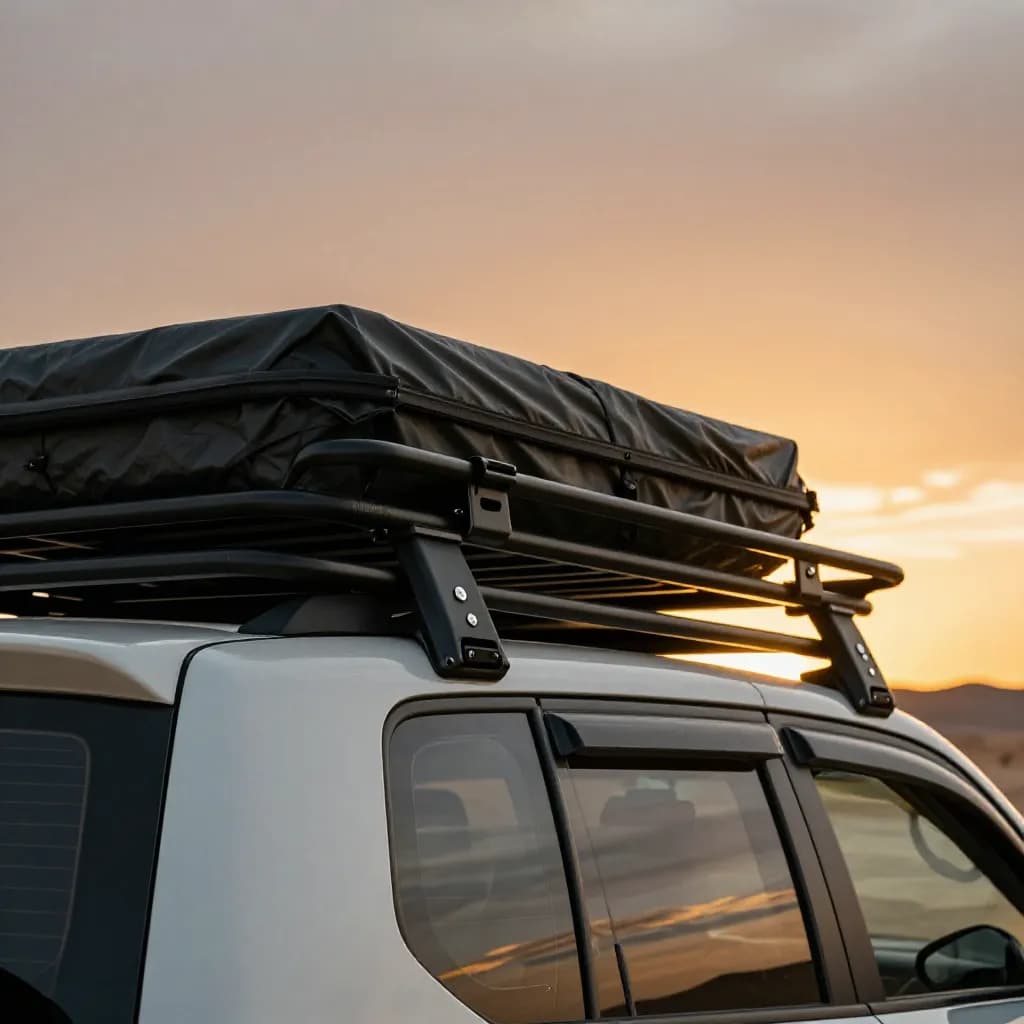
Factory coatings on aftermarket roof racks vary widely in quality. Budget racks often arrive with thin e-coat or spray paint that begins chalking and peeling within a year or two of outdoor use. Even premium brands occasionally ship racks with coatings that do not hold up to the demands of full-time roof mounting, especially in harsh UV environments like the Australian outback, the American Southwest, or equatorial regions where overlanding is popular.
Ready to Start Your Project?
From one-off customs to 15,000-part production runs — get precise pricing in 24 hours.
On This Page
Why Roof Racks Demand Premium Coatings
Powder coating provides a substantial upgrade over most factory finishes. Applied at 60-100 microns with UV-stable polyester chemistry, a quality powder coat will resist fading, chalking, and corrosion for years of continuous roof-mounted exposure. For overlanders and expedition vehicle builders who invest heavily in their rack systems and accessories, recoating with a premium powder finish protects that investment and ensures the rack looks as good as the rest of the build.
Aluminum vs Steel Rack Preparation
Roof racks are manufactured from either aluminum or steel, and each material requires a different preparation approach for optimal powder coating results. Understanding these differences is essential whether you are coating a custom-fabricated rack or refinishing a factory unit.
Steel racks, including those made from mild steel tube, flat bar, or formed sheet, are the more straightforward substrate. Abrasive blasting with aluminum oxide or steel grit removes any existing coating, rust, and mill scale, leaving a clean surface with good mechanical profile. An iron phosphate or zinc phosphate pretreatment after blasting provides excellent corrosion resistance and adhesion. Steel racks that will see salt exposure benefit from a zinc-rich primer coat beneath the topcoat for additional galvanic protection.
Aluminum racks require a different approach. Aluminum does not rust, but it does oxidize, and the oxide layer must be properly managed for good coating adhesion. Blasting aluminum requires softer media such as glass bead, garnet, or fine aluminum oxide at reduced pressure to avoid warping thin-walled extrusions. Chemical pretreatment with a chromate or chrome-free conversion coating is strongly recommended for aluminum, as it creates a chemically bonded layer that dramatically improves adhesion and corrosion resistance. Skipping this step on aluminum is the most common cause of powder coat failure on rack systems.
Cast aluminum components like mounting feet and brackets may contain porosity that causes outgassing during cure. A pre-bake at cure temperature before powder application drives out trapped gases and prevents pinholes in the finished coating.
UV Resistance and Powder Chemistry Selection
UV degradation is the primary threat to any coating on a roof-mounted accessory. The rack receives direct sunlight for every hour the vehicle is parked or driven, accumulating UV exposure far faster than body panels that benefit from garage time and partial shading. Choosing the right powder chemistry is essential for long-term color retention and gloss stability.
Super-durable polyester powders are the standard recommendation for roof rack applications. These formulations use UV-stabilized resins and HALS (hindered amine light stabilizers) that resist photodegradation far longer than standard polyester or hybrid powders. A super-durable polyester will typically maintain its color and gloss for 5-10 years of continuous outdoor exposure, compared to 2-4 years for a standard polyester.
For the ultimate in UV resistance, fluoropolymer-based powders such as PVDF blends offer performance comparable to architectural coatings rated to AAMA 2605 standards. These are overkill for most vehicle applications but may be justified for expedition vehicles that spend years in extreme UV environments without access to recoating facilities.
Black and dark colors are the most popular for roof racks, and they also tend to show UV degradation most visibly as chalking and fading to grey. If choosing a dark color, insist on a super-durable formulation. Lighter colors like silver, grey, and white are inherently more UV-stable and may be a practical choice for vehicles operating in extreme sun exposure. Textured finishes also help mask early signs of UV wear compared to high-gloss smooth finishes.
Maintaining Load Ratings After Coating
A common concern when recoating roof racks is whether the powder coating process affects the structural integrity and load ratings of the rack. The short answer is that standard powder coating does not compromise the load capacity of a properly designed rack, but there are nuances worth understanding.
The cure temperature for most powder coatings is 180-200 degrees Celsius, held for 10-20 minutes at metal temperature. For steel racks, this temperature range has no effect on the mechanical properties of mild steel or structural steel alloys. The metal does not approach any critical transformation temperature, and the brief thermal cycle is well within the range the material experiences during welding and fabrication.
Aluminum racks require slightly more consideration. Heat-treated aluminum alloys such as 6061-T6 can lose some temper strength if held at elevated temperatures for extended periods. However, the brief cure cycle of powder coating is generally insufficient to cause meaningful strength loss. Studies have shown that 6061-T6 retains over 95 percent of its yield strength after a standard powder coating cure cycle. For racks made from non-heat-treated alloys like 5052 or 6063, there is no concern at all.
The coating thickness itself does not affect load ratings. At 60-100 microns, the powder adds negligible material to the cross-section of tubes and extrusions. Mounting bolt holes should be masked or reamed after coating to ensure proper fit with mounting hardware, as even a small buildup of powder in bolt holes can affect torque values and clamping force on roof rail attachments.
Brand Color Matching and Custom Finishes
Many overlanding and expedition vehicle builds aim for a cohesive visual identity, with the roof rack color coordinated to match bumpers, sliders, skid plates, and other accessories. Powder coating makes this coordination straightforward, as all components can be coated in the same batch with identical color and texture.
Matching specific brand colors is achievable through RAL color codes, Pantone references, or physical color samples. If you are trying to match the factory finish of a specific rack brand, bring a sample piece or a color chip to your coater. Most powder suppliers can formulate a custom match within a few days. Keep in mind that matching across different textures is difficult. A smooth gloss finish and a textured finish in the same color will appear different due to how light interacts with the surface.
Popular rack finishes in the overlanding community include satin black, textured black, gunmetal grey, and desert tan. These colors complement most vehicle colors and hide trail dust and minor scratches well. For builds with a specific theme, custom colors like olive drab, flat dark earth, or signal red can make the rack a distinctive visual element.
Two-tone finishes are possible by masking sections of the rack during coating. For example, a black rack with contrasting silver or red crossbars creates visual interest and can highlight functional elements. This requires two separate coating and curing cycles, which adds to the process time but produces a result that cannot be achieved with single-color application.
Coating Rack Accessories and Mounting Hardware
A roof rack system includes more than just the main platform or bars. Mounting feet, crossbar clamps, wind fairings, light brackets, awning mounts, and tie-down points all benefit from powder coating, and coating these components alongside the main rack ensures a uniform appearance and consistent corrosion protection.
Small hardware like bolts, nuts, and clamps can be batch-coated on a rack or in a tumble basket. However, threaded fasteners require careful consideration. Powder coating adds 50-100 microns to each surface, which can interfere with thread engagement. Critical fasteners should be masked at the threads, or the threads should be chased with a tap or die after coating. For non-structural fasteners where appearance matters more than precise torque, coating the entire fastener is acceptable as long as the thread engagement is verified during assembly.
Stainless steel components like hose clamps, spring pins, and certain mounting brackets present adhesion challenges. Stainless steel has a passive oxide layer that resists coating adhesion unless properly prepared. Aggressive blasting with angular media followed by immediate coating before the oxide layer reforms is the standard approach. Some coaters also use specialized primers formulated for stainless steel adhesion.
Rubber and plastic components must be removed before coating. Rubber isolators, plastic end caps, and nylon bushings cannot survive the cure oven temperatures. These parts should be cataloged and set aside for reinstallation after coating. If rubber isolators are bonded to metal components, they must be cut away and replaced with new parts during reassembly.
Overlanding-Specific Durability Considerations
Overlanding places unique demands on roof rack coatings that go beyond normal road use. Vehicles on extended overland trips encounter tree branches, river crossings, dust storms, salt flats, and prolonged UV exposure in remote locations where touch-up or repair is not an option. The coating must survive all of this without significant degradation.
Stone chip resistance is critical for racks on vehicles that travel unpaved roads. Rocks kicked up by the vehicle's own tires or by vehicles ahead in a convoy strike the rack and its accessories at high velocity. A thick, well-adhered powder coat absorbs these impacts far better than thin paint, but no coating is completely immune to stone chips. Textured finishes perform better than smooth finishes in this regard because the texture distributes impact energy across a larger area and makes small chips less visible.
Chemical exposure is another overlanding concern. Insect repellent, sunscreen, fuel spills, and battery acid can all contact the rack during camp setup and vehicle maintenance. Polyester powder coatings resist most common chemicals, but prolonged contact with strong solvents or acids should be wiped away promptly. Fuel spills are particularly aggressive and should be cleaned immediately to prevent softening of the coating surface.
For expedition vehicles that will spend months or years on the road, applying a sacrificial clear coat over the color coat adds an extra layer of UV and abrasion protection. This dual-coat system is common in architectural applications and translates well to vehicle accessories. The clear coat absorbs the initial UV damage and surface scratches, preserving the color coat underneath for a longer service life.
Frequently Asked Questions
Can you powder coat an aluminum roof rack without affecting its strength?
Yes. The standard powder coating cure cycle of 190-200 degrees Celsius for 10-20 minutes does not significantly affect the mechanical properties of common aluminum alloys used in roof racks, including 6061-T6 and 6063-T5. The brief thermal exposure retains over 95 percent of the alloy's original yield strength.
What powder type is best for a roof rack exposed to constant sun?
Super-durable polyester powder is the best choice for roof-mounted accessories. These formulations contain UV stabilizers that resist fading and chalking for 5-10 years of continuous outdoor exposure, far outperforming standard polyester or hybrid powders in direct sunlight.
Should I coat the mounting hardware along with the rack?
Coating mounting hardware ensures a uniform appearance, but threaded fasteners should be masked at the threads or chased with a tap after coating to maintain proper engagement. Non-structural fasteners can be fully coated as long as thread fit is verified during assembly.
How do I match my roof rack color to my bumper and sliders?
The easiest approach is to have all components coated in the same batch by the same shop, using the same powder. If matching an existing finish, bring a physical sample or RAL color code to your coater. Keep in mind that different textures in the same color will appear slightly different.
Will powder coating void my roof rack warranty?
Most aftermarket rack manufacturers do not cover cosmetic finishes under warranty, so recoating typically does not affect structural warranty coverage. However, check your specific warranty terms before proceeding. Some manufacturers may void coverage if the rack has been modified, which could include stripping and recoating.
Ready to Start Your Project?
From one-off customs to 15,000-part production runs — get precise pricing in 24 hours.