Reinforced concrete is the most widely used construction material on Earth, and its durability depends on a simple electrochemical principle: the high alkalinity of concrete (pH 12-13) creates a passive oxide film on embedded steel reinforcement that prevents corrosion. When this passivity is destroyed — by chloride penetration from deicing salts or seawater, or by carbonation that reduces concrete pH — the reinforcing steel corrodes, generating expansive rust products that crack and spall the concrete cover, accelerating further deterioration in a self-reinforcing cycle.
Industrial
Powder Coating for Rebar and Reinforcement: Fusion Bonded Epoxy in Concrete Structures
Sundial Powder Coating·April 23, 2026·12 min
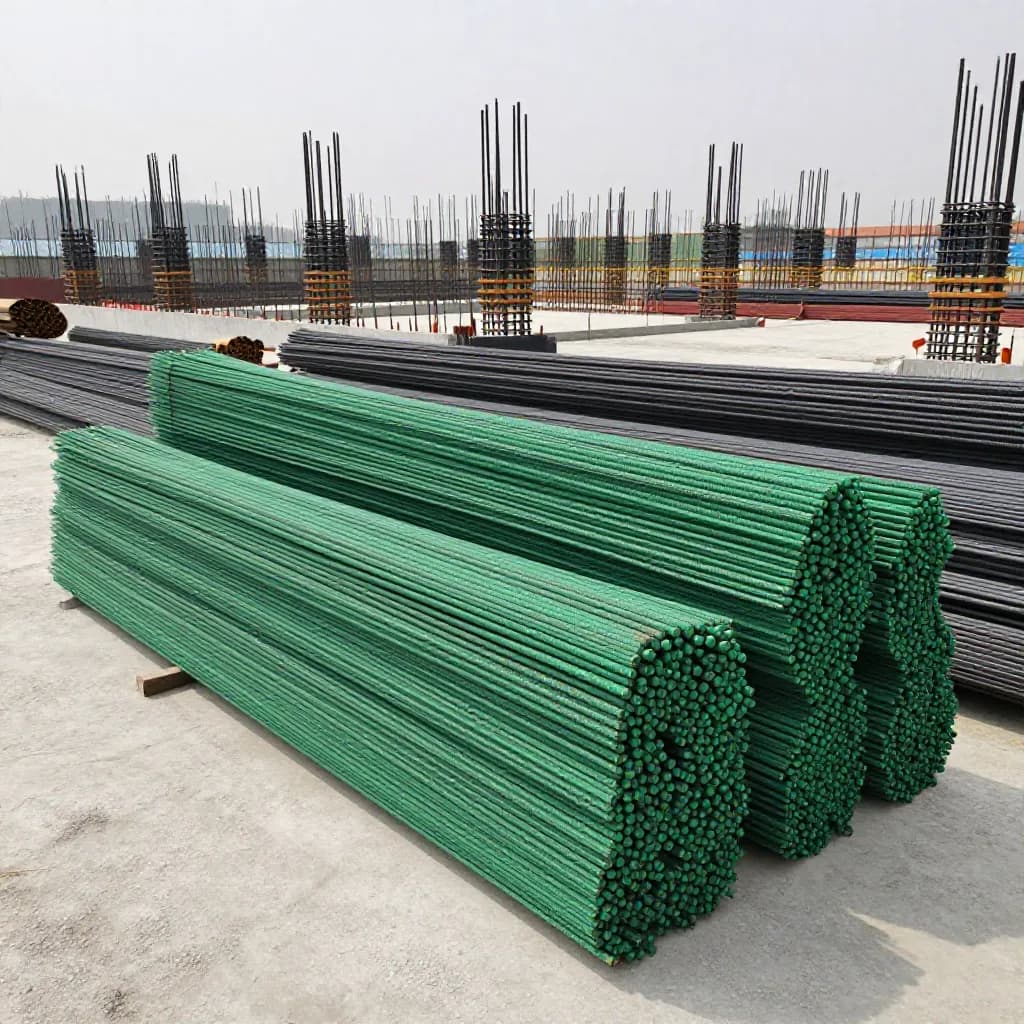
The economic consequences of reinforcement corrosion are staggering. Transportation agencies worldwide spend billions annually on bridge deck repairs, barrier wall replacements, and structural rehabilitation driven primarily by chloride-induced rebar corrosion. Parking structures, marine infrastructure, and buildings in coastal environments face similar deterioration patterns.
Ready to Start Your Project?
From one-off customs to 15,000-part production runs — get precise pricing in 24 hours.
On This Page
The Corrosion Crisis in Reinforced Concrete Infrastructure
Fusion-bonded epoxy (FBE) coating of reinforcing steel is one of the most effective and widely deployed strategies for extending the service life of concrete structures exposed to chloride environments. By applying a 175-300 micron epoxy powder coating to the rebar surface, the steel is physically isolated from chloride ions and moisture, preventing the electrochemical corrosion reaction from initiating even when chlorides penetrate the concrete cover.
First developed in the 1970s and widely adopted through the 1980s and 1990s, epoxy-coated rebar (ECR) is now specified as standard practice for bridge decks, marine structures, parking garages, and other chloride-exposed concrete construction across North America and increasingly worldwide. This article examines the technology, standards, application processes, and performance considerations for FBE-coated reinforcement.
Fusion Bonded Epoxy Chemistry and Coating Mechanism
Fusion-bonded epoxy coatings for rebar are thermosetting powder coatings specifically formulated for the unique requirements of concrete reinforcement protection. Unlike decorative powder coatings that prioritize appearance and weathering resistance, FBE rebar coatings are engineered for maximum adhesion to steel, impermeability to chloride ions and moisture, and compatibility with the alkaline concrete environment.
The FBE coating process begins with heating the steel rebar to 220-245°C using induction heating coils. The hot bar passes through an electrostatic powder spray booth where epoxy powder is deposited on the surface. The powder particles melt on contact with the hot steel, flow together to form a continuous film, and begin the thermosetting crosslinking reaction that converts the coating from a fusible thermoplastic to an infusible thermoset within seconds.
The chemistry of FBE rebar coatings is based on solid bisphenol-A epoxy resins cured with dicyandiamide or phenolic hardeners. These formulations produce coatings with excellent adhesion to steel (promoted by the chemical bonding between epoxy groups and the iron oxide surface), low permeability to water and chloride ions, and good resistance to the highly alkaline environment inside concrete (pH 12-13).
The crosslink density of the cured coating is critical to its barrier properties. Undercured coatings have lower crosslink density, resulting in higher permeability and reduced chemical resistance. Overcured coatings become brittle and may crack during bar bending or handling. The cure window is controlled by the bar temperature at application, the powder reactivity (gel time), and the post-application cooling rate.
Modern FBE rebar coatings also incorporate adhesion promoters that enhance the bond between the coating and the steel substrate, corrosion inhibitive pigments that provide active protection at any coating defects, and flexibility modifiers that allow the coating to withstand the bending and handling stresses encountered during rebar fabrication and placement.
Application Process and Production Line Configuration
FBE rebar coating is a high-speed, continuous production process designed to coat straight bars at rates of 15-30 meters per minute. The production line configuration reflects the need for precise temperature control, uniform powder application, and rapid quality verification on a product that is manufactured in enormous volumes.
The process begins with surface preparation. Rebar enters the line and passes through an abrasive blast cleaning station where steel grit removes mill scale, rust, and surface contaminants to achieve SSPC-SP 10 (Near-White Blast Cleaning) or better. The blast profile of 50-75 microns provides mechanical anchoring for the coating. Immediately after blasting, the bar surface is inspected and any bars with surface defects (pits, laps, or seams) that could compromise coating integrity are rejected.
Induction heating follows blast cleaning. The bar passes through a series of induction coils that rapidly heat the steel to 220-245°C. Induction heating is preferred over oven heating because it heats the bar uniformly and rapidly (typically 10-20 seconds for a No. 5 bar), minimizing the time between blast cleaning and coating application. Temperature is monitored continuously using infrared pyrometers, and bars outside the specified temperature range are automatically diverted.
The powder application station uses multiple electrostatic spray guns arranged around the bar circumference to ensure 360-degree coverage. Gun positions, voltages, and powder flow rates are optimized for each bar size to achieve the specified film thickness of 175-300 microns (per ASTM A775). Reclaim systems collect overspray powder for reuse, achieving material utilization rates of 95-98%.
After powder application, the coated bar passes through a post-heating zone (if needed to complete cure) and then through a water quench station that rapidly cools the bar to below 100°C. The quench rate must be controlled to avoid thermal shock that could crack the coating. Finally, the coated bar passes through inspection stations for film thickness measurement, holiday detection, and visual examination before being cut to length and bundled for shipment.
Concrete Adhesion and Bond Strength Considerations
One of the most debated aspects of epoxy-coated rebar is its effect on the bond between reinforcement and concrete. The bond between rebar and concrete is the mechanism by which forces are transferred from the concrete to the reinforcement, and any reduction in bond strength has structural implications that must be addressed in design.
Uncoated deformed rebar develops bond with concrete through three mechanisms: chemical adhesion between the cement paste and steel surface, friction along the bar surface, and mechanical interlock between the bar deformations (ribs) and the surrounding concrete. Epoxy coating affects the first two mechanisms — the smooth, low-friction epoxy surface reduces both chemical adhesion and frictional resistance compared to the rough, reactive surface of uncoated steel.
Research has consistently shown that epoxy-coated rebar develops 15-30% less bond strength than uncoated rebar of the same size and deformation pattern. To compensate for this reduction, design codes require increased development lengths and splice lengths for epoxy-coated bars. ACI 318 (Building Code Requirements for Structural Concrete) applies a modification factor of 1.2-1.5 to development length calculations for epoxy-coated reinforcement, depending on cover and spacing conditions.
The coating thickness on bar deformations is particularly important for bond performance. Excessive coating buildup on the ribs reduces the effective deformation height and further decreases mechanical interlock with the concrete. ASTM A775 limits the coating thickness on deformations to 300 microns maximum, and production lines are calibrated to minimize buildup on ribs while maintaining adequate coverage in the valleys between deformations.
Some jurisdictions and agencies have adopted alternative approaches to the bond reduction issue. Grit-impregnated epoxy coatings incorporate angular aggregate particles in the coating surface to increase friction and partially restore the bond strength lost due to the smooth epoxy surface. These textured coatings can reduce the bond strength penalty to 5-15%, potentially allowing shorter development lengths.
Bridge Deck and Highway Structure Applications
Bridge decks are the single largest application for epoxy-coated rebar, driven by the severe chloride exposure from deicing salts applied during winter maintenance. A typical bridge deck in a northern climate may receive 10-20 applications of sodium chloride or calcium chloride per winter season, and chloride concentrations at the rebar level can reach the corrosion threshold (0.6-1.2 kg/m³ of concrete) within 10-20 years of service.
The specification of epoxy-coated rebar for bridge decks is mandated by most state departments of transportation in the United States and by provincial transportation agencies in Canada. The Federal Highway Administration (FHWA) has supported ECR use since the 1970s, and the technology is referenced in AASHTO LRFD Bridge Design Specifications as a standard corrosion protection measure.
In bridge deck applications, both the top mat and bottom mat of reinforcement are typically coated, as chloride-laden water can penetrate through cracks and construction joints to reach the lower reinforcement layer. Transverse bars, which are most vulnerable to corrosion-induced delamination of the deck surface, receive particular attention during placement to ensure that coating damage from handling and tying is minimized.
Beyond bridge decks, epoxy-coated rebar is specified for bridge barrier walls, pier caps, abutment seats, and approach slabs — all components exposed to chloride splash and spray from traffic. Substructure elements in marine environments, including pier columns, pile caps, and abutments in tidal and splash zones, also benefit from ECR protection.
The performance record of epoxy-coated rebar in bridge decks spans over 40 years. While early installations in some aggressive marine environments experienced premature coating degradation, improvements in coating formulations, application quality control, and handling practices have significantly improved field performance. Modern ECR bridge decks in northern climates routinely achieve 30-50 year service lives before requiring major rehabilitation — roughly double the service life of decks with uncoated reinforcement in similar exposure conditions.
Marine Structure and Coastal Applications
Marine and coastal structures represent the most aggressive chloride exposure environment for reinforced concrete, and the performance demands on epoxy-coated rebar are correspondingly severe. Seawater contains approximately 35 g/L of dissolved salts, predominantly sodium chloride, and concrete structures in the tidal and splash zones are subject to continuous wetting and drying cycles that concentrate chlorides at the rebar level.
The performance of ECR in marine environments has been the subject of extensive research and some controversy. Early marine installations in the Florida Keys during the 1970s and 1980s experienced coating degradation and underfilm corrosion that raised questions about the long-term effectiveness of ECR in severe marine exposure. These early failures were attributed to a combination of factors: coating formulations with inadequate moisture resistance, insufficient film thickness, excessive coating damage during handling and placement, and the extreme aggressiveness of the subtropical marine environment.
In response to these findings, significant improvements were made to ECR technology. ASTM A775 requirements were tightened to increase minimum film thickness, reduce allowable holiday density, and improve coating flexibility. New FBE formulations with enhanced moisture resistance and adhesion were developed specifically for marine applications. Handling and placement guidelines were revised to minimize coating damage during construction.
For the most aggressive marine exposures — structures in the tidal zone, splash zone, or submerged in seawater — multiple corrosion protection strategies are often combined. ECR may be used in conjunction with increased concrete cover, low-permeability concrete mixes, corrosion-inhibiting admixtures, and cathodic protection systems to provide redundant layers of protection.
Dual-coated rebar systems, which apply a zinc-rich primer beneath the FBE topcoat, provide galvanic protection at coating defects in addition to the barrier protection of the epoxy. The zinc primer sacrificially corrodes to protect exposed steel at holidays or damage sites, extending the effective protection period even when the epoxy coating is locally compromised. ASTM A1055 covers the specification for zinc and epoxy dual-coated reinforcing bars.
Quality Control, Inspection, and Handling Requirements
The effectiveness of epoxy-coated rebar depends critically on coating quality at the production plant and coating preservation during transportation, storage, and construction. A comprehensive quality program spanning the entire supply chain is essential for achieving the intended service life.
Production quality control per ASTM A775 includes continuous monitoring of surface preparation quality, bar temperature at application, coating thickness, coating continuity (holiday detection), adhesion, and flexibility. Film thickness is measured at multiple points on each bar using magnetic gauges, with the specification requiring 175-300 microns on the bar body. Holiday detection using a wet sponge detector at 67.5 volts identifies pinholes and voids that must not exceed specified limits.
Bend testing verifies that the coating can withstand the fabrication bending required for stirrups, hooks, and bent bars without cracking or delaminating. Test bars are bent around a mandrel at a specified bend radius, and the coating on the outside of the bend is examined for cracking. The bend test requirements vary by bar size, with smaller bars requiring tighter bend radii.
Handling and transportation practices are critical to preserving coating integrity. Coated bars must be lifted with nylon slings or padded forklifts — never with chains or unpadded steel forks that can damage the coating. Bundling bands must be padded, and bars must be stored on padded supports off the ground. Dragging coated bars across the ground, dropping bundles, or walking on coated bars are prohibited practices that can cause coating damage exceeding allowable limits.
Field inspection before concrete placement verifies that coating damage from handling, tying, and placement does not exceed the limits specified by the project. Visible damage areas are repaired using two-component liquid epoxy patching material that is compatible with the FBE coating. ASTM D3963 covers the specification for fabrication, delivery, and field handling of epoxy-coated reinforcing bars.
Tie wire used with epoxy-coated rebar should be epoxy-coated or plastic-coated to prevent galvanic corrosion at contact points between bare steel tie wire and the coated bar. Similarly, bar supports (chairs) should be plastic-tipped or fully coated to prevent corrosion initiation at support contact points.
Frequently Asked Questions
How thick is the epoxy coating on rebar?
Per ASTM A775, fusion-bonded epoxy coating on rebar is applied at 175-300 microns on the bar body. Coating on deformations (ribs) is limited to 300 microns maximum to maintain adequate bond with concrete. The coating is applied to preheated bars at 220-245°C in a continuous production process.
Does epoxy coating reduce the bond between rebar and concrete?
Yes, epoxy-coated rebar develops 15-30% less bond strength than uncoated rebar due to the smooth, low-friction coating surface. Design codes compensate by requiring increased development and splice lengths — ACI 318 applies modification factors of 1.2-1.5 depending on cover and spacing conditions.
How long does epoxy-coated rebar last in bridge decks?
Modern epoxy-coated rebar bridge decks in northern climates routinely achieve 30-50 year service lives before major rehabilitation, roughly double the service life of decks with uncoated reinforcement. Performance depends on coating quality, handling practices, concrete quality, and the severity of chloride exposure.
Is epoxy-coated rebar effective in marine environments?
Modern ECR formulations with enhanced moisture resistance perform well in marine environments, though the most aggressive exposures (tidal and splash zones) often combine ECR with additional protection measures such as increased concrete cover, low-permeability concrete, and cathodic protection. Dual-coated rebar with zinc primer beneath FBE provides additional galvanic protection.
How is damaged epoxy coating repaired on rebar?
Coating damage from handling and placement is repaired using two-component liquid epoxy patching material compatible with the FBE coating. Repairs must be made before concrete placement, and the total damaged area must not exceed limits specified by ASTM D3963. Proper handling with nylon slings and padded supports minimizes damage.
What standards govern epoxy-coated rebar?
Key standards include ASTM A775 for the coating specification, ASTM D3963 for fabrication and handling, ASTM A1055 for dual zinc-epoxy coated bars, and AASHTO M284 for transportation agency procurement. ACI 318 provides structural design provisions for development length modifications with coated reinforcement.
Ready to Start Your Project?
From one-off customs to 15,000-part production runs — get precise pricing in 24 hours.