Pump housings are the pressure-containing shells that direct fluid flow through the heart of every pumping system. From municipal water treatment plants moving millions of liters daily to chemical processing facilities handling corrosive reagents, the coating on a pump housing must withstand continuous fluid contact, pressure cycling, vibration, and often aggressive chemical environments — all while maintaining the smooth internal surface finish that efficient hydraulic performance demands.
Industrial
Powder Coating for Pump Housings: Centrifugal, Submersible, and Chemical Pump Protection
Sundial Powder Coating·April 23, 2026·11 min
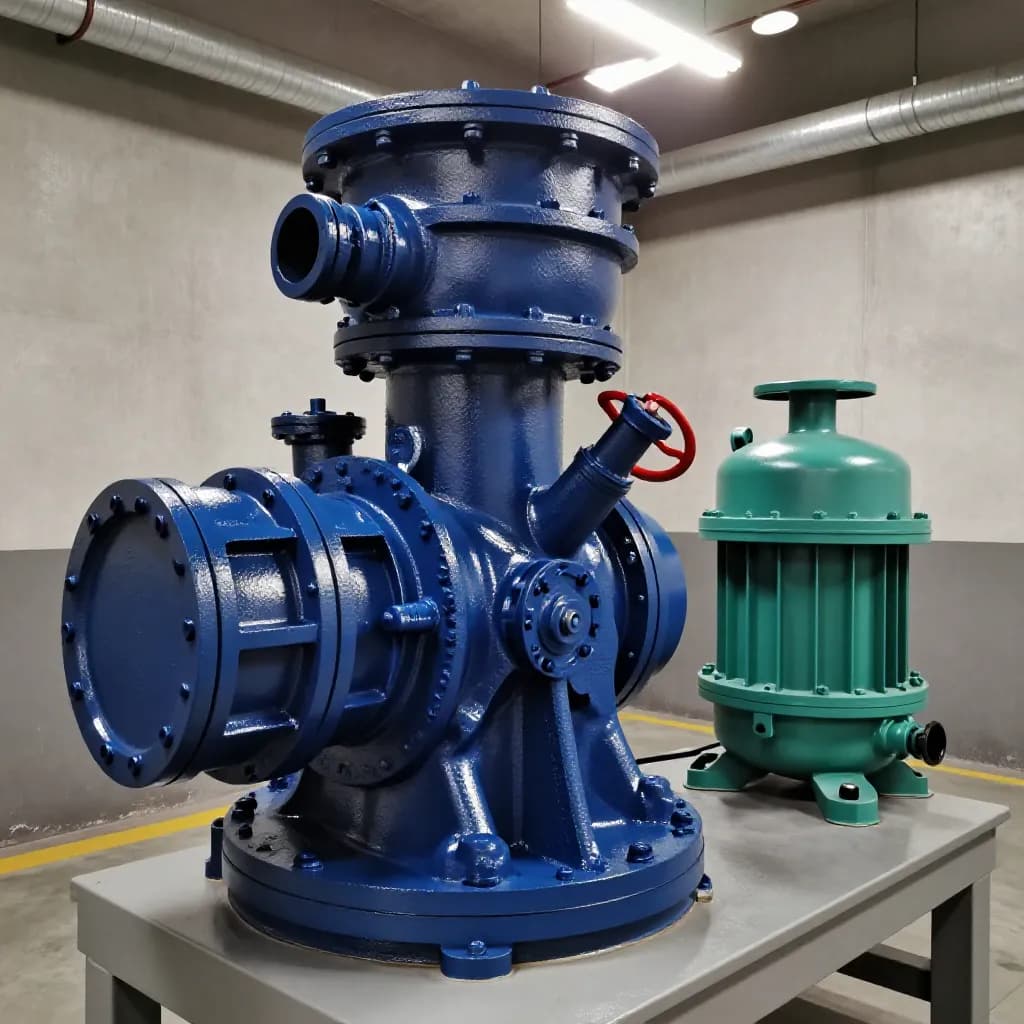
The diversity of pump types creates an equally diverse set of coating requirements. Centrifugal pump volutes and diffuser housings operate in continuous fluid contact with varying degrees of turbulence and cavitation. Submersible pump motors and housings are fully immersed in the pumped fluid, often for years between maintenance intervals. Chemical process pumps handle acids, alkalis, solvents, and slurries that attack most conventional coating systems.
Ready to Start Your Project?
From one-off customs to 15,000-part production runs — get precise pricing in 24 hours.
On This Page
Pump Housings: Where Coating Performance Meets Fluid Dynamics
Powder coating has emerged as the dominant finishing technology for pump housings across these applications, offering advantages over liquid paint in film thickness, chemical resistance, and production efficiency. The ability to apply thick, uniform coatings in a single pass — without the runs, sags, and solvent entrapment issues that plague liquid systems on complex pump geometries — makes powder coating the natural choice for pump manufacturers seeking consistent quality and long service life.
This article examines the specific requirements, challenges, and best practices for powder coating pump housings across the major pump categories and application sectors.
Centrifugal Pump Housings: Volute and Diffuser Coating
Centrifugal pumps are the most widely used pump type in industrial and municipal applications, and their housings present specific coating challenges related to fluid dynamics, erosion, and the complex volute geometry that converts velocity energy to pressure.
The internal surface of a centrifugal pump volute is in continuous contact with the pumped fluid and experiences significant turbulence, particularly near the cutwater (the point where the volute spiral begins) and at the discharge nozzle transition. Coating roughness directly affects pump efficiency — studies have shown that a smooth internal coating can improve pump efficiency by 2-4% compared to an uncoated cast iron surface, translating to meaningful energy savings over the pump's operating life.
For water service centrifugal pumps, fusion-bonded epoxy applied at 300-400 microns provides the optimal combination of corrosion protection, surface smoothness, and erosion resistance. The coating must be applied uniformly throughout the volute interior, including the tight radius at the cutwater and the transition zones at suction and discharge flanges. Fluidized bed application is often preferred for complete internal coverage, though electrostatic spray with specialized internal guns can achieve acceptable results on larger pump housings.
Erosion resistance is critical for pumps handling water with suspended solids — raw water intake pumps, dredging pumps, and wastewater pumps all encounter abrasive particles that progressively wear the coating and underlying substrate. Ceramic-filled epoxy powder coatings provide enhanced erosion resistance for these applications, with alumina or silicon carbide particles dispersed in the epoxy matrix creating a hard, wear-resistant surface.
The external surfaces of centrifugal pump housings require coating primarily for atmospheric corrosion protection and identification. Polyester powder coatings in standard industrial colors provide excellent weathering resistance for outdoor installations, while epoxy or hybrid formulations are suitable for indoor pump rooms where UV exposure is minimal.
Submersible Pump Housings: Total Immersion Protection
Submersible pumps operate fully immersed in the pumped fluid, placing extreme demands on the coating system. The motor housing, pump housing, cable entry points, and all external hardware must resist continuous immersion for service intervals that may extend to 5-10 years between maintenance pulls in municipal water and wastewater applications.
The coating system for submersible pump housings must address several simultaneous challenges. Continuous water immersion tests the barrier properties of the coating — any permeability allows water to reach the substrate and initiate underfilm corrosion that progressively disbonds the coating. Cathodic protection interactions must be considered, as submersible pumps in concrete wet wells or steel casings may be subject to stray currents that can cause cathodic disbondment of the coating.
Fusion-bonded epoxy at 400-600 microns is the standard coating system for submersible pump housings in water and wastewater service. The higher film thickness compared to centrifugal pump internals reflects the more demanding immersion environment and the need for a robust barrier against continuous water contact. Holiday detection at 100% of the coated surface area is mandatory, as even a single pinhole can become the initiation point for progressive corrosion in an immersion environment.
For submersible pumps in aggressive environments — seawater intake, industrial effluent, or chemical sump service — novolac epoxy or vinyl ester powder coatings provide enhanced chemical resistance. These premium formulations resist the sulfide-rich environments found in wastewater lift stations, where hydrogen sulfide concentrations can reach levels that rapidly degrade standard epoxy coatings.
The motor housing of a submersible pump requires particular attention because coating integrity directly affects motor reliability. Water ingress through coating defects can reach the motor winding cavity, causing insulation breakdown and motor failure. The coating on motor housings must maintain its integrity through thermal cycling as the motor heats during operation and cools during off cycles, with temperature differentials of 40-60°C being common.
Chemical Process Pump Housings
Chemical process pumps handle the most aggressive fluids in industrial service — concentrated acids, caustic solutions, organic solvents, and abrasive slurries — and their housing coatings must resist chemical attack that would destroy conventional coating systems within hours or days.
The selection of powder coating chemistry for chemical pump housings requires detailed knowledge of the specific chemicals, concentrations, temperatures, and exposure conditions the pump will encounter. No single powder formulation resists all chemicals, and the wrong selection can result in rapid coating failure with consequences ranging from pump replacement to environmental contamination.
Novolac epoxy powder coatings represent the highest level of chemical resistance available in powder form. These formulations use novolac-type epoxy resins with higher crosslink density than standard bisphenol-A epoxies, providing superior resistance to concentrated acids (sulfuric, hydrochloric, phosphoric), strong alkalis (sodium hydroxide, potassium hydroxide), and many organic solvents. Film thicknesses of 500-800 microns are typical for chemical pump housings, applied by fluidized bed or multiple electrostatic passes.
For pump housings handling oxidizing chemicals — sodium hypochlorite, hydrogen peroxide, ferric chloride — vinyl ester powder coatings offer better resistance than epoxy systems. The vinyl ester backbone provides inherent resistance to oxidative degradation that epoxies lack, making these formulations the preferred choice for chemical dosing pumps in water treatment plants.
Temperature is a critical factor in chemical resistance. A coating that resists a particular chemical at ambient temperature may fail rapidly at elevated process temperatures. Chemical resistance data published by powder manufacturers typically includes temperature limitations, and these must be carefully matched to the actual operating conditions of the pump. When process temperatures exceed the capability of organic powder coatings, metallic coatings, ceramic linings, or exotic alloy pump construction may be necessary.
Chemical pump housings often require internal lining rather than just external coating. The internal surfaces are in direct contact with the process fluid and experience the full chemical and erosive environment. External surfaces face atmospheric corrosion and chemical splash from leaks or maintenance activities.
Water Treatment Plant Pump Applications
Water treatment plants represent one of the largest application sectors for powder-coated pump housings, with dozens of pumps in a typical facility handling raw water, treated water, chemical reagents, sludge, and backwash flows. Each pump type faces different coating requirements based on the fluid being handled and the operating environment.
Raw water intake pumps handle untreated water that may contain suspended solids, organic matter, and varying levels of dissolved minerals and gases. FBE coatings at 300-500 microns provide corrosion protection and erosion resistance for these pumps, with the coating also preventing tuberculation that would reduce pump efficiency over time. In coastal facilities drawing seawater for desalination, the coating must also resist chloride-induced corrosion — one of the most aggressive forms of aqueous corrosion.
Chemical feed pumps in water treatment plants handle concentrated reagents including aluminum sulfate, ferric chloride, sodium hypochlorite, lime slurry, fluorosilicic acid, and various polymers. Each chemical presents specific coating challenges. Sodium hypochlorite is particularly aggressive, as it is a strong oxidizer that degrades many organic coatings. Vinyl ester or specially formulated epoxy powder coatings are required for hypochlorite service, with regular inspection and maintenance to catch coating degradation before it leads to pump failure.
Sludge pumps handle thickened waste streams containing abrasive particles, organic matter, and often aggressive chemistry from the treatment process. The combination of chemical attack and abrasive wear makes sludge pump housings among the most challenging coating applications in water treatment. Ceramic-filled epoxy powder coatings provide the best combination of chemical resistance and wear resistance for these demanding applications.
High-service pumps that deliver treated water to the distribution system must meet NSF/ANSI 61 requirements for potable water contact. The coating must not leach any substances that could affect water quality, taste, or odor. FBE coatings from NSF-certified manufacturers are the standard choice, applied at 250-400 microns with 100% holiday detection to ensure coating integrity.
Surface Preparation and Pretreatment for Pump Castings
Pump housings are predominantly manufactured from cast iron or cast steel, and the casting process creates surface conditions that demand careful pretreatment before powder coating. The quality of surface preparation directly determines the adhesion, integrity, and service life of the finished coating.
The first step for cast pump housings is thermal cleaning or degreasing to remove machining oils, cutting fluids, and foundry residues. Cast iron is particularly absorbent, and oils can penetrate deep into the porous surface structure. Alkaline immersion cleaning at 60-80°C for 10-20 minutes is standard, with agitation or ultrasonic assistance to improve penetration into surface pores.
Abrasive blast cleaning follows degreasing and serves multiple purposes: removing casting skin and mill scale, creating a surface profile for mechanical adhesion, and opening surface pores to allow subsequent pretreatment chemicals to penetrate. For pump housings, blast cleaning to SSPC-SP 10 (Near-White Blast Cleaning) using angular steel grit (G25 or G40) produces the optimal combination of cleanliness and profile depth. The target profile of 50-75 microns provides excellent mechanical anchoring for FBE and epoxy powder coatings.
The degas bake is critical for cast pump housings. Heating to 230-260°C for 20-30 minutes drives out trapped moisture and gases that would otherwise cause outgassing defects during powder curing. For heavily porous castings, a second degas cycle may be necessary. The effectiveness of the degas process can be verified by applying a test patch of powder and curing — if pinholes or bubbles appear, additional degas time is needed.
Chemical conversion coating — typically iron phosphate for general service or zinc phosphate for aggressive environments — provides the final pretreatment layer. The conversion coating improves coating adhesion by creating a chemically bonded intermediate layer between the metal substrate and the powder coating. For pump housings in immersion service, the quality of the conversion coating is particularly important, as it provides the last line of defense against underfilm corrosion if the powder coating is breached.
Application Techniques for Complex Pump Geometries
Pump housings present some of the most challenging geometries in industrial powder coating. The combination of internal volute passages, suction and discharge nozzles, drain ports, and external mounting features requires a systematic approach to achieve consistent coating coverage.
For internal coating of pump volutes, fluidized bed application is often the most effective method. The preheated pump housing is lowered into a bed of fluidized powder, which melts on contact with the hot metal surface and flows into the complex internal geometry. The immersion time and part temperature control the coating thickness — longer immersion and higher temperatures produce thicker coatings. Typical parameters for FBE internal lining are part temperature of 230-250°C and immersion time of 5-15 seconds for a 400-500 micron coating.
Electrostatic spray application is used for external surfaces and for internal coating of larger pump housings where fluidized bed immersion is impractical. Internal coating with electrostatic guns requires specialized lance-type or extension guns that can reach into the volute through the suction or discharge openings. Gun voltage is typically reduced to 30-50 kV to minimize the Faraday cage effect inside the volute cavity.
For pump housings requiring different coating systems on internal and external surfaces — a common requirement where internal FBE provides chemical resistance while external polyester provides weathering resistance — the coating process is performed in two stages. Internal coating is applied and cured first, then external surfaces are masked, prepared, and coated with the second system. This dual-system approach adds complexity and cost but provides optimized performance for each exposure environment.
Curing large pump housings requires careful oven management. A pump housing weighing 100-500 kg represents significant thermal mass that must be uniformly heated to curing temperature. Oven temperature profiling with multiple thermocouples — placed on the thickest flange section, the thinnest wall section, and the internal volute surface — establishes the minimum cure time needed to achieve full crosslinking throughout the coating.
Performance Testing and Service Life Expectations
The performance requirements for powder-coated pump housings are defined by a combination of industry standards, end-user specifications, and the practical demands of the operating environment. Testing programs must verify that the coating will perform reliably for the expected service life under actual operating conditions.
Adhesion testing is the first line of quality verification. Pull-off adhesion testing per ASTM D4541 typically requires minimum values of 7-10 MPa for immersion-service pump housings, with cohesive failure within the coating being the preferred failure mode. Adhesion testing should be performed on both internal and external surfaces, as the different exposure conditions and application methods may produce different adhesion characteristics.
Immersion testing simulates the continuous fluid contact that pump housings experience in service. Test panels coated alongside the pump housing are immersed in the actual process fluid (or a representative substitute) at operating temperature for extended periods — typically 1000-3000 hours for qualification testing. The panels are evaluated for blistering (ASTM D714), adhesion loss, color change, and coating softening at intervals throughout the test.
Cathodic disbondment testing per ASTM G8 or ASTM G95 is critical for pump housings that will operate in conjunction with cathodic protection systems. The test measures the radius of coating disbondment around an intentional holiday when cathodic potential is applied, simulating the interaction between the coating and cathodic protection in service. Maximum disbondment radii of 5-8 mm after 28 days are typical acceptance criteria for FBE coatings.
Service life expectations for properly applied powder coatings on pump housings vary by application. Municipal water pumps with FBE internal lining typically achieve 15-25 years of service before recoating is needed. Submersible pump housings in clean water service may last 10-15 years. Chemical process pumps in aggressive service may require recoating every 5-10 years, depending on the specific chemical environment. These service life expectations assume proper surface preparation, correct powder selection, and application within the manufacturer's specified parameters.
Frequently Asked Questions
Does powder coating improve centrifugal pump efficiency?
Yes. A smooth powder coating on the internal volute surface can improve pump efficiency by 2-4% compared to an uncoated cast iron surface. The smoother surface reduces hydraulic friction losses, which translates to meaningful energy savings over the pump's operating life, particularly for large pumps running continuously.
What coating is best for submersible pump housings?
Fusion-bonded epoxy at 400-600 microns is the standard for submersible pumps in water and wastewater service. For aggressive environments like seawater or chemical sumps, novolac epoxy or vinyl ester powder coatings provide enhanced chemical resistance. Holiday detection at 100% coverage is mandatory for immersion applications.
How do you handle outgassing on cast iron pump housings?
Cast iron pump housings require a degas bake at 230-260°C for 20-30 minutes before powder application to drive out trapped gases and moisture. Powder formulations with degassing additives like benzoin are also used. For heavily porous castings, a second degas cycle may be necessary to eliminate all outgassing defects.
Can powder-coated pump housings handle chemical service?
Yes, with the correct chemistry. Novolac epoxy powder coatings resist concentrated acids, strong alkalis, and many solvents. Vinyl ester formulations handle oxidizing chemicals like sodium hypochlorite. Film thicknesses of 500-800 microns are typical for chemical pump housings, applied by fluidized bed or multiple electrostatic passes.
What is the expected service life of powder coating on pump housings?
Service life varies by application: municipal water pumps with FBE lining typically achieve 15-25 years, submersible pumps in clean water last 10-15 years, and chemical process pumps may require recoating every 5-10 years depending on the chemical environment. Proper surface preparation and powder selection are critical to achieving these lifespans.
Ready to Start Your Project?
From one-off customs to 15,000-part production runs — get precise pricing in 24 hours.