Prosthetic limb technology has advanced dramatically in recent decades, with modern devices incorporating sophisticated mechanical joints, microprocessor-controlled actuators, and lightweight structural materials. The surface finish on these components serves multiple critical functions — protecting the underlying material from corrosion and wear, providing a comfortable and safe surface for skin contact, enabling personal aesthetic expression, and contributing to the overall perception of the device as a natural extension of the user's body.
Technical
Powder Coating for Prosthetic Components: Biocompatibility, Lightweight Finishes, and Patient Personalization
Sundial Powder Coating·April 23, 2026·12 min
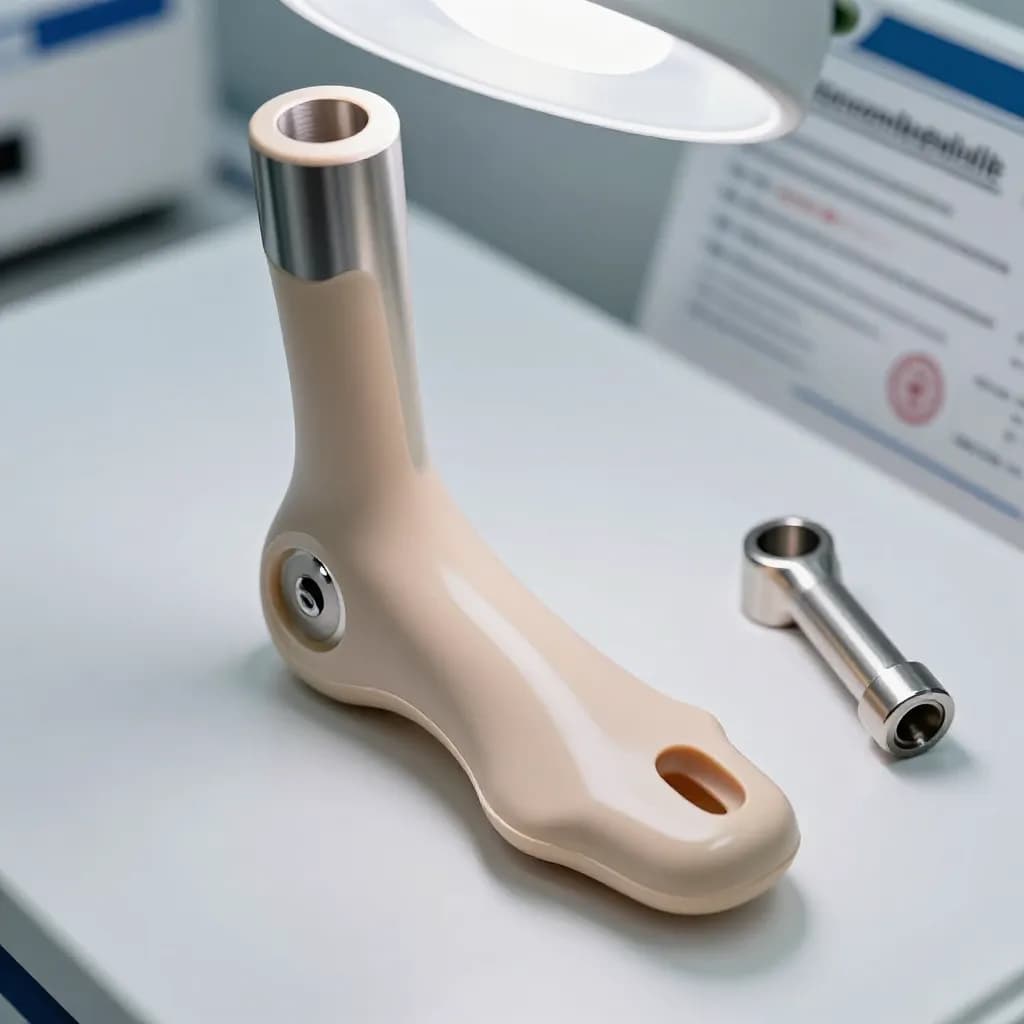
Powder coating has emerged as a preferred finishing technology for many prosthetic structural components, particularly the pylons, connectors, socket frames, and external housings that form the visible and load-bearing elements of a prosthetic limb. The technology offers advantages that align well with prosthetic manufacturing requirements: thin, uniform films that add minimal weight, excellent adhesion to the aluminum and titanium alloys used in prosthetic construction, a wide range of colors and textures for personalization, and a fully cured finish that is chemically inert and safe for prolonged skin proximity.
Ready to Start Your Project?
From one-off customs to 15,000-part production runs — get precise pricing in 24 hours.
On This Page
Powder Coating in Modern Prosthetic Manufacturing
The prosthetic industry operates at the intersection of medical device regulation, advanced materials engineering, and deeply personal patient care. Every component must meet rigorous safety and performance standards while also addressing the individual needs and preferences of the person who will wear the device. Powder coating contributes to both the technical and personal dimensions of prosthetic design, providing a durable protective finish that can also serve as a medium for self-expression.
This article examines the technical requirements, regulatory considerations, and personalization opportunities that powder coating brings to prosthetic component manufacturing, drawing on established practices in both the medical device and surface finishing industries.
Biocompatibility Requirements for Skin-Contact Surfaces
Prosthetic components that contact or are in close proximity to the user's skin must meet biocompatibility standards that ensure the surface does not cause adverse biological reactions. The primary standard governing biocompatibility of medical device materials is ISO 10993, which defines a framework of tests based on the nature and duration of body contact. For prosthetic components with prolonged skin contact, the relevant tests include cytotoxicity, sensitization, and irritation assessments.
Fully cured powder coatings are generally well-suited to skin-contact applications. The thermoset crosslinking reaction that occurs during curing converts the powder particles into a dense, chemically stable polymer network that does not leach monomers, plasticizers, or other potentially irritating substances under normal use conditions. However, the specific formulation matters — some pigments, additives, or flow agents used in powder coatings may not be appropriate for prolonged skin contact, and biocompatibility testing should be conducted on the specific formulation intended for prosthetic use.
The curing process itself is critical to biocompatibility. Undercured powder coating may contain unreacted chemical groups that could cause skin sensitization or irritation. Prosthetic component coating must achieve full cure as verified by differential scanning calorimetry or solvent rub testing, with no residual reactivity. Cure verification should be performed on production parts, not just test panels, because the thermal mass and geometry of actual prosthetic components may result in different cure profiles than flat test specimens.
Surface texture also affects skin compatibility. Rough or heavily textured coatings can cause friction irritation during the repetitive movements of walking or grasping. For surfaces that contact skin directly or through thin fabric interfaces, smooth finishes with controlled surface roughness are preferred. A surface roughness of Ra 0.8-1.6 micrometers provides a comfortable feel without the slipperiness of a mirror-smooth surface that could compromise grip on handling surfaces.
Lightweight Application Techniques for Prosthetic Parts
Weight is a paramount concern in prosthetic design. Every additional gram at the distal end of a prosthetic limb increases the energy expenditure required for ambulation and can cause fatigue, socket discomfort, and gait abnormalities. The powder coating specification for prosthetic components must minimize weight addition while still providing adequate protection and aesthetics.
Prosthetic pylons and connectors are typically small components with surface areas ranging from 50 to 300 square centimeters. At a film build of 40-50 microns — the recommended range for prosthetic applications — the coating weight on a typical below-knee pylon assembly is approximately 5-15 grams. While this seems trivial, it is evaluated in the context of overall prosthetic weight budgets where designers work to save individual grams through material selection and structural optimization.
Achieving consistent thin films on small, complex prosthetic components requires careful application technique. The small size of many prosthetic parts means they have low thermal mass and heat quickly in the curing oven, which can cause powder to flow and sag before gelling if film build is excessive. Conversely, thin films on small parts are more susceptible to edge pull-back during flow, where surface tension causes the molten powder to thin at edges and corners. Fine-particle powder formulations with fast gel times help manage both of these challenges by reducing flow time and maintaining edge coverage.
Fixturing is another critical consideration. Prosthetic components often have complex three-dimensional geometries with internal bores, threaded connections, and precision-machined interfaces that must be masked. Custom fixtures that hold parts in optimal orientation for powder deposition while protecting critical surfaces are essential for consistent quality. The fixture design must also ensure adequate grounding for electrostatic attraction — poor grounding is a common cause of thin or uneven coating on small parts.
Some prosthetic manufacturers are exploring ultra-thin coating approaches using powder coatings applied at 20-30 microns, approaching the lower limit of what standard electrostatic application can achieve reliably. At these thicknesses, substrate preparation quality becomes even more critical, as any surface imperfection will telegraph through the thin film.
Material Compatibility: Aluminum, Titanium, and Composites
Prosthetic components are manufactured from a range of advanced materials selected for their strength-to-weight ratio, fatigue resistance, and biocompatibility. Each material presents specific challenges and opportunities for powder coating that must be understood to achieve optimal results.
Aluminum alloys — primarily 7075-T6 and 2024-T3 — are widely used for prosthetic pylons, adapters, and structural connectors. These high-strength alloys respond well to standard aluminum pretreatment sequences: alkaline cleaning, acid etching, and chromate-free conversion coating. The 7000-series alloys are more corrosion-sensitive than common 6000-series architectural alloys due to their zinc content, requiring thorough pretreatment and complete coating coverage to prevent intergranular corrosion in service.
Titanium alloys — particularly Ti-6Al-4V — are used in premium prosthetic components for their exceptional strength-to-weight ratio and inherent biocompatibility. Powder coating titanium requires different pretreatment than aluminum. The stable titanium oxide layer that provides corrosion resistance also resists chemical conversion coating. Effective pretreatment typically involves alkaline cleaning followed by light grit blasting with fine aluminum oxide media at 2-3 bar pressure to create a mechanical adhesion profile without damaging the substrate. Some facilities use sol-gel adhesion promoters as an alternative to mechanical roughening, depositing a nanoscale silane-based layer that bonds to both the titanium oxide and the powder coating.
Carbon fiber composite components are increasingly common in prosthetic feet, socket frames, and cosmetic covers. Standard electrostatic powder coating is not directly applicable to carbon fiber composites because the curing temperatures of 180-200 degrees Celsius can degrade the epoxy or vinyl ester matrix of the composite. Low-temperature cure powder coatings that cure at 130-150 degrees Celsius are available and can be used on some composite substrates, but compatibility must be verified for each specific composite system. The electrical conductivity of carbon fiber varies depending on fiber orientation and resin content, which affects electrostatic powder attraction and may require conductive primers or modified application parameters.
Patient Personalization and Color Psychology
The psychological impact of prosthetic appearance on patient well-being and device acceptance is well-documented in rehabilitation literature. A prosthetic limb that looks and feels like a personal choice rather than a medical appliance can significantly improve the user's confidence, social comfort, and willingness to use the device consistently. Powder coating color and finish selection is one of the most accessible personalization tools available in prosthetic design.
Traditional prosthetic finishing aimed to make devices as inconspicuous as possible, using skin-tone colors and realistic cosmetic covers to simulate the appearance of a natural limb. While this approach remains appropriate for many patients, a growing number of prosthetic users — particularly younger patients and athletes — prefer to make their prosthetic a visible expression of personal identity. Bold colors, metallic finishes, graphic patterns, and even artistic designs transform the prosthetic from something to hide into something to celebrate.
Powder coating supports both approaches. For patients who prefer a natural appearance, custom color matching can produce skin-tone shades that complement the individual's complexion. These colors can be formulated in matte or satin finishes that approximate the light-reflecting properties of skin more closely than high-gloss finishes. For patients who want their prosthetic to stand out, the full spectrum of powder coating colors, metallics, and special effects is available.
Pediatric prosthetic personalization deserves special attention. Children who receive prosthetic limbs face unique psychological challenges, and the ability to choose colors and designs for their device can provide a sense of control and ownership that supports emotional adjustment. Powder coating in favorite colors, sports team colors, or character-themed color schemes helps children view their prosthetic positively. As children grow and their prosthetic is replaced, the opportunity to choose new colors for each device becomes a positive milestone rather than a reminder of limitation.
Some prosthetic clinics have begun offering color consultation as part of the fitting process, helping patients explore options and visualize how different finishes will look on their specific device. Digital color visualization tools that show the prosthetic in various powder coating options before commitment help patients make confident choices.
Wear Resistance and Service Life Expectations
Prosthetic components experience wear patterns that differ significantly from most other powder-coated products. The repetitive mechanical motions of walking, grasping, and daily activities create specific abrasion zones where coating durability is tested continuously. Understanding these wear patterns is essential for specifying coatings that will maintain both appearance and protection throughout the device's service life.
For lower-limb prosthetics, the primary wear zones are the pylon surface where it contacts clothing, the connector interfaces where components are assembled and adjusted, and the cosmetic cover attachment points where friction occurs during flexion. The pylon-to-clothing contact is a low-pressure but high-cycle abrasion scenario — thousands of fabric contact cycles per day over months and years of use. Smooth, hard polyester coatings with pencil hardness of 2H or higher resist this type of wear effectively.
Upper-limb prosthetic components face different challenges. Terminal devices and wrist units experience impact loading, tool contact, and exposure to a wider range of chemicals and environments as the user performs daily tasks. The coating on a prosthetic hand or hook must resist scratching from keys, utensils, and work tools, as well as exposure to food acids, cleaning products, and workplace chemicals. Epoxy-polyester hybrid coatings offer enhanced chemical and abrasion resistance for these demanding applications.
The expected service life of a prosthetic device varies by component and patient activity level, but typical replacement intervals range from 3 to 5 years for active users. The powder coating should maintain acceptable appearance and protection throughout this period without requiring refinishing. For structural components that may be reused across multiple socket fittings, the coating may need to last 5-10 years with periodic inspection and touch-up of wear areas.
Field experience indicates that properly specified powder coatings on prosthetic components maintain good appearance for 2-4 years of active daily use, with gradual wear becoming visible in high-contact zones thereafter. The corrosion protection function of the coating typically outlasts the cosmetic appearance, continuing to protect the substrate even after surface wear is visible. This is an important distinction — cosmetic wear does not necessarily indicate loss of structural protection.
Regulatory Compliance and Quality Documentation
Prosthetic components are regulated as medical devices, and the powder coating process must operate within the quality management framework required by applicable regulations. In the United States, prosthetic devices are regulated by the FDA under 21 CFR Part 890, and manufacturers must comply with the Quality System Regulation (21 CFR Part 820). In the European Union, the Medical Device Regulation (EU 2017/745) applies. Both frameworks require documented design controls, process validation, and traceability for all manufacturing processes including surface finishing.
Process validation for prosthetic powder coating involves demonstrating that the coating process consistently produces results meeting predetermined specifications. This includes Installation Qualification confirming that equipment is properly installed and calibrated, Operational Qualification verifying that the process operates within specified parameters, and Performance Qualification demonstrating that the process consistently produces acceptable product over multiple production runs. Validation documentation must be maintained and the process revalidated when significant changes occur — such as changing powder suppliers, modifying cure parameters, or replacing pretreatment chemistry.
Batch traceability requires that each coated component can be linked to specific powder coating lot numbers, pretreatment chemical batches, application dates, cure oven records, and quality test results. This traceability chain enables investigation of any field complaints or quality issues and supports recall actions if necessary. Electronic batch records and barcode tracking systems are increasingly used to manage this documentation efficiently.
Complaint handling procedures must include provisions for investigating coating-related issues such as adhesion failures, color discrepancies, or biocompatibility concerns reported by patients or clinicians. Root cause analysis of coating complaints should examine the full process chain from substrate preparation through final inspection, and corrective actions must be documented and verified for effectiveness.
Supplier qualification is another regulatory requirement. Powder coating material suppliers must be evaluated and approved based on their ability to consistently provide materials meeting prosthetic specifications. This evaluation typically includes review of the supplier's quality system, material certifications, biocompatibility data, and batch-to-batch consistency records.
Frequently Asked Questions
Is powder coating biocompatible for prosthetic skin contact?
Fully cured powder coatings are generally biocompatible for prolonged skin contact applications. The crosslinked thermoset polymer is chemically inert and does not leach irritating substances. However, specific formulations should be tested per ISO 10993 for cytotoxicity, sensitization, and irritation to confirm suitability for prosthetic use.
How much weight does powder coating add to a prosthetic component?
At the recommended 40-50 micron film build for prosthetic applications, coating weight on a typical below-knee pylon assembly is approximately 5-15 grams. This minimal weight addition is carefully considered within the overall prosthetic weight budget where every gram affects user comfort and energy expenditure.
Can patients choose custom colors for powder-coated prosthetics?
Yes. Powder coating offers virtually unlimited color options including skin-tone matching, bold colors, metallics, and matte finishes. Many prosthetic clinics now include color consultation in the fitting process, and some use digital visualization tools to help patients preview different finish options on their specific device.
Can you powder coat titanium prosthetic components?
Yes, though titanium requires different pretreatment than aluminum. The stable titanium oxide layer resists chemical conversion coating, so adhesion is typically achieved through light grit blasting or sol-gel adhesion promoters. Standard polyester powder coatings adhere well to properly prepared titanium surfaces and cure at temperatures that do not affect titanium's mechanical properties.
What regulatory standards apply to prosthetic powder coating?
Prosthetic powder coating must comply with medical device quality system requirements — FDA 21 CFR Part 820 in the US and EU MDR 2017/745 in Europe. This includes process validation, batch traceability, biocompatibility testing per ISO 10993, and documented quality controls. Powder suppliers must also be qualified and approved as part of the device manufacturer's quality system.
Ready to Start Your Project?
From one-off customs to 15,000-part production runs — get precise pricing in 24 hours.