Point-of-sale displays are the silent salespeople of retail — they attract attention, communicate brand identity, and influence purchasing decisions at the critical moment when consumers are ready to buy. The finish quality of a POS display directly impacts its effectiveness, because consumers unconsciously associate surface quality with product quality. A display with a flawless, premium finish elevates the perceived value of the products it presents.
Commercial
Powder Coating for Point-of-Sale Displays: Premium Finishes for Retail Merchandising
Sundial Powder Coating·April 22, 2026·11 min
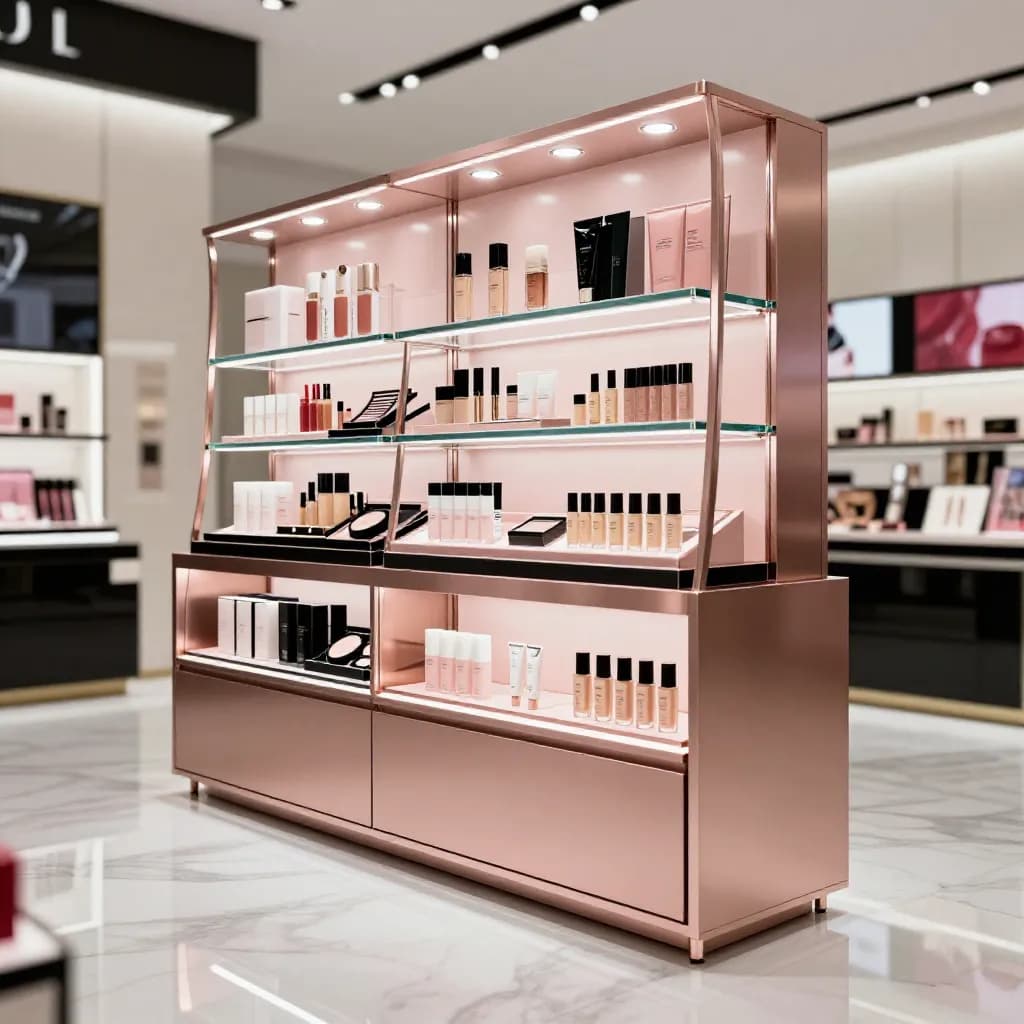
Powder coating has become the preferred finishing technology for metal POS displays because it delivers the aesthetic precision, durability, and production efficiency that the retail display industry demands. Unlike liquid paint, powder coating achieves a uniform, defect-free finish in a single application without runs, sags, or solvent-related defects. The resulting surface has a depth and consistency that enhances the visual impact of the display.
Ready to Start Your Project?
From one-off customs to 15,000-part production runs — get precise pricing in 24 hours.
On This Page
Powder Coating's Role in Retail Visual Merchandising
The POS display market encompasses a vast range of products: countertop displays, floor-standing merchandising units, gondola shelving, endcap displays, checkout lane fixtures, window display structures, and interactive digital display housings. Each category has specific coating requirements, but all share the need for a finish that looks premium, withstands retail handling, and accurately represents the brand identity of the product being merchandised.
Major display manufacturers and retail fixture companies including Madix, Lozier, Streater, and custom fabricators specify powder coating for its combination of aesthetic quality, mechanical durability, and rapid color change capability that supports the short production runs typical of promotional display manufacturing.
Aesthetic Excellence: Finishes That Sell Products
The aesthetic capabilities of modern powder coating technology have expanded dramatically, offering retail display designers a palette of finishes that rivals or exceeds what liquid paint can achieve. Understanding these finish options is essential for creating displays that maximize visual impact and brand alignment.
High-gloss finishes (80-95 GU at 60°) create a mirror-like surface that projects luxury and premium quality. These finishes are specified for cosmetics displays, jewelry merchandising units, and high-end electronics fixtures where the display finish must match the premium positioning of the products. Achieving consistent high gloss requires precise control of powder particle size distribution, application parameters, and cure conditions — any variation produces visible gloss inconsistency.
Matte and ultra-matte finishes (3-15 GU at 60°) are increasingly popular in contemporary retail design, projecting sophistication and modernity. These finishes are achieved through matting agents (typically silica or wax-based) incorporated into the powder formulation. Ultra-matte finishes require careful handling during and after production because fingerprints and surface marks are more visible on low-gloss surfaces.
Textured finishes — including fine texture, wrinkle, hammertone, and sand texture — add tactile dimension to displays and are particularly effective for outdoor retail, sporting goods, and industrial product merchandising. Texture also provides practical benefits: hiding fingerprints, masking minor surface imperfections, and improving scratch resistance compared to smooth finishes.
Metallic and special-effect finishes create eye-catching displays that stand out in crowded retail environments. Bonded metallic powders with aluminum, copper, or mica flake produce consistent metallic effects ranging from subtle shimmer to bold sparkle. Pearlescent powders create color-shifting effects that change appearance with viewing angle, adding dynamic visual interest to static displays. Chrome-effect powder coatings, while not achieving true mirror chrome, provide a bright metallic appearance suitable for accent elements and trim details.
Substrate Diversity in POS Display Manufacturing
POS displays are fabricated from a wider range of substrates than most powder-coated products, reflecting the diverse structural and aesthetic requirements of retail merchandising. Each substrate requires specific pretreatment and application parameters for optimal powder coating performance.
Mild steel is the most common substrate for floor-standing displays, gondola shelving, and structural fixtures. Standard pretreatment with alkaline cleaning and iron phosphate conversion coating provides adequate performance for indoor retail environments. Film thickness of 60-80 microns in a single coat is typical, with hybrid epoxy-polyester chemistry providing the best balance of adhesion, hardness, and chemical resistance for indoor applications.
Aluminum is increasingly used for lightweight displays, portable merchandising units, and premium fixtures where weight reduction is important. Aluminum requires chromate-free pretreatment (zirconium or titanium-based) for REACH and RoHS compliance. The lower cure temperature tolerance of some aluminum alloys may require low-temperature cure powder formulations (140-160°C) to prevent substrate distortion or temper loss.
MDF (medium-density fiberboard) and other engineered wood substrates are used for display bases, shelving, and decorative panels. Powder coating MDF requires specialized low-temperature cure formulations (120-140°C) and UV-cure powder technologies that cure at temperatures compatible with wood substrates. The MDF surface must be sealed and primed to prevent moisture absorption and outgassing during cure. This is a growing application area as retailers seek the durability of powder coating on mixed-material displays.
Wire forms — display hooks, basket displays, and wire shelving — present the same Faraday cage challenges as shopping cart coating. Pre-heating, tribo-charging, and multi-pass application techniques ensure adequate coverage at wire intersections and recessed areas. Wire display components are typically coated at 50-70 microns to maintain the fine detail and dimensional precision of the wire form.
Cast and die-cast components used for decorative elements, brackets, and hardware require careful outgassing management. A pre-bake at 190-210°C for 15-20 minutes drives off trapped gases and moisture that would otherwise cause pinholes and bubbles in the powder coating film.
Brand Color Accuracy and Multi-Brand Production
POS displays are brand ambassadors, and color accuracy is non-negotiable. A Coca-Cola red display must be exactly the right red — not slightly orange, not slightly maroon, but the precise shade that consumers associate with the brand. This level of color precision requires sophisticated color management throughout the powder coating supply chain.
Color development begins with the brand owner's color standard, which may be specified as a Pantone reference, a physical sample, or a spectrophotometric data file. The powder supplier formulates a match using a combination of spectrophotometric measurement and visual assessment under controlled lighting conditions (D65 daylight, TL84 retail lighting, and incandescent). The formulation must achieve acceptable color match under all three illuminants to avoid metamerism — the phenomenon where colors match under one light source but appear different under another.
Delta E tolerances for brand-critical POS displays are typically ≤0.8 for primary brand colors, with some luxury brands specifying ≤0.5. These tight tolerances require precise pigment dispersion during powder manufacturing and rigorous batch-to-batch quality control. Each production batch is measured against the approved master standard, and batches outside tolerance are rejected or reformulated.
Multi-brand production is a defining characteristic of POS display manufacturing. A single coating facility may process displays for dozens of different brands in a single shift, each requiring a different color. Quick-color-change powder application systems are essential, with booth cleaning and color change completed in 10-15 minutes to maintain production efficiency. Contamination control during color changes is critical — even trace amounts of a previous color can cause visible specks in the new color, particularly when changing from dark to light colors.
Color libraries maintained by display manufacturers may contain hundreds of brand-specific formulations, each with documented master standards, spectrophotometric data, and approved supplier sources. Digital color management systems track formulation history, batch data, and customer approvals to ensure consistent color reproduction across orders that may span months or years.
Durability Requirements for Retail Environments
POS displays must maintain their appearance through the rigors of retail handling, which includes shipping, installation, restocking, cleaning, and eventual repositioning or disposal. The powder coating must survive these stresses without visible degradation that would diminish the display's merchandising effectiveness.
Shipping and handling represent the first durability challenge. Displays are packed, palletized, and transported by truck to retail locations, where they are unpacked and assembled by store personnel who may not handle them with particular care. The coating must resist scratching from packaging materials, impact from adjacent items during transit, and abrasion from sliding across warehouse floors. Impact resistance of 60-80 inch-pounds (direct) and scratch resistance of H-2H pencil hardness are minimum specifications for displays that must arrive at retail locations in pristine condition.
In-store durability requirements vary by display type and location. Checkout lane displays are bumped by shopping carts and baskets multiple times per hour. Floor-standing displays are struck by floor cleaning equipment. Countertop displays are moved, restacked, and repositioned during restocking. The coating must resist these repeated low-energy impacts without chipping or showing wear marks.
Cleaning resistance is essential because retail displays are cleaned regularly with commercial cleaning products. The coating must resist glass cleaners, all-purpose cleaners, and disinfectants (particularly since the COVID-19 pandemic increased cleaning frequency and chemical strength in retail environments) without softening, discoloration, or gloss change. Chemical resistance testing against common retail cleaning products should be part of the coating qualification process.
For seasonal and promotional displays with shorter service lives (weeks to months), coating durability requirements may be relaxed in favor of aesthetic impact and production speed. These displays prioritize visual effect over long-term durability, allowing the use of more decorative but less durable finish options such as candy colors, chrome effects, and ultra-high-gloss formulations.
Production Efficiency for Short-Run Display Manufacturing
POS display manufacturing is characterized by short production runs, frequent color changes, and tight delivery schedules driven by retail promotional calendars. The powder coating process must accommodate these production realities while maintaining consistent quality across small batch sizes.
Batch sizes for POS displays range from as few as 10-50 units for custom promotional displays to several thousand units for standard retail fixtures. This variability requires flexible coating systems that can efficiently process both small and large orders. Small-batch production favors manual or semi-automatic powder application with quick-color-change booths, while larger runs benefit from fully automatic reciprocating or robotic application systems.
Quick-color-change capability is the most critical production requirement for POS display coating. A facility processing displays for multiple brands may change colors 10-20 times per shift. Cartridge-style powder feed systems with dedicated hoppers for each color eliminate the need to clean the feed system during color changes, reducing changeover time to 5-10 minutes. Booth designs with smooth, non-stick interior surfaces and automated air-blow cleaning further accelerate color changes.
Cure oven flexibility is important for processing the diverse substrates used in POS displays. Programmable cure ovens with multiple temperature zones allow different cure schedules for steel, aluminum, and MDF components without dedicated oven runs for each substrate. Infrared boost zones at the oven entrance accelerate heating of heavy steel components while preventing overheating of lighter aluminum and MDF parts.
Just-in-time delivery requirements mean that POS display coating operations must maintain rapid turnaround times — often 24-48 hours from receipt of fabricated parts to shipment of coated components. This requires efficient scheduling, minimal work-in-process inventory, and reliable first-pass quality to avoid rework that delays delivery. Statistical process control and standardized application parameters for common display geometries help maintain first-pass yield above 95%.
Sustainability and Circular Economy in Retail Displays
The retail industry is under increasing pressure to reduce the environmental impact of its operations, and POS displays — which are frequently replaced as promotions change — represent a significant waste stream. Powder coating contributes to sustainability through its inherently clean application process and by enabling display reuse and refurbishment.
Zero-VOC emissions from powder coating eliminate the air quality concerns associated with liquid paint finishing. This is particularly relevant for display manufacturers operating in urban areas with strict air quality regulations, where liquid paint operations may require expensive solvent abatement equipment. Powder coating's clean process also improves working conditions for production staff, reducing occupational health risks associated with solvent exposure.
Material efficiency of 95-98% means that virtually all powder material is converted into finished coating, with overspray reclaimed and reused. This contrasts sharply with liquid paint operations where 30-50% of material may be lost as waste. The reduced waste generation lowers disposal costs and environmental impact.
Display reuse and refurbishment programs are growing as retailers seek to reduce waste and cost. Powder-coated metal displays can be stripped, re-pretreated, and recoated in new brand colors for redeployment, extending the useful life of the metal fixture and avoiding the environmental cost of manufacturing new displays. The durability of powder coating supports multiple recoating cycles without substrate degradation.
Recyclability of powder-coated steel and aluminum displays at end of life is straightforward. Both metals are infinitely recyclable, and the thin powder coating film does not interfere with recycling processes. Retailers and display manufacturers are increasingly tracking and reporting the recycled content and recyclability of their display programs as part of corporate sustainability commitments.
Life cycle assessment (LCA) studies consistently show that powder coating has a lower environmental footprint than liquid paint across all major impact categories: global warming potential, ozone depletion, acidification, and resource depletion. These LCA results support the specification of powder coating for retailers with ambitious sustainability targets.
Frequently Asked Questions
What finishes are available for powder-coated POS displays?
Powder coating offers high-gloss, semi-gloss, satin, matte, ultra-matte, textured, metallic, pearlescent, and chrome-effect finishes for POS displays. Bonded metallic powders provide consistent metallic effects, while specialty formulations create color-shifting and sparkle effects that maximize visual merchandising impact.
How accurate is brand color matching with powder coating?
Powder coating achieves Delta E tolerances of 0.8 or less for brand-critical colors, with some luxury brands specifying 0.5 or less. Colors are matched under multiple illuminants (D65, TL84, incandescent) to prevent metamerism, ensuring consistent brand representation under different retail lighting conditions.
Can powder coating be applied to MDF display components?
Yes. Low-temperature cure powder formulations (120-140°C) and UV-cure powder technologies are compatible with MDF substrates. The MDF surface must be sealed and primed before powder application to prevent moisture absorption and outgassing during cure.
How durable is powder coating on retail displays?
Powder-coated POS displays achieve impact resistance of 60-80 inch-pounds, pencil hardness of H-2H, and resist common retail cleaning chemicals without degradation. These properties ensure displays maintain their appearance through shipping, installation, restocking, and daily retail use.
Is powder coating sustainable for retail displays?
Yes. Powder coating produces zero VOC emissions, achieves 95-98% material utilization, and enables display reuse through stripping and recoating. Powder-coated metal displays are fully recyclable at end of life, supporting circular economy goals in the retail industry.
Ready to Start Your Project?
From one-off customs to 15,000-part production runs — get precise pricing in 24 hours.