For original equipment manufacturers, powder coating is rarely just a finishing step — it is a strategic capability that affects product quality, production throughput, supply chain flexibility, and competitive positioning. The decision of whether to coat in-house or outsource, and how to manage the coating process within the broader manufacturing operation, has implications that extend far beyond the coating line itself.
Commercial
Powder Coating for OEM Manufacturers: In-House vs Outsource and Supply Chain Integration
Sundial Powder Coating·April 22, 2026·12 min
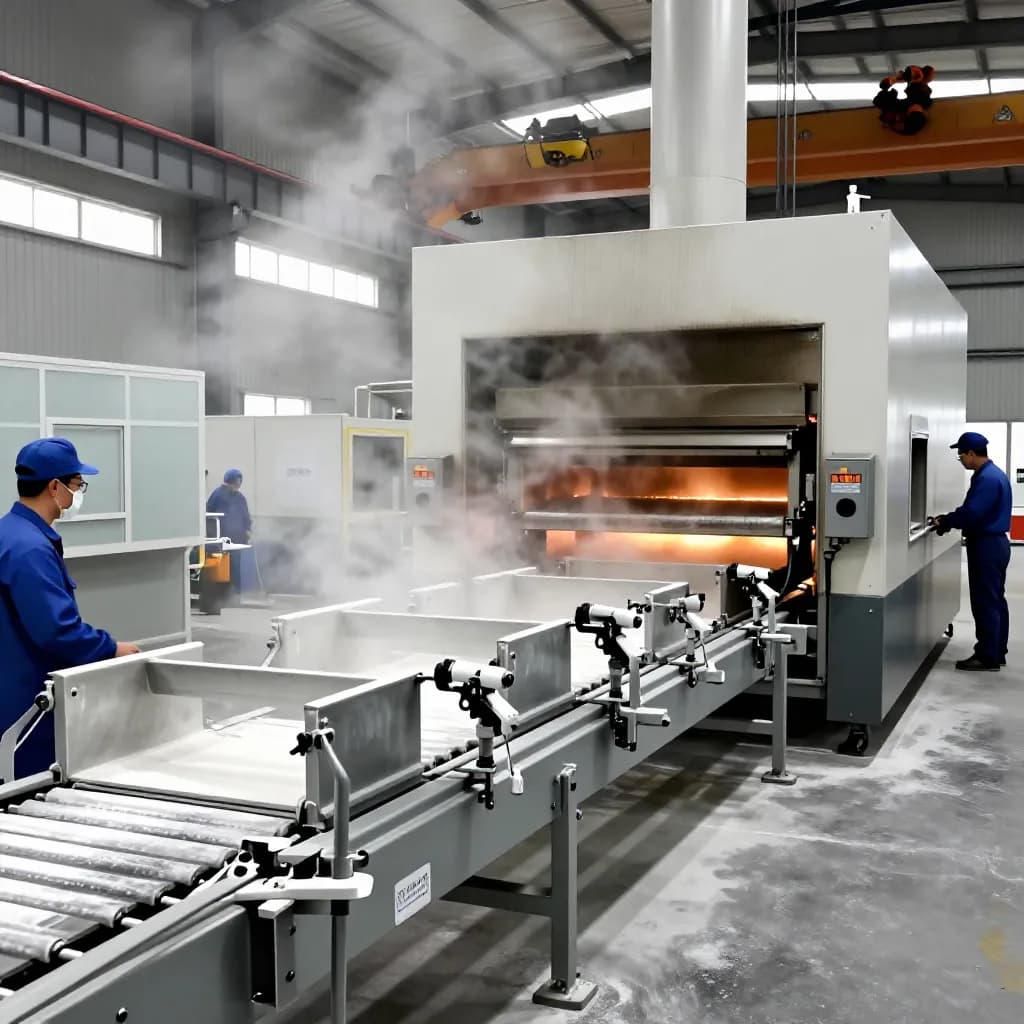
OEM manufacturers face a fundamentally different set of coating challenges than job shops or architectural coaters. Production volumes are typically higher and more predictable, but product variety may be extensive — a single OEM might produce hundreds of different parts in dozens of colors across multiple product lines. Quality requirements are defined by the OEM's own product specifications rather than external standards, and the coating must integrate seamlessly with upstream fabrication and downstream assembly processes.
Ready to Start Your Project?
From one-off customs to 15,000-part production runs — get precise pricing in 24 hours.
On This Page
The Strategic Importance of Coating for OEM Manufacturers
This guide addresses the key decisions OEM manufacturers face regarding powder coating: whether to invest in in-house capability or outsource to specialist coaters, how to justify and plan a coating line investment, how to integrate coating quality into the broader manufacturing quality system, and how to manage the coating supply chain for maximum efficiency and reliability.
The In-House vs Outsource Decision Framework
The decision to coat in-house or outsource is one of the most significant capital and operational decisions an OEM manufacturer can make. Both options have compelling advantages, and the right choice depends on the specific circumstances of the business — volume, variety, quality requirements, available capital, facility constraints, and strategic priorities.
In-house coating offers direct control over quality, scheduling, and lead times. Parts move from fabrication to coating to assembly without leaving the facility, eliminating transport time, packaging costs, and the risk of transit damage. The OEM can respond immediately to production schedule changes, rush orders, and quality issues without depending on an external supplier's availability. In-house coating also protects proprietary product information and eliminates the risk of a coating supplier serving competitors.
Outsourcing offers access to specialist expertise, equipment, and certifications without the capital investment and operational complexity of running a coating line. A specialist coater typically has more advanced equipment, deeper technical knowledge, and broader experience across different substrates and coating requirements than an OEM operating coating as a secondary process. Outsourcing also converts fixed costs (equipment, facility, staff) into variable costs that scale with production volume, providing financial flexibility during demand fluctuations. The trade-off is reduced control over scheduling, quality, and lead times, plus the ongoing management overhead of the supplier relationship.
Justifying an In-House Coating Line Investment
If the strategic analysis favors in-house coating, the next step is building a business case that justifies the capital investment. The business case should compare the total cost of in-house coating against the total cost of outsourcing over a defined period — typically five to seven years to capture the full lifecycle of the equipment investment.
In-house costs include capital equipment (spray booth, curing oven, pretreatment system, conveyor, powder recovery, and ancillary equipment), facility modifications (floor space, ventilation, electrical supply, gas supply, compressed air, water treatment), staffing (operators, maintenance technicians, quality inspectors), consumables (powder, pretreatment chemicals, masking materials, filters), utilities (gas, electricity, water), maintenance and spare parts, environmental compliance (waste disposal, emissions monitoring, permits), and the opportunity cost of the capital invested.
Outsourcing costs include the per-unit coating charge, transport and packaging costs, inventory holding costs for work-in-progress during the outsourcing cycle, quality inspection costs at goods receipt, management overhead for supplier coordination, and the cost of quality failures and delivery delays attributable to the external supplier. Many OEMs underestimate the hidden costs of outsourcing — particularly the management time consumed by supplier coordination, quality disputes, and logistics management — which can significantly narrow the apparent cost advantage of outsourcing.
Planning and Designing an OEM Coating Line
Designing a coating line for an OEM manufacturing environment requires careful consideration of production requirements, facility constraints, and integration with existing manufacturing processes. Start by defining the throughput requirement — how many parts per hour or per shift must the line process to meet current and projected production volumes? Include a capacity margin (typically 20-30%) to accommodate demand growth and production variability.
The line layout should optimize material flow from the upstream fabrication process through pretreatment, coating, curing, and cooling to the downstream assembly or packaging operation. Minimize handling steps and transport distances to reduce labor, cycle time, and the risk of damage to coated parts. Consider whether a conveyorized (continuous) line or a batch system is more appropriate — conveyorized lines offer higher throughput and consistency but require higher capital investment and are less flexible for product variety, while batch systems are more adaptable but slower and more labor-intensive.
Pretreatment system design is critical and often underestimated. The pretreatment must be matched to the substrate materials processed on the line and must deliver consistent results across the full range of part sizes and geometries. Multi-stage spray wash systems are the most common choice for OEM lines, with the number of stages and chemistry type determined by the substrate and performance requirements. Include adequate water treatment and waste management capability in the design — pretreatment generates chemical waste that must be treated and disposed of in compliance with environmental regulations.
Integrating Coating Quality into the OEM Quality System
For OEM manufacturers, coating quality must be integrated into the broader product quality management system rather than managed as an isolated process. This means applying the same quality disciplines to the coating operation — whether in-house or outsourced — that are applied to machining, fabrication, assembly, and other manufacturing processes.
Define coating quality requirements in the product specification, including all measurable parameters (film thickness, adhesion, hardness, color, gloss) with test methods and acceptance criteria. Establish a control plan for the coating process that identifies critical process parameters (pretreatment chemistry concentration, temperature, dwell time; powder application settings; cure temperature and time), their target values and acceptable ranges, the monitoring method and frequency, and the corrective action to be taken if parameters drift out of range.
Implement statistical process control (SPC) for key coating parameters. Film thickness is the most commonly monitored parameter using SPC, with measurements taken at defined intervals and plotted on control charts to detect trends before they result in out-of-specification product. Color measurement, gloss measurement, and adhesion testing can also be incorporated into the SPC program for critical applications. The goal is to move from reactive quality control (inspecting finished product and rejecting defects) to proactive quality assurance (monitoring the process and preventing defects from occurring).
Supply Chain Management for Outsourced Coating
OEM manufacturers who outsource coating must manage the coating supply chain with the same rigor applied to other critical purchased components. This begins with supplier qualification — evaluating potential coating suppliers against defined criteria for quality capability, capacity, technical expertise, financial stability, and geographic suitability before awarding business.
Ongoing supply chain management should include regular performance monitoring (quality rejection rates, on-time delivery rates, corrective action responsiveness), periodic supplier audits, and structured business reviews. For critical coating requirements, maintain at least two qualified suppliers to provide supply chain resilience and competitive tension. Ensure that both suppliers are qualified to the same specification and can produce interchangeable results.
Logistics management is a significant component of outsourced coating supply chain management. Parts must be transported to the coating supplier, coated, and returned — each transport step adds lead time, cost, and risk of damage. Optimize the logistics by locating coating suppliers close to your manufacturing facility, using dedicated transport with appropriate part protection, and minimizing the number of handling steps. For high-volume ongoing supply, consider implementing a milk-run logistics model where a dedicated vehicle makes regular scheduled collections and deliveries, reducing transport cost and providing predictable lead times.
Hybrid Models: Combining In-House and Outsourced Coating
Many OEM manufacturers find that a hybrid approach — combining in-house coating capability with outsourced capacity — provides the best balance of control, flexibility, and cost efficiency. The in-house line handles the core production volume in the most common colors, providing direct control over quality and scheduling for the majority of output. Outsourced suppliers handle overflow volume during peak periods, specialty colors or finishes that the in-house line is not configured for, and prototype or low-volume work that would be inefficient on the production line.
The hybrid model requires careful management to work effectively. Define clear criteria for which work goes in-house and which is outsourced — typically based on volume, color, urgency, and quality criticality. Ensure that the outsourced supplier is qualified to the same specification as the in-house operation and that the finished product is indistinguishable regardless of source. This requires alignment on pretreatment processes, powder products, application parameters, and quality inspection criteria.
Manage the hybrid model as an integrated system rather than two separate operations. Use a single quality specification, a unified inspection process, and consistent documentation regardless of the coating source. Track quality and delivery performance for both in-house and outsourced coating on the same metrics, and use the comparison to drive improvement in both operations. The in-house operation benefits from benchmarking against the specialist outsource supplier, while the outsource supplier benefits from the OEM's product knowledge and quality expectations.
Frequently Asked Questions
At what volume does in-house powder coating become cost-effective?
The break-even point depends on part size, complexity, color variety, and local outsourcing costs, but as a general guideline, in-house coating becomes worth evaluating when annual outsourcing spend exceeds the annualized cost of a coating line (capital depreciation plus operating costs). For many OEMs, this threshold is reached at volumes of several thousand parts per month.
What are the main risks of outsourcing powder coating?
Key risks include quality inconsistency, delivery delays, loss of scheduling flexibility, supplier financial instability, and dependence on a single source. Mitigate these risks through thorough supplier qualification, quality agreements, performance monitoring, dual-sourcing for critical requirements, and maintaining the technical knowledge to evaluate coating quality independently.
How do I maintain color consistency between in-house and outsourced coating?
Use the same powder product (manufacturer and product code) for both sources. Establish shared color reference standards and tolerance agreements. Conduct regular cross-checks by measuring parts from both sources with the same calibrated instruments. Align pretreatment processes as closely as possible, as pretreatment differences can affect color appearance.
What environmental permits are needed for an in-house coating line?
Requirements vary by jurisdiction but typically include air emissions permits (for oven exhaust), wastewater discharge permits (for pretreatment effluent), waste handling permits (for chemical waste and powder waste), and potentially hazardous materials storage permits. Consult local environmental authorities early in the planning process to understand requirements and timelines.
How many staff are needed to operate an OEM powder coating line?
A typical single-shift manual coating line requires two to four operators (loading/unloading, spray application, inspection) plus part-time maintenance and quality support. Automated lines may require fewer operators but need skilled technicians for programming and maintenance. Add supervisory and administrative support for larger operations.
Ready to Start Your Project?
From one-off customs to 15,000-part production runs — get precise pricing in 24 hours.