The Ford Mustang has been one of America's most customized vehicles since its introduction in 1964, and powder coating has become an essential finishing technology for Mustang builds spanning six decades of production. Whether the project is a concours-quality first-generation restoration, a Pro Touring restomod, or a modern S550 or S650 performance build, powder coating provides the durability, color range, and finish quality that Mustang enthusiasts demand.
Automotive
Powder Coating for Mustang Parts: Classic Restoration, Modern Performance, Engine Bay, and Suspension
Sundial Powder Coating·April 22, 2026·13 min
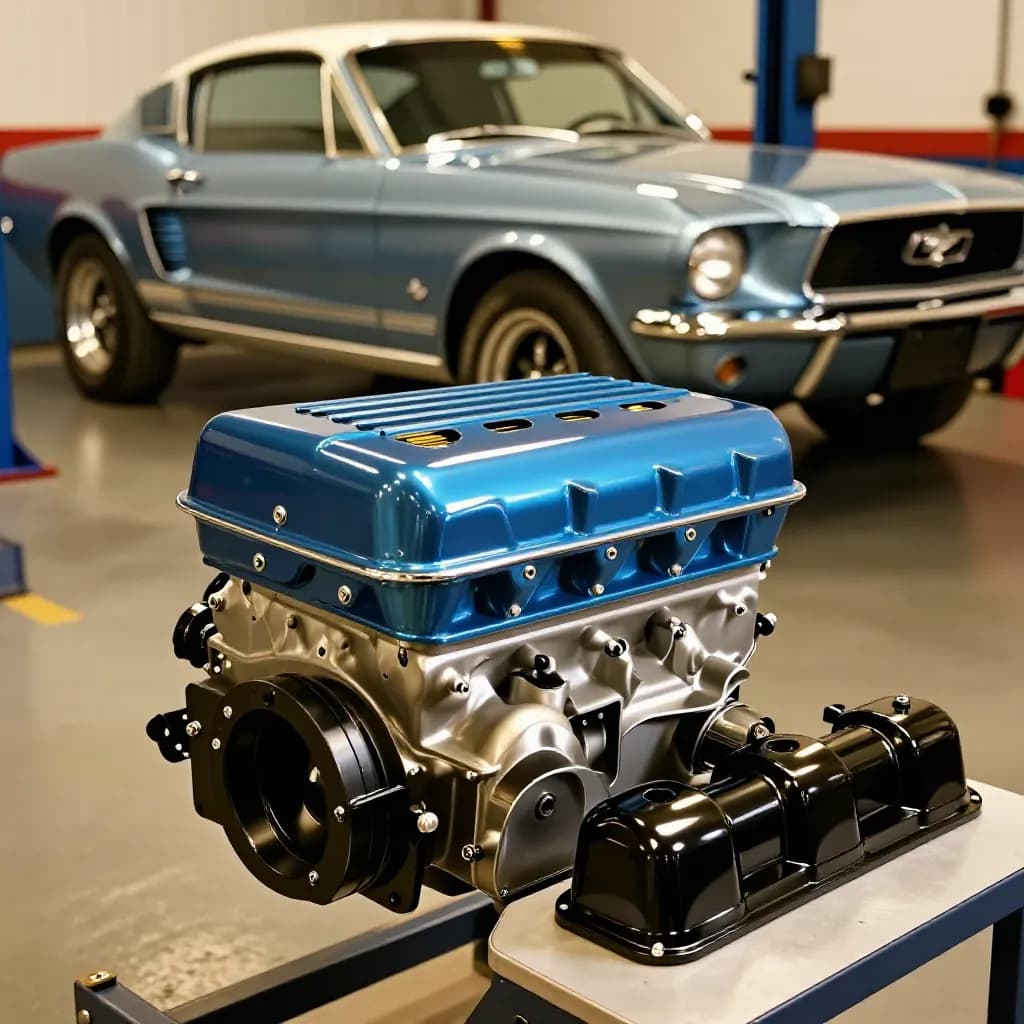
Classic Mustang restoration drives significant powder coating demand. First-generation Mustangs (1964-1973) are among the most actively restored vehicles in the world, with a well-documented community of restorers who maintain detailed standards for factory-correct finishes. The Mustang Club of America (MCA) judging standards specify finish requirements for chassis, suspension, engine, and accessory components that powder coating must replicate.
Ready to Start Your Project?
From one-off customs to 15,000-part production runs — get precise pricing in 24 hours.
On This Page
The Mustang Powder Coating Tradition
Modern Mustang performance builds — particularly the S197 (2005-2014), S550 (2015-2023), and S650 (2024-present) generations — generate powder coating demand for wheels, brake calipers, suspension components, and engine bay accessories. The modern Mustang's active track day and autocross community values both the durability and the aesthetic enhancement that powder coating provides.
The restomod segment — combining classic Mustang bodies with modern drivetrains and suspension — represents a growing powder coating market. These builds often feature extensively powder-coated chassis, suspension, and engine components in custom color schemes that blend vintage aesthetics with contemporary finish quality. Restomod builds typically demand higher finish quality than period-correct restorations, as the goal is show-quality presentation rather than factory-original appearance.
Classic Mustang Restoration: Factory-Correct Finishes
Restoring a classic Mustang to factory-correct condition requires accurate reproduction of the original finishes used during the vehicle's production. Ford used specific colors, gloss levels, and finish types on different components, and these specifications varied between model years, engine options, and assembly plants.
First-generation Mustang chassis and suspension components were typically finished in semi-gloss black. The specific shade and gloss level varied slightly between production years and assembly plants, but a standard semi-gloss black powder coating provides a close match for most applications. For concours-level restorations, compare powder coating samples to known-correct reference components or MCA documentation.
Ford small-block engines (260, 289, 302) were finished in Ford Corporate Blue — a medium blue that is one of the most iconic engine colors in American automotive history. This color can be matched in powder coating, though the original factory finish was a relatively basic enamel paint with visible imperfections. For MCA judging, the powder coating should replicate the appearance of the original paint, including its gloss level and surface characteristics.
Ford big-block engines (390 FE, 428 Cobra Jet) were finished in Ford Engine Blue, which differs slightly from the small-block Corporate Blue. The Boss 302 and Boss 429 engines had their own specific finish requirements. Matching these engine colors requires research specific to the engine type and model year.
Exhaust manifolds on classic Mustangs were originally cast iron with a natural finish that developed a characteristic heat patina during use. For restoration, high-temperature powder coating in a cast iron grey or natural metal color can replicate this appearance while providing corrosion protection. Some restorers prefer to leave exhaust manifolds uncoated for the most authentic appearance.
Small components — brackets, pulleys, hardware, and fasteners — were finished in various ways depending on the component. Some were painted black, others were natural metal, and some were cadmium or zinc plated. Powder coating can replicate painted finishes, while plated finishes may require actual plating rather than powder coating for the most authentic appearance.
Modern Mustang Performance: Suspension and Chassis
Modern Mustang performance builds focus on suspension, braking, and chassis components that enhance both the vehicle's capability and its visual presentation. Powder coating these components provides corrosion protection for track and street use while creating the detailed, finished appearance that distinguishes a well-built Mustang.
S197 and S550 Mustang suspension components — including control arms, subframe connectors, sway bars, and strut tower braces — are commonly powder coated during performance upgrades. Aftermarket suspension components from manufacturers like BMR, Steeda, Maximum Motorsports, and Whiteline are often available in bare metal or with basic factory coating, making custom powder coating a popular upgrade.
Subframe connectors are a particularly visible component on Mustangs that are displayed at shows or on lifts. These structural reinforcements connect the front and rear subframes and are visible from underneath the vehicle. Powder coating subframe connectors in gloss or satin black creates a clean, finished appearance that complements the overall build.
Brake caliper powder coating is popular on modern Mustangs, particularly the GT Performance Pack and Shelby GT350/GT500 models with their large, visible Brembo calipers. Ford's factory caliper colors include red (GT Performance Pack), blue (Shelby GT350), and various other colors depending on the model and option package. These colors can be matched in high-temperature powder coating formulations.
For track-focused Mustangs, powder coating provides practical benefits beyond aesthetics. Coated suspension components are easier to inspect for cracks and damage because the smooth, uniform surface makes defects more visible than on bare or corroded metal. This inspection advantage is particularly valuable for components that experience high stress during track driving.
Roll cage and chassis reinforcement components on dedicated track Mustangs are commonly powder coated for both protection and appearance. These components must be coated before installation, as the curing temperatures would damage the vehicle's interior and wiring. Coordinate the coating schedule with the cage installation timeline to avoid delays.
Engine Bay Presentation
Mustang engine bay detailing has a long tradition in the Mustang community, from the meticulously correct engine bays of MCA Gold-judged restorations to the custom-colored engine bays of modern show cars. Powder coating is the preferred finishing method for engine bay components due to its durability, heat resistance, and consistent finish quality.
On classic Mustangs, the engine bay contains numerous components that benefit from powder coating: valve covers, air cleaner housings, intake manifolds (on some engines), alternator and power steering brackets, master cylinder housings, and various small brackets and covers. Each component has a specific factory finish that must be researched and matched for restoration projects.
Modern Coyote 5.0L engine bays (S197 GT and S550 GT) feature aluminum intake manifolds, coil covers, and valve covers that are popular powder coating targets. The factory finish on these components is typically a textured black or silver, which can be replicated or customized in powder coating. Many owners choose to powder coat these components in a color that matches or complements the vehicle's exterior.
Shelby GT350 and GT500 engine bays feature the Voodoo flat-plane crank V8 and the supercharged Predator V8 respectively, each with distinctive engine components that can be powder coated for enhanced presentation. The GT500's supercharger housing is a prominent visual element that some owners powder coat in contrasting colors.
For any engine bay powder coating project, heat management is critical. Components near exhaust manifolds, turbochargers, or superchargers may experience temperatures that exceed standard powder coating limits. Map the temperature zones in the engine bay and specify appropriate coating formulations for each zone — standard powder for cool areas, high-temperature formulations for hot areas.
All gasket surfaces, sensor ports, threaded holes, and fluid passages must be masked during engine component powder coating. Powder contamination in oil passages, coolant passages, or sensor ports can cause serious engine damage. Experienced automotive powder coating shops understand these masking requirements and use precision techniques to protect critical surfaces.
Wheels and Exterior Accessories
Wheel powder coating is one of the most popular and visible modifications for Mustangs of all generations. The Mustang's wheel designs — from classic Magnum 500s to modern GT Performance Pack wheels — are iconic and benefit from the protection and customization that powder coating provides.
Classic Mustang wheels include the Styled Steel wheel (standard on many first-generation models), the Magnum 500 (a popular dealer-installed option), and various aftermarket designs from the period. The Styled Steel wheel was originally finished in argent silver — a specific grey-silver color that can be matched in powder coating. The Magnum 500 featured a chrome outer rim with a painted center, requiring a two-tone coating approach.
Modern Mustang factory wheels are available in various finishes including Silver, Dark Stainless (a dark grey metallic), Gloss Black, and Ebony Black. The GT Performance Pack wheels feature a distinctive design in Dark Stainless that is frequently requested for color matching. Aftermarket wheels from companies like Forgestar, Velgen, SVE, and American Muscle are commonly powder coated in custom colors.
Ford Mustang paint codes for body color matching include Grabber Blue (code D3 or E7), Race Red (code PQ), Oxford White (code YZ), Shadow Black (code G1), Eruption Green (code B5), Vapor Blue (code HN), and Dark Highland Green (code TY — the classic Bullitt color). These codes enable powder coating manufacturers to develop accurate color matches for wheels and accessories.
Exterior accessories including grille inserts, mirror caps (if metal), spoiler mounting hardware, and exhaust tips can be powder coated to complement the vehicle's color scheme. The blacked-out aesthetic — replacing chrome and silver trim with gloss or satin black — is particularly popular on modern Mustangs and can be achieved through powder coating of metal trim components.
For Mustangs with aftermarket body kits or wide-body conversions, the mounting hardware and structural brackets can be powder coated for corrosion protection and a finished appearance. These components are often visible through wheel openings or from underneath the vehicle and benefit from a coordinated finish.
Preparation Specifics for Mustang Components
Mustang components span a wide range of materials, ages, and conditions that require specific preparation approaches. Understanding these requirements ensures optimal powder coating results across the diverse range of Mustang parts.
Classic Mustang steel components — including frames, subframes, and suspension parts — may have decades of accumulated rust, paint, and undercoating that must be thoroughly removed. Chemical stripping removes old paint and undercoating. Media blasting with aluminum oxide or steel grit removes surface rust and creates the surface profile needed for powder adhesion. Severely corroded components should be evaluated for structural integrity before coating.
Cast iron components — including classic Mustang brake drums, some engine blocks, and exhaust manifolds — require pre-baking to prevent outgassing. The porous structure of cast iron traps moisture and oils that escape during curing, creating pinholes and bubbles in the powder coating surface. A pre-bake cycle at curing temperature before powder application eliminates this issue.
Aluminum components — common on modern Mustangs — require aluminum-specific pretreatment. After degreasing and media blasting, a chromate-free conversion coating promotes adhesion and prevents under-film corrosion. The blasting media and pressure must be appropriate for aluminum — too aggressive and the soft aluminum surface can be damaged.
Chrome-plated components on classic Mustangs — including bumpers, grille surrounds, and trim pieces — require chrome removal before powder coating. The chrome, nickel, and copper plating layers must be stripped through chemical or electrochemical processes. After stripping, the base metal is blasted and pretreated for powder coating.
For restoration projects, document the original finish of each component before stripping. Photograph components from multiple angles, note colors and textures, and record any casting numbers, date codes, or inspection marks that may be obscured by the new coating. This documentation is invaluable for ensuring accuracy and for future reference if the vehicle changes hands.
Planning a Mustang Powder Coating Project
Whether the project is a complete frame-off restoration or a targeted upgrade of specific components, planning the powder coating work as part of the overall build timeline ensures efficient execution and optimal results.
For restoration projects, the powder coating phase typically occurs after disassembly and component repair but before reassembly. Create a comprehensive component list organized by coating specification — which components need semi-gloss black, which need engine blue, which need high-temperature coating, and which need special finishes. This list guides the powder coating shop and ensures nothing is missed.
Batch components by coating specification to maximize efficiency and minimize cost. Components that share the same color and finish can be coated together in a single batch, reducing setup time and ensuring perfect color matching between components. Group semi-gloss black chassis components together, engine blue components together, and so on.
For modern Mustang performance builds, coordinate the powder coating schedule with the parts ordering and installation timeline. Aftermarket suspension components, for example, should be powder coated before installation — attempting to coat installed components is impractical due to the curing temperatures required. Order parts with sufficient lead time to allow for powder coating before the planned installation date.
Budget for powder coating as a line item in the overall build budget. For restoration projects, powder coating typically represents a modest percentage of the total build cost but has a disproportionate impact on the finished vehicle's appearance and long-term durability. Cutting corners on powder coating quality to save money is a false economy that will be visible in the finished product.
Document your powder coating specifications — product names, color codes, gloss levels, and texture types — for future reference. If you need to add or replace components later, having the original specification enables accurate matching. Share this documentation with the powder coating shop and keep a copy with your build records.
For show vehicles, allow time for quality inspection and potential rework before the show season. Powder coating defects are easier and less expensive to correct before components are installed on the vehicle. Build the inspection and potential rework time into your project timeline.
Frequently Asked Questions
What color is Ford Corporate Blue for classic Mustang engines?
Ford Corporate Blue is a medium blue used on Ford small-block engines (260, 289, 302). The color can be matched in powder coating using Ford's engine paint specifications. For MCA judging, the powder coating should replicate the appearance of the original factory enamel, including its gloss level and surface characteristics.
Can I powder coat modern Mustang Brembo brake calipers?
Yes. Modern Mustang Brembo calipers from GT Performance Pack and Shelby models can be powder coated in high-temperature formulations rated for 300-500 degrees Celsius. Factory caliper colors including red and blue can be matched. Calipers must be fully disassembled before coating and reassembled with new seals afterward.
What finish should a first-generation Mustang frame be?
First-generation Mustang frames were factory finished in semi-gloss black. The specific gloss level varied slightly between production years and assembly plants. For MCA judging, compare powder coating samples to known-correct reference components or MCA documentation to ensure an accurate match.
How do I match Grabber Blue in powder coating?
Provide the Ford paint code (D3 for classic Grabber Blue or E7 for modern versions) to the powder coating manufacturer along with a physical color sample if possible. Grabber Blue is a solid color without metallic flake, making it relatively straightforward to match in powder format.
Can classic Mustang Magnum 500 wheels be powder coated?
Yes. The Magnum 500 features a chrome outer rim and painted center, requiring a two-tone approach. The center can be powder coated in argent silver or the desired color, while the outer rim can be powder coated in a chrome-look finish or replated in actual chrome for the most authentic appearance.
Ready to Start Your Project?
From one-off customs to 15,000-part production runs — get precise pricing in 24 hours.