Metal lockers are among the most heavily used and abused pieces of commercial furniture in existence. In schools, students slam doors thousands of times per year, kick lower panels, and subject surfaces to backpack abrasion, marker graffiti, and sticker adhesion. In gyms and fitness centers, lockers endure high humidity, sweat, body sprays, and cleaning chemicals. In workplaces, industrial lockers face oil, solvents, and heavy tool impacts. The coating on a locker must survive this punishment for 15-25 years — the expected service life of a quality metal locker system.
Commercial
Powder Coating for Lockers and Storage Systems: Long-Lasting Finishes for Every Environment
Sundial Powder Coating·April 22, 2026·11 min
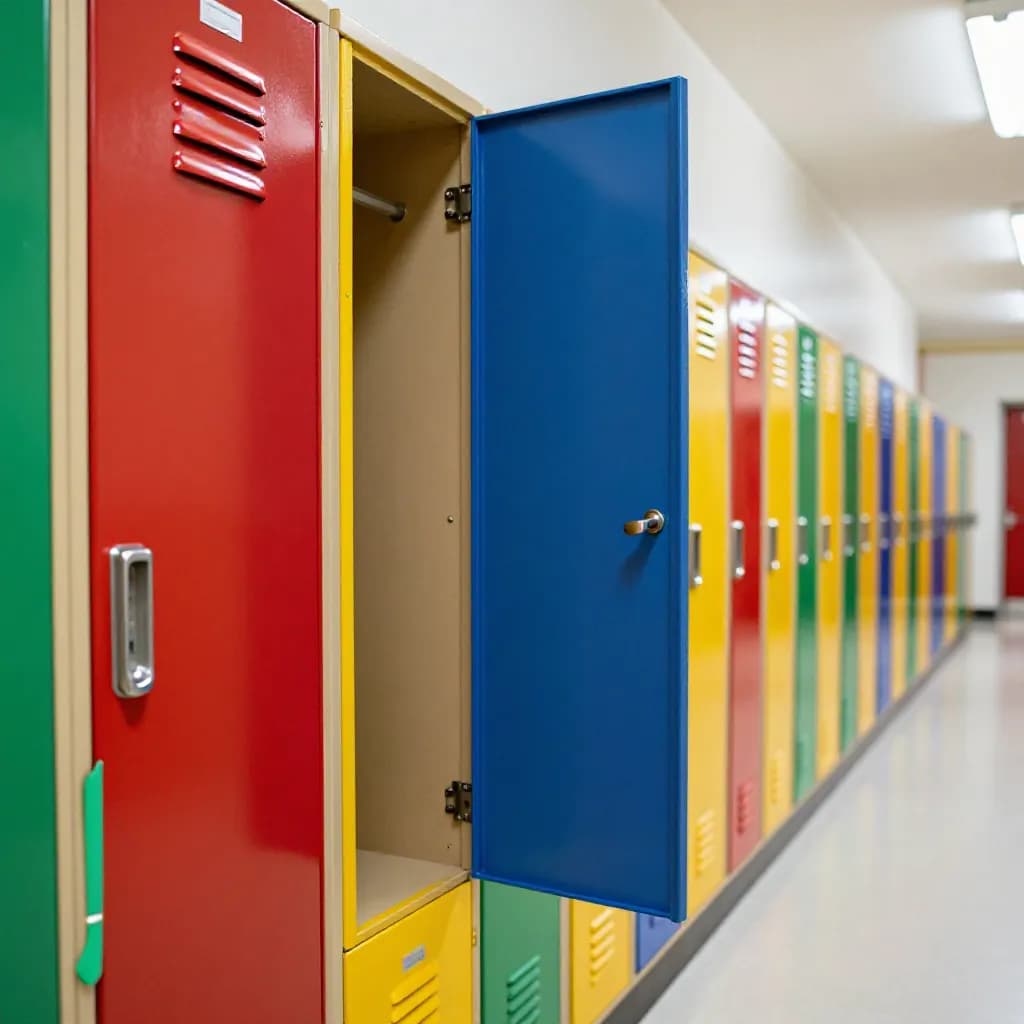
Powder coating replaced baked enamel as the standard locker finish in the 1980s and 1990s, driven by its superior durability, environmental compliance, and production efficiency. Today, virtually all major locker manufacturers — including Penco Products, Lyon Workspace Products, Republic Storage Systems, Hadrian, and ASI Group — use powder coating as their exclusive finishing technology.
Ready to Start Your Project?
From one-off customs to 15,000-part production runs — get precise pricing in 24 hours.
On This Page
The Role of Powder Coating in Modern Locker Manufacturing
The transition to powder coating delivered measurable performance improvements. Film thickness increased from 25-35 microns (typical for baked enamel) to 60-80 microns for standard powder coating, providing a substantially thicker protective barrier. Scratch resistance improved from pencil hardness of HB-F for enamel to 2H-3H for powder coating. Salt spray resistance increased from 200-300 hours to 500-1000 hours. These improvements translated directly into longer service life and lower lifecycle maintenance costs for locker owners.
Steel Substrates and Pretreatment for Locker Production
Locker bodies are fabricated from cold-rolled steel (CRS) in gauges ranging from 24 gauge (0.6 mm) for economy models to 16 gauge (1.5 mm) for heavy-duty industrial lockers. Door panels are typically one gauge heavier than body panels to withstand the concentrated stress of repeated opening and closing. Ventilation louvers, shelves, and internal components use lighter gauges appropriate to their structural requirements.
The pretreatment process for locker steel is a critical determinant of coating longevity. High-volume locker manufacturers operate continuous spray pretreatment systems with 5-7 stages: alkaline cleaning, rinse, iron phosphate or zinc phosphate conversion coating, rinse, and non-chrome seal rinse. The conversion coating creates a crystalline layer that promotes powder coating adhesion and provides a secondary corrosion barrier beneath the coating film.
Iron phosphate pretreatment is the most common choice for standard indoor lockers due to its lower cost and simpler process control compared to zinc phosphate. Iron phosphate coating weights of 0.3-0.8 g/m² provide adequate adhesion promotion and corrosion protection for lockers in dry indoor environments. For lockers destined for wet environments — swimming pool changing rooms, outdoor installations, or industrial wash-down areas — zinc phosphate pretreatment at 2-4 g/m² is specified for its superior moisture resistance.
Edge preparation is particularly important for lockers because the sheared edges of steel panels are the most vulnerable points for corrosion initiation. Sheared edges expose bare steel without the mill finish or pretreatment protection of flat surfaces. Powder coating must achieve minimum 35-40 micron film thickness on edges to provide adequate protection. Some manufacturers specify edge radius requirements (minimum 0.5 mm) on sheared edges to improve powder coating coverage and reduce the sharp edge effect that causes coating thinning.
Powder Chemistry Selection for Different Locker Environments
The choice of powder coating chemistry for lockers depends primarily on the intended installation environment. Indoor lockers in climate-controlled buildings have different requirements than outdoor lockers or lockers in high-humidity wet areas.
Hybrid epoxy-polyester powders (50:50 to 60:40 ratio) are the standard chemistry for indoor lockers in schools, offices, and general commercial buildings. These formulations provide excellent adhesion, good chemical resistance to common cleaning agents, and mechanical properties that withstand the daily abuse of locker use. The epoxy component delivers adhesion and chemical resistance, while the polyester component provides flexibility and resistance to yellowing under fluorescent lighting. Film thickness is typically specified at 60-80 microns.
For outdoor lockers and lockers in high-UV environments (near windows or under skylights), TGIC-free superdurable polyester powders are specified. These formulations resist UV-induced chalking and fading that would cause hybrid coatings to degrade within 2-3 years of outdoor exposure. Superdurable polyester maintains acceptable appearance for 5-10 years in outdoor applications, depending on UV exposure intensity and orientation.
Wet-area lockers for swimming pools, water parks, and shower rooms require maximum corrosion protection. A two-coat system with epoxy primer (25-35 microns) and polyester topcoat (50-70 microns) provides the best performance in continuously humid environments. The epoxy primer's superior moisture barrier properties prevent water vapor transmission to the steel substrate, while the polyester topcoat provides UV stability and aesthetic durability. Some manufacturers additionally specify antimicrobial additives for wet-area lockers to inhibit mold and bacterial growth on the coating surface.
High-security lockers for evidence storage, weapons lockers, and high-value storage may specify high-hardness powder coatings with ceramic additives for enhanced tamper resistance, similar to the security coating technologies used in ATM enclosures.
Color Systems and Architectural Integration
Locker color selection has evolved from the utilitarian grey and tan of previous decades to a sophisticated palette that integrates with modern architectural design. Today's locker manufacturers offer 20-40 standard colors plus custom color matching, enabling architects and interior designers to coordinate locker installations with overall building design schemes.
Standard locker color palettes are organized around functional categories. Neutral tones — various greys (RAL 7035, 7042, 7047), white (RAL 9003, 9016), and black (RAL 9005) — account for approximately 60% of locker orders and coordinate with virtually any interior design. Bold accent colors — reds, blues, greens, and yellows — are popular in schools and recreational facilities where color is used for wayfinding, team identity, or visual energy. Earth tones and muted colors are specified for corporate and hospitality environments where lockers must blend with upscale interior finishes.
Color coding serves functional purposes in many locker installations. Schools use different colors to identify grade levels or building wings. Workplaces use color to distinguish departments or shift groups. Healthcare facilities use color to separate clean and soiled storage. The powder coating color system must support these functional requirements with consistent, distinguishable colors that maintain their identity under various lighting conditions.
Texture finishes are increasingly popular for lockers because they hide fingerprints, minor scratches, and surface imperfections that are highly visible on smooth gloss finishes. Fine texture (light orange peel) and medium texture (leather grain) are the most common specifications. Textured finishes also provide a more contemporary aesthetic that aligns with current architectural trends favoring matte and tactile surfaces over high-gloss finishes.
Metallic and special-effect powder coatings are available for premium locker installations in hospitality, retail, and corporate environments. Bonded metallic formulations provide consistent metallic appearance without the application challenges of dry-blended metallics, though at higher material cost than standard solid colors.
Durability Testing and Performance Verification
Locker manufacturers subject powder-coated panels to a comprehensive battery of tests that simulate the mechanical and environmental stresses of real-world use. These tests go beyond standard coating industry specifications to address the specific abuse patterns that lockers experience.
Door slam testing evaluates coating adhesion and impact resistance under repeated impact loading. Test protocols typically specify 100,000 to 500,000 door slam cycles at forces representative of aggressive use. The coating must show no chipping, cracking, or delamination at hinge points, latch strike areas, or door edges after the full test cycle. This test is particularly demanding because it combines impact, vibration, and flexural stress at concentrated points.
Kick panel testing simulates the foot impacts that school lockers routinely receive. A standardized impactor delivers repeated blows to the lower door panel at energies of 5-15 joules, and the coating is evaluated for cracking, chipping, and substrate exposure. Powder coatings with impact resistance exceeding 80 inch-pounds (direct) typically pass kick panel testing without significant damage.
Abrasion resistance testing per ASTM D4060 (Taber abrasion) quantifies the coating's resistance to surface wear from backpacks, clothing, and cleaning. Locker-grade powder coatings should achieve weight loss below 60 mg per 1000 cycles with CS-17 wheels and 1 kg load. Lower abrasion loss indicates better long-term appearance retention in high-traffic installations.
Chemical resistance testing evaluates the coating's ability to withstand common cleaning agents, body sprays, deodorants, hand sanitizers, and marker inks. Test panels are exposed to these substances for 24 hours, then evaluated for softening, discoloration, or adhesion loss. Powder coatings for school lockers must additionally resist permanent marker ink — a common graffiti medium — without permanent staining.
Corrosion resistance testing per ASTM B117 (salt spray) and ASTM D2247 (humidity) verifies the coating system's ability to protect the steel substrate from corrosion. Standard indoor lockers are specified at 500 hours salt spray minimum, while wet-area and outdoor lockers require 1000+ hours.
Specialized Locker Types and Coating Adaptations
Different locker categories require specific coating adaptations to address their unique operating conditions and performance requirements.
School lockers represent the highest-volume segment and face the most diverse abuse. The coating must resist marker graffiti, sticker adhesion, backpack abrasion, door slamming, and kicking while maintaining appearance for 15-20 years. Anti-graffiti powder coatings with low surface energy are increasingly specified for school lockers, allowing marker and paint removal without damaging the finish. These coatings add 10-15% to material cost but dramatically reduce maintenance expense over the locker's service life.
Gym and fitness center lockers operate in high-humidity environments with exposure to sweat, body sprays, and aggressive cleaning chemicals. Antimicrobial powder coatings with silver-ion technology are commonly specified to inhibit bacterial and fungal growth on locker surfaces. The coating must also resist the organic acids in sweat and the alcohol and fragrance compounds in personal care products without softening or discoloration.
Industrial lockers in manufacturing facilities face exposure to oils, cutting fluids, solvents, and heavy tool impacts. Epoxy-rich hybrid formulations (70:30 epoxy-to-polyester) provide the chemical resistance needed for industrial environments, while higher film thickness (80-100 microns) provides additional impact and abrasion protection. Industrial lockers may also require antistatic or ESD-dissipative coatings in environments with flammable vapors or sensitive electronics.
Parcel lockers for package delivery and pickup are a rapidly growing segment that requires outdoor-rated coatings with enhanced security features. These lockers are typically installed in exposed outdoor locations and must withstand full weather exposure while maintaining the electronic locking mechanisms and package compartments in functional condition. Superdurable polyester with epoxy primer is the standard specification, with total system thickness of 85-120 microns for maximum weather protection.
Sustainability and End-of-Life Considerations
Powder coating contributes to the sustainability profile of metal locker systems through multiple mechanisms. The zero-VOC application process eliminates solvent emissions that contribute to air pollution and occupational health hazards. Material utilization rates of 95-98% minimize waste generation compared to liquid paint systems. And the long service life of powder-coated lockers reduces the frequency of replacement, conserving the embodied energy and raw materials in the steel substrate.
End-of-life recycling of powder-coated steel lockers is straightforward. The steel substrate is fully recyclable through standard ferrous scrap processing, and the thin powder coating film (representing less than 1% of the total product weight) does not interfere with steel recycling. The coating is burned off during the steel melting process, contributing negligible emissions compared to the energy content of the recycling operation.
Environmental Product Declarations (EPDs) are increasingly requested for locker systems installed in green-certified buildings. EPDs quantify the environmental impact of the product across its full lifecycle, from raw material extraction through manufacturing, use, and end-of-life disposal. The powder coating process contributes favorably to EPD metrics due to its low energy consumption (compared to liquid paint with solvent abatement), zero VOC emissions, and high material efficiency.
LEED, BREEAM, and other green building certification systems award credits for low-emitting materials, recycled content, and responsible manufacturing practices. Powder-coated steel lockers can contribute to these credits through the zero-VOC coating process, the recycled content of the steel substrate (typically 25-70% recycled content for cold-rolled steel), and the recyclability of the finished product. Some locker manufacturers have obtained Cradle to Cradle certification for their powder-coated products, demonstrating commitment to circular economy principles.
Frequently Asked Questions
How long does powder coating last on school lockers?
Powder coating on school lockers typically lasts 15-20 years under normal use conditions. The 60-80 micron film thickness, 2H-3H pencil hardness, and 500+ hour salt spray resistance provide durability that far exceeds the baked enamel finishes previously used on lockers.
Can graffiti be removed from powder-coated lockers?
Standard powder coatings resist some graffiti removal, but anti-graffiti powder coatings with low surface energy are recommended for school and public lockers. These specialized formulations allow permanent marker, spray paint, and sticker residue to be removed with mild solvents without damaging the coating.
What powder coating is best for gym lockers in humid environments?
Gym lockers in high-humidity environments should use a two-coat system with epoxy primer and polyester topcoat for maximum moisture resistance. Antimicrobial powder coatings with silver-ion technology are recommended to inhibit bacterial and fungal growth in the warm, humid conditions typical of fitness facilities.
Are powder-coated lockers environmentally friendly?
Yes. Powder coating produces zero VOC emissions, achieves 95-98% material utilization, and the coated steel is fully recyclable at end of life. These characteristics contribute to green building certification credits under LEED, BREEAM, and similar systems.
How many colors are available for powder-coated lockers?
Major locker manufacturers offer 20-40 standard colors plus custom color matching to any RAL, NCS, or proprietary color reference. The palette includes neutrals, bold accents, earth tones, and metallic finishes to coordinate with any architectural design scheme.
Ready to Start Your Project?
From one-off customs to 15,000-part production runs — get precise pricing in 24 hours.