Laser cutting has revolutionized metal fabrication over the past three decades, enabling complex geometries, tight tolerances, and rapid production that were previously impossible or prohibitively expensive. Today, fiber lasers and CO2 lasers cut millions of parts daily from steel, stainless steel, aluminum, and other metals for applications ranging from architectural panels to industrial machinery components.
Industrial
Powder Coating for Laser Cut Parts: Managing Oxide Layers and Edge Quality
Sundial Powder Coating·April 23, 2026·11 min
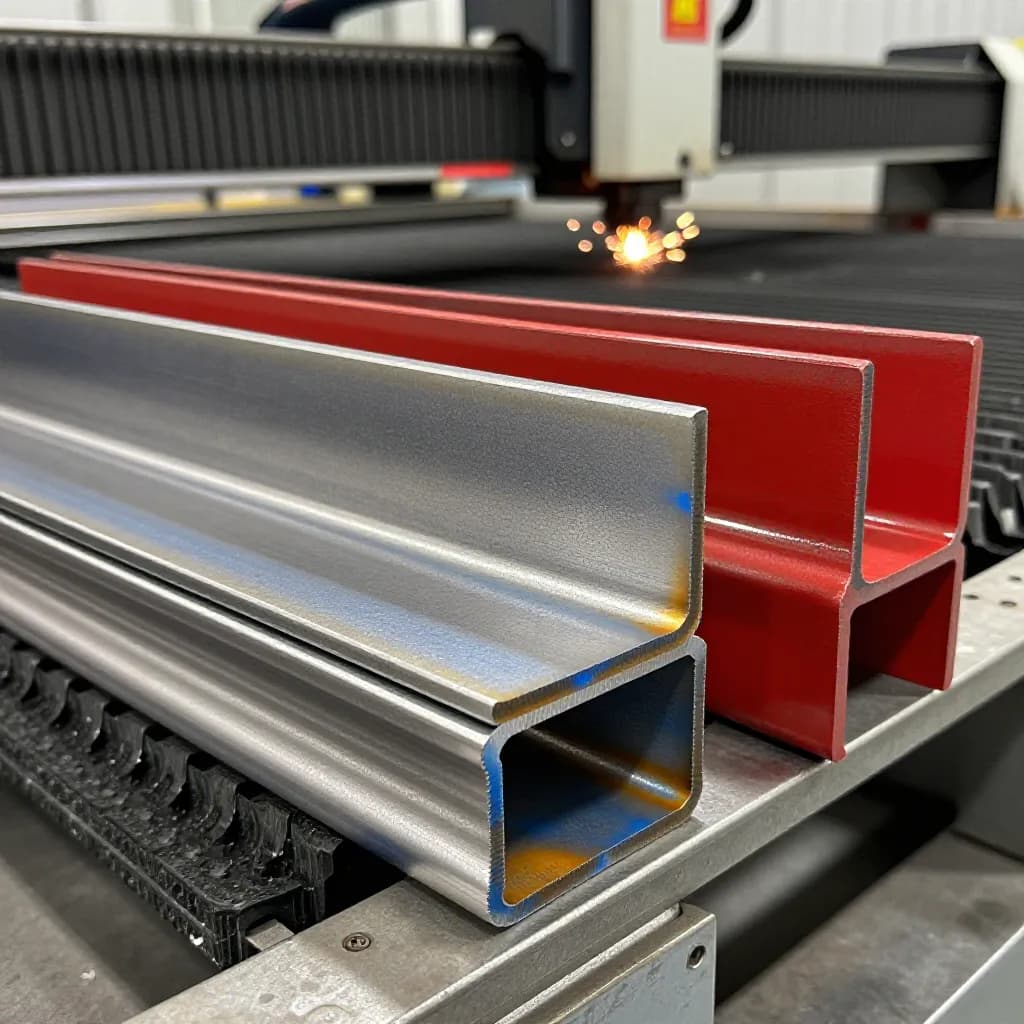
The partnership between laser cutting and powder coating is natural — both are modern, efficient technologies that complement each other in the fabrication workflow. However, the laser cutting process creates specific surface conditions on the cut edge that directly affect powder coating adhesion, coverage, and long-term performance. Understanding these effects and implementing appropriate pretreatment strategies is essential for achieving reliable coating quality on laser-cut parts.
Ready to Start Your Project?
From one-off customs to 15,000-part production runs — get precise pricing in 24 hours.
On This Page
Laser Cutting and Powder Coating: A Modern Fabrication Partnership
The primary concern is the heat-affected zone (HAZ) and oxide layer that form on the cut edge during laser processing. The intense heat of the laser beam (temperatures exceeding 1500°C at the cut point) melts and vaporizes the metal, and the assist gas used to blow molten material from the kerf interacts with the hot metal surface to create oxide layers of varying thickness and composition depending on the material, laser parameters, and assist gas type.
This article examines how different laser cutting parameters and assist gases affect the cut edge condition, the impact of these edge conditions on powder coating performance, and the pretreatment strategies that ensure reliable coating adhesion and corrosion protection on laser-cut parts.
Oxide Layer Formation: Oxygen vs. Nitrogen Assist Gas
The choice of assist gas during laser cutting has a profound effect on the cut edge condition and its suitability for powder coating. The two primary assist gases — oxygen and nitrogen — produce dramatically different edge characteristics that require different pretreatment approaches.
Oxygen-assist cutting is the traditional method for mild steel. The oxygen reacts exothermically with the hot steel, providing additional cutting energy that enables faster cutting speeds and thicker material processing. However, this oxidation reaction creates a thick iron oxide layer on the cut edge — typically 10-50 microns of mixed iron oxides (FeO, Fe₂O₃, Fe₃O₄) that appears as a dark blue-black discoloration.
This oxide layer is the primary challenge for powder coating. The oxide is poorly adherent to the base metal, creating a weak boundary layer that can cause coating delamination under mechanical stress or corrosive exposure. The oxide layer is also porous and hygroscopic, absorbing moisture that promotes underfilm corrosion. If the oxide layer is not removed or adequately treated before powder coating, the cut edge becomes the first point of coating failure — a critical concern because edges are already the most vulnerable area for powder coating due to the edge-thinning effect described in the stampings article.
Nitrogen-assist cutting produces a fundamentally different edge condition. Nitrogen is inert and does not react with the hot metal, so the cut edge remains oxide-free with a clean, bright metallic appearance. The edge quality is generally smoother than oxygen-cut edges, with less dross (resolidified metal) adhering to the bottom of the cut. Nitrogen-cut edges are inherently more compatible with powder coating because there is no oxide layer to compromise adhesion.
The trade-off is that nitrogen-assist cutting is slower than oxygen-assist cutting on mild steel (typically 30-50% slower for equivalent material thickness) and consumes more gas. For stainless steel and aluminum, nitrogen is the standard assist gas regardless of coating considerations, as oxygen cutting would produce unacceptable edge oxidation on these materials.
For fabricators who powder coat their laser-cut parts, the choice of assist gas should be evaluated holistically — the higher cutting cost of nitrogen may be offset by reduced pretreatment requirements and improved coating quality on the finished part.
Edge Quality Factors Affecting Coating Performance
Beyond the oxide layer, several other aspects of laser cut edge quality affect powder coating performance. Understanding these factors helps fabricators optimize their cutting parameters for the best overall result when parts will be powder coated.
Dross — the resolidified metal that adheres to the bottom edge of the cut — creates raised irregularities that are difficult to coat uniformly. Heavy dross deposits can protrude several millimeters from the cut edge, creating sharp points that attract excessive powder buildup while adjacent areas remain thinly coated. Dross is more common with oxygen-assist cutting and increases with material thickness, cutting speed, and worn or misaligned nozzles. Minimizing dross through optimized cutting parameters is preferable to removing it after cutting, though mechanical deburring or grinding can address moderate dross deposits.
Striation marks — the periodic ridges visible on the cut face — are inherent to the laser cutting process and their depth affects coating coverage. Deep striations (common at higher cutting speeds or with worn optics) create micro-valleys where powder coating may not fully penetrate, leaving thin spots that are vulnerable to corrosion. Shallow, uniform striations (achieved with optimized parameters and well-maintained equipment) provide a surface texture that actually improves coating adhesion by increasing the mechanical anchoring area.
The heat-affected zone extends beyond the visible oxide layer into the base metal. In carbon steel, the HAZ can extend 0.1-0.5 mm from the cut edge, with altered microstructure (martensite formation in higher-carbon steels) that may affect coating adhesion and corrosion behavior. The HAZ is generally not a significant concern for powder coating on low-carbon steel (the most common laser-cut material), but it can be relevant for medium and high-carbon steels where the hardened HAZ may be more susceptible to hydrogen-assisted cracking under certain conditions.
Micro-cracking at the cut edge, caused by thermal stress during rapid heating and cooling, can propagate under the coating and cause localized delamination. Micro-cracking is more common in thicker materials and higher-carbon steels. Post-cut stress relief (heating to 200-300°C) can reduce micro-cracking, though this is rarely performed in production due to the additional processing step.
Pretreatment Strategies for Laser Cut Parts
The pretreatment strategy for laser-cut parts must address the specific edge conditions created by the cutting process while also preparing the flat surfaces of the part for coating. A one-size-fits-all approach is rarely optimal — the pretreatment should be tailored to the cutting method, material, and coating performance requirements.
For oxygen-cut mild steel parts, the oxide layer on cut edges must be removed or converted before powder coating. Abrasive blasting is the most effective removal method, as it simultaneously removes the oxide layer, creates a surface profile for adhesion, and cleans the flat surfaces of the part. Steel grit or aluminum oxide blasting to SSPC-SP 6 or SP 10 removes the oxide layer completely and produces a uniform surface condition across both cut edges and flat surfaces.
Mechanical deburring and edge rounding — using tumble deburring machines, vibratory finishers, or dedicated edge-rounding equipment — can remove the oxide layer from cut edges while simultaneously radiusing the sharp edge for improved coating coverage. These processes are increasingly integrated into laser cutting production lines as a standard post-processing step.
Chemical pretreatment alone (alkaline cleaning followed by iron phosphate conversion coating) may be insufficient for heavily oxidized oxygen-cut edges. The iron phosphate conversion reaction requires a clean, reactive metal surface, and the thick oxide layer on oxygen-cut edges may not convert uniformly, leaving areas of poor adhesion. If chemical pretreatment is the only option (no blasting capability), an acid pickling step using phosphoric or hydrochloric acid can dissolve the oxide layer before conversion coating, though this adds process complexity and waste treatment requirements.
For nitrogen-cut parts, the clean, oxide-free edge requires no special treatment beyond the standard pretreatment applied to the flat surfaces. Alkaline cleaning followed by iron phosphate or zirconium conversion coating provides adequate preparation for both edges and flat surfaces. This simplified pretreatment is one of the significant advantages of nitrogen-assist cutting for parts that will be powder coated.
For aluminum and stainless steel laser-cut parts, the pretreatment must address the specific oxide characteristics of these materials. Aluminum forms a tenacious aluminum oxide layer that requires acid etching (chromic-sulfuric or fluoride-based) or alkaline etching for removal. Stainless steel develops a chromium-rich oxide layer at the cut edge that, while providing some corrosion resistance, may interfere with coating adhesion if not properly treated.
Optimizing Laser Parameters for Coating Compatibility
Fabricators who routinely powder coat their laser-cut parts can optimize cutting parameters to produce edge conditions that are more compatible with the coating process, reducing pretreatment requirements and improving finished part quality.
For mild steel parts that will be powder coated, switching from oxygen to nitrogen assist gas eliminates the oxide layer problem entirely. While nitrogen cutting is slower, the total process time including pretreatment may be comparable or shorter because the simplified pretreatment for oxide-free edges offsets the slower cutting speed. The decision should be based on a total-cost analysis that includes cutting time, gas consumption, pretreatment costs, and coating reject rates.
When oxygen-assist cutting is necessary (for thick mild steel where nitrogen cutting is impractical), optimizing cutting parameters to minimize oxide layer thickness improves coating compatibility. Lower oxygen pressure reduces the oxidation rate, producing a thinner oxide layer. Slower cutting speeds allow more complete ejection of molten oxide from the kerf, reducing the amount of oxide that resolidifies on the cut face. Pulsed laser modes can reduce the heat input and corresponding oxide formation compared to continuous-wave cutting.
Focal point position affects edge quality and oxide formation. Positioning the focal point at or slightly below the material surface produces the cleanest cut with minimum dross and oxide. A focal point positioned too high results in a wider kerf with more oxidation, while a focal point too low produces excessive dross on the bottom edge.
Nozzle condition and alignment are critical for consistent edge quality. A worn or damaged nozzle produces an asymmetric gas flow that results in uneven oxide formation and dross distribution. Regular nozzle inspection and replacement — typically every 8-16 hours of cutting for high-volume operations — maintains consistent edge quality.
For fabricators with both fiber and CO2 lasers, the choice of laser source affects edge quality. Fiber lasers generally produce narrower kerfs and smaller heat-affected zones than CO2 lasers at equivalent power levels, resulting in thinner oxide layers and less thermal distortion. However, fiber lasers can produce a rougher cut surface on thicker mild steel, which may affect coating appearance on visible edges.
Integration with Modern Fabrication Workflows
The integration of laser cutting with powder coating is part of a broader trend toward automated, connected fabrication workflows where parts flow seamlessly from cutting through forming, welding, preparation, and finishing with minimal manual handling and maximum process control.
Modern fabrication facilities increasingly implement a continuous flow from laser cutting to powder coating. Parts are cut, deburred, formed (if required), welded (if required), and then conveyed directly to the pretreatment and coating line. This continuous flow minimizes the time between cutting and coating — reducing the opportunity for flash rusting on cut edges — and eliminates the handling damage and contamination that can occur during intermediate storage.
Automated deburring and edge-rounding systems positioned immediately after the laser cutter process parts while they are still clean from the cutting operation. These systems use abrasive belts, brushes, or planetary head deburring tools to remove dross, round edges, and create a uniform surface finish in a single pass. The integration of deburring with cutting eliminates a separate handling step and ensures that every part receives consistent edge preparation.
Digital process control links the laser cutting parameters to the downstream coating process. When a part is cut with oxygen assist (producing an oxide layer), the pretreatment system can automatically adjust chemical concentrations, temperatures, or dwell times to ensure adequate oxide removal. When the same part geometry is cut with nitrogen assist, the pretreatment parameters revert to standard settings. This adaptive process control requires digital integration between the cutting and coating systems but provides optimized treatment for every part.
Nesting software that optimizes material utilization on the laser cutting table can also consider coating requirements. Parts with critical visible edges can be positioned on the sheet to minimize edge defects, and cutting sequences can be optimized to reduce heat buildup that increases oxide formation on adjacent cuts.
For job shops that process a wide variety of laser-cut parts for different customers and applications, standardizing on a pretreatment process that handles both oxygen-cut and nitrogen-cut edges provides flexibility without requiring process changes for each job. Abrasive blasting followed by chemical conversion coating is the most versatile approach, providing reliable coating adhesion regardless of the cutting method used.
Testing and Verification for Laser Cut Edge Coating Quality
Verifying coating quality on laser-cut edges requires specific testing approaches that focus on the edge — the area most likely to exhibit coating defects and the first point of failure in corrosive environments.
Edge coating thickness measurement is challenging due to the small radius and irregular surface of the cut edge. Specialized small-area magnetic or eddy-current probes with measurement spots of 1-2 mm can measure thickness on the cut face, though positioning accuracy is critical. Cross-sectional microscopy — mounting a coated edge sample in epoxy, polishing, and measuring the coating thickness under magnification — provides the most accurate edge thickness data and reveals the coating profile across the entire edge geometry.
Edge corrosion testing evaluates the coating's ability to protect the cut edge in corrosive environments. Standard salt spray testing (ASTM B117) with evaluation focused on cut edges rather than flat surfaces provides relevant performance data. Some specifications require scribing through the coating on a cut edge and measuring creep (corrosion spread from the scribe) after a specified exposure period. Acceptable creep values for cut edges are typically 2-3 mm after 500-1000 hours of salt spray, depending on the application.
Adhesion testing on cut edges can be performed using a modified cross-cut test where the cuts are made across the cut edge, or by using a pull-off adhesion test with a small-diameter dolly positioned on the cut face. Adhesion values on properly prepared cut edges should be comparable to flat surface adhesion — any significant reduction indicates inadequate oxide removal or pretreatment on the edge.
For production quality control, a practical approach is to include dedicated test coupons — small pieces of the same material cut with the same parameters as the production parts — in each coating batch. These coupons are subjected to thickness measurement, adhesion testing, and accelerated corrosion testing to verify that the coating process is producing acceptable results on laser-cut edges.
Comparative testing between oxygen-cut and nitrogen-cut edges from the same material and coating process provides valuable data for process optimization. If nitrogen-cut edges consistently outperform oxygen-cut edges in corrosion testing, the additional cost of nitrogen cutting may be justified by the improved coating durability and reduced field failure risk.
Frequently Asked Questions
Does the laser cutting oxide layer affect powder coating adhesion?
Yes. Oxygen-assist laser cutting creates a 10-50 micron iron oxide layer on cut edges that is poorly adherent to the base metal. This oxide layer must be removed by abrasive blasting, mechanical deburring, or acid pickling before powder coating to prevent edge delamination. Nitrogen-assist cutting produces oxide-free edges that require no special treatment.
Is nitrogen-assist cutting better for parts that will be powder coated?
Generally yes. Nitrogen-cut edges are oxide-free, smoother, and more compatible with standard pretreatment processes. While nitrogen cutting is 30-50% slower than oxygen cutting on mild steel, the simplified pretreatment and improved coating quality may offset the higher cutting cost when total process economics are considered.
How do you remove the oxide layer from oxygen-cut laser edges?
Abrasive blasting (steel grit or aluminum oxide to SSPC-SP 6 or SP 10) is the most effective method. Mechanical deburring and edge-rounding equipment can also remove the oxide while radiusing the edge. Acid pickling with phosphoric or hydrochloric acid dissolves the oxide chemically but adds process complexity.
What edge radius is recommended for powder-coated laser-cut parts?
A minimum edge radius of 0.5 mm significantly improves powder coating coverage on cut edges, and 1.0 mm or greater provides near-uniform coverage. Tumble deburring, vibratory finishing, or dedicated edge-rounding equipment can achieve the required radius as a post-cutting step.
How is coating quality verified on laser-cut edges?
Edge coating quality is verified through small-area thickness measurement (1-2 mm probes), cross-sectional microscopy for detailed edge profiles, edge-focused salt spray testing with creep measurement, and adhesion testing on the cut face. Dedicated test coupons cut with production parameters provide representative quality data.
Ready to Start Your Project?
From one-off customs to 15,000-part production runs — get precise pricing in 24 hours.