Land Rover vehicles have a well-documented relationship with corrosion, and powder coating has become an essential tool for Land Rover owners fighting this battle. From classic Defenders and Series vehicles to modern Discovery and Range Rover models, corrosion protection is a primary motivation for powder coating Land Rover components — often more important than aesthetics.
Automotive
Powder Coating for Land Rover Parts: Chassis, Bumpers, Expedition Builds, and Heritage Restoration
Sundial Powder Coating·April 22, 2026·14 min
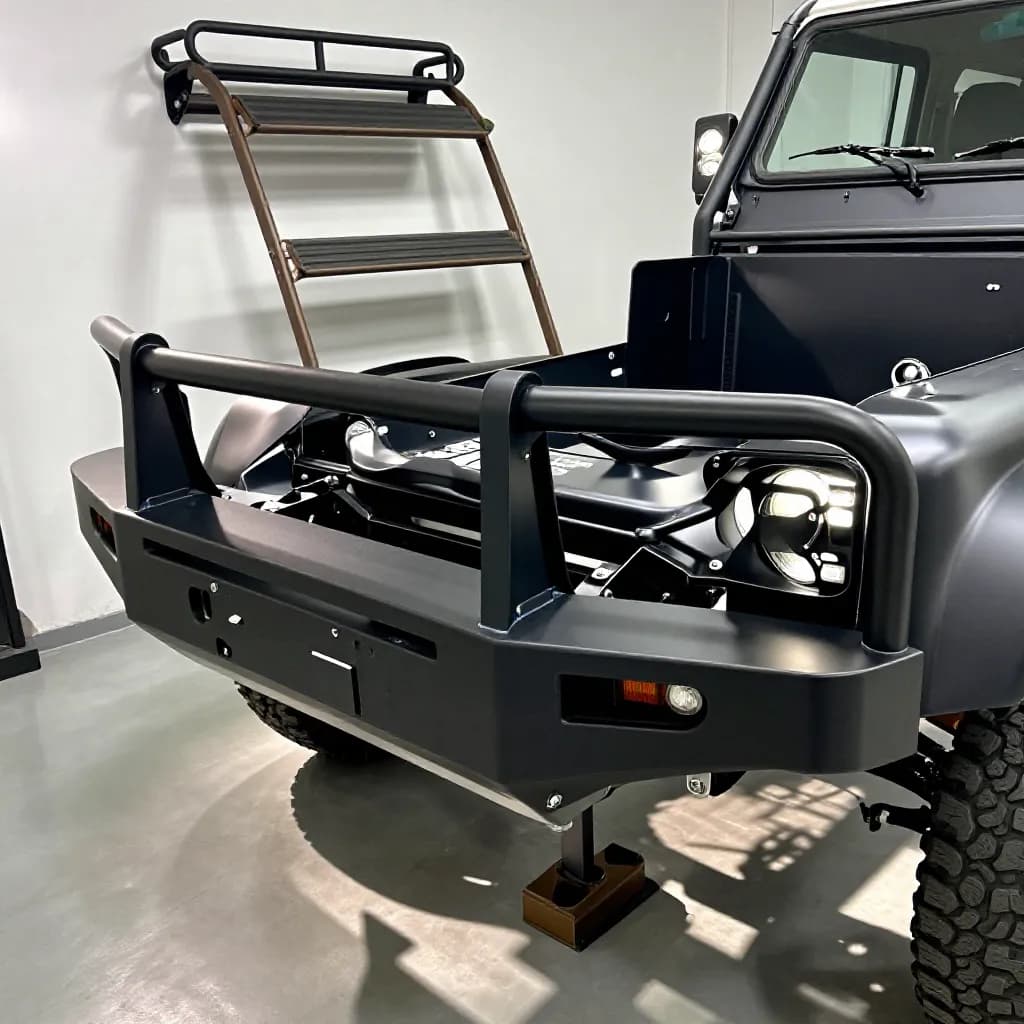
The classic Land Rover Defender and Series vehicles are particularly susceptible to chassis and body corrosion. These vehicles use steel chassis frames, bulkheads, and body panels that were originally protected with relatively basic factory coatings. Decades of exposure to water, mud, road salt, and the general abuse of off-road use have left many classic Land Rovers with significant corrosion that threatens their structural integrity and long-term survival.
Ready to Start Your Project?
From one-off customs to 15,000-part production runs — get precise pricing in 24 hours.
On This Page
Land Rover and the Corrosion Challenge
Modern Land Rovers — including the new Defender (L663), Discovery, and Range Rover — use aluminum body structures that are inherently more corrosion-resistant than steel. However, these vehicles still have steel subframes, suspension components, and fasteners that benefit from powder coating protection. The aftermarket accessories fitted to these vehicles — bumpers, rock sliders, roof racks — are typically steel and require robust corrosion protection.
The Land Rover community's global reach means that these vehicles operate in every climate imaginable — from the salt-laden roads of the British Isles to the humid tropics of Southeast Asia, from the desert heat of the Middle East to the freezing winters of Scandinavia. Powder coating specifications for Land Rover components must account for the specific environmental conditions the vehicle will face.
Chassis and Structural Component Coating
Chassis powder coating is the most significant and most challenging Land Rover powder coating application. A complete chassis strip and coat is a major undertaking that can transform a corroded, deteriorating chassis into a component with decades of remaining service life.
Classic Defender and Series Land Rover chassis are ladder-frame constructions made from steel box-section and channel members. These chassis can be removed from the vehicle as a complete unit, stripped of all components, and sent for powder coating. The process requires complete disassembly — every bracket, mount, spring hanger, and cross-member must be accessible for thorough preparation and coating.
Preparation of a Land Rover chassis is intensive. Decades of accumulated mud, oil, underseal, and corrosion must be removed to expose clean steel. Chemical stripping removes old coatings and underseal. Media blasting with steel grit or aluminum oxide removes surface rust and creates the surface profile needed for powder adhesion. Any areas of severe corrosion that have compromised the steel's thickness must be repaired by welding in new metal before coating.
For chassis coating, a two-coat system is strongly recommended: an epoxy primer for maximum adhesion and corrosion resistance, followed by a polyester topcoat for UV resistance and the desired color. The epoxy primer provides a barrier against moisture and chemicals that is significantly more effective than a single topcoat alone. For chassis that will be exposed to road salt, the two-coat system is essential.
Film thickness on chassis components should be generous — 100-150 microns total for the two-coat system. The additional material provides more barrier protection and more capacity to absorb mechanical damage from road debris and off-road use without exposing the steel substrate.
Chassis powder coating requires a large curing oven capable of accommodating the complete chassis frame. Not all powder coating shops have ovens of sufficient size. Verify the shop's oven dimensions before committing to chassis work. Some shops specialize in large-component coating and have ovens specifically designed for vehicle chassis and frames.
Expedition and Overland Build Accessories
The Land Rover expedition and overlanding community has created strong demand for powder-coated accessories that combine durability with a professional, purpose-built appearance. These builds often involve extensive aftermarket accessories that benefit from coordinated powder coating.
Steel bumpers from manufacturers like Terrafirma, Mantec, ARB, and numerous specialist fabricators are the most common expedition accessories for powder coating. Front bumpers with integrated winch mounts, recovery points, and light bar provisions are substantial steel fabrications that require thorough preparation and robust coating for long-term service in demanding environments.
Rock sliders and side protection bars protect the vehicle's sills and lower body panels during off-road driving. These components take direct impacts from rocks and trail obstacles, making coating durability critical. Textured powder coatings are popular for rock sliders because the texture conceals trail damage and provides a non-slip stepping surface.
Roof racks and expedition frames — from manufacturers like Front Runner, Patriot Products, and Hannibal Safari — provide mounting for rooftop tents, awnings, storage, and equipment. These large components require oversized curing ovens and careful preparation. Aluminum racks require different pretreatment than steel racks, and the specific material must be confirmed before coating begins.
Snorkel mounts, light guards, brush bars, and other smaller accessories can be powder coated to match the primary accessories, creating a coordinated appearance across the entire build. Batching these smaller components with larger items reduces cost and ensures color consistency.
For expedition vehicles that will operate in extreme environments — desert crossings, tropical rainforest, arctic conditions — the powder coating specification should account for the specific environmental challenges. Desert environments demand maximum UV resistance. Tropical environments require enhanced moisture and biological resistance. Arctic environments need coatings that maintain flexibility at extreme low temperatures without cracking or delaminating.
Land Rover expedition builds often evolve over time, with accessories added over months or years. Documenting the powder coating specification — product name, color code, texture type, and gloss level — ensures that future additions can be matched to existing components.
Heritage Colors and Classic Land Rover Restoration
Restoring classic Land Rovers to their original factory appearance requires accurate reproduction of period-correct colors and finishes. Land Rover's color history spans decades and includes distinctive colors that are closely associated with the brand's identity.
Classic Land Rover chassis were typically finished in black — either gloss or semi-gloss depending on the era. Series I vehicles (1948-1958) had chassis finished in a relatively basic black paint. Series II and III vehicles continued with black chassis, though the specific shade and gloss level varied over the production run. Defender chassis were finished in black with varying quality of factory coating depending on the production year and factory.
Land Rover body colors include some of the most iconic vehicle colors in automotive history. Bronze Green, a distinctive olive-green, was used on early Series vehicles and has become synonymous with classic Land Rovers. Limestone, a pale cream-green, was another classic Series color. Marine Blue, Pastel Green, and various military colors round out the classic palette.
Defender-era colors include Coniston Green, Epsom Green, Atlantis Blue, Rioja Red, Rutland Red, and the distinctive Camel Trophy yellow (Sandglow). These colors are frequently requested for restoration projects and can be matched in powder coating format using the Land Rover paint code as a reference.
Land Rover paint codes for classic vehicles can be found on the vehicle's chassis plate, in factory workshop manuals, and through Land Rover heritage resources. The paint code format has changed over the decades, so identifying the correct code may require research specific to your vehicle's model year and market.
For heritage restorations, the powder coating finish should replicate the appearance of the original factory paint. This means matching not only the color but also the gloss level and surface texture. Original Land Rover factory finishes were not always high-quality — some had visible orange peel, runs, and inconsistencies that are considered part of the vehicle's character. Concours judges for classic Land Rovers may actually penalize finishes that are too perfect, as they do not represent the original factory standard.
Corrosion Protection Systems for Land Rover
Developing an effective corrosion protection strategy for Land Rover components requires understanding the specific corrosion mechanisms that affect these vehicles and selecting coating systems that address them. The approach varies depending on whether the component is a structural chassis member, a body panel, or an accessory.
For steel chassis and structural components, the most effective powder coating system is a zinc-rich epoxy primer followed by a polyester topcoat. The zinc-rich primer provides cathodic protection — if the coating is damaged and the steel substrate is exposed, the zinc sacrificially corrodes to protect the steel, similar to the protection provided by galvanizing. This active corrosion protection is particularly valuable for chassis components that will inevitably sustain coating damage during off-road use.
For body panels and non-structural steel components, a standard epoxy primer and polyester topcoat system provides excellent protection. The epoxy primer's barrier properties prevent moisture and chemicals from reaching the steel substrate, while the polyester topcoat provides UV resistance and the desired color and finish.
For aluminum components — including the body panels on modern Defenders and Range Rovers — the pretreatment is critical. Aluminum requires a chromate-free conversion coating that promotes adhesion and prevents the filiform corrosion that can occur under coatings on aluminum substrates. The conversion coating must be appropriate for the specific aluminum alloy, as different alloys respond differently to pretreatment chemistry.
Bolted joints and enclosed sections present particular corrosion challenges on Land Rovers. Moisture can become trapped in box sections and between bolted surfaces, creating corrosion cells that are hidden from view. Before powder coating chassis components, ensure that all enclosed sections have adequate drainage provisions and that bolted joints are designed to prevent moisture entrapment.
Supplementary corrosion protection measures — such as cavity wax injection for enclosed sections, zinc spray for weld areas, and anti-corrosion grease for bolted joints — complement the powder coating and provide additional protection in areas where the powder coating alone may not be sufficient. A comprehensive corrosion protection strategy uses multiple methods in combination rather than relying on any single approach.
Preparation Challenges Specific to Land Rover
Land Rover components present specific preparation challenges that experienced shops understand and address. The age, condition, and construction of Land Rover parts create requirements that differ from typical automotive powder coating work.
Decades of accumulated underseal, wax, and anti-corrosion treatments must be removed from classic Land Rover chassis and body components before powder coating. These materials — particularly bituminous underseal — are resistant to standard chemical strippers and may require specialized solvents, heat treatment, or mechanical removal. Any residual underseal left on the surface will contaminate the powder coating and cause adhesion failures.
Heavy corrosion is common on classic Land Rover components, particularly in areas where mud and water accumulate. Corroded areas must be assessed for structural integrity — if the corrosion has reduced the steel thickness below acceptable limits, the affected area must be cut out and new metal welded in before coating. A reputable powder coating shop will identify areas of concern and recommend repair before proceeding with coating.
Galvanized components — including some Defender body panels and aftermarket galvanized chassis — require specific pretreatment for powder coating adhesion. The zinc galvanizing layer must be treated with an etch primer or specialized conversion coating that promotes adhesion to the zinc surface. Standard pretreatment processes designed for bare steel may not provide adequate adhesion on galvanized surfaces.
Cast aluminum components — including gearbox and transfer case housings, differential covers, and various engine components — are prone to outgassing during the curing process. A pre-bake cycle at curing temperature before powder application drives out trapped gases and prevents surface defects in the finished coating.
Multi-material assemblies are common on Land Rovers, where steel, aluminum, and sometimes brass or copper components are used together. Each material requires different pretreatment chemistry, so multi-material assemblies must be disassembled and each material treated separately. Attempting to coat a multi-material assembly without proper material-specific pretreatment will result in adhesion failures on at least some of the materials.
Planning a Land Rover Powder Coating Project
Land Rover powder coating projects — particularly chassis restorations and expedition builds — are significant undertakings that benefit from careful planning. The scope, timeline, and logistics of these projects require coordination between the vehicle owner, the powder coating shop, and any other specialists involved in the build.
For chassis restoration projects, plan for the vehicle to be off the road for an extended period. A complete chassis strip, repair, and powder coat typically requires four to eight weeks, depending on the extent of corrosion repair needed and the powder coating shop's schedule. Add time for chassis removal and reinstallation, which may require a specialist Land Rover workshop.
Create a detailed component list before beginning disassembly. Photograph every component in place, label all parts and fasteners, and document the routing of brake lines, fuel lines, and wiring. Land Rover chassis carry numerous small brackets, clips, and mounting points that are easy to lose or misidentify during a lengthy restoration process.
Specify the coating system for each component based on its material, location, and exposure conditions. Chassis members may need zinc-rich primer and polyester topcoat. Body panels may need standard epoxy primer and topcoat. Engine components may need high-temperature formulations. Documenting the specification for each component ensures that the powder coating shop applies the correct system to each part.
Budget realistically for the project. Chassis powder coating is a significant investment, but it is typically far less expensive than purchasing a new or reconditioned chassis. The coating cost should be viewed in the context of the vehicle's overall value and the owner's long-term plans for the vehicle.
Consider the logistics of transporting large components to the powder coating shop. A Land Rover chassis is a large, heavy item that requires a flatbed truck or trailer for transport. Some powder coating shops offer collection and delivery services for large components, which simplifies the logistics for the vehicle owner.
For expedition builds involving multiple accessories, coordinate the coating schedule with the accessory delivery timeline. Batching components together for coating in a single session ensures color consistency and reduces overall cost. If accessories arrive at different times, have the shop retain a reference sample from the first batch for matching subsequent components.
Frequently Asked Questions
Can a complete Land Rover Defender chassis be powder coated?
Yes. The chassis must be removed from the vehicle, completely stripped of all components, cleaned of underseal and corrosion, and repaired where necessary. A two-coat system with epoxy primer and polyester topcoat is recommended. The shop must have a curing oven large enough to accommodate the complete chassis frame.
What is the best corrosion protection system for a Land Rover chassis?
A zinc-rich epoxy primer followed by a polyester topcoat provides the best protection. The zinc primer offers cathodic protection — if the coating is damaged, the zinc sacrificially corrodes to protect the steel. Supplement with cavity wax for enclosed sections and anti-corrosion grease for bolted joints.
Can galvanized Land Rover parts be powder coated?
Yes, but galvanized surfaces require specific pretreatment — an etch primer or specialized conversion coating that promotes adhesion to the zinc surface. Standard pretreatment for bare steel will not provide adequate adhesion on galvanized components and will result in premature coating failure.
How do I match classic Land Rover heritage colors in powder coating?
Provide the Land Rover paint code from the chassis plate or workshop manual. Classic colors like Bronze Green, Limestone, and Coniston Green can be matched in powder format. For the most accurate match, provide a physical sample from an original component. Heritage resources and Land Rover registries can help identify period-correct colors.
How long does a Land Rover chassis powder coating project take?
A complete chassis strip, repair, and powder coat typically requires four to eight weeks, depending on the extent of corrosion repair needed. Add time for chassis removal and reinstallation. Plan for the vehicle to be off the road for the duration of the project.
Should I powder coat my new Defender's accessories?
Yes. Aftermarket steel bumpers, rock sliders, and roof racks benefit from quality powder coating for corrosion protection and appearance. Even if accessories arrive pre-coated, custom powder coating in a coordinated finish creates a more professional, cohesive appearance across all accessories.
Ready to Start Your Project?
From one-off customs to 15,000-part production runs — get precise pricing in 24 hours.