Dock and marina equipment operates in a permanent marine environment — not the intermittent exposure of boat trailers or seasonal hardware, but continuous, year-round exposure to saltwater, salt spray, UV radiation, and mechanical loading. Dock cleats, pilings caps, gangway frames, fuel dock equipment, boat lift structures, and marina utility pedestals must maintain structural integrity and functional performance for 20-30 years in this relentless environment.
Marine
Powder Coating for Dock and Marina Equipment: Heavy-Duty Marine Finishes
Sundial Powder Coating·April 22, 2026·11 min
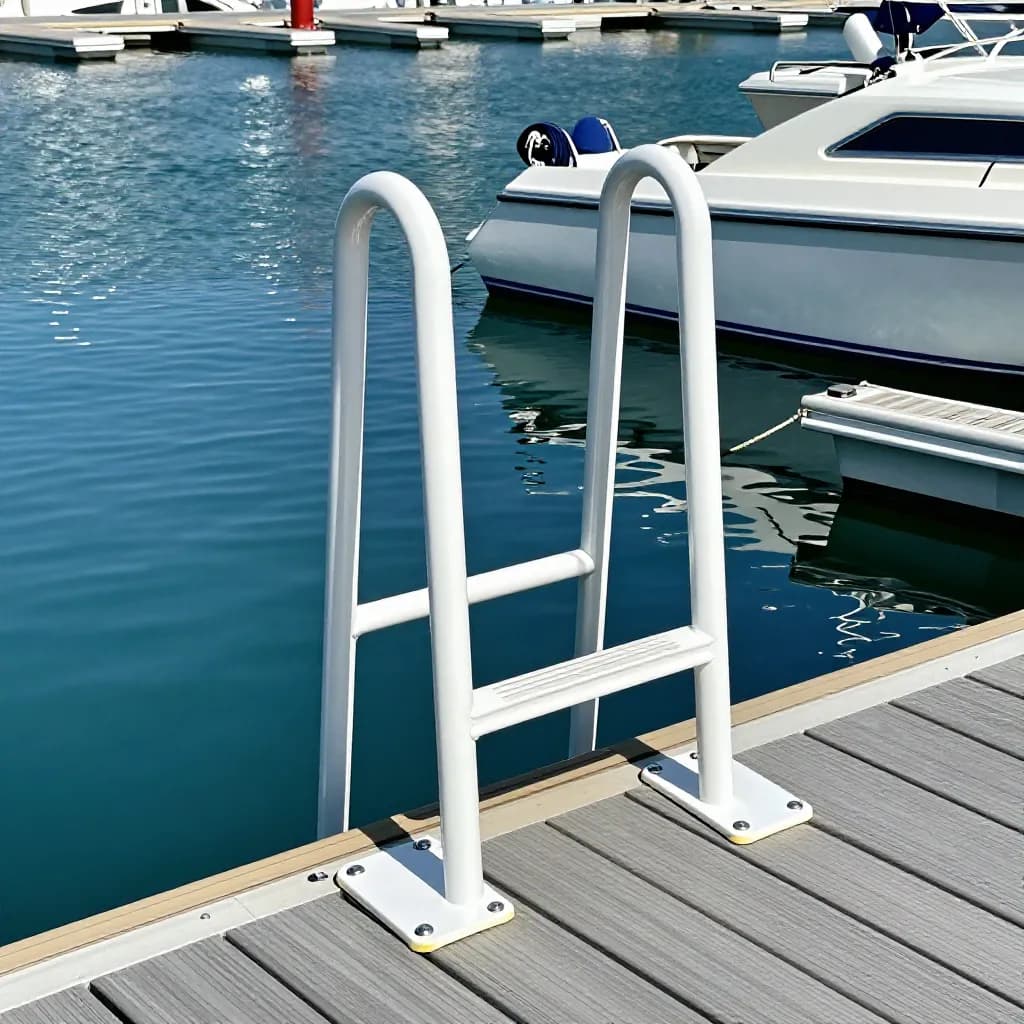
The coating requirements for marina infrastructure are among the most demanding in any industry. Equipment is exposed to saltwater splash and spray 24 hours a day, 365 days a year. UV exposure is amplified by water reflection. Mechanical loads from moored vessels, tidal movement, and storm surge stress both the structure and its coating. And maintenance access is often difficult — dock structures cannot be easily removed for recoating, so the initial coating must provide maximum service life.
Ready to Start Your Project?
From one-off customs to 15,000-part production runs — get precise pricing in 24 hours.
On This Page
Marina Infrastructure Coating Challenges
Powder coating has gained significant market share in marina equipment finishing, competing with traditional marine coatings including hot-dip galvanizing, marine-grade liquid epoxy, and polyurethane paint systems. Powder coating's advantages in this market include superior film thickness in a single application, zero VOC emissions (important for waterfront environmental compliance), excellent adhesion to properly prepared substrates, and the ability to achieve decorative finishes that enhance marina aesthetics.
Major marina equipment manufacturers including Marinetek, Bellingham Marine, Meeco Sullivan, and Golden Boat Lifts specify powder coating for components ranging from decorative trim and utility pedestals to structural gangway frames and boat lift cradles.
Heavy-Gauge Steel Preparation for Marine Service
Marina equipment is fabricated from heavy structural steel — I-beams, channels, plates, and pipe sections — that require industrial-grade surface preparation for reliable powder coating adhesion. The scale of these components and the severity of the marine environment demand pretreatment processes that go beyond standard commercial practices.
Abrasive blasting to Sa 2.5 (near-white metal) per ISO 8501-1 is the minimum surface preparation standard for marina equipment. For critical structural components, Sa 3 (white metal) preparation provides the cleanest possible surface for maximum coating adhesion. Steel grit (G25-G40) or aluminum oxide (24-40 grit) media create a surface profile of 50-100 micrometers that provides excellent mechanical anchoring for the primer coat.
The time between surface preparation and primer application is critical in marine environments. Freshly blasted steel begins to oxidize immediately, and in humid coastal air, flash rust can form within 1-2 hours. Best practice limits the interval between blasting and priming to 4 hours maximum, with 2 hours preferred. If flash rust does form, re-blasting or power tool cleaning to remove the rust layer is required before coating.
For galvanized marina equipment, the pretreatment process must address both outgassing management and adhesion promotion. A pre-bake at 230-260°C for 20-30 minutes drives off volatile compounds, followed by cooling, light abrasive sweep blasting to create surface profile on the zinc, and application of a zinc-compatible conversion coating. This process ensures reliable powder coating adhesion to the galvanized surface while preserving the zinc layer's cathodic protection capability.
Aluminum components used in marina equipment — gangway decking, railing systems, and decorative trim — require chromate-free pretreatment per current environmental regulations. Multi-stage zirconium-based pretreatment systems provide excellent adhesion promotion and corrosion resistance enhancement for aluminum in marine environments. The pretreatment must be specifically formulated for the marine-grade aluminum alloys (5000 and 6000 series) used in marina construction.
Coating Systems for Permanent Marine Exposure
Marina equipment coating systems must be designed for permanent marine exposure — not the intermittent exposure of recreational equipment, but continuous, year-round saltwater and salt spray contact. This requires the most robust coating systems available in powder coating technology.
The premium marina equipment coating system uses a four-layer approach for maximum protection. A zinc-rich epoxy primer at 50-75 microns provides cathodic protection. An epoxy build coat at 50-75 microns provides barrier protection against moisture and chloride penetration. A polyester intermediate coat at 40-60 microns provides additional barrier protection and UV screening for the epoxy layers beneath. A superdurable polyester topcoat at 60-80 microns provides UV resistance, color retention, and aesthetic quality. Total system thickness of 200-290 microns provides protection that can achieve 5000+ hours of salt spray resistance.
For components in the splash zone — the area between low water and the highest wave or spray reach — the coating system must resist both immersion and atmospheric corrosion. The splash zone is the most corrosive region of any marine structure because the alternating wet-dry cycles concentrate salt on the surface and provide abundant oxygen for the corrosion reaction. Additional film thickness (25-50% above the standard specification) is recommended for splash zone components.
Submerged components — pile caps, underwater bracing, and boat lift cradles that operate below the waterline — require coating systems specifically designed for immersion service. Epoxy-based systems provide the best immersion resistance, but UV-stable topcoats are unnecessary for permanently submerged surfaces. A two-coat epoxy system at 200-300 total microns provides excellent immersion corrosion protection.
Above-water structural components — gangway frames, railing systems, and utility pedestals — require UV resistance in addition to corrosion protection. The three-coat or four-coat systems described above provide the necessary combination of corrosion and UV protection for these visible, accessible components.
Fastener and connection point protection is critical for marina structures. All fasteners should be 316 stainless steel or higher-grade marine alloys. Fastener holes should be coated before assembly, and marine-grade sealant should be applied at all bolted connections to prevent moisture ingress at these vulnerable points.
Specific Marina Equipment Applications
Different categories of marina equipment have specific coating requirements based on their function, exposure conditions, and maintenance accessibility.
Dock cleats and mooring hardware are high-wear items that experience concentrated mechanical loads from mooring lines. The coating must resist abrasion from rope and chain contact while maintaining corrosion protection. High-hardness polyester topcoats with ceramic additives provide the abrasion resistance needed for these applications. Fluidized bed coating at 200-400 microns is an alternative application method that provides extra-thick, uniform coverage on small hardware items.
Gangway frames and railing systems are the most visible marina components and must maintain aesthetic quality while providing structural corrosion protection. These components are typically aluminum or steel, coated with the full multi-coat system for maximum durability. Color selection for gangways and railings often follows the marina's architectural design scheme, with custom colors matched to the marina's brand identity.
Marina utility pedestals — the shore power, water, and communication connection points at each boat slip — are high-visibility, high-touch items that must resist both corrosion and the mechanical abuse of daily use by boaters. Powder coating provides a durable, attractive finish that withstands the constant handling, hose connections, and electrical plug insertions that these pedestals experience. UV-stable polyester topcoats in the marina's brand colors maintain appearance for 10-15 years.
Boat lift structures — cradles, beams, and drive mechanisms — operate in the splash zone and are subject to heavy mechanical loads. The coating system must provide maximum corrosion protection while withstanding the concentrated stress at cable attachment points, roller contacts, and structural connections. Two-coat or three-coat epoxy-polyester systems at 150-250 total microns are standard for boat lift components.
Fuel dock equipment requires coatings that resist petroleum products in addition to saltwater corrosion. Epoxy-based coating systems provide excellent resistance to gasoline, diesel fuel, and hydraulic fluids. Anti-static or conductive powder coatings may be specified for fuel dispensing equipment to prevent static discharge that could ignite fuel vapors.
Environmental Compliance for Waterfront Coating Operations
Marina and dock equipment coating operations are subject to stringent environmental regulations due to their proximity to waterways. Federal, state, and local regulations govern air emissions, water discharge, and waste management for coating operations near navigable waters.
The Clean Water Act (CWA) and state water quality regulations prohibit the discharge of coating materials, pretreatment chemicals, and rinse water into navigable waters. Powder coating's zero-VOC, zero-liquid-waste application process provides a significant compliance advantage over liquid paint systems that generate solvent emissions and liquid waste streams. However, pretreatment operations still generate wastewater that must be treated and discharged in compliance with applicable permits.
The Clean Air Act (CAA) and state air quality regulations govern emissions from coating operations. Powder coating's zero-VOC profile eliminates the need for air pollution control equipment that liquid paint operations require. Cure oven emissions (primarily water vapor and trace organic compounds from the powder binder) are generally below regulatory thresholds for powder coating operations, though local regulations should be verified.
For field coating and touch-up operations at the marina site, environmental controls are particularly important. Abrasive blasting near waterways requires containment systems to prevent blast media and coating debris from entering the water. Vacuum blasting systems that simultaneously blast and collect debris are preferred for waterfront operations. Any coating application at the marina site must use zero-VOC materials — powder coating for shop-applied components and water-based or high-solids liquid coatings for field touch-up.
Coastal Zone Management Act (CZMA) regulations may impose additional requirements on coating operations within designated coastal zones. These regulations vary by state and may include restrictions on facility siting, operational hours, and waste management practices. Marina equipment manufacturers and coating applicators should consult with state coastal zone management agencies to ensure compliance.
Environmental product certifications such as NSF/ANSI 61 (Drinking Water System Components) may be required for marina equipment that contacts potable water systems. Powder coatings certified to NSF 61 have been evaluated for leaching of contaminants into drinking water and found to meet safety requirements.
Inspection, Maintenance, and Lifecycle Management
Marina equipment represents a significant capital investment, and the coating system is the primary defense against the corrosion that threatens that investment. A structured inspection and maintenance program maximizes coating service life and prevents the progressive structural deterioration that leads to costly repairs or replacement.
Initial coating inspection should be performed before equipment installation using the methods specified in SSPC-PA 2 (Procedure for Determining Conformance to Dry Coating Thickness Requirements) and NACE SP0188 (Discontinuity Testing). Film thickness verification at critical points — edges, welds, fastener areas, and splash zone surfaces — confirms that the coating meets specification. Holiday detection identifies pinholes and discontinuities that could initiate corrosion. Any defects found during initial inspection should be repaired before the equipment enters marine service.
Annual inspection of installed marina equipment should include visual assessment of all coated surfaces, with particular attention to the splash zone, fastener connections, and areas subject to mechanical wear. Coating degradation is rated using ASTM D610 (Standard Practice for Evaluating Degree of Rusting on Painted Steel Surfaces) and ASTM D714 (Standard Test Method for Evaluating Degree of Blistering of Paints). Equipment showing rust grade 4 or worse (more than 1% surface rusting) should be scheduled for maintenance coating.
Maintenance coating of marina equipment in service typically involves localized surface preparation and touch-up rather than complete recoating. Power tool cleaning to SSPC-SP 3 or SSPC-SP 11 removes corrosion and deteriorated coating from affected areas. Compatible liquid marine coatings (two-component epoxy primer and polyurethane topcoat) are applied to prepared areas, feathering into the surrounding intact powder coating. This approach extends the overall coating system life by addressing localized failures before they propagate.
Complete recoating of marina equipment is typically required every 15-25 years depending on the original coating system, environmental severity, and maintenance history. Recoating involves removing the equipment from service, stripping the existing coating, re-preparing the substrate, and applying a new multi-coat powder coating system. For large structural components that cannot be removed, field application of liquid marine coatings over properly prepared surfaces provides an alternative to powder coating reapplication.
Frequently Asked Questions
How thick should powder coating be on dock equipment?
Marina equipment typically requires 200-290 microns total system thickness using multi-coat systems. Splash zone components should receive 25-50% additional thickness. Submerged components use 200-300 micron epoxy systems, while above-water components use three or four-coat epoxy-polyester systems for combined corrosion and UV protection.
How long does powder coating last on marina structures?
With premium multi-coat systems and regular maintenance, powder coating on marina structures can last 15-25 years. Splash zone components may require localized maintenance coating sooner. Annual inspection and prompt repair of any coating damage are essential for achieving maximum service life in permanent marine exposure.
Is powder coating environmentally safe for waterfront use?
Yes. Powder coating's zero-VOC application process and zero-liquid-waste profile make it the most environmentally compliant coating technology for waterfront applications. It eliminates the solvent emissions and liquid waste streams associated with liquid marine paint systems, simplifying compliance with Clean Water Act and Clean Air Act regulations.
What coating system is best for boat lift structures?
Boat lift structures operating in the splash zone should use two-coat or three-coat epoxy-polyester systems at 150-250 total microns. Zinc-rich epoxy primer provides cathodic protection, epoxy barrier coat resists moisture penetration, and polyester topcoat provides UV resistance on above-water surfaces.
Can marina equipment be recoated in the field?
Large structural components that cannot be removed can be maintained with field-applied liquid marine coatings over properly prepared surfaces. Localized power tool cleaning and two-component epoxy/polyurethane touch-up extends the coating system life. Complete recoating with powder coating requires removal to a coating facility.
Ready to Start Your Project?
From one-off customs to 15,000-part production runs — get precise pricing in 24 hours.