The intake manifold is one of the most visible components in any engine bay, and its finish sets the tone for the entire build. Whether the goal is a concours-quality show car, a clean street build, or a performance vehicle with a coordinated engine bay theme, powder coating the intake manifold delivers a finish that paint simply cannot match in terms of durability, uniformity, and heat resistance.
Automotive
Powder Coating Intake Manifolds: Heat Management, Outgassing, and Show-Quality Finishes
Sundial Powder Coating·April 23, 2026·10 min
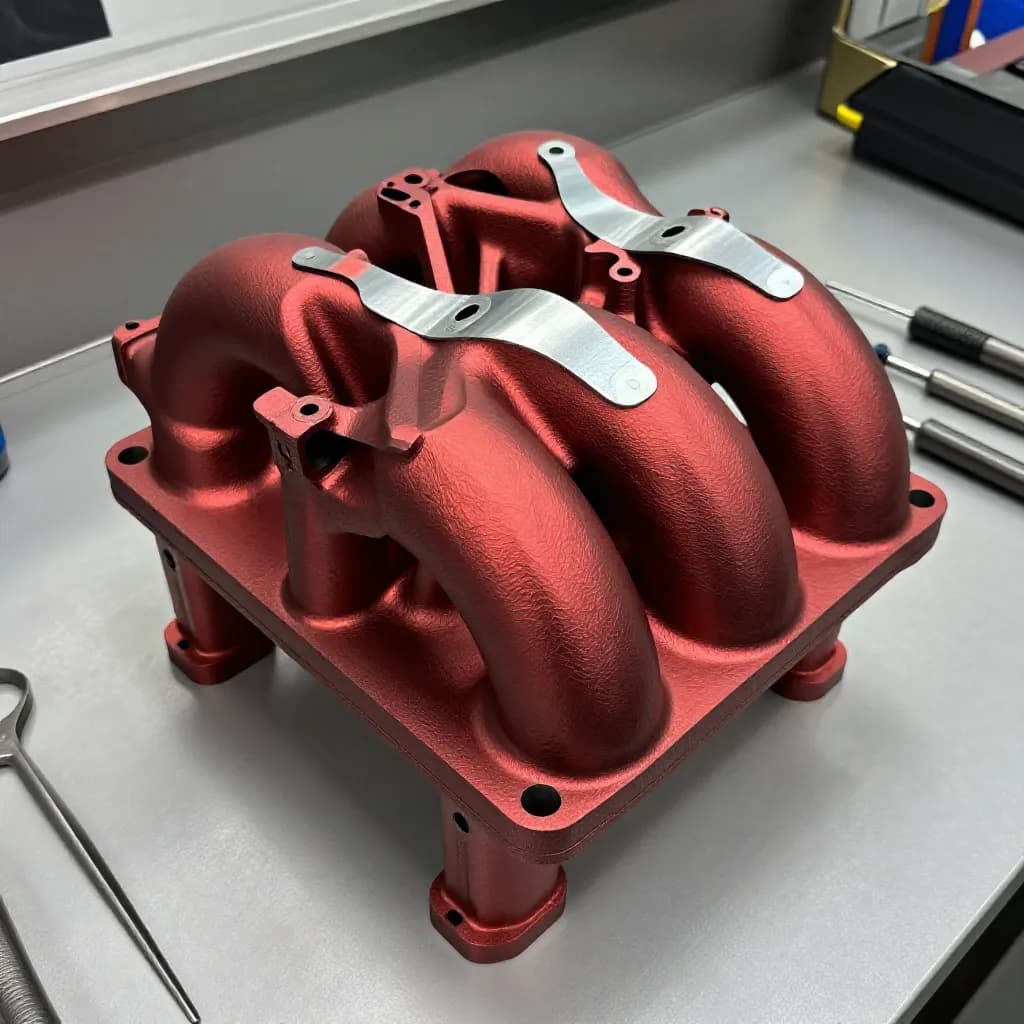
Beyond aesthetics, powder coating an intake manifold provides functional benefits. The coating acts as a thermal barrier, reducing heat soak from the engine bay into the intake charge air. Cooler intake air is denser, which means more oxygen per combustion cycle and marginally better performance. While the thermal benefit of a single powder coat layer is modest compared to dedicated thermal barrier coatings, it is a real and measurable effect that complements the visual upgrade.
Ready to Start Your Project?
From one-off customs to 15,000-part production runs — get precise pricing in 24 hours.
On This Page
Benefits of Powder Coating an Intake Manifold
Powder coating also protects the manifold surface from corrosion, oil staining, and the general discoloration that aluminum manifolds develop over time. Bare aluminum oxidizes and stains from oil vapors, coolant leaks, and heat cycling, eventually developing a dull, blotchy appearance. A powder-coated manifold maintains its appearance indefinitely with basic cleaning, eliminating the need for periodic polishing or chemical treatment that bare aluminum requires.
Aluminum Manifold Preparation and Outgassing
Intake manifolds are almost universally cast or die-cast aluminum, and this material presents the most significant challenge in the powder coating process: outgassing. Cast aluminum is inherently porous, with microscopic voids throughout the material that trap air, moisture, and machining oils during manufacturing. When the manifold is heated during the powder coating cure cycle, these trapped substances expand and escape as gas, pushing through the molten powder and creating pinholes, bubbles, and craters in the finished surface.
The solution is a thorough pre-bake protocol. Before any powder is applied, the manifold should be heated to cure temperature, typically 200 degrees Celsius, and held for 30-45 minutes. This extended pre-bake drives out the majority of trapped gases. The manifold is then cooled, inspected for evidence of outgassing on the surface, and if necessary, pre-baked again. Some heavily porous castings require three or more pre-bake cycles before they are ready for coating.
Between pre-bake cycles, the manifold surface should be lightly scuffed with a Scotch-Brite pad or fine abrasive to remove any residue that has migrated to the surface during heating. After the final pre-bake, the manifold is blasted with fine glass bead or aluminum oxide at low pressure to create a uniform surface profile. A chromate-free conversion coating is then applied for adhesion promotion.
Chemical cleaning before the first pre-bake is essential. Soak the manifold in a hot alkaline cleaner to remove machining oils, gasket sealant residue, and carbon deposits from the intake runners. Any contamination left on or in the casting will contribute to outgassing problems during the cure cycle.
Heat Management and Thermal Barrier Properties
Intake manifold temperature directly affects engine performance. Heat soak from the engine, exhaust manifold, and radiator raises the temperature of the intake manifold, which in turn heats the incoming air charge. Every 5-degree Celsius increase in intake air temperature reduces air density by approximately one percent, resulting in a proportional loss of power. Managing manifold heat is therefore a legitimate performance concern.
Powder coating provides a modest thermal barrier effect. The cured polymer layer has lower thermal conductivity than bare aluminum, which slows the rate of heat transfer from the engine bay environment into the manifold walls. This effect is most noticeable during heat soak conditions when the vehicle is stationary with a hot engine, such as in traffic or at a staging lane. The coated manifold absorbs heat more slowly than a bare aluminum manifold, keeping the intake charge cooler for longer.
For maximum thermal benefit, light colors are preferred over dark colors. White, silver, and light grey reflect more radiant heat from the exhaust manifold and engine block than black or dark colors, which absorb radiant energy. A white or silver powder-coated manifold can run measurably cooler than a black-coated manifold in the same engine bay, though the difference is typically in the range of 5-15 degrees Celsius depending on engine bay layout and heat sources.
Dedicated thermal barrier coatings applied as a base layer beneath the powder topcoat can enhance the insulating effect further. These ceramic-filled coatings are designed specifically for heat management and provide significantly more thermal resistance than powder coat alone. The powder topcoat then provides the color, gloss, and durability that the thermal barrier coating lacks.
Masking Critical Surfaces and Passages
An intake manifold has numerous critical surfaces that must be protected from powder coating. The gasket surfaces, throttle body mounting flange, injector bosses, vacuum ports, and internal runner surfaces all require careful masking to maintain proper function after coating.
Gasket surfaces must remain flat and free of coating buildup. Even a thin layer of powder on a gasket surface can prevent proper sealing, leading to vacuum leaks that cause rough idle, lean conditions, and check engine lights. Use high-temperature masking tape or custom-cut silicone gaskets to protect all mating surfaces. After coating, inspect these surfaces carefully and remove any overspray with a razor blade or fine sandpaper.
Throttle body and plenum mounting flanges require the same attention. The bolt holes in these flanges should be plugged with silicone plugs or masked with tape to prevent powder from accumulating in the threads and reducing bolt engagement. After coating, chase all threaded holes with the appropriate tap to ensure clean thread engagement.
Internal runner surfaces should not be coated. Powder inside the intake runners creates a rough surface that disrupts airflow and can flake off over time, sending debris into the combustion chambers. Plug all runner openings with foam, silicone plugs, or tightly fitted masking before blasting and coating. Verify that all plugs are secure before entering the blast booth, as a dislodged plug will allow abrasive media into the runners, which is extremely difficult to remove completely.
Vacuum ports, PCV fittings, and sensor bosses should be masked to maintain their original dimensions. MAP sensors, IAT sensors, and other electronic components rely on precise fitment in their mounting bosses, and coating buildup can prevent proper seating or affect sensor readings.
Show-Quality Finishes and Color Options
For show vehicles and high-end builds, the intake manifold finish is a centerpiece of the engine bay presentation. Achieving a true show-quality powder coat on a cast aluminum manifold requires meticulous preparation and skilled application, but the results are stunning and far more durable than any paint finish.
Smooth gloss finishes in vibrant colors are the hallmark of show-quality manifold coating. These finishes demand the most thorough surface preparation because every casting imperfection, porosity pit, and machining mark will be visible under a glossy surface. After outgassing pre-bakes, the manifold surface may need to be filled with a high-temperature body filler or epoxy to smooth out casting defects before the final blast and coat. This level of preparation is time-intensive but produces a glass-smooth result.
Popular show colors for intake manifolds include candy red, candy blue, metallic silver, pearl white, and anodized-look finishes that mimic the appearance of colored anodizing without the limitations of the anodizing process. Metallic and candy finishes add depth and visual complexity that solid colors cannot achieve, with the metallic flake or translucent candy layer creating a finish that changes appearance with viewing angle and lighting.
For a more understated look, satin black, wrinkle black, and textured finishes provide a clean, professional appearance without the maintenance demands of a high-gloss finish. These finishes are popular for performance builds where the manifold should look purposeful rather than flashy. Wrinkle finishes also hide casting imperfections effectively, reducing the preparation time needed compared to smooth gloss finishes.
Two-tone and accent finishes are achievable through masking. Coating the manifold body in one color and the plenum or runner tops in a contrasting color creates visual interest and highlights the manifold's design features.
Performance Considerations and Airflow
Performance-oriented builders sometimes express concern that powder coating an intake manifold could negatively affect airflow or engine performance. These concerns are worth addressing with factual information about how the coating interacts with manifold function.
The external surfaces of the manifold have no effect on airflow. Coating the outside of the manifold in any color, texture, or thickness does not change the internal runner geometry or flow characteristics. The only performance-relevant surfaces are the internal runner walls, throttle body bore, and plenum interior, which should not be coated.
Coating thickness on external surfaces does not affect manifold fitment on the engine in any meaningful way. At 60-100 microns, the powder adds less than 0.1 millimeters to each surface, which is well within the tolerance of manifold gaskets and mounting hardware. Bolt holes should be cleared of powder to ensure proper fastener engagement, but the manifold will bolt up to the engine identically to its uncoated state.
Weight addition from powder coating is negligible. A typical intake manifold coating adds 30-80 grams depending on the manifold size and coating thickness. For context, this is less than the weight of the gasket set used to install the manifold.
For turbocharged and supercharged applications, the manifold may see elevated temperatures from compressed intake air. Standard polyester powder coatings handle continuous temperatures up to 150 degrees Celsius, which is adequate for most forced-induction applications. Vehicles running extreme boost levels with intake temperatures exceeding this threshold should consider high-temperature powder formulations rated to 200 degrees Celsius or higher.
Reinstallation and Engine Bay Integration
Reinstalling a powder-coated intake manifold is straightforward but requires attention to detail to protect the fresh finish and ensure proper engine function. The manifold should be handled with clean gloves to prevent oil and fingerprint contamination on the coated surface.
Install new gaskets at all mating surfaces. Reusing old gaskets on a freshly coated manifold risks poor sealing and defeats the purpose of the refinishing work. Apply gasket sealant only where specified by the engine manufacturer, and avoid getting sealant on the visible coated surfaces where it will be difficult to remove without damaging the finish.
Torque all fasteners to the manufacturer's specification in the correct sequence. Over-torquing manifold bolts can crack the casting, and the damage may be hidden beneath the powder coat until a vacuum leak develops. Use a calibrated torque wrench and follow the tightening pattern specified in the service manual.
Reconnect all vacuum lines, sensor connectors, fuel injector harnesses, and coolant hoses. Verify that no connections were missed by comparing against photos taken during disassembly. Start the engine and check for vacuum leaks using a smoke machine or by listening for hissing sounds around the manifold gasket surfaces.
To maintain the finish over time, clean the manifold periodically with a mild automotive detailer or all-purpose cleaner. Avoid harsh solvents and abrasive cleaners that could damage the powder coat. Address any oil or coolant leaks from adjacent components promptly, as prolonged chemical exposure can stain or soften the coating surface. A well-maintained powder-coated manifold will look showroom-fresh for years.
Frequently Asked Questions
Does powder coating an intake manifold improve performance?
The thermal barrier effect of powder coating provides a modest performance benefit by reducing heat soak into the intake charge. Light-colored coatings reflect radiant heat and can keep the manifold 5-15 degrees Celsius cooler than dark colors. The effect is most noticeable during heat soak conditions like idling in traffic.
How do you prevent outgassing on a cast aluminum manifold?
Pre-bake the manifold at cure temperature for 30-45 minutes before applying powder. This drives out trapped gases from the casting porosity. Multiple pre-bake cycles may be needed for heavily porous castings. Thorough chemical cleaning before the first pre-bake removes oils that contribute to outgassing.
Should the inside of the intake runners be coated?
No. Internal runner surfaces should not be powder coated. The rough coating surface disrupts airflow, and flaking powder could send debris into the combustion chambers. Plug all runner openings before blasting and coating to prevent any material from entering the internal passages.
What colors work best for intake manifolds?
Light colors like silver, white, and light grey provide the best thermal performance by reflecting radiant heat. For show vehicles, candy colors, metallics, and pearl finishes create stunning visual effects. Wrinkle black and satin black are popular for performance builds where a clean, purposeful look is preferred.
Can a powder-coated manifold handle turbo or supercharger heat?
Standard polyester powder coatings handle continuous temperatures up to 150 degrees Celsius, which is adequate for most forced-induction applications. For extreme boost applications with higher intake temperatures, high-temperature powder formulations rated to 200 degrees Celsius or higher are available.
Ready to Start Your Project?
From one-off customs to 15,000-part production runs — get precise pricing in 24 hours.