Heating, ventilation, and air conditioning systems are the lungs of modern buildings, circulating conditioned air through networks of ductwork, grilles, diffusers, registers, and air handling units. The coating on these components serves multiple functions: corrosion protection for the metal substrate, aesthetic integration with interior design, antimicrobial protection for indoor air quality, and thermal performance optimization.
Industrial
Powder Coating for HVAC Ductwork and Grilles: Durable Finishes for Climate Control Systems
Sundial Powder Coating·April 22, 2026·11 min
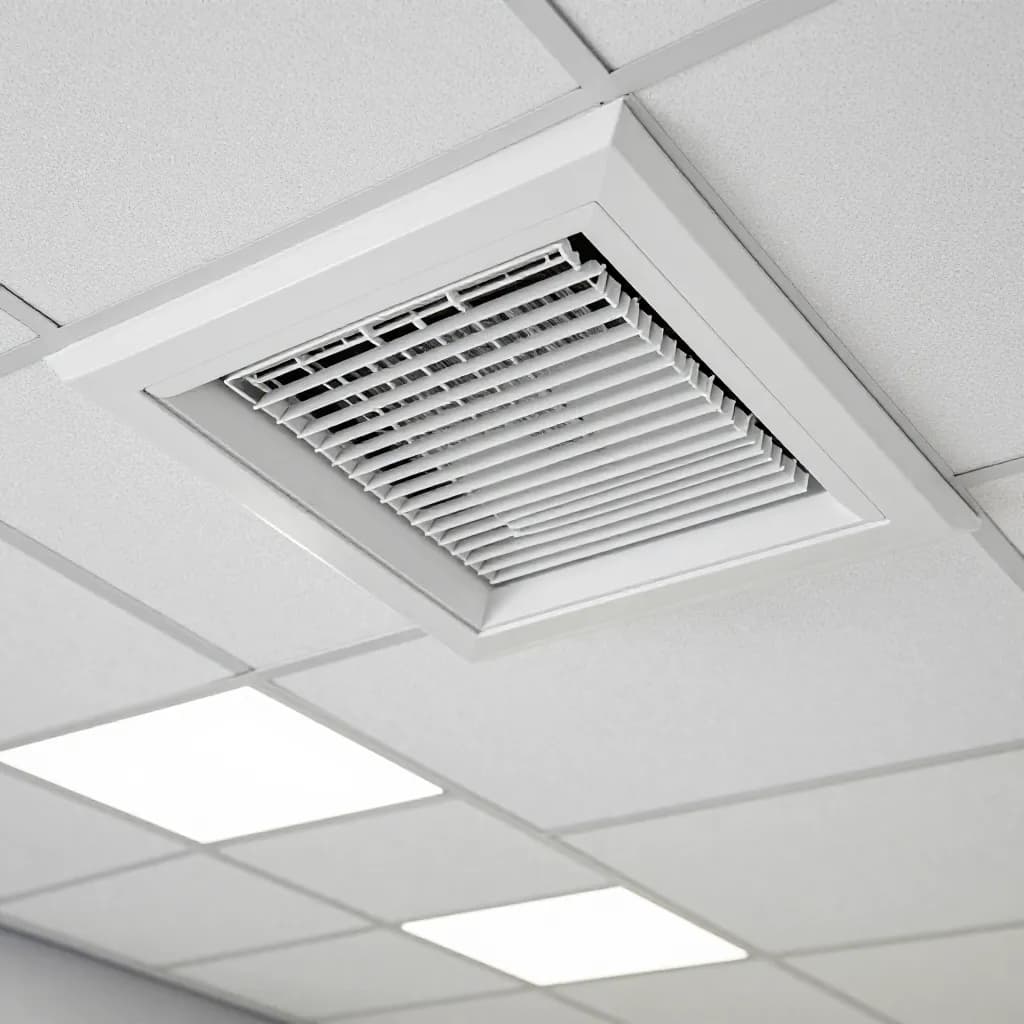
HVAC components operate in environments that range from the controlled interior of an office building to the extreme conditions of industrial facilities, coastal structures, and swimming pool enclosures. Ductwork may carry air at temperatures from -20°C to 120°C, at humidity levels from near-zero to saturation. Grilles and diffusers are visible architectural elements that must coordinate with interior design while withstanding cleaning, accidental impact, and years of airflow-deposited contamination.
Ready to Start Your Project?
From one-off customs to 15,000-part production runs — get precise pricing in 24 hours.
On This Page
HVAC Components and the Case for Powder Coating
Powder coating has become the standard finish for HVAC grilles, diffusers, registers, and visible ductwork components, replacing the baked enamel and spray lacquer finishes that were common in previous decades. The transition was driven by powder coating's superior durability, environmental compliance, and the ability to achieve the precise color matching and finish quality that architects demand for visible HVAC components.
Major HVAC component manufacturers including Titus, Krueger, Price Industries, Metal-Fab, and Hart & Cooley specify powder coating as their primary finishing technology. The coating specification varies by component type and installation environment, from basic single-coat polyester for standard interior grilles to multi-coat antimicrobial systems for healthcare and food processing facilities.
Grille and Diffuser Coating Specifications
Grilles, diffusers, and registers are the visible face of the HVAC system, and their coating must meet both functional and aesthetic requirements. These components are typically fabricated from aluminum or steel and are installed in ceilings, walls, and floors where they are visible to building occupants.
Aluminum grilles and diffusers are the most common type in commercial construction. Extruded or roll-formed aluminum components require chromate-free pretreatment (zirconium or titanium-based) for REACH and RoHS compliance. The pretreatment provides adhesion promotion and enhanced corrosion resistance for the aluminum substrate. Film thickness of 50-70 microns in a single coat of polyester or superdurable polyester provides adequate protection and aesthetic quality for standard interior applications.
Steel grilles and registers, common in residential and light commercial applications, require iron phosphate or zinc phosphate pretreatment for corrosion protection. Hybrid epoxy-polyester powder at 60-80 microns provides good chemical resistance and mechanical durability for steel components. For steel grilles in humid environments (bathrooms, kitchens, pool areas), zinc phosphate pretreatment and increased film thickness (80-100 microns) provide enhanced moisture resistance.
Color matching for HVAC grilles is a critical quality requirement. Grilles must match the ceiling, wall, or floor color of the space they serve, which means matching paint colors specified by the architect or interior designer. Standard HVAC grille colors — white (RAL 9003, 9010, 9016), off-white, and various greys — are maintained as stock formulations by powder suppliers. Custom colors are matched to the architect's specification using spectrophotometric analysis, with Delta E tolerances typically ≤1.0 for standard colors and ≤1.5 for metallics.
Gloss level is equally important for architectural integration. Ceiling-mounted grilles typically match the ceiling paint gloss, which is usually flat to eggshell (5-25 GU at 60°). Wall-mounted grilles may require semi-gloss (30-50 GU) to match wall paint. Floor registers often use satin or semi-gloss finishes for durability and cleanability. The powder coating formulation must achieve the specified gloss level consistently across production batches.
Antimicrobial Coatings for Healthcare and Clean Air Applications
Indoor air quality is a growing concern in commercial buildings, and HVAC components play a direct role in air quality management. Antimicrobial powder coatings on grilles, diffusers, and ductwork interior surfaces provide continuous microbial reduction that supplements filtration and UV disinfection systems.
Silver-ion antimicrobial technology is the most widely used system for HVAC component coatings. Silver ions incorporated into a ceramic or glass carrier matrix provide broad-spectrum antibacterial activity on the coated surface. Testing per ISO 22196 demonstrates greater than 99.9% reduction in common airborne bacteria including Staphylococcus aureus, Escherichia coli, and Pseudomonas aeruginosa within 24 hours of surface contact.
Healthcare facilities are the primary market for antimicrobial HVAC coatings. Hospital-acquired infections (HAIs) are a significant patient safety concern, and contaminated HVAC surfaces can serve as reservoirs for pathogenic organisms. ASHRAE Standard 170 (Ventilation of Health Care Facilities) establishes ventilation requirements for healthcare spaces, and antimicrobial coatings on HVAC components provide an additional layer of infection control that complements the ventilation design.
Food processing facilities also benefit from antimicrobial HVAC coatings. USDA and FDA regulations require that food processing environments maintain sanitary conditions, and HVAC systems that circulate air through processing areas must not contribute to microbial contamination. Antimicrobial coatings on supply air grilles and ductwork reduce the microbial load on HVAC surfaces, supporting the facility's food safety program.
Schools and commercial office buildings are increasingly specifying antimicrobial HVAC coatings in response to heightened awareness of airborne disease transmission. The COVID-19 pandemic accelerated this trend, with building owners and facility managers seeking every available measure to improve indoor air quality and reduce disease transmission risk.
The antimicrobial coating must maintain its efficacy throughout the HVAC component's service life, which may be 15-25 years. Silver-ion systems in ceramic carriers provide sustained antimicrobial activity because the silver ions are released gradually from the carrier matrix as surface bacteria are killed. The carrier matrix contains a reservoir of silver ions that far exceeds the amount consumed during normal antimicrobial activity, ensuring long-term efficacy.
Ductwork Interior Coating for Corrosion and Microbial Control
While most ductwork is fabricated from galvanized steel that provides adequate corrosion protection for standard interior applications, certain environments require additional coating protection on ductwork interior surfaces. These include coastal buildings, swimming pool facilities, industrial environments with corrosive atmospheres, and healthcare facilities requiring enhanced microbial control.
SMACNA (Sheet Metal and Air Conditioning Contractors' National Association) standards define ductwork construction and coating requirements for various environments. SMACNA's HVAC Duct Construction Standards specify that ductwork in corrosive environments (classified as Class 3 or Class 4) requires interior coating for corrosion protection. Powder coating is one of the approved coating methods for ductwork interior surfaces.
Coating ductwork interiors with powder presents unique challenges. Ductwork sections are typically 1.2-2.4 meters long with rectangular or round cross-sections ranging from 150 mm to over 1500 mm. The interior surfaces must be coated uniformly, including corners, seams, and joint areas. For rectangular duct, the components are coated flat before assembly, ensuring complete coverage of all interior surfaces. Round duct sections require internal spray application using lance-type spray guns inserted into the duct opening.
Epoxy powder coatings are preferred for ductwork interior applications due to their superior chemical resistance and moisture barrier properties. Since ductwork interiors are not exposed to UV light, the UV sensitivity of epoxy coatings is irrelevant. Film thickness of 50-75 microns provides adequate corrosion protection for most environments, with 75-100 microns specified for highly corrosive conditions.
For swimming pool and natatorium ductwork, the interior coating must resist the chloramine gases that are present in the supply and return air streams. These gases are highly corrosive to galvanized steel and can cause rapid deterioration of unprotected ductwork. Novolac epoxy coatings provide the best resistance to chloramine attack, with film thickness of 75-100 microns recommended for natatorium ductwork.
Antimicrobial interior duct coatings are specified for healthcare and cleanroom applications where microbial contamination of the air distribution system is a concern. These coatings combine the corrosion protection of epoxy chemistry with silver-ion antimicrobial technology, providing both substrate protection and continuous microbial reduction on the duct interior surface.
Thermal Performance and Energy Efficiency Considerations
The powder coating on HVAC components can affect thermal performance and energy efficiency, making coating selection an engineering consideration as well as an aesthetic one.
Surface emissivity of the coating affects radiant heat transfer from ductwork and equipment surfaces. Standard powder coatings have high emissivity (0.85-0.95), meaning they radiate heat effectively. For ductwork carrying heated air, high-emissivity coatings increase heat loss from the duct surface, reducing energy efficiency. Low-emissivity coatings (0.15-0.30) incorporating metallic pigments or aluminum flake reduce radiant heat loss, improving the thermal efficiency of heated ductwork. This is particularly relevant for exposed ductwork in unconditioned spaces such as attics, crawl spaces, and parking garages.
For ductwork carrying cooled air, the situation is reversed — high-emissivity coatings absorb radiant heat from the surrounding environment, warming the cooled air and reducing cooling efficiency. Low-emissivity coatings reduce this heat gain, maintaining cooler air temperatures at the supply grille. The energy savings from low-emissivity duct coatings can be significant in hot climates where cooling loads dominate energy consumption.
Solar absorptance affects the thermal performance of exterior HVAC equipment — condensing units, rooftop air handlers, and cooling towers. Dark-colored coatings absorb more solar radiation than light-colored coatings, increasing the thermal load on the equipment and reducing cooling efficiency. Light-colored or reflective coatings on exterior HVAC equipment reduce solar heat gain, improving equipment efficiency and reducing energy consumption. ENERGY STAR and ASHRAE 90.1 energy efficiency standards encourage the use of reflective surfaces on exterior equipment.
Surface roughness of the coating affects air friction within ductwork, influencing fan energy consumption and noise generation. Smooth powder coatings with low surface roughness (Ra below 2 micrometers) minimize air friction and turbulence, reducing the pressure drop across the duct system. This allows fans to operate at lower speeds for the same airflow, reducing energy consumption and noise. Textured coatings, while sometimes specified for aesthetic reasons on visible ductwork, increase surface roughness and air friction.
Condensation resistance is important for ductwork and equipment operating below the dew point of the surrounding air. The powder coating must prevent moisture from penetrating to the metal substrate, where it could cause corrosion beneath the coating. Epoxy-based coatings provide the best moisture barrier properties for condensation-prone applications.
Fire Safety and Smoke Development Ratings
HVAC components must meet fire safety requirements defined by building codes and industry standards. The powder coating on these components must not compromise fire safety and ideally should contribute to the overall fire resistance of the HVAC system.
UL 723 (Standard for Test for Surface Burning Characteristics of Building Materials), also known as ASTM E84 (Standard Test Method for Surface Burning Characteristics of Building Materials), is the primary fire test for HVAC duct linings and coatings in North America. This test measures flame spread index (FSI) and smoke developed index (SDI) as a material is exposed to a controlled flame in a 25-foot tunnel. Building codes typically require FSI ≤ 25 and SDI ≤ 50 for duct linings and coatings, classifying them as Class 1 or Class A materials.
Standard powder coatings at typical film thicknesses (50-100 microns) generally achieve FSI and SDI values well below the code limits because the thin coating film represents minimal fuel load. However, thicker coating systems (150+ microns) or coatings with organic additives may require testing to confirm compliance. Manufacturers should obtain UL 723/ASTM E84 test reports for their specific coating systems at the maximum specified film thickness.
NFPA 90A (Standard for the Installation of Air-Conditioning and Ventilating Systems) and NFPA 90B (Standard for the Installation of Warm Air Heating and Air-Conditioning Systems) establish requirements for materials used in HVAC systems, including coatings. These standards reference UL 723/ASTM E84 for fire performance classification and may impose additional requirements for specific applications.
European fire classification under EN 13501-1 uses a different testing methodology (EN ISO 11925-2 and EN 13823) and classification system (Euroclass A1 through F). Powder coatings on metal HVAC components typically achieve Euroclass A2-s1,d0 or B-s1,d0, indicating very limited combustibility with minimal smoke production and no flaming droplets. Manufacturers selling HVAC components in Europe must obtain EN 13501-1 classification for their coating systems.
For HVAC components in plenum spaces (the area above suspended ceilings used as return air paths), NFPA 90A requires materials with FSI ≤ 25 and SDI ≤ 50. Powder-coated metal components readily meet these requirements, but any non-metallic components (gaskets, insulation, labels) must also comply.
Quality Standards and Industry Specifications
HVAC component powder coating is governed by a combination of industry standards, building codes, and customer specifications that ensure consistent quality and performance.
AHRI (Air-Conditioning, Heating, and Refrigeration Institute) standards define performance requirements for HVAC equipment, including coating durability requirements for outdoor equipment. AHRI Standard 340/360 (Performance Rating of Commercial and Industrial Unitary Air-Conditioning and Heat Pump Equipment) includes requirements for corrosion resistance of outdoor equipment enclosures.
ASHRAE standards influence HVAC coating specifications indirectly through their requirements for indoor air quality, energy efficiency, and system performance. ASHRAE Standard 62.1 (Ventilation for Acceptable Indoor Air Quality) drives the specification of low-VOC and antimicrobial coatings for HVAC components. ASHRAE Standard 90.1 (Energy Standard for Buildings) encourages reflective coatings on exterior equipment for energy efficiency.
Manufacturer-specific quality requirements often exceed industry standards. Major HVAC equipment manufacturers maintain detailed coating specifications that define pretreatment, powder chemistry, film thickness, adhesion, cure, color, gloss, and environmental resistance requirements for each component category. These specifications are developed through years of field experience and warranty data analysis.
ISO 9001 quality management system certification is standard for HVAC component coating operations. Statistical process control of critical coating parameters ensures consistent quality across production runs. Incoming material inspection verifies that powder coating materials meet specification before use. In-process monitoring tracks application parameters and film thickness. Final inspection verifies appearance, color, gloss, and film properties against acceptance criteria.
For HVAC components installed in healthcare facilities, additional quality requirements may apply. Joint Commission accreditation standards for healthcare facilities include requirements for infection control that extend to HVAC system components. Antimicrobial coating efficacy must be documented and maintained throughout the component's service life.
Frequently Asked Questions
Do antimicrobial powder coatings on HVAC grilles improve air quality?
Yes. Silver-ion antimicrobial powder coatings achieve 99.9% bacterial reduction on grille and diffuser surfaces per ISO 22196. While they don't filter airborne pathogens, they prevent HVAC surfaces from becoming microbial reservoirs that could contaminate the air stream, supplementing filtration and UV disinfection systems.
What fire rating do powder-coated HVAC components achieve?
Powder-coated metal HVAC components typically achieve Class 1/Class A ratings per UL 723/ASTM E84 with flame spread index ≤25 and smoke developed index ≤50. In European classification, they achieve Euroclass A2-s1,d0 or B-s1,d0, meeting requirements for plenum spaces and general HVAC installation.
Should ductwork interiors be powder coated?
Standard galvanized ductwork in normal interior environments does not require interior coating. However, ductwork in corrosive environments (coastal buildings, swimming pools, industrial facilities) and healthcare facilities benefits from interior epoxy powder coating at 50-100 microns for corrosion protection and optional antimicrobial properties.
How does powder coating color affect HVAC energy efficiency?
Dark coatings on exterior HVAC equipment absorb more solar radiation, increasing thermal load and reducing cooling efficiency. Light-colored or reflective coatings reduce solar heat gain. Low-emissivity coatings on ductwork reduce radiant heat transfer, improving thermal efficiency for both heated and cooled air distribution.
What color matching tolerances apply to HVAC grilles?
HVAC grilles typically require Delta E tolerances of 1.0 or less for standard colors to match ceiling and wall paint colors specified by architects. Custom colors are matched using spectrophotometric analysis under multiple illuminants to prevent metamerism under different lighting conditions.
Ready to Start Your Project?
From one-off customs to 15,000-part production runs — get precise pricing in 24 hours.