Hotel bathrooms represent one of the most challenging environments for metal finishes in the hospitality industry. The combination of sustained high humidity from showers and baths, direct water contact on fixtures, exposure to aggressive cleaning chemicals used in hotel housekeeping, and the expectation of flawless luxury appearance creates a finishing challenge that many traditional approaches fail to meet. Chrome plating blisters and peels. Brushed nickel tarnishes. Painted surfaces chip and corrode. Powder coating, properly specified for the bathroom environment, provides the durability and aesthetic quality that hotel bathrooms demand.
Hospitality
Powder Coating for Hotel Bathroom Fixtures: Humidity Resistance, Luxury Finishes, and Chemical Durability
Sundial Powder Coating·April 22, 2026·11 min
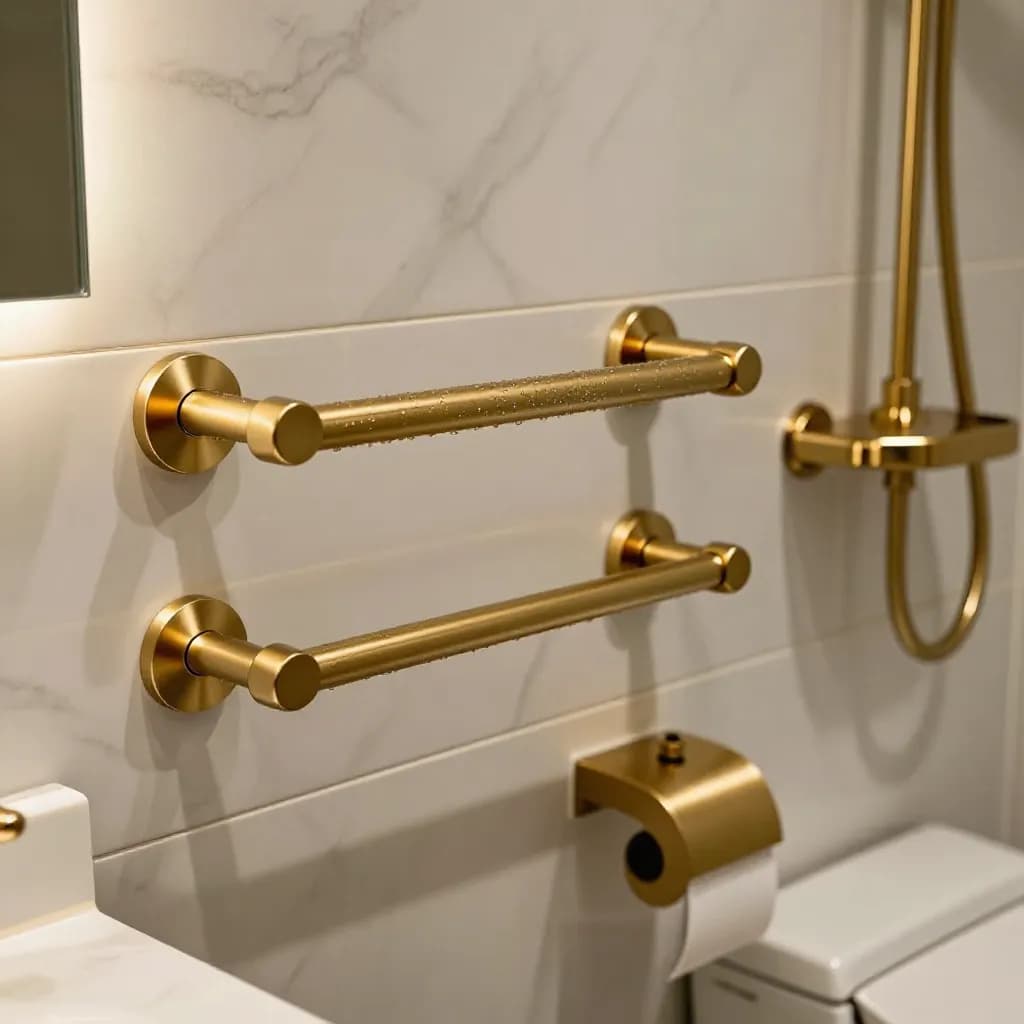
Hotel bathroom fixtures endure a punishing daily cycle. Each guest occupancy generates multiple shower or bath events that fill the room with steam, raising humidity to near-saturation levels. Between guests, housekeeping staff clean every surface with commercial-grade cleaning chemicals that are far more aggressive than residential cleaning products. This cycle of humidity exposure followed by chemical cleaning repeats hundreds of times per year, creating cumulative stress that degrades inferior finishes within months.
Ready to Start Your Project?
From one-off customs to 15,000-part production runs — get precise pricing in 24 hours.
On This Page
Hotel Bathrooms: Where Luxury Meets Extreme Conditions
The guest's perception of bathroom quality is disproportionately influential in overall hotel satisfaction ratings. Research consistently shows that bathroom cleanliness and fixture quality are among the top factors in guest satisfaction surveys. Fixtures that appear worn, corroded, or poorly maintained create a negative impression that affects the guest's perception of the entire property. Powder coating's ability to maintain a fresh, unblemished appearance through years of hotel use directly supports guest satisfaction and property reputation.
Modern hotel design increasingly uses bathroom fixtures as design statements rather than purely functional elements. Towel racks, robe hooks, toilet paper holders, and shower accessories are specified in custom colors and finishes that coordinate with the overall bathroom design scheme. Powder coating enables this design-forward approach by providing virtually unlimited color and finish options on metal fixtures that must also perform in the demanding bathroom environment.
Humidity and Moisture Resistance Engineering
Hotel bathrooms maintain elevated humidity levels for extended periods during guest occupancy. A typical shower event raises bathroom humidity to 80-100% relative humidity, and without adequate ventilation, these levels can persist for hours. Over the course of a day with multiple guest showers, bathroom fixtures experience near-continuous exposure to saturated air that condenses on cooler metal surfaces, creating a persistent moisture film that drives corrosion.
The powder coating system for bathroom fixtures must provide an impermeable moisture barrier that prevents water vapor and condensed moisture from reaching the metal substrate. Epoxy primer systems excel in moisture barrier performance, providing the foundation layer that blocks moisture transmission. A polyester topcoat over the epoxy primer adds UV resistance for fixtures near windows and provides the aesthetic finish quality that the application demands.
Adhesion under wet conditions is the critical performance metric for bathroom powder coating. Standard adhesion testing on dry surfaces does not predict performance in the perpetually humid bathroom environment. Wet adhesion testing — where the coated surface is immersed in water for extended periods before adhesion measurement — provides a more realistic assessment of how the coating will perform in actual bathroom conditions. Specify wet adhesion testing as part of the coating qualification for bathroom fixture applications.
Condensation management through fixture design complements the coating system's moisture resistance. Fixtures should be designed to shed condensation rather than trap it — avoid horizontal surfaces where water pools, ensure that mounting brackets allow air circulation behind the fixture, and provide drainage paths for water that collects at fixture bases. These design details reduce the moisture load on the coating system and extend its service life.
Ventilation system performance directly affects the humidity exposure that bathroom fixtures experience. Well-ventilated bathrooms with exhaust fans that operate during and after shower use reduce peak humidity levels and shorten the duration of high-humidity exposure. Properties investing in premium powder-coated fixtures should ensure that bathroom ventilation meets or exceeds building code requirements to protect the investment in quality finishes.
Chemical Resistance to Housekeeping Products
Hotel housekeeping departments use commercial cleaning chemicals that are significantly more aggressive than residential cleaning products. These professional-grade cleaners are formulated for speed and efficacy — they must remove soap scum, hard water deposits, body oils, and potential biological contamination quickly and completely to meet the tight room turnover schedules that hotel operations demand. The powder coating on bathroom fixtures must withstand daily exposure to these chemicals without degradation.
Common hotel bathroom cleaning chemicals include acidic bathroom cleaners containing phosphoric or hydrochloric acid for removing hard water deposits and soap scum, alkaline all-purpose cleaners for general surface cleaning, chlorine-based disinfectants for sanitization, and abrasive cream cleansers for stubborn stains. Each of these chemical families attacks coating systems through different mechanisms — acids dissolve certain pigments and degrade some resin systems, alkalis can saponify ester-based coatings, chlorine oxidizes organic materials, and abrasives physically remove coating material.
Polyester-epoxy hybrid powder coatings provide the broadest chemical resistance profile for hotel bathroom applications. The epoxy component contributes excellent resistance to acids and alkalis, while the polyester component provides UV stability and exterior durability. This hybrid chemistry withstands the full range of hotel cleaning chemicals without softening, discoloration, blistering, or adhesion loss.
Chemical resistance testing should simulate actual hotel cleaning conditions rather than relying on generic chemical resistance data. Request testing with the specific cleaning products used by the hotel's housekeeping department, applied at the concentrations and contact times used in actual cleaning protocols. This application-specific testing provides confidence that the coating will perform under real-world conditions.
Staff training on proper cleaning techniques for powder-coated fixtures extends coating life and prevents unnecessary damage. Housekeeping staff should be instructed to use the minimum effective concentration of cleaning chemicals, avoid abrasive pads or steel wool on coated surfaces, rinse chemical residues thoroughly after cleaning, and report any coating damage for prompt repair. These simple practices significantly extend the service life of powder-coated bathroom fixtures.
Towel Racks, Robe Hooks, and Bathroom Accessories
Towel racks are the most prominent powder-coated fixtures in most hotel bathrooms, serving both functional and decorative purposes. The rack must support the weight of wet towels — which can be substantial when multiple bath towels are hung simultaneously — while maintaining the aesthetic quality expected in a hotel environment. Powder coating on towel rack tubes and mounting brackets must resist the constant moisture from wet towels, the mechanical stress of towel loading and removal, and the cleaning chemicals applied during housekeeping.
Heated towel racks add a thermal dimension to the coating requirements. Electric heated towel racks operate at surface temperatures of 40-60°C, which is within the range of standard polyester powder coatings but requires verification that the specific formulation maintains adhesion and appearance at the operating temperature. The combination of heat and moisture on heated towel racks creates conditions that accelerate coating degradation in poorly specified systems.
Robe hooks experience concentrated loading forces when heavy bathrobes are hung, creating stress at the hook-to-wall mounting point. The powder coating at this stress concentration must maintain adhesion under repeated loading cycles. Reinforced mounting designs that distribute the load across a larger area reduce the stress on both the coating and the wall mounting, extending the service life of the hook installation.
Toilet paper holders, soap dishes, toothbrush holders, and other small bathroom accessories are high-touch items that guests interact with multiple times during their stay. The powder coating on these items must provide a pleasant tactile experience — smooth, warm to the touch, and free from sharp edges or rough spots that could snag skin or fabric. Quality control during the coating process should include tactile inspection of all guest-contact surfaces.
Shower accessories including shampoo shelves, razor holders, and grab bars operate in the direct water spray zone where they experience the most intense moisture exposure in the bathroom. These items require the highest level of moisture resistance in the coating system, with epoxy primer and thorough edge coverage to prevent water ingress at any point. Grab bars have the additional requirement of slip resistance — textured powder coating or rubberized overmold on grip surfaces provides the traction needed for safe use in wet conditions.
Luxury Finish Options for Hotel Bathrooms
Hotel bathroom design has evolved from the utilitarian white-and-chrome standard to embrace a wide range of colors, textures, and metallic effects that create distinctive bathroom experiences. Powder coating enables this design evolution by providing luxury finish options that were previously achievable only through expensive plating processes or hand-applied specialty finishes.
Matte black has become the dominant trend in contemporary hotel bathroom design, providing a bold, modern aesthetic that contrasts dramatically with white fixtures and tile. Powder coating achieves a true matte black finish with ultra-low gloss levels of 5-10 units that absorbs light softly and creates a sophisticated visual weight. Unlike black chrome plating, which can appear blue or purple in certain lighting, matte black powder coating maintains a neutral, true black appearance under all lighting conditions.
Brushed gold and champagne gold finishes bring warmth and luxury to hotel bathrooms without the maintenance demands of actual gold plating. Metallic powder coatings with fine gold-toned flakes create a convincing brushed gold appearance that maintains its warmth and luster indefinitely, unlike plated gold finishes that can tarnish or wear through to reveal the base metal beneath.
Gunmetal and dark bronze finishes offer a sophisticated alternative to both chrome and black, providing depth and visual interest that complements natural stone, wood, and earth-toned tile palettes. These metallic finishes change subtly with viewing angle and lighting conditions, adding dynamic visual quality to the bathroom environment.
Textured finishes including fine sand texture, leather grain, and hammered effects add tactile dimension to bathroom fixtures. These textures provide practical benefits beyond aesthetics — they mask minor scratches and wear marks that would be visible on smooth finishes, extending the period between refinishing or replacement. Textured finishes also provide improved grip on fixtures like grab bars and towel rack ends.
Two-tone and accent color combinations create design interest on fixtures that might otherwise be visually monotonous. A matte black towel rack with brushed gold end caps, or a white accessory set with gunmetal mounting hardware, demonstrates the design flexibility that powder coating enables. These multi-finish combinations require careful masking during the coating process but create distinctive fixtures that elevate the bathroom design.
Shower Enclosure and Wet Zone Hardware
Shower enclosures contain the most aggressive moisture environment in the hotel bathroom, with direct water spray, steam, soap residue, and cleaning chemicals creating conditions that test any finish to its limits. Powder-coated shower hardware — including frame profiles, hinges, handles, and mounting brackets — must withstand this continuous wet exposure while maintaining the aesthetic quality expected in a hotel setting.
Shower door frames and enclosure profiles are the largest powder-coated components in the shower zone. These profiles are typically extruded aluminum, which provides the corrosion resistance and dimensional stability needed for shower enclosure construction. Powder coating on aluminum shower profiles requires chromate-free pretreatment that provides both corrosion inhibition and adhesion promotion in the perpetually wet shower environment.
Hinges and pivot hardware on shower doors experience both moisture exposure and mechanical stress from daily door operation. The coating on hinge components must withstand the friction and wear of pivot movement without flaking or wearing through at contact points. Specifying hardened stainless steel pivot pins within powder-coated hinge housings provides the mechanical durability needed while maintaining the aesthetic finish on visible surfaces.
Shower handles and grab bars are safety-critical components that must provide secure grip in wet, soapy conditions. Powder coating with textured or rubberized finishes provides the slip resistance needed for safe operation. The coating must maintain its texture and grip properties through years of use and cleaning, without smoothing or polishing from repeated hand contact.
Drain covers and threshold trim in shower enclosures are exposed to standing water and the concentrated cleaning chemicals used to maintain shower hygiene. These components require maximum moisture resistance in the coating system, with particular attention to edge coverage and the coating of any cut edges where the substrate is exposed. Epoxy-based powder coatings provide the moisture barrier performance needed for these perpetually wet components.
Mildew resistance is an important consideration for powder-coated surfaces in the shower zone. While powder coating's non-porous surface inherently resists mildew growth better than porous materials, the warm, humid shower environment can support mildew growth on any surface where soap residue or body oils provide nutrients. Antimicrobial powder coating formulations inhibit mildew growth on the coated surface, reducing the cleaning frequency needed to maintain a mildew-free appearance.
Specification for Hotel Bathroom Projects
Specifying powder coating for hotel bathroom fixtures requires a systematic approach that addresses the unique environmental demands of the bathroom while meeting the aesthetic standards of the hotel's design program. The specification should be organized by exposure zone — wet zone, splash zone, and general bathroom — with appropriate coating systems defined for each zone.
Wet zone components (shower hardware, grab bars, drain covers) require the most robust coating system: blast-cleaned substrate, epoxy primer at 25-40 microns, polyester or polyester-epoxy hybrid topcoat at 60-80 microns, with wet adhesion testing to verify performance under sustained moisture exposure. Total system thickness of 85-120 microns provides the moisture barrier needed for continuous wet exposure.
Splash zone components (towel racks, sink-area accessories, toilet hardware) require epoxy primer at 20-30 microns under a polyester topcoat at 50-70 microns. These components experience intermittent moisture contact rather than continuous immersion, and the slightly thinner system provides adequate protection while optimizing coating cost.
General bathroom components (robe hooks, decorative hardware, lighting fixtures) can be specified with standard polyester powder coating at 60-80 microns over appropriate pretreatment. These components experience elevated humidity but minimal direct water contact, and standard coating systems provide adequate protection in this zone.
Color and finish specifications should include physical reference samples approved under the bathroom's installed lighting. Bathroom lighting — whether warm incandescent, cool LED, or natural daylight — significantly affects the appearance of metallic and colored finishes. Approving colors under actual lighting conditions prevents costly mismatches after installation.
Quality assurance requirements should include film thickness verification on production components, adhesion testing on witness panels, salt spray testing for corrosion resistance verification, and chemical resistance testing with the hotel's actual cleaning products. These quality measures provide documented assurance that the installed fixtures will perform as specified throughout their intended service life.
Installation specifications should address mounting methods that maintain the coating envelope's integrity. Drilling through powder-coated surfaces for mounting hardware creates potential corrosion initiation points that must be sealed. Specify sealant application at all penetrations and the use of isolation materials between dissimilar metals to prevent galvanic corrosion at mounting points.
Frequently Asked Questions
How does powder coating handle constant bathroom humidity?
Epoxy primer under a polyester topcoat creates an impermeable moisture barrier that prevents water vapor from reaching the metal substrate. Wet adhesion testing verifies performance under sustained moisture exposure. Proper fixture design that sheds condensation rather than trapping it complements the coating system's moisture resistance.
Will hotel cleaning chemicals damage powder-coated bathroom fixtures?
Polyester-epoxy hybrid powder coatings resist the full range of hotel cleaning chemicals including acidic bathroom cleaners, alkaline all-purpose cleaners, and chlorine-based disinfectants. Request chemical resistance testing with your specific housekeeping products to verify compatibility before specifying.
What luxury finishes are available for hotel bathroom powder coating?
Options include matte black (ultra-low gloss 5-10 units), brushed gold and champagne gold metallics, gunmetal, dark bronze, textured finishes like sand and leather grain, and two-tone combinations. These finishes maintain their appearance indefinitely unlike plated finishes that can tarnish or wear through.
Can heated towel racks be powder coated?
Yes, standard polyester powder coatings withstand the 40-60°C operating temperatures of electric heated towel racks. Verify that the specific formulation maintains adhesion and appearance at the operating temperature. The combination of heat and moisture on heated racks requires careful coating system selection for long-term performance.
How long do powder-coated hotel bathroom fixtures last?
Properly specified and maintained powder-coated bathroom fixtures last 10-15 years in hotel environments, significantly outlasting chrome plating (which often shows blistering within 3-5 years in humid bathrooms) and liquid paint finishes. The key factors are proper pretreatment, appropriate coating chemistry, and correct housekeeping procedures.
Ready to Start Your Project?
From one-off customs to 15,000-part production runs — get precise pricing in 24 hours.