Hot rods represent the intersection of mechanical craftsmanship and visual artistry, and powder coating has become an essential tool for builders who demand both durability and beauty from every component. From gleaming valve covers to satin-black chassis rails, powder coating delivers finishes that hold up under the hood and under the judges' scrutiny at car shows. The technology has transformed what is possible in hot rod finishing, offering colors, textures, and effects that were previously achievable only with expensive multi-stage liquid paint systems.
Automotive
Powder Coating for Hot Rod Parts: Engine Components, Chassis, Custom Colors, and Show Quality
Sundial Powder Coating·April 22, 2026·10 min
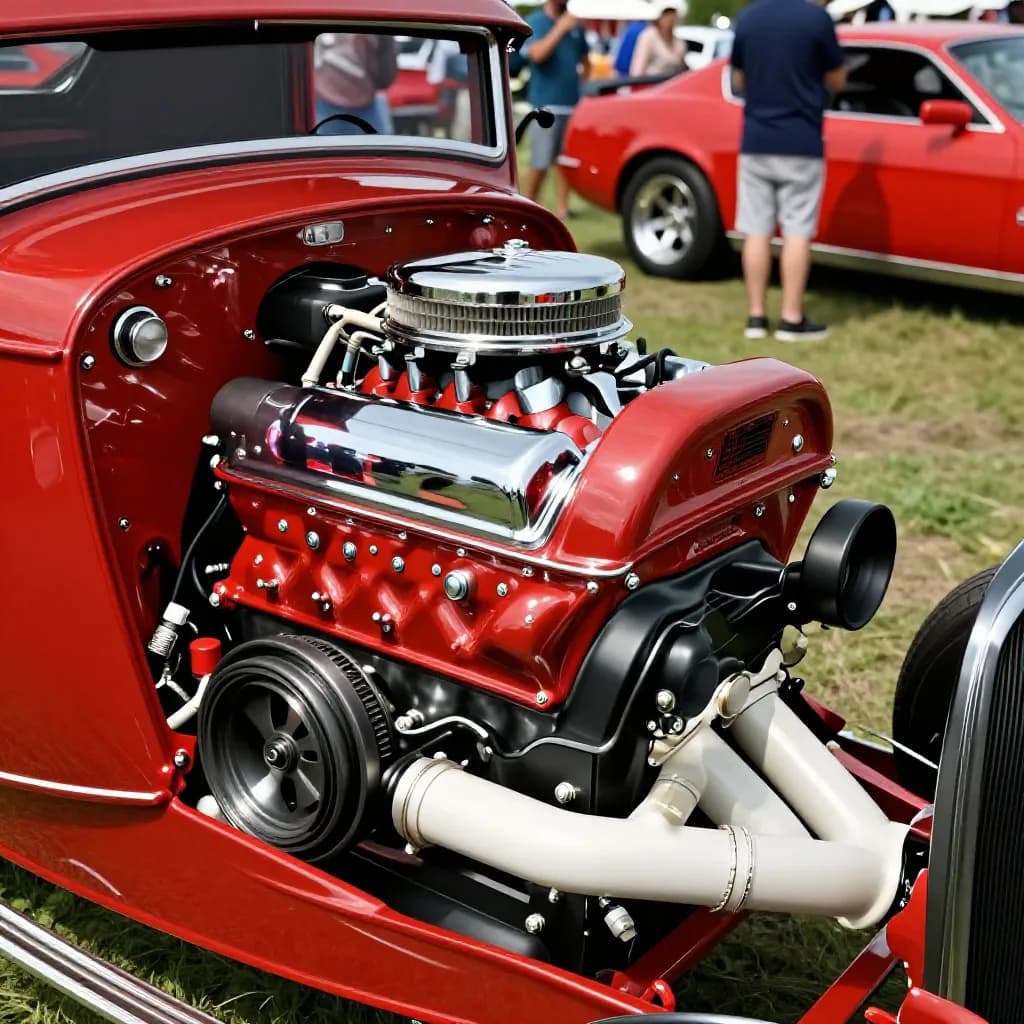
The hot rod community was initially skeptical of powder coating, viewing it as a utilitarian finish better suited to industrial equipment than show cars. That perception has changed dramatically as powder coating technology has advanced. Modern powder formulations include deep candy colors, brilliant metallics, chrome-like mirror finishes, and translucent clears that rival the best liquid paint work. Combined with the inherent durability advantage of powder coating, these aesthetic improvements have made it the preferred finish for many of the top hot rod builders in the country.
Ready to Start Your Project?
From one-off customs to 15,000-part production runs — get precise pricing in 24 hours.
On This Page
Powder Coating and the Hot Rod World
Powder coating is particularly well-suited to the hot rod build process because most components are assembled from bare metal. Unlike restoration work where existing finishes must be preserved, hot rod construction typically involves new fabrication or stripped-down components that are ready for coating. This clean-slate approach allows the coater to apply optimal preparation and coating systems without the complications of working around existing finishes.
Engine Components: Heat, Oil, and Show Shine
Engine components are among the most popular hot rod parts for powder coating, and they present unique challenges due to the heat and chemical exposure they endure. Valve covers, intake manifolds, timing covers, oil pans, and air cleaner housings are all excellent candidates for powder coating, but the coating must be selected based on the operating temperature of each component.
Standard polyester powder coatings are suitable for components that operate below 150 degrees Celsius, which includes most valve covers, air cleaners, and accessories that are not in direct contact with exhaust gases. For components that see higher temperatures — such as intake manifolds on turbocharged engines or headers — high-temperature powder coatings rated for 300 to 600 degrees Celsius are required. These ceramic-based or silicone-modified formulations maintain their color and adhesion at temperatures that would destroy standard powders.
Surface preparation for cast engine components requires special attention to outgassing. Cast aluminum and cast iron parts contain trapped gases in the porous casting structure that release during the curing process, creating pinholes and bubbles in the finish. A pre-bake at curing temperature for 20 to 30 minutes before powder application drives out these gases. After the pre-bake, the part is allowed to cool, blasted again to clean the surface, and then coated. This extra step adds time to the process but is essential for achieving the defect-free finish that show-quality hot rod work demands.
Chassis and Frame: The Foundation of the Build
The chassis is the backbone of any hot rod, and a beautifully finished frame elevates the entire build. Whether it is a boxed and smoothed original frame, a custom-fabricated chassis, or a reproduction frame from a kit manufacturer, powder coating provides a durable, uniform finish that showcases the metalwork and protects it from corrosion. A powder-coated chassis is easier to clean, resists fluid stains from oil and coolant leaks, and maintains its appearance far longer than a painted frame.
Chassis coating requires careful planning around assembly sequence. The frame should be coated before any components are mounted, which means all brackets, crossmembers, and mounting tabs must be welded and finished before the frame goes to the coater. Mounting surfaces for the body, engine, transmission, and suspension should be masked to maintain bare metal contact for proper grounding and to prevent the coating from compressing under bolt torque and loosening fasteners.
Gloss black is the traditional choice for hot rod chassis, but the range of options has expanded considerably. Satin black offers a more modern, less reflective appearance that many builders prefer. Charcoal, gunmetal, and dark bronze provide subtle alternatives to black that add visual interest without being flashy. For show-oriented builds, matching the chassis color to the body color or using a complementary accent color creates a dramatic effect when the car is displayed with the body removed or elevated.
Custom Colors and Show-Quality Finishes
The color palette available through modern powder coating technology is vast enough to satisfy even the most creative hot rod builders. Beyond the standard RAL and custom-matched solid colors, specialty powder formulations offer effects that push the boundaries of what powder coating can achieve. Candy colors — created by applying a translucent tinted clear over a metallic base coat — produce the deep, rich, color-shifting appearance that has been a hot rod staple for decades.
Metallic powders range from subtle silver and gold flakes to bold, large-particle metallics that create dramatic sparkle under show lighting. Chameleon and color-shifting powders change hue depending on the viewing angle, creating an eye-catching effect that draws attention at shows and cruises. Chrome-effect powders, while not quite matching the reflectivity of actual chrome plating, provide a bright, mirror-like finish that works well for accent pieces and trim components.
Achieving true show-quality results with powder coating requires meticulous preparation and application. The substrate must be perfectly smooth, with all welds ground flush, all imperfections filled, and the surface blasted to a uniform profile. The powder must be applied at consistent thickness with no thin spots, runs, or orange peel. For the highest-quality work, the cured coating may be wet-sanded with fine-grit sandpaper and buffed to remove any texture, producing a glass-smooth surface that rivals the best liquid paint finishes.
Suspension and Steering Components
Suspension and steering components are highly visible on hot rods, particularly on builds with open wheel wells or raised ride heights that expose the undercarriage. Control arms, spindles, sway bars, steering linkages, and spring perches all benefit from powder coating, both for corrosion protection and visual appeal. A set of freshly powder-coated suspension components transforms the look of the undercarriage from utilitarian to show-worthy.
The key consideration for suspension components is maintaining proper clearances and fits. Powder coating adds 60 to 100 microns of thickness to every coated surface, which can affect the fit of bushings, bearings, and press-fit components. All bearing surfaces, bushing bores, and press-fit areas must be masked before coating to maintain factory dimensions. Ball joint tapers, tie rod ends, and other precision-fit surfaces should never be coated.
For springs, powder coating is an excellent alternative to traditional paint. Coil springs can be powder coated in any color, and the thick, flexible coating resists the chipping and flaking that occurs when painted springs compress and extend during suspension travel. Leaf springs are more challenging because the individual leaves slide against each other, which will wear through any coating at the contact surfaces. If leaf springs are coated, the contact surfaces between leaves should be left uncoated or treated with a dry-film lubricant.
Brackets, Accessories, and Small Parts
The details make or break a hot rod build, and powder coating the small parts and accessories is what separates a good build from a great one. Alternator brackets, power steering pump brackets, hood hinges, trunk hinges, door handles, mirror mounts, and countless other small components contribute to the overall visual impression. When all these parts are coated in a coordinated color scheme, the result is a cohesive, professional appearance that shows attention to detail.
Batch coating small parts is efficient and cost-effective. Parts can be hung on a rack or placed in a fluidized bed for coating, and dozens of small items can be processed in a single oven cycle. The main challenge with small parts is ensuring complete coverage, particularly in recesses, holes, and tight corners where electrostatic shielding can prevent powder from reaching the surface. Experienced coaters use techniques like manual touch-up with a small spray gun and adjusting the electrostatic charge to improve coverage in difficult areas.
Fastener finishing is another detail that distinguishes show-quality builds. Bolts, nuts, and washers can be powder coated to match the surrounding components, creating a seamless appearance. Stainless steel fasteners can be coated for color coordination, and even standard grade-8 bolts can be transformed with a matching powder coat. The coating on fasteners will wear at the wrench contact surfaces during installation, so many builders install coated fasteners with care and avoid removing them unnecessarily.
Exhaust and High-Temperature Applications
Exhaust components represent the most demanding application for powder coating on a hot rod. Headers, exhaust manifolds, and exhaust pipes operate at temperatures ranging from 300 to 700 degrees Celsius, far exceeding the capability of standard powder coatings. High-temperature ceramic powder coatings are specifically formulated for these applications, using silicone-based or ceramic-filled resins that withstand extreme heat without discoloring, peeling, or burning off.
High-temperature powder coatings are available in a more limited color range than standard powders, with black, silver, gray, and cast iron being the most common options. Some manufacturers offer high-temp formulations in red, blue, and other colors, though these may experience some color shift at the highest operating temperatures. The coating is applied and cured like standard powder, but the final cure actually occurs during the first heat cycle when the exhaust reaches operating temperature, which further cross-links the coating and develops its full heat resistance.
Beyond aesthetics, high-temperature powder coating on exhaust components provides functional benefits. The coating acts as a thermal barrier that reduces radiant heat transfer to surrounding components, helping to keep underhood temperatures lower. This is particularly valuable on hot rods with tight engine compartments where heat management is a constant challenge. The coating also protects the exhaust from surface corrosion, extending the life of steel headers and pipes that would otherwise rust quickly from the combination of heat cycling and moisture exposure.
Frequently Asked Questions
Can you powder coat cast iron engine blocks?
Yes, but cast iron requires a pre-bake to drive out trapped gases before coating. The block is heated to curing temperature for 20 to 30 minutes, cooled, re-blasted, and then coated. All machined surfaces, cylinder bores, and gasket surfaces must be masked. High-temperature powder is needed for surfaces near exhaust ports.
Will powder coating on headers discolor over time?
High-temperature ceramic powder coatings are designed to resist discoloration at exhaust temperatures. Standard powder coatings will burn and peel on headers. Properly applied high-temp coatings maintain their appearance through normal heat cycling, though extreme temperatures above the coating's rated range may cause gradual color shift.
Can powder coating achieve a chrome-like finish?
Chrome-effect powder coatings produce a bright, reflective finish that approaches the look of chrome plating but does not achieve true mirror-quality reflectivity. For show applications, chrome powder works well on accent pieces and trim. For components requiring actual chrome appearance, traditional chrome plating remains the standard.
How do you prevent powder coating from affecting engine component fitment?
All mating surfaces, gasket surfaces, bearing bores, and threaded holes must be masked before coating. Powder coating adds 60 to 100 microns of thickness, which can interfere with precision fits. After coating, threaded holes should be chased with a tap and any tight fits should be checked before assembly.
Is powder coating durable enough for a daily-driven hot rod?
Powder coating is more durable than liquid paint for daily-driven vehicles. The thick film resists stone chips, chemical exposure, and UV degradation better than most paint systems. With proper preparation and quality powder, a coated chassis or set of engine components will maintain its appearance through years of regular driving.
Ready to Start Your Project?
From one-off customs to 15,000-part production runs — get precise pricing in 24 hours.