The front grille is the face of any vehicle, and its finish plays a defining role in the vehicle's visual character. Whether it is a bold mesh insert on a performance truck, a classic bar grille on a vintage muscle car, or a custom fabricated grille on a show vehicle, the finish quality communicates the level of care and investment in the build. Powder coating provides a finish that is both visually striking and functionally superior to paint for this high-exposure application.
Automotive
Powder Coating Grille Inserts: Custom Colors and Stone Impact Protection
Sundial Powder Coating·April 23, 2026·9 min
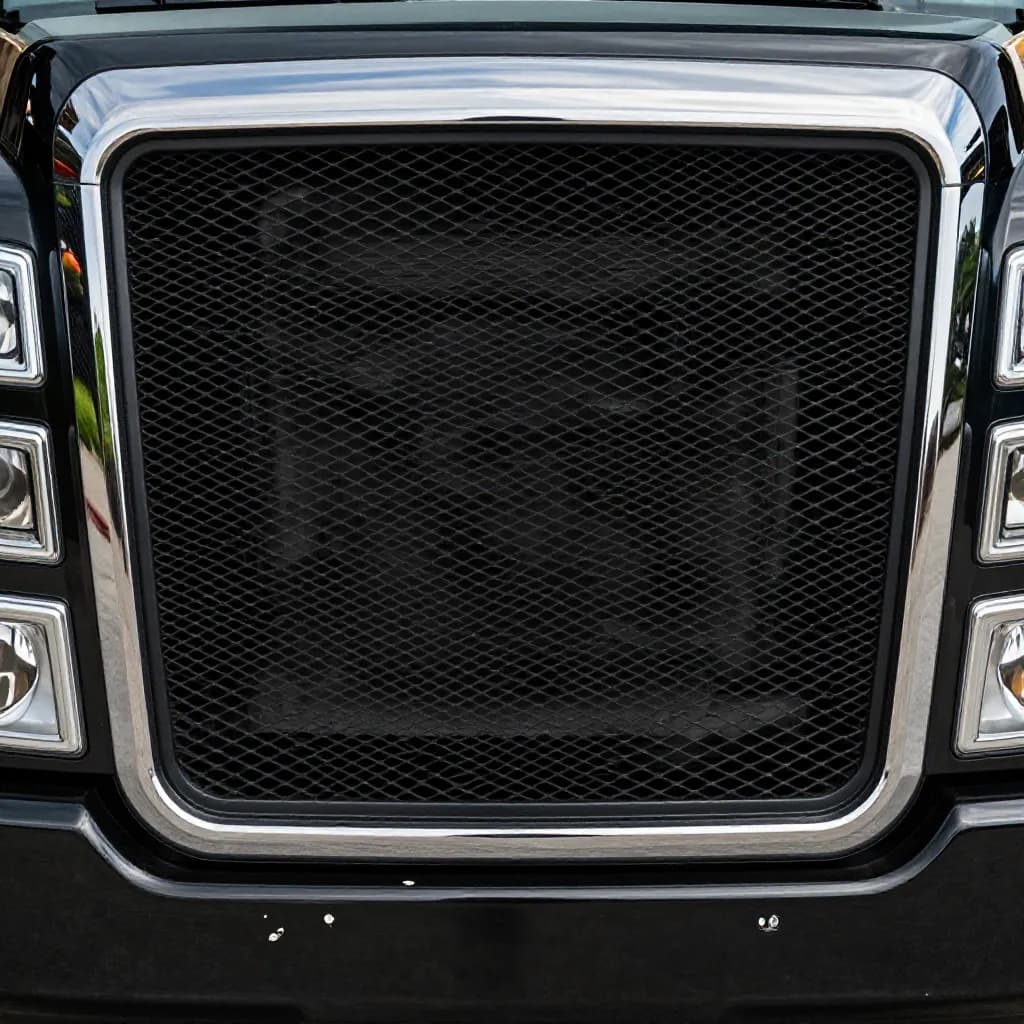
Grille inserts occupy one of the most demanding positions on a vehicle. They sit at the leading edge, directly in the path of stones, insects, road debris, and airborne contaminants. They receive intense UV exposure from direct sunlight and reflected light from the road surface. They are also one of the first things people see when looking at the vehicle, making any coating defect or degradation immediately noticeable.
Ready to Start Your Project?
From one-off customs to 15,000-part production runs — get precise pricing in 24 hours.
On This Page
The Grille as a Vehicle's Visual Identity
Powder coating addresses all of these challenges. The thick, cross-linked polymer film resists stone chips far better than thin paint, the UV-stable polyester chemistry maintains color and gloss for years, and the uniform electrostatic application produces a consistent finish across the complex geometry of grille bars and mesh patterns. For vehicle owners who want their grille to make a statement and maintain that statement over time, powder coating is the clear choice.
Mesh vs Bar Grille Coating Considerations
Grille inserts come in two primary configurations: mesh and bar. Each presents different challenges for the powder coating process, and understanding these differences helps achieve the best possible result.
Mesh grilles, whether woven wire, expanded metal, or perforated sheet, have a high surface area relative to their size and numerous edges, holes, and intersections where coating coverage can be inconsistent. The Faraday cage effect is particularly pronounced on fine mesh, where the electrostatic charge on the mesh wires repels powder from the interior of each opening. The result can be thin coverage on the wire intersections and excessive buildup on the outer edges.
To coat mesh grilles effectively, reduce the electrostatic voltage to minimize the Faraday cage effect, use a tribo-charging gun if available, and apply multiple light passes from different angles. Some coaters prefer to dip fine mesh grilles in a fluidized bed of powder rather than spraying, as the dipping process provides more uniform coverage on complex geometries. After coating, inspect the mesh carefully for any bare spots or thin areas that need touch-up.
Bar grilles with horizontal or vertical bars are simpler to coat. The bars have relatively simple geometry with flat or round cross-sections that accept powder uniformly. The main challenge is ensuring consistent coverage on the back side of the bars and in the corners where bars meet the frame. Hanging the grille at an angle during spraying and applying powder from multiple directions ensures complete coverage.
For both mesh and bar grilles, the mounting tabs, clips, and fastener holes should be masked to maintain proper fitment in the vehicle. Powder buildup on mounting features can prevent the grille from seating correctly in the vehicle's grille opening.
Stone Impact and Front-End Durability
The front grille takes the brunt of stone impacts from the road surface and from vehicles ahead. Every stone, gravel piece, and road debris that passes through the grille opening first contacts the grille bars or mesh, and the coating must withstand this constant bombardment without chipping or flaking.
Powder coating provides inherently better stone chip resistance than liquid paint due to its greater thickness and cross-linked molecular structure. A standard 60-80 micron polyester powder coat on a grille insert will resist stone impacts that would chip through a 25-40 micron paint film. For grilles on vehicles that frequently drive on gravel roads or follow other vehicles closely, increasing the film build to 80-100 microns provides additional impact protection.
The coating's adhesion to the substrate is equally important for stone chip resistance. A well-adhered coating distributes impact energy across a larger area and resists delamination at chip edges. Proper surface preparation with abrasive blasting and chemical pretreatment ensures the strong adhesion needed for front-end durability. Skipping pretreatment to save time is a false economy that will result in premature coating failure.
For maximum stone chip protection on grilles, a two-coat system with an epoxy primer and polyester topcoat is recommended. The flexible epoxy primer absorbs impact energy, while the hard polyester topcoat resists abrasion and UV degradation. This combination is standard in industrial applications where impact resistance is critical and translates perfectly to automotive grille coating.
Insect residue is another front-end challenge. Bug splatter contains acids that can etch and stain coatings if left in contact for extended periods. A smooth, glossy powder coat surface is easier to clean than a textured surface, and prompt washing after highway driving prevents acid etching.
Custom Colors and Brand Identity
The grille is a prime location for expressing brand identity and personal style through color. Powder coating offers virtually unlimited color options, from subtle factory-matching shades to bold custom colors that transform the vehicle's front-end appearance.
Gloss black is the most popular grille finish across all vehicle types. It provides a clean, aggressive look that complements any body color and is the default choice for blacked-out builds. Satin black offers a similar effect with a more understated, modern feel. Both finishes are available in standard and super-durable polyester formulations for long-term UV resistance.
Body-color matching creates a seamless, integrated appearance where the grille blends with the surrounding body panels. This approach is popular for luxury vehicles and clean street builds where a monochromatic look is desired. Matching requires accurate color formulation using the vehicle's paint code, and the result should be verified under multiple lighting conditions before committing to the full grille.
Contrasting colors make the grille a focal point. Red, blue, orange, or yellow grille inserts on a dark vehicle create a striking visual accent. This approach is popular in the performance and motorsport communities where bold color choices signal the vehicle's purpose. Metallic and candy finishes add depth and visual complexity that solid colors cannot achieve.
For commercial vehicles and fleet applications, the grille can carry brand colors that reinforce corporate identity. A delivery van with a grille finished in the company's brand color creates a professional, branded appearance. Powder coating's consistency and durability make it ideal for fleet applications where uniform appearance across multiple vehicles is important.
UV Resistance and Color Retention
The grille's forward-facing position means it receives maximum UV exposure during daylight hours. UV radiation breaks down the polymer bonds in powder coatings, causing fading, chalking, and loss of gloss over time. Selecting the right powder chemistry is essential for maintaining the grille's appearance over the long term.
Super-durable polyester powders are the minimum recommendation for grille inserts. These formulations contain UV stabilizers and HALS (hindered amine light stabilizers) that resist photodegradation far longer than standard polyester powders. A super-durable polyester will maintain its color and gloss for 5-10 years of continuous outdoor exposure, compared to 2-4 years for standard polyester.
Dark colors are more susceptible to visible UV degradation than light colors. Black grilles will show chalking and fading sooner than silver or white grilles, even when using the same powder chemistry. If choosing a dark color for a grille that will be exposed to intense sun, insisting on a super-durable or even a fluoropolymer-based formulation is a worthwhile investment.
Gloss level also affects the perception of UV degradation. High-gloss finishes show gloss loss more obviously than satin or matte finishes, because the eye is more sensitive to changes in a reflective surface. A satin black grille will appear to age more gracefully than a gloss black grille, even if the actual chemical degradation is similar. This is worth considering when selecting the finish level.
A clear coat over the color coat adds a sacrificial UV-absorbing layer that protects the color underneath. The clear coat takes the initial UV damage, preserving the color coat's appearance. When the clear coat eventually shows wear, it can be stripped and reapplied without disturbing the color coat, extending the overall service life of the finish.
Installation and Care
Installing a powder-coated grille insert requires careful handling to protect the finish during fitment. Grille inserts often require flexing or compressing to snap into the vehicle's grille opening, and the coating must be flexible enough to accommodate this without cracking.
Standard polyester powder coatings have sufficient flexibility for normal grille installation. However, if the grille requires significant bending or flexing during installation, verify that the coating does not crack at the flex points. Warming the grille slightly with a heat gun before installation can increase the coating's flexibility and reduce the risk of cracking during fitment.
Mounting clips, tabs, and fasteners should be checked for proper engagement after installation. Powder buildup on these features can prevent full engagement, leaving the grille loose or misaligned. If clips do not engage fully, carefully trim the powder from the clip surfaces with a sharp blade.
Ongoing care for a powder-coated grille is straightforward. Wash the grille regularly with the rest of the vehicle, paying attention to insect residue that can accumulate on the leading edges. A soft brush helps clean mesh grilles where debris can become trapped in the openings. Avoid pressure washing directly at close range, as the high-pressure water stream can chip the coating at edges and thin spots.
For show vehicles, a periodic application of spray wax or ceramic coating enhances the gloss and provides a hydrophobic layer that makes cleaning easier. Inspect the coating annually for any chips or scratches, particularly on the leading edges of bars and mesh wires where stone impacts are concentrated. Touch up any damage promptly to prevent corrosion and maintain the grille's appearance.
Frequently Asked Questions
Can you powder coat a mesh grille evenly?
Yes, but mesh grilles require specific techniques. Reducing electrostatic voltage, using tribo-charging guns, and applying multiple light passes from different angles helps overcome the Faraday cage effect. Some coaters use fluidized bed dipping for fine mesh to achieve more uniform coverage than electrostatic spray.
Will powder coating protect my grille from stone chips?
Powder coating provides significantly better stone chip resistance than paint due to its greater thickness and cross-linked structure. A two-coat system with epoxy primer and polyester topcoat at 100-140 microns total offers maximum protection for grilles on vehicles that drive on gravel roads or in heavy traffic.
How long will a powder-coated grille keep its color?
A super-durable polyester powder coat will maintain its color and gloss for 5-10 years of continuous outdoor exposure. Standard polyester may fade within 2-4 years. Dark colors show UV degradation sooner than light colors. A clear coat over the color adds additional UV protection.
Can I match my grille color to my vehicle's body paint?
Yes. Most powder suppliers can formulate a custom match using your vehicle's paint code or a physical sample. Verify the match under multiple lighting conditions, as powder coat and automotive paint reflect light differently. A close match that reads as the same color in most conditions is typically achievable.
How do I clean bugs off a powder-coated grille?
Wash the grille promptly after highway driving to prevent insect acids from etching the coating. Use a mild car wash soap and a soft brush or microfiber cloth. For stubborn residue, a dedicated bug remover spray softens dried insects for easier removal. Avoid abrasive scrubbing that could scratch the finish.
Ready to Start Your Project?
From one-off customs to 15,000-part production runs — get precise pricing in 24 hours.