The Ford Bronco's return to production has created a thriving aftermarket ecosystem, and powder coating sits at the center of it. Bronco owners are among the most active vehicle customizers in the market, with off-road bumpers, rock sliders, roof racks, and skid plates being the most popular accessories — and nearly all of these components benefit from powder coating for durability and appearance.
Automotive
Powder Coating for Ford Bronco Parts: Bumpers, Rock Sliders, Roof Racks, and Off-Road Protection
Sundial Powder Coating·April 22, 2026·13 min
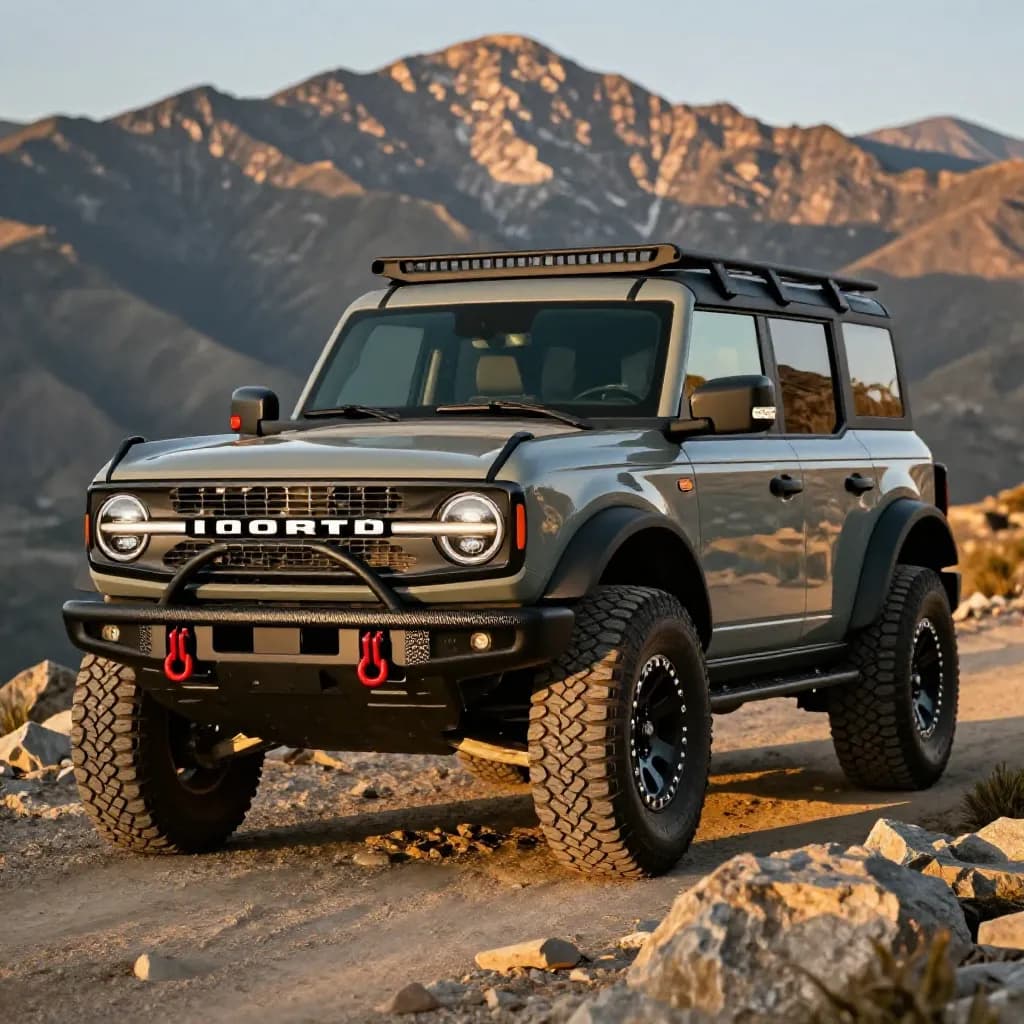
The Bronco's intended use as an off-road capable vehicle makes coating durability a genuine functional requirement rather than merely an aesthetic preference. Components that will encounter rocks, trail debris, mud, sand, and water crossings need a finish that can withstand sustained mechanical abuse without chipping, peeling, or corroding. Powder coating's superior impact resistance, adhesion, and corrosion protection make it the natural choice for off-road accessories.
Ready to Start Your Project?
From one-off customs to 15,000-part production runs — get precise pricing in 24 hours.
On This Page
The Ford Bronco and the Powder Coating Connection
The sixth-generation Bronco (2021-present) is available in two-door and four-door configurations with multiple trim levels, each offering different factory colors and equipment levels. The Bronco's modular design philosophy — with removable doors, roof panels, and fender flares — creates additional powder coating opportunities as owners customize their vehicles for specific off-road disciplines or aesthetic preferences.
Both the full-size Bronco and the Bronco Sport have active owner communities that share modification ideas, product recommendations, and build documentation. Powder coating features prominently in these communities, with owners documenting their coating projects and sharing results. This community knowledge base is a valuable resource for Bronco owners planning their first powder coating project.
Bumpers and Armor: The Primary Application
Aftermarket steel bumpers are the most commonly powder-coated Bronco accessory. Companies like ARB, Warn, Fab Fours, Body Armor 4x4, and numerous smaller fabricators produce front and rear bumpers designed for the sixth-generation Bronco, and most of these bumpers are delivered with a powder coat finish or in bare steel ready for custom coating.
Front bumpers for the Bronco range from stubby designs that maintain approach angle to full-width designs with integrated winch mounts, light bars, and D-ring recovery points. These bumpers are typically fabricated from 3/16-inch to 1/4-inch steel plate and weigh 60-100 pounds, making them substantial components that require thorough preparation and adequate oven capacity for proper curing.
Rear bumpers often incorporate swing-out tire carriers, jerry can mounts, and integrated recovery points. The complex geometry of swing-out carriers — with pivot points, latches, and multiple mounting surfaces — requires careful masking to ensure that moving parts operate freely after coating. Pivot bushings and latch mechanisms should be removed before coating and reinstalled afterward.
Rock sliders protect the Bronco's rocker panels during off-road use and are among the most abuse-prone components on the vehicle. These components take direct impacts from rocks, logs, and trail obstacles, making coating durability critical. Textured powder coatings are popular for rock sliders because the texture helps conceal trail damage and provides a non-slip surface for stepping.
Skid plates protect the Bronco's undercarriage components — oil pan, transmission, transfer case, and fuel tank — from rock impacts during off-road driving. These components operate in a harsh environment of mud, water, road salt, and mechanical impact. Powder coating provides excellent protection, but the coating will inevitably sustain damage during aggressive off-road use. Choosing a textured finish in a dark color helps minimize the visual impact of trail wear.
For factory color matching on bumpers and armor, Ford Bronco paint codes include Area 51 (code HX), Cactus Grey (code NE), Cyber Orange (code CD), Eruption Green (code B5), and Iconic Silver (code JS). These codes can be provided to powder coating manufacturers for color matching, though metallic and tri-coat factory colors are more challenging to match in powder format.
Roof Racks and Cargo Systems
Roof racks and cargo management systems are essential accessories for Bronco owners who use their vehicles for overlanding, camping, and adventure travel. These components are typically fabricated from steel or aluminum tubing and plate, making them ideal candidates for powder coating.
Full-length roof racks from manufacturers like Frontrunner, Prinsu, Rhino-Rack, and Gobi span the entire roof of the Bronco and provide mounting points for lights, awnings, recovery gear, and cargo containers. These large components require oversized curing ovens — a standard roof rack for a four-door Bronco may measure 60 inches by 80 inches or larger. Not all powder coating shops can accommodate components of this size, so verify oven capacity before committing.
Aluminum roof racks require different pretreatment than steel racks. Aluminum needs a chromate or chrome-free conversion coating to promote adhesion and prevent under-film corrosion. Steel racks are typically treated with iron phosphate or zinc phosphate. Using the wrong pretreatment for the substrate material will result in poor adhesion and premature coating failure.
Roof rack crossbars and mounting feet are smaller components that are straightforward to powder coat. These components should be coated in a finish that complements the roof rack and the vehicle's overall color scheme. Satin black is the most popular choice, providing a clean appearance that coordinates with most Bronco colors and accessories.
Cargo baskets, ladder racks, and accessory mounts are additional components that benefit from powder coating. These items are often purchased in bare metal or with minimal factory coating and can be custom powder coated to match the owner's preferred color scheme. Coordinating the finish across all roof-mounted accessories creates a cohesive, professional appearance.
For Broncos with removable hardtop panels, the roof rack mounting system must account for the panel removal process. Powder coating should not interfere with the mounting hardware or seal surfaces that enable hardtop removal. Discuss the specific mounting system with the powder coating shop to ensure proper masking of critical interface surfaces.
Wheels and Suspension Components
Wheel powder coating is a popular modification for Bronco owners seeking to customize their vehicle's appearance or protect aftermarket wheels from off-road damage. The Bronco's factory wheels and popular aftermarket options present specific considerations for powder coating.
Factory Bronco wheels are available in 17-inch and 18-inch sizes depending on the trim level. The Sasquatch package includes 17-inch beadlock-capable wheels that are popular candidates for color changes. Aftermarket wheels from Method, KMC, Fuel, and other off-road wheel manufacturers are commonly powder coated in custom colors to match the vehicle's build theme.
Beadlock wheels require special attention during powder coating. True beadlock wheels have a removable outer ring that clamps the tire bead to the wheel. The beadlock ring, mounting bolts, and sealing surfaces must be masked during coating to maintain proper bead sealing. Some owners choose to powder coat the beadlock ring in a contrasting color for visual accent.
Suspension components — including control arms, track bars, sway bar links, and coil spring perches — are commonly powder coated during lift kit installation. These components operate in a harsh environment of road debris, water, mud, and salt, making corrosion protection important for long-term durability. Standard polyester powder coating provides excellent protection for suspension components that operate at ambient temperatures.
Brake components including caliper brackets and dust shields can be powder coated for corrosion protection and appearance. Brake calipers themselves require high-temperature powder coating formulations, as discussed in the brake caliper section. Standard powder coatings are suitable for non-heat-generating brake components.
Drive shaft components, differential covers, and transfer case skid plates are additional candidates for powder coating. These components benefit from the corrosion protection that powder coating provides in the harsh undercarriage environment. Textured black finishes are popular for undercarriage components, providing a clean appearance while concealing minor trail damage.
Off-Road Durability: Choosing the Right Finish
Selecting the right powder coating finish for off-road Bronco components requires balancing durability, appearance, and practical considerations specific to trail use. The finish choice affects how well the coating withstands impacts, how visible trail damage appears, and how easy the component is to clean after off-road use.
Textured finishes are the most popular choice for off-road components. Fine and medium textures provide a non-reflective surface that conceals minor scratches, stone chips, and trail rash better than smooth finishes. The texture also provides a slight grip surface, which is beneficial for rock sliders that double as step surfaces. Textured black is the default finish for most off-road bumpers and armor.
Wrinkle finishes provide a more pronounced texture that is extremely effective at hiding surface damage. The wrinkle pattern creates a surface that is visually busy enough to mask all but the most severe impacts. Wrinkle finishes are popular for components that will see heavy trail abuse, such as rock sliders and skid plates.
Smooth finishes — gloss, satin, or matte — provide a cleaner, more refined appearance but show trail damage more readily. Smooth finishes are appropriate for components that will see moderate off-road use or for Broncos that are primarily street-driven with occasional trail excursions. Satin black smooth finish is a popular choice for bumpers on Broncos that prioritize appearance over extreme off-road durability.
Color selection for off-road components is primarily a matter of personal preference, but practical considerations apply. Dark colors — black, dark grey, dark bronze — conceal trail damage and dirt better than light colors. Light colors show every scratch and mud stain, requiring more frequent cleaning to maintain appearance. For components that will see heavy off-road use, dark textured finishes provide the best combination of appearance and practicality.
Film thickness is an important specification for off-road components. Standard powder coating film thickness of 60-80 microns is adequate for most applications, but components subject to severe mechanical abuse may benefit from increased film thickness of 80-120 microns. Thicker films provide more material to absorb impacts before the substrate is exposed, extending the coating's service life in abusive conditions.
Factory Color Matching for Bronco Builds
Many Bronco owners want their aftermarket accessories to match or complement their vehicle's factory color, creating a cohesive, integrated appearance. Matching Ford factory colors in powder coating format requires understanding the specific color codes and the challenges of replicating automotive paint in powder.
Ford assigns specific paint codes to each Bronco color, which can be found on the vehicle identification label on the driver's door jamb. Current Bronco colors and their codes include Area 51 (HX), Cactus Grey (NE), Cyber Orange Metallic Tri-Coat (CD), Eruption Green Metallic (B5), Iconic Silver Metallic (JS), Oxford White (YZ), Race Red (PQ), Shadow Black (G1), Carbonized Grey Metallic (M7), Hot Pepper Red Metallic Tinted Clearcoat (E4), and Velocity Blue Metallic (E7).
Solid colors like Oxford White, Race Red, and Shadow Black are relatively straightforward to match in powder coating. These colors do not contain metallic flakes or multi-layer effects, so a single-layer powder coating can achieve a close match. The main challenge is matching the exact hue and gloss level of the factory paint.
Metallic colors like Iconic Silver, Carbonized Grey, and Velocity Blue require bonded metallic powder formulations to replicate the metallic flake effect. The flake size, density, and color of the metallic pigment must be matched to the factory paint. Metallic matches are inherently more challenging than solid color matches because the metallic effect varies with viewing angle and lighting conditions.
Tri-coat colors like Cyber Orange present the greatest matching challenge. These factory colors use three liquid paint layers — a base coat, a translucent mid-coat, and a clear coat — to create their distinctive depth and color-shifting effect. A single-layer powder coating cannot perfectly replicate this multi-layer effect, though skilled color matchers can develop formulations that provide a reasonable visual match under most conditions.
For the best color match results, provide the powder coating shop with your vehicle's paint code and a physical color sample. A painted body panel, fuel door, or touch-up paint sample provides a more accurate reference than photographs. Request a sample panel from the shop before committing to coating production components, and evaluate the match in natural daylight alongside the vehicle.
Preparation Notes for Bronco Aftermarket Parts
Aftermarket Bronco parts arrive in various conditions — bare steel, primed, pre-coated, or with mill scale — and each condition requires a specific preparation approach to achieve optimal powder coating results.
Bare steel parts from fabricators are the simplest to prepare. These components need degreasing to remove cutting oils and handling contamination, followed by media blasting to create a surface profile and remove any mill scale or surface rust. After blasting, an iron phosphate or zinc phosphate conversion coating provides adhesion promotion and corrosion resistance.
Pre-primed or pre-coated parts — common from larger aftermarket manufacturers — require removal of the existing coating before powder coating. Factory primers and e-coat finishes may not be compatible with the powder coating process and can cause adhesion failures or surface defects if left in place. Chemical stripping or media blasting removes existing coatings and prepares the surface for powder.
Laser-cut and CNC-machined parts may have heat-affected zones along cut edges where the steel's surface chemistry has been altered by the cutting process. These areas may exhibit different coating adhesion or appearance compared to the surrounding material. Grinding or blasting the cut edges ensures uniform surface preparation across the entire component.
Welded assemblies — which include most bumpers, rock sliders, and roof racks — require attention to weld quality before coating. Weld spatter, undercut, porosity, and grinding marks will all be visible through the powder coating and may be accentuated by certain finishes. Smooth finishes reveal every surface imperfection, while textured finishes are more forgiving. For smooth finish applications, weld areas should be ground, filled, and sanded to a smooth surface before coating.
Hardware and mounting points require careful masking. Bolt holes, threaded inserts, alignment pins, and mounting surfaces must remain uncoated to ensure proper fitment during installation. Powder coating buildup on mounting surfaces can prevent proper seating and may affect the structural integrity of bolted connections. Experienced shops use calibrated masking plugs and tape to protect these critical areas while ensuring complete coating coverage on all visible surfaces.
Frequently Asked Questions
What is the best powder coating finish for off-road Bronco bumpers?
Textured black is the most popular and practical choice for off-road bumpers. The texture conceals minor trail damage, provides a non-reflective appearance, and hides dirt between cleanings. For bumpers that will see heavy trail use, wrinkle black provides even better damage concealment.
Can I match my Bronco's factory color in powder coating?
Solid colors like Oxford White and Race Red can be closely matched. Metallic colors require bonded metallic powder formulations and are more challenging. Tri-coat colors like Cyber Orange are the most difficult to replicate in powder. Provide your paint code from the door jamb label and a physical sample for best results.
Do I need to strip the factory coating off aftermarket bumpers before powder coating?
Yes. Factory primers and e-coat finishes on aftermarket parts may not be compatible with powder coating and can cause adhesion failures. The existing coating should be removed through chemical stripping or media blasting before applying powder coating for reliable long-term performance.
Can beadlock wheels be powder coated?
Yes, but the beadlock ring, mounting bolts, and bead sealing surfaces must be carefully masked to maintain proper tire bead sealing. Some owners powder coat the beadlock ring in a contrasting color for visual accent. Discuss the specific beadlock design with the powder coating shop before proceeding.
How thick should powder coating be on off-road components?
Standard film thickness of 60-80 microns is adequate for most applications. Components subject to severe mechanical abuse — rock sliders, skid plates — may benefit from 80-120 microns for additional impact protection. Thicker films provide more material to absorb impacts before exposing the substrate.
Ready to Start Your Project?
From one-off customs to 15,000-part production runs — get precise pricing in 24 hours.