Food trucks operate in an environment that combines the worst challenges of automotive finishing with the regulatory demands of food service. The exterior must withstand road debris, UV exposure, rain, salt spray, and the mechanical vibration of daily transit, while the interior must meet health department requirements for food preparation surfaces, resist cooking heat and grease, and survive aggressive cleaning protocols. No other food service format demands this combination of mobile durability and food safety from a single coating system.
Hospitality
Powder Coating for Food Trucks: Exterior Branding, Interior Food Safety, and Mobile Durability
Sundial Powder Coating·April 22, 2026·11 min
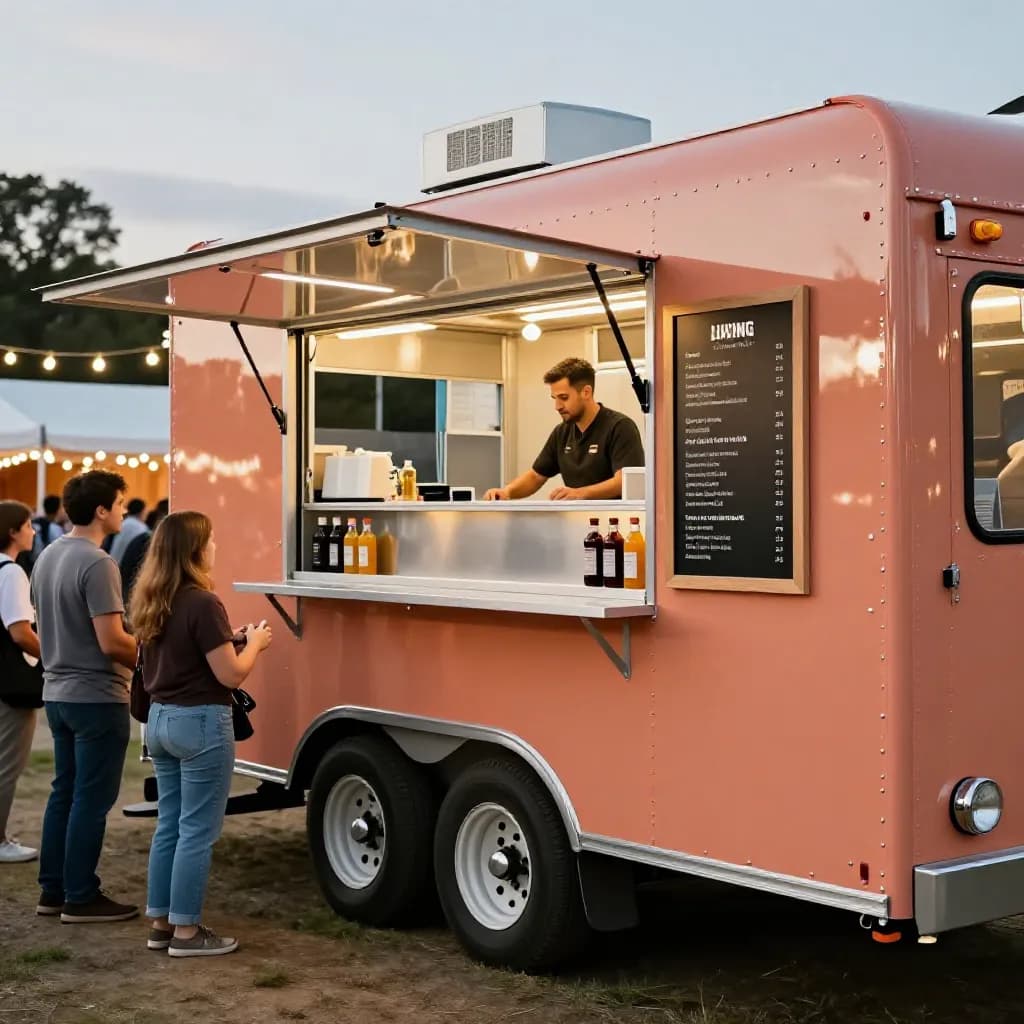
Traditional food truck finishing has relied on automotive paint for exteriors and stainless steel cladding for interiors, but this approach has significant limitations. Automotive paint chips easily from stone impacts during highway driving, requiring frequent touch-ups that interrupt revenue-generating operations. Interior stainless steel adds substantial weight to the vehicle, increasing fuel consumption and reducing payload capacity for food supplies and equipment.
Ready to Start Your Project?
From one-off customs to 15,000-part production runs — get precise pricing in 24 hours.
On This Page
The Unique Finishing Challenges of Food Trucks
Powder coating addresses both challenges simultaneously. Exterior powder coating provides a film thickness of 60-100 microns that absorbs stone chip impacts far better than the 25-40 micron films typical of automotive paint. Interior powder coating on aluminum panels replaces heavy stainless steel with a lighter, equally hygienic alternative that meets health department requirements when NSF-listed formulations are used.
The food truck industry has grown into a multi-billion dollar sector with operators increasingly investing in professional-grade builds that prioritize longevity and brand presentation. Powder coating has become the preferred finish for operators who view their truck as a long-term business asset rather than a temporary venture, delivering the durability and visual impact that supports sustained brand building.
Exterior Powder Coating for Brand Identity and Protection
A food truck's exterior is its primary marketing asset. The truck is simultaneously a kitchen, a storefront, and a mobile billboard, making the quality and durability of its exterior finish directly tied to brand perception and customer attraction. Powder coating delivers the vibrant, consistent color that brand identity demands while providing the mechanical toughness that mobile operations require.
Custom color matching allows food truck operators to specify exact brand colors using Pantone, RAL, or custom references. Unlike vinyl wraps that can shift in color over time and peel at edges, powder coating becomes a permanent part of the truck's body, maintaining color accuracy for years without fading, peeling, or lifting. Metallic, textured, and matte finishes expand the design palette beyond what vinyl wraps can achieve, enabling distinctive visual identities that stand out at food truck rallies and street locations.
The mechanical durability of exterior powder coating is critical for vehicles that navigate urban streets, park on gravel lots, and operate in close proximity to other trucks and equipment. The thick powder coating film resists chipping from road debris, scratching from equipment loading, and abrasion from daily contact with serving windows, awnings, and access panels. When minor damage does occur, the thermoset coating prevents corrosion from spreading beneath the film, unlike liquid paint where moisture can wick along the substrate under the paint layer.
UV resistance is essential for trucks that spend hours in direct sunlight during service. Super-durable polyester powder coatings retain their color and gloss through years of sun exposure, maintaining the fresh, professional appearance that attracts customers. Standard polyester powders offer good UV resistance for most climates, while fluoropolymer-modified formulations provide premium weathering performance for trucks operating in high-UV environments like the American Southwest or tropical regions.
Interior Food-Safe Coating Solutions
The interior of a food truck must satisfy health department inspectors while surviving the daily rigors of food preparation in a confined, mobile space. Powder coating provides a smooth, non-porous surface that meets health code requirements for cleanability and food safety when applied using NSF-listed formulations compliant with FDA 21 CFR 175.300.
Interior wall panels, ceiling panels, and equipment housings are the primary candidates for powder coating inside a food truck. These surfaces must be smooth enough to clean thoroughly, resistant to grease and food splashes, and durable enough to withstand the impacts and abrasion that occur in a compact workspace where staff work in close quarters with equipment and supplies. Powder-coated aluminum panels provide all these properties at a fraction of the weight of stainless steel cladding.
The weight savings from replacing stainless steel interior panels with powder-coated aluminum are significant for food truck operations. A typical food truck interior might use 50-80 square feet of wall and ceiling paneling. Replacing 18-gauge stainless steel with powder-coated aluminum sheet saves approximately 2-3 pounds per square foot, translating to a total weight reduction of 100-240 pounds. This weight savings improves fuel economy, increases payload capacity for food supplies, and may allow the truck to operate on a lighter chassis.
Color selection for food truck interiors should consider both aesthetics and practicality. Light colors such as white or light gray maximize the perception of cleanliness and make it easier to spot food debris or grease accumulation during cleaning. However, lighter colors show wear and staining more readily than mid-tone colors. Many operators choose a light-colored upper wall and ceiling with a slightly darker lower wall that conceals the inevitable scuffs and marks from daily kitchen operations.
Heat Management in Mobile Cooking Environments
Food trucks generate intense heat in a confined space, creating thermal challenges that fixed restaurants rarely face. Cooking equipment including griddles, fryers, ovens, and steam tables produces sustained heat that radiates to nearby surfaces, while the metal truck body absorbs solar heat that compounds the thermal load. Interior powder coatings must withstand this combined heat exposure without degradation.
High-temperature powder coatings rated for 200-350°C continuous exposure are essential for surfaces adjacent to cooking equipment. The area behind a griddle or fryer, the ceiling above cooking stations, and equipment housings all experience temperatures well above the 80-100°C limit of standard decorative powder coatings. Silicone-modified polyester formulations provide the heat resistance needed for these zones while maintaining acceptable color and appearance.
Thermal cycling is particularly severe in food trucks because the entire vehicle cools to ambient temperature overnight and then heats rapidly when cooking equipment is fired up for service. This daily thermal cycle creates expansion and contraction stresses in the coating system that can cause cracking or delamination in rigid coatings. Flexible high-temperature powder formulations accommodate this cycling without film failure, maintaining their integrity through hundreds of heat-cool cycles per year.
Exhaust hood interiors and grease trap housings require the most extreme heat resistance, with temperatures potentially exceeding 400°C during heavy cooking periods. Silicone-based powder coatings or ceramic-modified formulations are appropriate for these components, providing both heat resistance and the smooth surface needed for effective grease cleaning. These specialized coatings have limited color options — typically black, silver, or dark gray — but appearance is secondary to performance in these concealed locations.
Road Vibration, Impact Resistance, and Mobile Durability
Food trucks endure mechanical stresses that no fixed restaurant experiences. Road vibration transmits through the chassis to every surface and component, creating fatigue stresses that can crack rigid coatings at stress concentration points such as corners, weld seams, and fastener locations. Impact from road debris, loading dock bumps, and equipment shifting during transit adds acute mechanical loads to the chronic vibration stress.
Powder coatings for food truck applications should be specified with flexibility and impact resistance as primary performance criteria. The pencil hardness that is desirable for architectural applications can be counterproductive on a mobile platform where some flexibility is needed to accommodate chassis flex and vibration. Polyester and polyester-epoxy hybrid formulations offer the best balance of hardness for scratch resistance and flexibility for vibration tolerance.
Impact resistance testing per ASTM D2794 measures a coating's ability to absorb sudden deformation without cracking or delaminating. Food truck specifications should require minimum impact resistance of 80 inch-pounds direct impact and 60 inch-pounds reverse impact, which exceeds the requirements for most architectural applications but reflects the real-world impacts that mobile food service equipment experiences.
Edge protection is critical on food truck components that are handled during setup and breakdown. Serving window frames, fold-down counters, access panels, and equipment drawers all have edges that experience repeated contact and impact. Powder coating's natural tendency to build thickness on edges provides inherent protection, but design details should still include radiused edges and reinforced corners on high-contact components to maximize coating longevity.
The undercarriage and lower body panels face the most aggressive road environment, including stone chips, salt spray, mud, and standing water. These areas benefit from thicker powder coating applications of 100-150 microns combined with appropriate primers for maximum corrosion protection in the splash zone.
Serving Window and Customer-Facing Hardware
The serving window area is the focal point of customer interaction and the most visible element of a food truck's finish. This zone must combine visual appeal with extreme durability, as the serving counter, window frame, and surrounding panels experience constant contact from customers, staff, food containers, and payment equipment throughout every service period.
Powder coating the serving window frame and counter provides a seamless, easy-to-clean surface that maintains its appearance through thousands of customer interactions. The coating must resist scratching from plates, cups, and utensils sliding across the counter surface, as well as staining from food and beverage spills. High-hardness polyester formulations with a minimum pencil hardness of 2H provide adequate scratch resistance for serving counter applications while maintaining sufficient flexibility for the mobile environment.
Menu board frames, lighting fixtures, and decorative hardware around the serving window contribute to the truck's brand presentation and benefit from powder coating in coordinated brand colors. These components are typically smaller items that can be coated separately and installed after the truck body is finished, allowing for easy replacement or color updates if the brand identity evolves.
Awning and canopy hardware must withstand both the mechanical stress of daily deployment and retraction and the environmental exposure of outdoor operation. Powder-coated aluminum or steel awning arms, brackets, and tracks resist the corrosion that quickly attacks bare or poorly finished hardware exposed to rain, humidity, and salt air. Marine-grade polyester powder coatings provide the weathering resistance needed for hardware that spends its entire service life outdoors.
Customer-facing payment stations, order number displays, and condiment holders are high-touch items that benefit from antimicrobial powder coating formulations. These items are handled by dozens or hundreds of customers daily and represent potential vectors for pathogen transmission. Antimicrobial coatings reduce microbial populations on these surfaces between cleaning cycles.
Regulatory Compliance Across Jurisdictions
Food trucks operate across multiple jurisdictions, each with its own health department requirements for food preparation surfaces and equipment finishes. A truck that passes inspection in one city may face different standards when operating in a neighboring county or state. Powder coating specifications for food truck interiors should target the most stringent applicable standards to ensure compliance across all operating jurisdictions.
NSF International certification provides the most widely recognized baseline for food service equipment materials. Health departments across North America generally accept NSF-listed materials without additional testing or documentation, making NSF certification the most practical path to multi-jurisdictional compliance. Specifying NSF-listed powder coatings for all interior food zone and splash zone surfaces simplifies the inspection process and reduces the risk of compliance issues when operating in new territories.
Some jurisdictions have specific requirements for coating smoothness, measured as surface roughness (Ra value). Food zone surfaces typically must achieve Ra values below 0.8 micrometers to prevent microbial harboring in surface irregularities. Properly applied powder coating on smooth substrates easily achieves this requirement, but coating applied over rough welds, textured substrates, or inadequately prepared surfaces may exceed the roughness limit.
Documentation is essential for food truck operators who cross jurisdictional boundaries. Maintaining a file that includes the powder coating manufacturer's NSF listing certificate, the applicator's quality records showing cure temperature verification, and film thickness measurements provides the evidence needed to satisfy health inspectors in any jurisdiction. This documentation should travel with the truck and be readily available during inspections.
Fire safety regulations also vary by jurisdiction and may affect coating selection for interior surfaces. Some fire codes require interior finishes to meet specific flame spread and smoke development ratings. Powder coatings generally perform well in fire testing due to their thermoset chemistry, but operators should verify that their specific coating formulation meets the fire rating requirements of all jurisdictions where they plan to operate.
Maintenance and Touch-Up Strategies for Mobile Operations
Maintaining powder-coated surfaces on a food truck requires a proactive approach that accounts for the accelerated wear rate of mobile food service. Daily cleaning of interior surfaces with approved food service degreasers removes grease and food residue before it can polymerize and bond permanently to the coating. Exterior surfaces should be washed weekly to remove road film, salt, and environmental deposits that can degrade the coating over time.
Inspection routines should focus on high-wear areas including the serving counter, lower body panels, door edges, and equipment mounting points. Early identification of chips, scratches, or coating damage allows prompt repair before corrosion develops. In humid or coastal operating environments, even small coating breaches can initiate corrosion within days, making regular inspection essential for maintaining the truck's appearance and structural integrity.
Touch-up procedures for powder-coated food trucks differ from those for liquid-painted vehicles. Because powder coating requires oven curing, field repairs use color-matched liquid touch-up paint rather than powder. High-quality two-component epoxy or polyurethane touch-up paints provide durable repairs that blend visually with the surrounding powder coating. For larger damaged areas, removable components can be stripped and re-powder-coated by a professional applicator.
Seasonal maintenance should include a thorough inspection of all coated surfaces, with particular attention to areas that accumulate moisture or road salt during winter operations. Undercarriage and lower body panel coatings should be inspected for stone chip damage and repaired before the corrosion season. Waxing exterior powder-coated surfaces with automotive-grade wax provides an additional sacrificial barrier that extends the coating's service life and maintains gloss.
Planning for eventual full refinishing is a practical consideration for food truck operators. A well-maintained powder coating system on a food truck exterior typically lasts 5-8 years before the accumulated wear from mobile operations warrants complete refinishing. Budgeting for periodic refinishing as a normal operating expense ensures that the truck maintains the professional appearance that supports brand value and customer confidence.
Frequently Asked Questions
Is powder coating better than vinyl wrap for food trucks?
Powder coating provides superior durability against stone chips, scratches, and UV fading compared to vinyl wraps. While vinyl wraps are easier to change for rebranding, powder coating lasts 5-8 years on mobile applications versus 2-4 years for wraps, and it won't peel at edges or bubble in heat. Powder coating is the better choice for long-term brand investment.
Can powder coating replace stainless steel inside a food truck?
Yes, for wall panels, ceiling panels, and equipment housings. Powder-coated aluminum panels using NSF-listed formulations meet health department requirements at 40-60% less weight than stainless steel, saving 100-240 pounds on a typical truck. Stainless steel is still recommended for direct food contact surfaces like prep counters.
How do I maintain powder coating on a food truck?
Clean interior surfaces daily with approved food service degreasers. Wash the exterior weekly to remove road film and salt. Inspect high-wear areas regularly for chips or scratches and repair promptly with color-matched touch-up paint. Wax exterior surfaces seasonally with automotive-grade wax to extend coating life.
Will powder coating withstand the heat inside a food truck?
Standard powder coatings are not suitable near cooking equipment. High-temperature formulations rated for 200-350°C are needed for surfaces adjacent to griddles, fryers, and ovens. Exhaust hood interiors may require silicone-based coatings rated to 400°C or higher. Always specify heat-rated coatings for zones near cooking equipment.
Does powder coating on food trucks meet health department standards?
Yes, when NSF-listed powder coating formulations compliant with FDA 21 CFR 175.300 are used for food zone and splash zone surfaces. Maintain documentation including the NSF listing certificate and applicator quality records to satisfy health inspectors across different jurisdictions.
Ready to Start Your Project?
From one-off customs to 15,000-part production runs — get precise pricing in 24 hours.