Expanded metal mesh is created by simultaneously slitting and stretching a solid sheet of metal, producing a diamond-shaped pattern of interconnected strands without any material waste. This manufacturing process creates a material with unique structural, visual, and functional properties that have made it increasingly popular in contemporary architecture for facade cladding, security screening, solar shading, balustrade infill, and decorative interior applications.
Architecture
Powder Coating for Expanded Metal Mesh: Security Screens, Facades, and Design Flexibility
Sundial Powder Coating·April 23, 2026·11 min
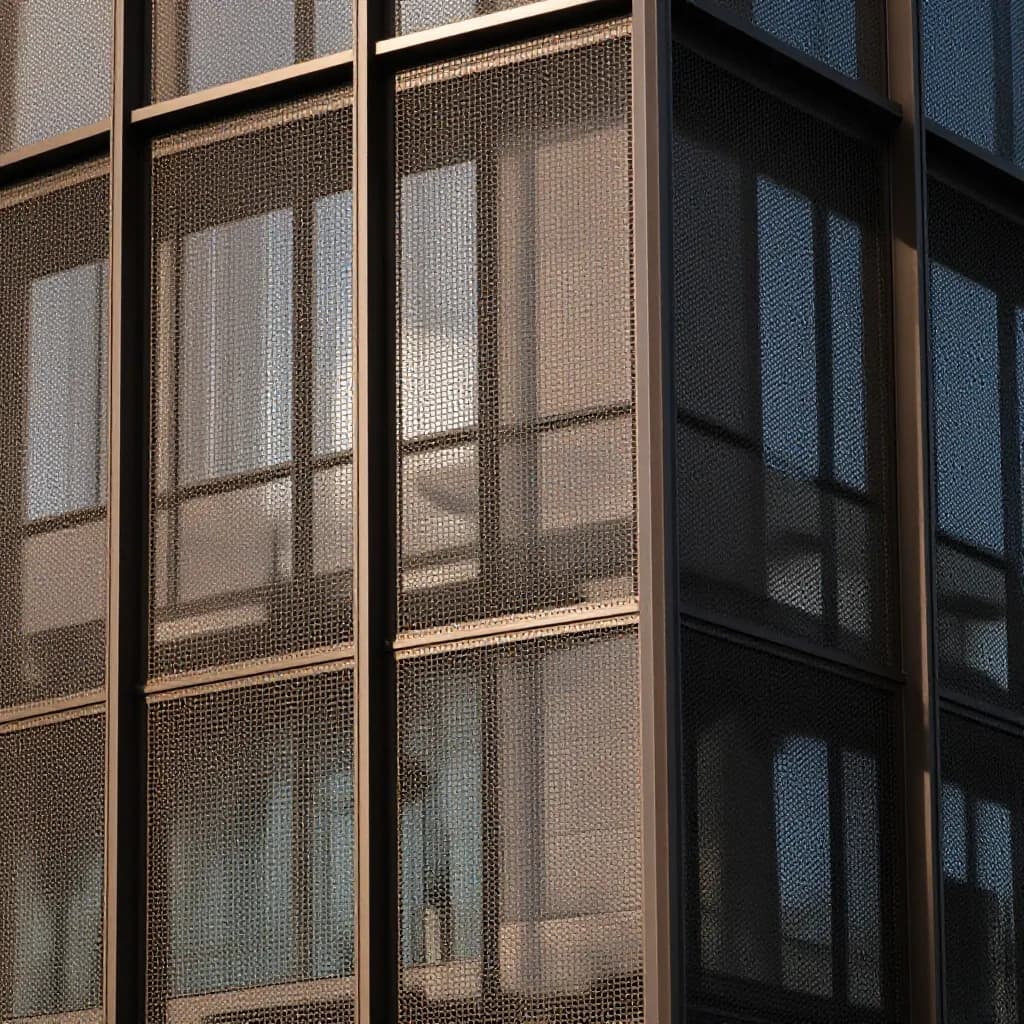
Unlike perforated metal (where material is removed to create holes) or woven wire mesh (where individual wires are interlaced), expanded metal retains the full material of the original sheet, redistributed into a three-dimensional lattice of strands and nodes. This gives expanded metal a distinctive visual depth and directional character that changes with viewing angle — a quality that architects exploit for dynamic facade effects.
Ready to Start Your Project?
From one-off customs to 15,000-part production runs — get precise pricing in 24 hours.
On This Page
Expanded Metal Mesh: A Distinctive Architectural Material
Powder coating expanded metal mesh presents a unique combination of challenges drawn from both sheet metal and wire mesh coating. The strand cross-sections are relatively thin (similar to wire), creating edge coverage concerns. The three-dimensional geometry creates Faraday cage effects that resist electrostatic powder penetration. And the large surface area relative to weight means that expanded metal panels cool rapidly, affecting both fluidized bed and electrostatic application processes.
However, expanded metal also offers advantages for powder coating. The open structure allows powder to reach both sides of the mesh from a single spray direction (unlike solid panels), and the strand geometry provides natural drainage during pretreatment. When properly coated, expanded metal mesh provides decades of maintenance-free performance in architectural applications.
This article examines the specific requirements and techniques for powder coating expanded metal mesh across its range of architectural and industrial applications.
Expanded Metal Geometry and Its Coating Implications
Understanding the geometry of expanded metal is essential for developing effective coating strategies. The expansion process creates a repeating pattern of diamond-shaped openings bounded by strands that have been stretched and twisted from the original sheet. The key geometric parameters — strand width, strand thickness, short way of diamond (SWD), long way of diamond (LWD), and overall thickness — all affect coating behavior.
Strand width and thickness determine the cross-sectional area available for coating. Standard expanded metal has strands that are typically 3-10 mm wide and 1-4 mm thick, with the strand cross-section being roughly rectangular. The four edges of each strand — two on the face and two on the sides — are all sheared edges with sharp radii that are prone to coating thinning. The total edge length on an expanded metal panel is enormous, often exceeding the edge length on an equivalent perforated panel.
The three-dimensional nature of expanded metal — strands are angled alternately above and below the panel centerline — creates a depth that affects both coating application and visual appearance. Standard (raised) expanded metal has a depth equal to the original sheet thickness plus the expansion, typically 5-20 mm. Flattened expanded metal, which has been rolled after expansion to reduce the depth, presents a more planar surface that is easier to coat uniformly but loses some of the visual depth that makes expanded metal architecturally distinctive.
The node points — where adjacent strands meet at the top and bottom of each diamond — are the thickest areas of the mesh and tend to accumulate excessive powder during electrostatic application. The strand midpoints, where the metal is thinnest and most stretched, are the most vulnerable areas for both coating coverage and corrosion.
Open area percentage affects coating transfer efficiency. Standard expanded metal patterns have open areas of 40-70%, meaning that a significant portion of the sprayed powder passes through the mesh without depositing on any surface. This reduces transfer efficiency compared to solid panel coating and increases the importance of effective powder reclaim systems.
The directional character of expanded metal — the diamond pattern has a distinct orientation relative to the original sheet direction — means that the mesh presents different profiles to the spray gun depending on its orientation. Coating from the normal (perpendicular) direction provides the most uniform coverage, while coating at oblique angles can result in shadowing effects where one side of each strand receives more powder than the other.
Edge Coverage Strategies for Expanded Metal Strands
Edge coverage is the dominant quality challenge for powder-coated expanded metal. Every strand in the mesh has four sheared edges running its full length, and the expansion process can create additional micro-cracking and surface roughness at the most stretched areas of each strand. Achieving adequate coating thickness on these edges is essential for long-term corrosion protection.
The shearing process that creates the slits in the original sheet produces edges similar to those on stamped parts — a rollover zone, a sheared zone, and a burr or fracture zone. The burr side of each strand edge is the sharpest and most difficult to coat. On standard expanded metal, the burr direction alternates between adjacent strands, so both faces of the mesh have some strands with burr-side edges facing outward.
Deburring expanded metal is more challenging than deburring flat stamped parts because the three-dimensional geometry prevents effective contact with flat abrasive surfaces. Tumble deburring in rotating barrels with abrasive media can round the edges of smaller expanded metal panels, but large architectural panels may be too large for tumble processing. Vibratory finishing and wide-belt sanding are alternatives for larger panels, though care must be taken to avoid distorting the mesh geometry.
Flattened expanded metal is easier to deburr than standard (raised) expanded metal because the flattening process partially closes the burrs and the resulting planar geometry is compatible with wide-belt sanding equipment. For architectural applications where edge coverage is critical, specifying flattened expanded metal simplifies both deburring and coating.
Powder formulation selection follows the same principles as for perforated metal — high-viscosity formulations with modified rheology provide better edge coverage than standard smooth-flow powders. Textured and matte finishes are particularly effective on expanded metal because they maintain coverage on edges while also complementing the industrial aesthetic that architects often seek with expanded metal facades.
Film thickness targets for expanded metal are typically set higher than for solid panels to ensure adequate edge coverage. Targeting 80-120 microns on flat strand surfaces ensures that even the thinnest areas on strand edges receive 40-60 microns of protection. This higher target increases powder consumption but provides the corrosion protection margin needed for long-term outdoor performance.
For the most demanding applications — coastal facades, industrial environments, or structures with extended maintenance intervals — a duplex system combining hot-dip galvanizing with powder coating provides the ultimate protection. The galvanizing protects the strand edges where powder coating is thinnest, while the powder coating protects the galvanizing from atmospheric degradation.
Security Screen and Industrial Applications
Expanded metal security screens are widely used for window guards, door screens, equipment enclosures, and perimeter security barriers. The inherent strength of expanded metal — which retains the full material of the original sheet in a rigid, three-dimensional lattice — provides excellent resistance to forced entry, impact, and cutting compared to wire mesh of equivalent weight.
Powder coating security screens serves both protective and functional purposes. The coating provides corrosion protection for outdoor installations, color coding for identification and safety compliance, and a finished appearance for commercial and institutional buildings where security hardware must be visually acceptable.
For security applications, the coating must withstand the mechanical stresses that security screens encounter — impacts from thrown objects, attempts to pry or cut the mesh, and the vibration and flexing that occurs when the screen is struck. Epoxy and epoxy-polyester powder coatings provide the adhesion and toughness needed for security applications, with film thicknesses of 60-100 microns providing adequate protection without significantly affecting the mesh's security rating.
Industrial machine guards and equipment enclosures use expanded metal for its combination of visibility, ventilation, and containment. The open mesh allows operators to see the equipment and allows airflow for cooling, while the rigid structure contains debris and prevents accidental contact with moving parts. Safety color coding (yellow for physical hazards per ANSI Z535) is applied by powder coating, providing durable identification that remains visible throughout the guard's service life.
Walkway gratings and stair treads in expanded metal provide slip-resistant walking surfaces in industrial facilities, offshore platforms, and public infrastructure. The raised diamond pattern of standard expanded metal provides inherent slip resistance, and powder coating adds corrosion protection and visibility (yellow nosing on stair treads for safety compliance). The coating must withstand foot traffic, cleaning, and the occasional impact from dropped tools or equipment.
HVAC grilles and diffusers in expanded metal distribute airflow while providing a finished appearance in commercial and institutional buildings. Powder coating these components in colors that match the ceiling or wall finish integrates the HVAC system with the interior design. The coating must resist the condensation that can occur on cold-air diffusers and the elevated temperatures on heating system grilles.
Architectural Facade Cladding with Expanded Metal
Expanded metal facade cladding has emerged as a distinctive architectural expression that combines solar control, visual screening, and aesthetic impact in a single material layer. Major architectural projects worldwide have featured expanded metal facades, establishing the material as a mainstream option for contemporary building design.
The visual character of expanded metal facades changes dramatically with viewing angle, time of day, and lighting conditions. When viewed straight-on, the mesh appears relatively transparent, allowing views through to the building behind. As the viewing angle becomes more oblique, the overlapping strands progressively obscure the view, creating a solid-appearing surface. This angular selectivity provides natural solar shading — blocking high-angle sun while admitting low-angle daylight — and privacy screening that varies with the observer's position.
Powder coating color selection profoundly affects the visual impact of expanded metal facades. Dark colors (black, dark gray, dark bronze) maximize the mesh's transparency when viewed straight-on, as the dark strands recede visually against the building behind. Light colors (white, silver, light gray) make the mesh more visually prominent, creating a stronger screening effect and a brighter facade appearance. Metallic finishes add sparkle and visual complexity that changes with lighting conditions.
Large-format expanded metal panels for facade cladding — typically 1000-3000 mm wide and up to 6000 mm long — require coating equipment capable of handling these dimensions. Overhead conveyor systems with adequate load capacity (expanded metal panels can weigh 10-30 kg/m² depending on the pattern and material thickness) and spray booths with sufficient width and height are essential for production-scale facade panel coating.
Panel flatness is critical for architectural facade applications. Expanded metal panels can distort during the coating process due to thermal stress from the curing oven, particularly if the panel is not adequately supported during heating and cooling. Proper fixturing — supporting the panel at multiple points to prevent sagging — and controlled heating and cooling rates minimize thermal distortion.
For facade projects requiring hundreds or thousands of panels, color consistency across the entire production run is essential. Powder batch management — using powder from the same manufacturing batch for the entire project, or carefully blending batches to maintain consistency — ensures that panels installed adjacent to each other on the facade match in color and appearance. Sample panel approval and production monitoring with spectrophotometric color measurement maintain quality throughout the production run.
Pretreatment and Application Methods
The pretreatment and application process for expanded metal must accommodate the material's three-dimensional geometry, high surface-area-to-weight ratio, and the need for complete coverage on all strand surfaces including edges.
Pretreatment of expanded metal follows the standard sequence for the base material — alkaline cleaning, surface preparation (blasting or chemical), and conversion coating — but the open mesh geometry affects each step. Spray pretreatment systems are generally more effective than immersion systems for expanded metal because the spray jets can reach all strand surfaces, while immersion may leave air pockets trapped in the diamond openings that prevent chemical contact.
Drainage after pretreatment rinses is excellent on expanded metal due to the open geometry — there are no enclosed areas where chemicals can pool. However, the high surface area means that expanded metal panels carry more drag-out (chemical solution carried from one tank to the next) than solid panels of equivalent size, requiring adequate rinse stages to prevent chemical contamination.
Electrostatic spray application is the standard method for expanded metal panels. The open mesh geometry allows powder to pass through the mesh and deposit on both sides from a single spray direction, though coverage on the back side is typically thinner than on the gun side. For architectural applications requiring uniform appearance on both sides, dual-side spraying is recommended.
Gun settings for expanded metal follow the same principles as for perforated metal and wire mesh — reduced voltage (30-50 kV) and tribo-charging guns improve penetration into the three-dimensional mesh structure. The gun-to-part distance should be optimized for the specific mesh pattern; too close causes excessive buildup on the nearest strands while too far reduces transfer efficiency.
Fluidized bed coating is an effective alternative for smaller expanded metal components (security screens, machine guards, walkway gratings) where thick coatings (200-500 microns) are acceptable. The preheated mesh is immersed in fluidized powder, which melts on contact with all strand surfaces simultaneously, providing complete coverage without Faraday cage effects. The thick coating provides excellent edge protection and corrosion resistance for industrial applications.
Curing expanded metal panels requires attention to the low thermal mass of the mesh. Expanded metal reaches oven temperature much faster than solid panels of equivalent size, and overcure is a risk if standard cure schedules are applied. Oven profiling with thermocouples attached to the mesh strands establishes the actual time-at-temperature profile and allows the cure schedule to be optimized for the specific mesh weight and pattern.
Design Considerations and Specification
Architects specifying powder-coated expanded metal should consider several design factors that affect both the visual result and the coating performance of the finished installation.
Mesh pattern selection affects coating quality and visual appearance. Fine patterns with thin strands (SWD less than 10 mm) are more difficult to coat uniformly than coarse patterns with wider strands. For facade applications where coating durability is critical, medium to coarse patterns (SWD 20-50 mm) provide better coating coverage and longer service life. Fine patterns may be appropriate for interior applications where corrosion exposure is minimal.
Material selection — mild steel, aluminum, stainless steel, or copper — determines the pretreatment process and affects the coating's long-term performance. Aluminum expanded metal is the most common choice for architectural facades due to its light weight and inherent corrosion resistance. Mild steel expanded metal is used for security and industrial applications where strength is the priority, and galvanized steel provides enhanced corrosion protection for outdoor installations.
Panel orientation on the facade affects both visual appearance and coating durability. The diamond pattern can be oriented with the long way of the diamond (LWD) running vertically or horizontally, creating different visual effects. Vertical LWD orientation provides better water drainage from the panel surface, reducing the accumulation of dirt and pollutants that can degrade the coating over time.
Specification of powder-coated expanded metal for architectural applications should reference the appropriate quality standard (Qualicoat for aluminum, Qualisteelcoat for galvanized steel, or AAMA for North American projects) and define the coating requirements including powder type, color, minimum film thickness on flat strand surfaces, and minimum edge coverage. The specification should also define the acceptable appearance standard, referencing approved sample panels.
Maintenance requirements for powder-coated expanded metal facades are minimal — annual cleaning with mild detergent and water is typically sufficient. The open mesh geometry allows rain to wash the panel surfaces naturally, reducing the accumulation of dirt and pollutants compared to solid cladding panels. For installations in polluted urban environments, more frequent cleaning (every 6 months) may be needed to maintain appearance.
For projects requiring extended warranties (15-25 years), the specification should define the warranty terms including the performance criteria (color retention, gloss retention, coating integrity), the environmental exposure conditions, and the maintenance requirements that must be followed to maintain the warranty. Joint warranties from the powder manufacturer and coating applicator provide the most comprehensive coverage.
Frequently Asked Questions
What makes expanded metal different from perforated metal for coating?
Expanded metal has a three-dimensional geometry with angled strands, creating more complex Faraday cage effects than flat perforated panels. Every strand has four sheared edges along its full length, creating enormous total edge length. However, the open structure allows powder to reach both sides from one spray direction, and drainage during pretreatment is excellent.
Is flattened expanded metal easier to powder coat than standard raised?
Yes. Flattened expanded metal presents a more planar surface that is easier to coat uniformly and compatible with wide-belt deburring equipment. The reduced three-dimensional depth minimizes Faraday cage effects. However, flattened mesh loses some of the visual depth and angular selectivity that makes standard expanded metal architecturally distinctive.
What coating thickness is recommended for expanded metal facades?
Target 80-120 microns on flat strand surfaces to ensure 40-60 microns minimum on strand edges. This higher target compared to solid panels accounts for the edge thinning effect on the numerous sheared edges. For maximum protection in coastal environments, a duplex system (galvanizing plus powder coating) is recommended.
How does expanded metal mesh orientation affect facade appearance?
Expanded metal appears relatively transparent when viewed straight-on and progressively opaque at oblique angles. Dark coating colors maximize transparency, while light colors make the mesh more visually prominent. The diamond pattern orientation (vertical or horizontal LWD) creates different visual effects and affects water drainage from the panel surface.
What maintenance does powder-coated expanded metal require?
Annual cleaning with mild detergent and water is typically sufficient. The open mesh geometry allows natural rain washing, reducing dirt accumulation compared to solid panels. In polluted urban environments, cleaning every 6 months may be needed. Properly specified and applied coatings provide 20-30+ year service life on architectural facades.
Ready to Start Your Project?
From one-off customs to 15,000-part production runs — get precise pricing in 24 hours.