The rapid expansion of electric vehicle charging infrastructure is creating a massive new market for powder-coated outdoor equipment. Charging pedestals, wall-mounted units, cable management systems, and associated electrical enclosures must withstand years of outdoor exposure while maintaining the clean, professional appearance that builds consumer confidence in the charging network. As EV adoption accelerates globally, hundreds of thousands of new charging stations are being installed annually, each requiring durable, attractive surface finishing.
Industrial
Powder Coating for EV Charging Pedestals: Outdoor Durability, Brand Identity, and Vandal Resistance
Sundial Powder Coating·April 23, 2026·12 min
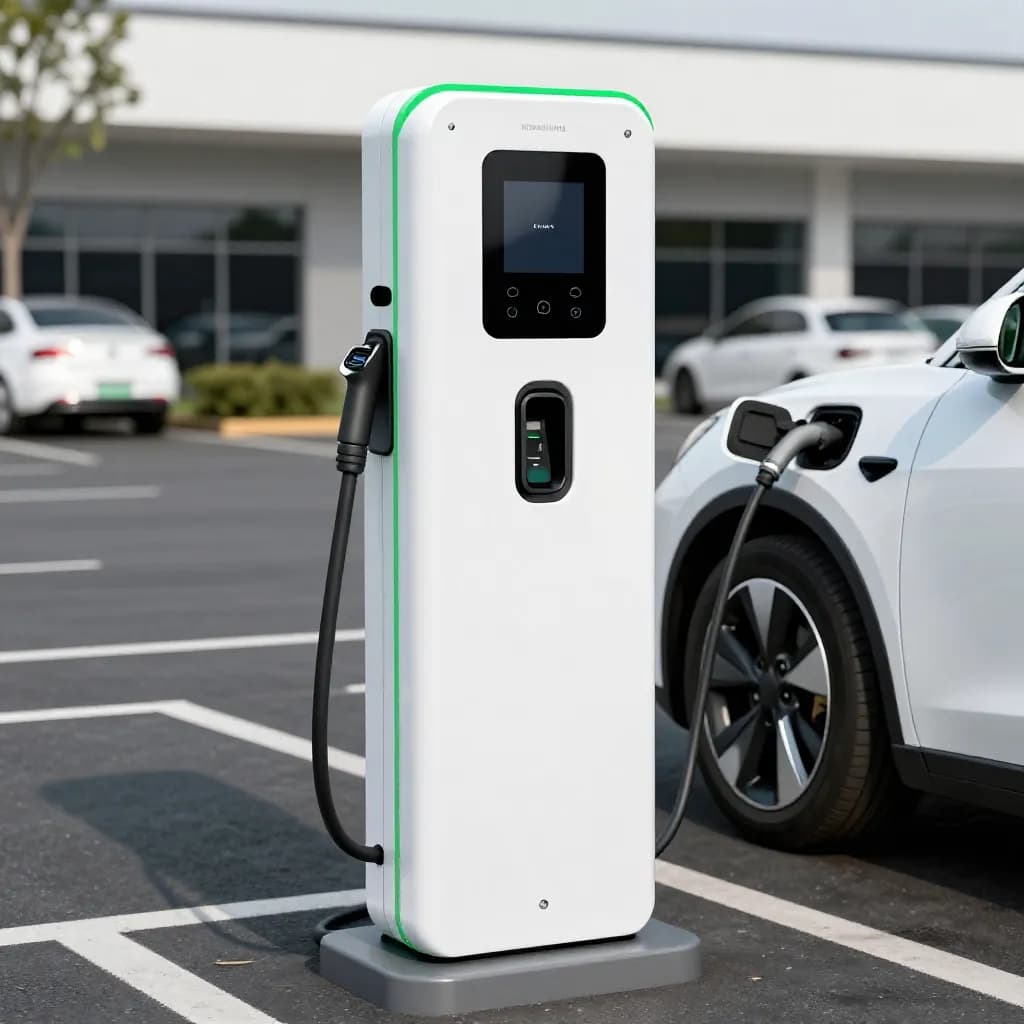
EV charging pedestals face a unique combination of challenges. They are installed in parking lots, highway rest areas, retail centers, and residential driveways — all outdoor locations with full weather exposure. They must withstand vehicle impact from parking maneuvers, vandalism in public locations, and the daily wear of cable handling by thousands of different users. They must maintain brand identity colors that help drivers locate and identify their preferred charging network. And they must do all of this for 10-15 years with minimal maintenance, as charging network operators manage thousands of distributed units with limited field service resources.
Ready to Start Your Project?
From one-off customs to 15,000-part production runs — get precise pricing in 24 hours.
On This Page
EV Charging Infrastructure: A New Frontier for Powder Coating
Powder coating is the natural finishing choice for EV charging pedestals because it addresses all of these requirements in a single coating system. The thick, dense thermoset film provides excellent outdoor durability, impact resistance, and chemical resistance. The unlimited color palette supports brand identity programs. The hard, smooth surface resists graffiti and is easy to clean. And the single-coat application process supports the high-volume production needed to meet the explosive growth in charging infrastructure demand.
The charging pedestal market includes products from established electrical equipment manufacturers and new entrants focused specifically on EV infrastructure. Both groups are specifying powder coating as their primary finishing technology, and the coating specification is becoming a competitive differentiator as network operators evaluate equipment durability and appearance retention in their procurement decisions.
Outdoor Durability for Parking Lot Environments
Parking lot environments subject EV charging pedestals to a comprehensive range of outdoor stresses. UV radiation, rain, snow, ice, temperature extremes, road salt splash, and atmospheric pollution all attack the coating simultaneously. The pedestal must maintain its appearance and protection through this continuous assault for a decade or more, often without any scheduled coating maintenance.
UV resistance is the primary durability concern because charging pedestals are installed in open parking areas with no shade protection. Super-durable polyester powder coatings are the minimum acceptable specification, providing 7-10 years of color and gloss retention. For premium charging networks that demand longer appearance retention, fluoropolymer-modified powder coatings extend UV resistance to 15-20 years, matching the expected service life of the charging equipment itself.
Salt spray exposure is significant for charging pedestals in northern climates where road salt is used for winter maintenance. Vehicles entering parking lots carry salt spray on their undercarriages and tires, depositing it on nearby surfaces including charging pedestals. The lower sections of pedestals — from ground level to approximately 50 centimeters — receive the heaviest salt exposure. A minimum of 1000 hours salt spray resistance per ASTM B117 is recommended, with 1500 hours for installations in heavy salt-use regions.
Temperature cycling in continental climates creates thermal stress as the pedestal surface temperature swings from winter lows of minus 30 degrees Celsius to summer highs of 70 degrees Celsius in direct sun. This 100-degree range creates expansion and contraction cycles that stress the coating at joints, fastener points, and thickness transitions. Flexible polyester formulations with good elongation properties accommodate this thermal movement without cracking.
Water management is important for pedestal durability. Standing water at the pedestal base accelerates corrosion of the lower sections, particularly if the coating has any defects from installation damage or vehicle contact. Pedestal design should incorporate drainage features that prevent water pooling, and the coating specification for the base section should include enhanced corrosion protection — either increased film thickness or a dual-coat system with epoxy primer.
Brand Identity and Network Recognition
EV charging network operators invest heavily in brand identity to build consumer recognition and loyalty. The charging pedestal's color and appearance are the primary visual brand elements at the point of use, and the powder coating must deliver precise, consistent brand colors that remain recognizable throughout the pedestal's service life.
Major charging networks have established distinctive color identities: Tesla's white and red, ChargePoint's orange and white, Electrify America's blue and green, EVgo's teal, and BP Pulse's green. These colors are specified with tight tolerances — typically Delta E less than 1.0 — and must be consistent across pedestals manufactured by different suppliers and installed across wide geographic areas. A driver should be able to identify their preferred network from across a parking lot based on pedestal color alone.
Color consistency across production batches and manufacturing facilities requires rigorous spectrophotometric control. Each powder batch should be verified against the approved color standard before production use, and in-process color checks should be performed at regular intervals during coating runs. Physical color reference panels — maintained under controlled storage conditions to prevent fading — provide the ultimate color standard against which instrumental measurements are calibrated.
Multi-color pedestal designs are common in the EV charging market, with brand colors applied to specific zones of the pedestal — typically a colored upper section with a contrasting base, or colored accent panels on a neutral body. These multi-color schemes require sequential coating with intermediate masking, adding complexity to the production process but creating distinctive visual identities that strengthen brand recognition.
Illuminated brand elements — backlit logos, LED light rings, and illuminated status indicators — interact with the powder coating finish. The coating color and gloss level affect how illuminated elements appear, particularly during daylight hours when the coating color is visible alongside the illumination. Matte and satin finishes reduce glare that can wash out illuminated elements, while high-gloss finishes provide a premium appearance but may create reflections that compete with illuminated branding.
As charging networks expand internationally, color specifications must account for regional variations in color perception and cultural color associations. A color that communicates trust and technology in one market may have different connotations in another. Network operators working with global powder coating suppliers can develop region-specific color palettes while maintaining overall brand coherence.
Vandal Resistance and Anti-Graffiti Properties
Public EV charging pedestals are vulnerable to vandalism including graffiti, sticker application, scratching, and deliberate impact damage. The powder coating specification must address these threats to maintain the pedestal's appearance and functionality in public locations where vandalism is a persistent concern.
Anti-graffiti powder coatings use surface chemistry modifications to prevent paint, marker, and adhesive from bonding permanently to the coating surface. Two approaches are common: sacrificial anti-graffiti coatings that are removed along with the graffiti during cleaning and must be reapplied, and permanent anti-graffiti coatings that allow graffiti removal without damaging the coating surface. Permanent anti-graffiti formulations are preferred for EV charging pedestals because they do not require reapplication after each cleaning event.
Permanent anti-graffiti powder coatings achieve their graffiti-release properties through low surface energy — typically below 25 millinewtons per meter — that prevents paint and adhesive from wetting and bonding to the surface. Graffiti applied to these surfaces can be removed with mild solvents or proprietary cleaning solutions without affecting the underlying coating. The anti-graffiti property is maintained through multiple cleaning cycles, though aggressive solvents or abrasive cleaning methods can degrade the surface over time.
Scratch resistance is important for pedestals in public locations where keys, coins, and other sharp objects may be used to scratch the surface. Hard powder coatings with pencil hardness of 3H or higher resist casual scratching, though determined vandalism with sharp metal tools will penetrate any polymer coating. The coating's role is to resist incidental damage and casual vandalism, not to provide security-level protection against deliberate attack.
Impact resistance protects against vehicle bumper contact, shopping cart collisions, and deliberate kicking or striking. The lower section of the pedestal is most vulnerable to vehicle contact during parking maneuvers. A minimum of 100 inch-pounds direct impact resistance is recommended for the lower pedestal section, with 160 inch-pounds preferred for high-traffic locations. Some pedestal designs incorporate steel bollards or concrete bases that absorb vehicle impact before it reaches the pedestal, reducing the impact resistance requirement for the coating.
Sticker and poster removal is a frequent maintenance task for public charging pedestals. The anti-graffiti surface properties that resist paint adhesion also facilitate sticker removal, but adhesive residue can be more challenging. Regular cleaning with appropriate adhesive removers — verified for compatibility with the powder coating — prevents adhesive buildup that becomes increasingly difficult to remove over time.
UV Protection and Color Retention Strategies
EV charging pedestals are installed in open parking areas with maximum sun exposure, making UV resistance a critical coating specification. The brand colors that identify the charging network must remain vivid and recognizable for the pedestal's entire service life — a faded, chalky pedestal undermines consumer confidence in the charging network's reliability and maintenance standards.
The UV degradation mechanism in powder coatings involves photochemical breakdown of the polymer backbone by ultraviolet radiation, producing free radicals that propagate chain scission reactions. This degradation manifests as chalking — the formation of a loose, powdery surface layer — followed by color fading and gloss loss. The rate of degradation depends on the resin chemistry, pigment system, and the presence of UV stabilizer additives.
Super-durable polyester powder coatings incorporate several UV protection strategies. Modified polyester resins with enhanced photostability resist backbone degradation. UV absorber additives — typically hydroxyphenyl benzotriazole or hydroxyphenyl triazine compounds — absorb UV radiation before it can attack the polymer. Hindered amine light stabilizers scavenge the free radicals produced by UV exposure, interrupting the degradation chain reaction. Together, these protection mechanisms extend the coating's UV resistance to 7-10 years of full outdoor exposure.
For charging networks requiring 15-year or longer color retention, fluoropolymer-modified powder coatings provide the ultimate UV protection. FEVE-based fluoropolymer coatings combine the weathering resistance of fluoropolymer chemistry with the application convenience of powder coating, achieving color and gloss retention comparable to architectural-grade PVDF coatings. These premium formulations are justified for high-visibility installations where brand appearance is a priority.
Pigment selection significantly affects UV color stability. Organic pigments — particularly bright reds, oranges, and yellows — are more susceptible to UV fading than inorganic pigments. For brand colors that rely on organic pigments, specifying high-performance lightfast grades with Blue Wool Scale ratings of 7-8 ensures maximum color stability. Some brand colors may need to be reformulated using more UV-stable pigment alternatives that achieve the same visual color through different pigment chemistry.
Clear topcoat systems provide an additional UV protection strategy. A pigmented base coat covered by a UV-resistant clear powder topcoat creates a two-layer system where the clear coat absorbs UV radiation before it reaches the color coat. This approach extends color retention by 30-50 percent compared to a single-coat system and provides the additional benefit of enhanced scratch resistance from the clear topcoat.
Electrical Safety and Coating Considerations
EV charging pedestals are electrical equipment operating at voltages up to 1000 volts DC for fast chargers, and the powder coating must not compromise electrical safety. While the coating is not a primary electrical insulation component, its properties can affect grounding, static dissipation, and the performance of safety systems.
Powder coating is an excellent electrical insulator, with dielectric strength values of 20-40 kilovolts per millimeter for typical formulations. This insulating property is generally beneficial for charging pedestals, providing an additional barrier against electrical contact on the enclosure exterior. However, the insulating property must not interfere with the pedestal's grounding system, which is essential for electrical safety.
Grounding connections on the pedestal enclosure must make reliable metal-to-metal contact through the powder coating. Grounding lugs are typically installed with star washers or serrated flanges that penetrate the coating at designated grounding points. These grounding connections must maintain low resistance — typically below 0.1 ohms — throughout the pedestal's service life. The coating specification should identify grounding point locations and ensure they are either masked during coating or designed for reliable post-coating grounding connection.
Static charge accumulation on the pedestal surface is a minor concern in dry environments. The insulating powder coating can accumulate static charge from wind, user contact, and cable handling, potentially causing uncomfortable static discharge when users touch the pedestal. For installations in dry climates where static is a concern, anti-static powder coating formulations with surface resistivity in the 10^9 to 10^11 ohms per square range dissipate static charge gradually, preventing uncomfortable discharge events.
Thermal management of the charging electronics affects the coating specification for the enclosure. Fast chargers generate significant heat during charging sessions, and the enclosure must dissipate this heat to maintain electronics within their operating temperature range. The coating's thermal properties — emissivity and thermal conductivity — affect heat dissipation as discussed in the generator enclosure context. Dark colors improve radiative cooling but increase solar heat gain, requiring thermal analysis to determine the optimal color for each installation climate.
The cable management area of the pedestal — where the charging cable is stored and handled — experiences the most wear from daily use. The coating in this area must resist abrasion from cable dragging, impact from the connector being dropped or swung against the pedestal, and chemical exposure from road grime transferred from the cable. Enhanced film thickness of 80-100 microns in the cable management zone provides additional wear resistance.
Production Scale and Supply Chain Considerations
The explosive growth of EV charging infrastructure is driving demand for powder-coated pedestals at a scale that challenges existing supply chains. Charging network operators are ordering thousands of pedestals per quarter, and the coating process must scale to meet this demand while maintaining the quality consistency that brand identity requires.
Production volume for EV charging pedestals is transitioning from job-shop quantities to mass production. Early charging network deployments involved hundreds of units per year, manageable by small to medium coating shops. Current deployment rates of thousands to tens of thousands of units per year require dedicated coating lines with automated application, high-throughput ovens, and integrated quality control systems. The coating operation must be designed for the specific pedestal geometry, with custom fixtures, optimized gun positioning, and automated masking systems that maximize throughput while maintaining quality.
Color change efficiency is important for coating operations serving multiple charging networks. Each network specifies different brand colors, and the coating line must switch between colors efficiently to serve multiple customers without excessive downtime or powder waste. Quick-color-change booth designs with automated cleaning systems can reduce color change time to 10-15 minutes, supporting multi-color production schedules.
Supply chain resilience for powder coating materials has become a concern as demand grows. Charging network operators should ensure that their pedestal suppliers have qualified multiple powder sources for each color specification, preventing single-source dependencies that could disrupt production. The powder specification should be written in performance terms rather than brand-specific terms, allowing sourcing flexibility while maintaining quality standards.
Global manufacturing of charging pedestals requires coating specification harmonization across facilities in different countries. The same brand color must be achievable from powder suppliers in North America, Europe, and Asia, using locally available raw materials and equipment. International color standards — RAL, Pantone, or custom spectrophotometric specifications — provide the common reference that enables global color consistency.
Quality documentation and traceability are increasingly important as charging network operators implement asset management systems that track each pedestal from manufacturing through installation and service. The coating batch, application date, cure parameters, and quality test results should be recorded and linked to the pedestal's serial number, supporting warranty claims and field performance analysis.
Frequently Asked Questions
How long does powder coating last on EV charging pedestals?
Super-durable polyester powder coating maintains color and gloss for 7-10 years on outdoor charging pedestals. Fluoropolymer-modified coatings extend this to 15-20 years. Corrosion protection typically lasts longer than cosmetic appearance, with properly specified coatings preventing substrate corrosion for 15-25 years depending on the installation environment.
Can powder coating resist graffiti on charging stations?
Yes. Permanent anti-graffiti powder coatings use low surface energy chemistry to prevent paint and adhesive from bonding permanently. Graffiti can be removed with mild solvents without damaging the coating, and the anti-graffiti property is maintained through multiple cleaning cycles. These coatings also facilitate sticker and poster removal.
What powder coating color is best for EV chargers?
Color is typically determined by the charging network's brand identity rather than technical considerations. From a durability standpoint, light colors show less UV degradation and chalking than dark colors. Inorganic pigments provide better UV color stability than organic pigments. The specific brand color should be specified with Delta E tolerances below 1.0 for network consistency.
Does powder coating affect EV charger electrical safety?
Powder coating is an electrical insulator that provides an additional barrier against electrical contact on the enclosure exterior. Grounding connections must penetrate the coating using star washers or serrated flanges to maintain reliable metal-to-metal contact. Grounding points should be identified in the coating specification and either masked or designed for post-coating connection.
How is vandal resistance achieved with powder coating?
Vandal resistance combines several coating properties: anti-graffiti surface chemistry prevents paint adhesion, pencil hardness of 3H or higher resists scratching, and impact resistance of 100-160 inch-pounds absorbs physical impacts. Some pedestal designs also incorporate steel bollards or concrete bases that protect the pedestal from vehicle contact.
Ready to Start Your Project?
From one-off customs to 15,000-part production runs — get precise pricing in 24 hours.