The Chevrolet Corvette occupies a unique position in American automotive culture, and powder coating has become an integral part of both Corvette restoration and modern Corvette customization. From concours-quality C2 restorations to track-ready C8 builds, powder coating serves Corvette owners across every generation and every level of involvement.
Automotive
Powder Coating for Corvette Parts: Suspension, Engine Accessories, Wheels, and Show-Quality Restoration
Sundial Powder Coating·April 22, 2026·13 min
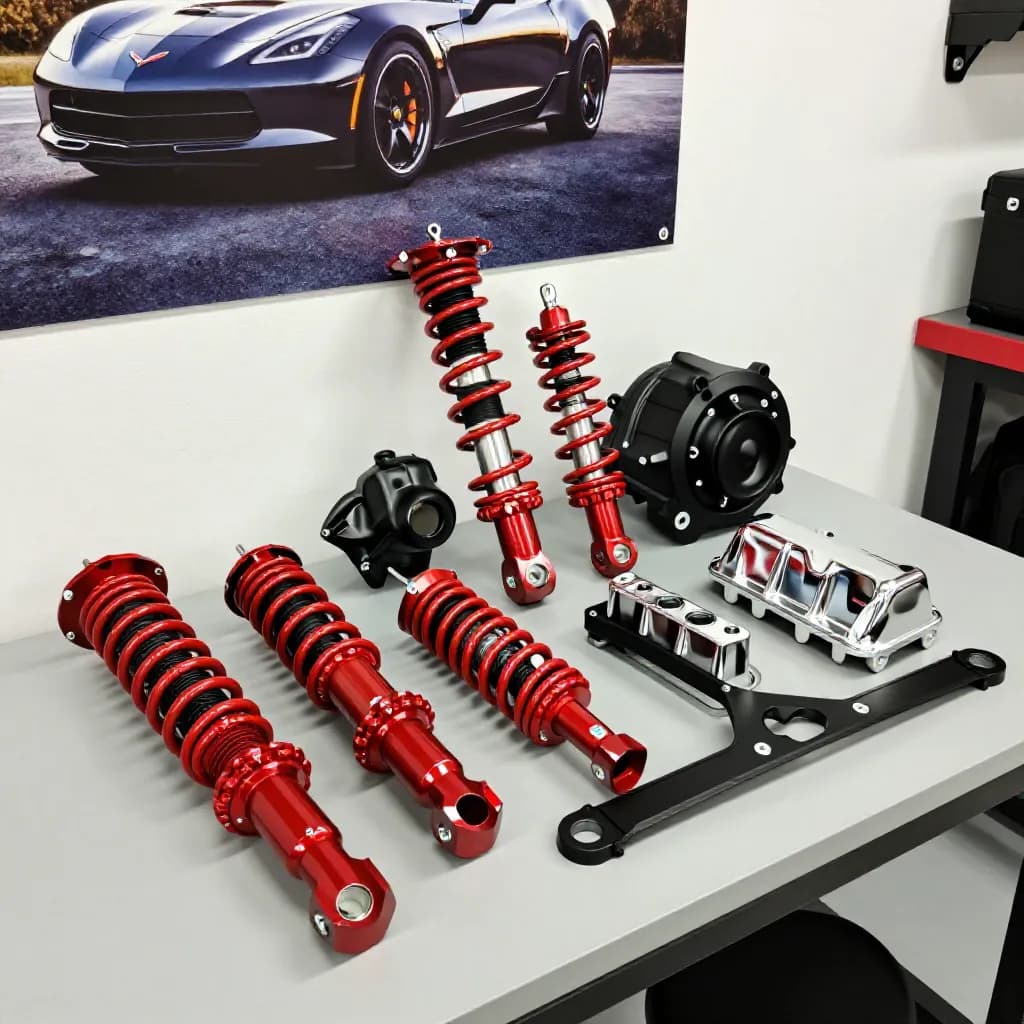
The Corvette community's emphasis on show-quality presentation drives demand for powder coating that meets exceptionally high aesthetic standards. Corvette shows — from local car club events to national NCRS (National Corvette Restorers Society) judging — evaluate component finish quality with intense scrutiny. Powder coating must not only protect components but deliver a finish quality that withstands close inspection under show lighting.
Ready to Start Your Project?
From one-off customs to 15,000-part production runs — get precise pricing in 24 hours.
On This Page
Corvette Culture and Powder Coating
Restoration of classic Corvettes (C1 through C4) involves powder coating numerous chassis, suspension, and engine components to replicate original factory finishes. The NCRS judging standards define specific finish requirements for each component, and achieving these standards in powder coating requires research, skilled color matching, and meticulous application.
Modern Corvettes (C5 through C8) generate powder coating demand primarily for wheels, brake calipers, suspension components, and engine bay accessories. The mid-engine C8 Corvette has created particular interest in engine bay presentation, as the visible engine compartment behind the cabin showcases the LT2 or LT6 engine and its surrounding components.
The Corvette aftermarket is extensive, with manufacturers producing suspension upgrades, exhaust systems, intake components, and cosmetic accessories that are commonly powder coated before installation. Coordinating the finish across aftermarket and factory components creates the cohesive, detailed appearance that Corvette enthusiasts value.
Suspension Components: The Foundation of a Build
Suspension components are among the most commonly powder-coated parts on Corvettes of all generations. These components operate in the harsh undercarriage environment and benefit from both the corrosion protection and the visual enhancement that powder coating provides.
C5, C6, and C7 Corvette suspension components — including control arms, knuckles, sway bars, and subframe assemblies — are typically cast aluminum or forged steel. These components are visible through the wheel openings and contribute significantly to the vehicle's overall presentation. Powder coating these components in gloss black, satin black, or a color matched to the vehicle creates a clean, finished appearance that elevates the entire build.
C8 Corvette suspension components are visible from multiple angles due to the mid-engine layout, making their finish quality even more important. The rear suspension, in particular, is visible through the engine bay window and through the rear wheel openings. Powder coating C8 suspension components in a coordinated finish creates a show-quality presentation that complements the vehicle's exotic mid-engine architecture.
For classic Corvette restorations (C1-C3), suspension components were originally finished in specific factory colors. C2 and C3 Corvette frames were typically finished in a semi-gloss black, while suspension components varied between black, natural metal, and cadmium plating depending on the component and model year. NCRS judging standards specify the correct finish for each component, and restoration-focused powder coating must match these specifications.
Spring perches, shock mounts, and other small suspension hardware are often overlooked but contribute to the overall presentation when properly finished. These small components can be batched together for efficient powder coating and should be finished to match the larger suspension components.
When powder coating suspension components, all bushing bores, ball joint tapers, and mounting surfaces must be carefully masked. Powder coating on these surfaces will interfere with proper assembly and can affect suspension geometry. Experienced automotive powder coating shops understand these masking requirements and use precision techniques to protect critical surfaces.
Engine Accessories and Bay Detailing
Engine bay detailing is a hallmark of Corvette show culture, and powder coating plays a central role in creating the clean, color-coordinated engine presentations that win awards and draw attention at shows. The specific components and approach vary by Corvette generation, but the goal is consistent: a meticulously finished engine bay that showcases the vehicle's mechanical heart.
On C5 and C6 Corvettes with the LS-series engines, popular powder coating targets include the intake manifold, valve covers, coil covers, alternator bracket, power steering pump bracket, and various accessory brackets. These aluminum and steel components provide a canvas for color customization that transforms the engine bay from a utilitarian space into a showcase.
C7 Corvette engine bays feature the LT1 or LT4 engine with a prominent engine cover that dominates the visual presentation. While the factory engine cover is typically plastic and not suitable for powder coating, the surrounding metal components — brackets, heat shields, and accessory mounts — can be powder coated to complement the engine cover's finish.
The C8 Corvette's mid-engine layout places the engine behind the cabin, visible through a glass panel. This visibility has made engine bay presentation a priority for C8 owners. The LT2 engine's intake manifold, coil covers, and surrounding brackets are popular powder coating targets. The engine bay's visibility from outside the vehicle means that finish quality must be exceptional — any defects will be visible to anyone looking through the engine window.
For classic Corvette restorations, engine component finishes must match the factory specifications for the specific model year. Small-block and big-block Chevrolet engines were finished in specific colors — Chevrolet Orange for most small-blocks, various blues and oranges for big-blocks depending on the year. These colors can be matched in high-temperature powder coating for components that operate at elevated temperatures, or standard powder coating for components that remain cool.
Exhaust manifolds and headers require high-temperature coatings rated for 500-600 degrees Celsius or higher. Ceramic thermal barrier coatings are popular for Corvette headers, as they reduce radiated heat in the engine bay while providing a durable, attractive finish. These coatings are available in silver, black, and white, with silver being the most common choice for Corvette applications.
Wheel Powder Coating for Corvette
Corvette wheels are high-visibility components that significantly impact the vehicle's overall appearance. Powder coating provides a durable, customizable finish that can either replicate the factory wheel color or transform the wheel's appearance entirely.
C5 Corvette wheels are available in 17-inch and 18-inch sizes, with the Z06 model featuring lightweight forged aluminum wheels. These wheels are popular candidates for color changes, with satin black, gunmetal, and chrome-look finishes being common requests. The five-spoke design of the C5 Z06 wheel is relatively straightforward to coat, with good access to all surfaces.
C6 Corvette wheels include the distinctive five-spoke design in 18-inch and 19-inch sizes, with the Z06 and Grand Sport models featuring wider rear wheels. The C6 Z06 Spyder wheel is a particularly popular candidate for powder coating due to its aggressive design and the visual impact of a color change.
C7 Corvette wheels range from 18-inch to 20-inch depending on the model. The C7 Z06 and Grand Sport wheels feature complex multi-spoke designs that require careful spray technique for uniform coverage. The Stingray's five-split-spoke design is more straightforward to coat.
C8 Corvette wheels are available in 19-inch front and 20-inch rear sizes, with the Z06 model featuring unique designs. The C8's wheel designs feature deep concave profiles and intricate spoke patterns that challenge spray technique. The size difference between front and rear wheels means that the powder coating shop must accommodate both sizes.
For all Corvette wheel applications, the lug nut seats (12mm x 1.5 conical), hub center bore, valve stem hole, and TPMS sensor mounting area must be masked. Corvette wheels use conical lug seats that must remain uncoated for proper bolt seating and torque retention.
Factory Corvette wheel colors include Silver, Chrome, Satin Graphite, Gloss Black, and various model-specific finishes. Corvette wheel color codes can be identified through the GM parts catalog using the wheel's RPO code. Common RPO codes for wheels include Q8P, Q8T, Q8J, and others that specify both the wheel design and finish.
Show-Quality and NCRS Restoration Standards
Achieving show-quality powder coating for Corvette restoration requires understanding the specific standards that judges use to evaluate component finishes. The National Corvette Restorers Society (NCRS) and Bloomington Gold are the two most prominent Corvette judging organizations, each with detailed standards for component finish quality.
NCRS judging evaluates components against the factory-original standard for the specific model year and production date. This means that the powder coating must replicate the appearance of the original factory finish — including its color, gloss level, texture, and even its imperfections. A finish that is too perfect may actually be penalized if it does not represent the original factory standard.
For NCRS restoration, research the specific finish requirements for each component using the NCRS Judging Reference Manual, factory assembly manuals, and reference photographs of known-correct examples. The finish specifications can vary between model years, production dates, and even between different assembly plants, so precision in identifying the correct standard is essential.
Bloomington Gold judging uses a different approach, evaluating the vehicle against a standard of excellence rather than strict factory originality. This allows slightly more latitude in finish quality, but the overall standard is still extremely high. Powder coating for Bloomington Gold preparation should prioritize flawless execution and accurate color matching.
Common NCRS-judged components that are powder coated include the frame and crossmembers (semi-gloss black for most years), suspension components (various finishes depending on the component and year), brake components (natural metal or specific colors), and engine accessories (various finishes). Each component has a specific finish requirement that must be researched and matched.
For show-quality work, every aspect of the powder coating process must be elevated. Surface preparation must be flawless, with no visible imperfections. Application must achieve consistent film thickness with no orange peel, sags, or inclusions. Curing must be precisely controlled to achieve optimal flow and color development. Post-coating inspection under show-quality lighting conditions ensures that the finished product meets the exacting standards of Corvette show judging.
Preparation and Process for Corvette Components
Corvette components span a wide range of materials, ages, and conditions, each requiring specific preparation approaches. Understanding the preparation requirements for different Corvette components ensures optimal powder coating results.
Aluminum suspension components (common on C5-C8 Corvettes) require aluminum-specific pretreatment. After degreasing and media blasting, a chromate-free conversion coating promotes adhesion and prevents under-film corrosion. The conversion coating must be appropriate for the specific aluminum alloy — cast aluminum (suspension knuckles) and forged aluminum (control arms) may respond differently to pretreatment chemistry.
Steel frame components (C1-C4 Corvettes) require thorough rust removal and surface preparation. The C3 Corvette's birdcage — the steel structure that supports the fiberglass body — is a particularly challenging component due to its complex geometry and the difficulty of accessing all surfaces for preparation and coating. Complete disassembly of the birdcage from the body is recommended for thorough coating.
Cast iron components — including some brake calipers and older engine blocks — require pre-baking to prevent outgassing. Cast iron is porous and can trap moisture and oils that escape during curing, creating surface defects. A pre-bake cycle at curing temperature before powder application eliminates this issue.
Chrome-plated components — including bumpers on C1-C3 Corvettes and various trim pieces — require chrome removal before powder coating. The chrome, nickel, and copper plating layers must be stripped through chemical or electrochemical processes. After stripping, the base metal is blasted and pretreated for powder coating.
For restoration projects, document the original finish of each component before stripping. Photograph the component from multiple angles, note the color, gloss level, and texture, and record any markings or stamps that may be obscured by the new coating. This documentation helps ensure that the powder coating accurately replicates the original finish and provides a reference for future restoration work.
Selecting Colors and Finishes for Corvette Builds
Color and finish selection for Corvette powder coating depends on whether the project is a period-correct restoration, a restomod build, or a modern performance modification. Each approach has different aesthetic goals and different constraints on color and finish choices.
For period-correct restorations, the color palette is defined by the factory specifications for the specific model year. Frame and chassis components are typically semi-gloss black. Engine components follow the Chevrolet engine color specifications — Chevrolet Orange (engine block and heads), natural aluminum (intake manifold on some years), and various blacks and silvers for accessories. Suspension components may be natural metal, black, or specific colors depending on the component and year.
For restomod builds — which combine classic Corvette aesthetics with modern performance components — the color palette is more flexible. Many restomod builders choose a monochromatic scheme with all chassis and engine components in gloss or satin black, creating a clean, modern appearance that contrasts with the classic body lines. Others use accent colors — red, blue, or the vehicle's body color — on selected components for visual interest.
For modern Corvette performance builds (C5-C8), color selection is primarily aesthetic. Popular choices include satin black for a stealth appearance, body-color matching for a factory-integrated look, and contrasting accent colors for visual impact. The C8 Corvette's visible engine bay has made engine component color selection particularly important, with many owners choosing finishes that complement the vehicle's exterior color.
Gloss level selection affects both appearance and practicality. High-gloss finishes provide maximum visual impact but show every fingerprint, water spot, and minor imperfection. Satin finishes offer a contemporary appearance with better tolerance for minor surface imperfections. Matte finishes provide a flat, modern look but can be more difficult to clean and maintain.
For show vehicles, the finish must be evaluated under the lighting conditions that will be used during judging. Indoor show lighting can make finishes appear different than they do in natural daylight. Request sample panels from the powder coating shop and evaluate them under both natural and artificial lighting before committing to a finish for show-critical components.
Frequently Asked Questions
What color should a C3 Corvette frame be powder coated?
C3 Corvette frames were factory finished in semi-gloss black. For NCRS judging, the specific gloss level and color must match the factory standard for the production year. Request a semi-gloss black sample from the powder coating shop and compare it to reference examples or NCRS documentation before proceeding.
Can C8 Corvette engine bay components be powder coated?
Yes. The C8's visible engine bay makes component finishing particularly impactful. Popular targets include the intake manifold, coil covers, and accessory brackets. The engine bay's visibility through the rear glass means finish quality must be exceptional, as defects will be visible from outside the vehicle.
What powder coating is needed for Corvette exhaust headers?
Exhaust headers require high-temperature coatings rated for 500-600 degrees Celsius or higher. Ceramic thermal barrier coatings are popular for Corvette headers, reducing radiated heat while providing a durable finish. Available in silver, black, and white, with silver being the most common choice.
How do I identify the correct factory finish for NCRS restoration?
Consult the NCRS Judging Reference Manual, factory assembly manuals, and reference photographs of known-correct examples. Finish specifications vary by model year, production date, and assembly plant. Document original finishes before stripping components and compare powder coating samples to reference standards.
Can Corvette wheels be powder coated without affecting balance?
Powder coating adds minimal, generally uniform weight that does not significantly affect wheel balance. However, masking errors or uneven coating can create imbalance requiring correction with wheel weights. Wheels should be rebalanced after powder coating and tire mounting.
Ready to Start Your Project?
From one-off customs to 15,000-part production runs — get precise pricing in 24 hours.