Conveyor systems are the circulatory system of modern manufacturing, logistics, and distribution operations. From automotive assembly lines to food processing plants, from airport baggage handling to mining operations, conveyors move materials continuously through production and distribution processes. The coating on conveyor system components must withstand the relentless mechanical stress, chemical exposure, and environmental conditions of 24/7 industrial operation.
Industrial
Powder Coating for Conveyor Systems: Industrial-Grade Finishes for Material Handling Equipment
Sundial Powder Coating·April 22, 2026·11 min
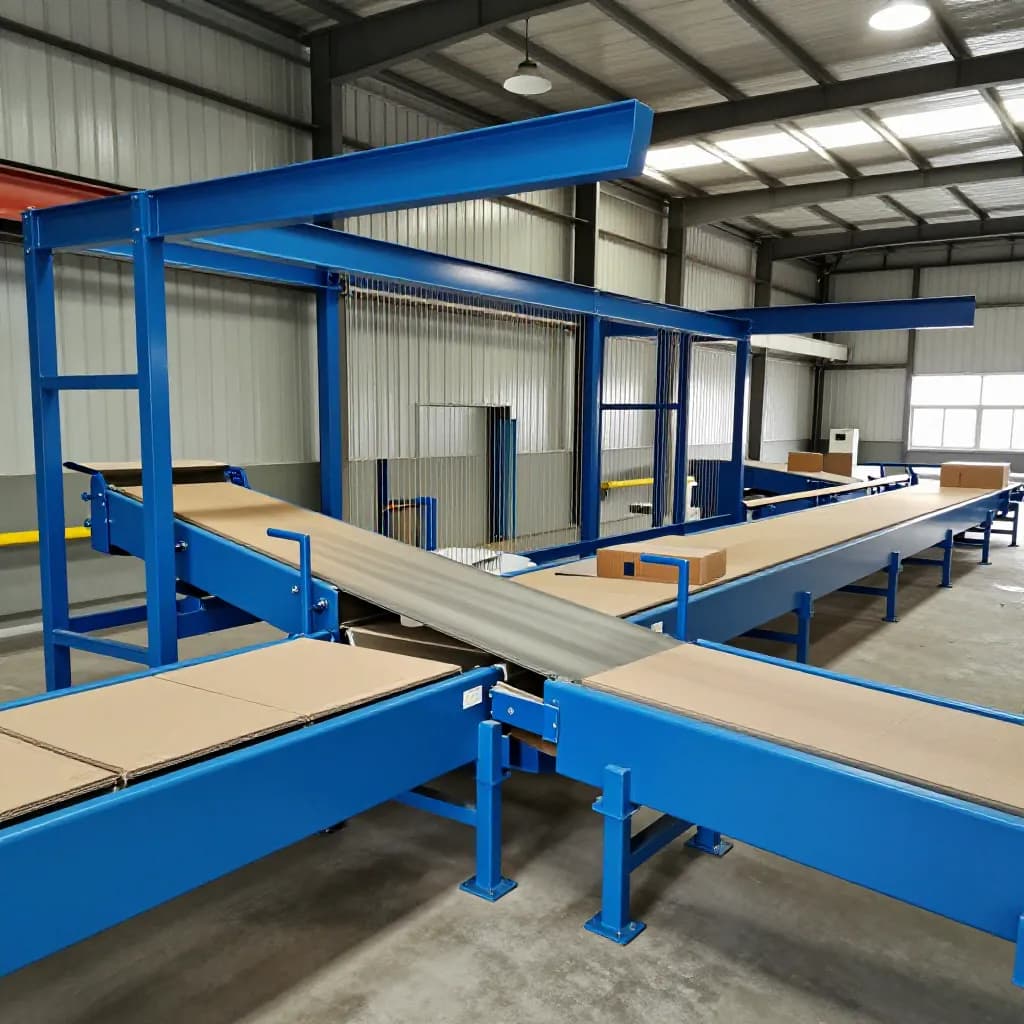
Conveyor system components that require powder coating include structural frames, side rails, support legs, guard panels, motor housings, drive covers, chute linings, hopper surfaces, and control enclosures. Each component category has specific coating requirements based on its exposure to abrasion, impact, chemicals, temperature, and environmental conditions.
Ready to Start Your Project?
From one-off customs to 15,000-part production runs — get precise pricing in 24 hours.
On This Page
Conveyor Systems: The Backbone of Industrial Material Handling
Powder coating has become the standard finish for conveyor system components because it delivers the combination of mechanical durability, chemical resistance, and production efficiency that industrial equipment manufacturers require. The dense, cross-linked powder coating film provides superior abrasion and impact resistance compared to liquid paint, while the zero-VOC application process simplifies environmental compliance for manufacturing facilities.
Major conveyor system manufacturers including Hytrol, Dorner, FlexLink, Interroll, and Dematic specify powder coating for their standard product lines. Custom conveyor builders also rely on powder coating for its ability to provide consistent, durable finishes on the wide variety of structural steel and sheet metal components used in conveyor construction.
Abrasion and Impact Resistance for Continuous Operation
Conveyor systems operate continuously, often 24 hours a day, 7 days a week, subjecting coated surfaces to relentless mechanical stress. The coating must resist abrasion from conveyed materials, impact from loaded containers, and wear from belt and chain contact without degrading to the point where corrosion can initiate.
Side rails and guide surfaces experience continuous sliding contact with conveyed products, packaging materials, and belt edges. The coating on these surfaces must resist abrasion without generating coating debris that could contaminate the conveyed product. Taber abrasion resistance per ASTM D4060 should be below 30 mg weight loss per 1000 cycles with CS-17 wheels for high-wear conveyor surfaces — significantly better than the 50-60 mg typical of general industrial coatings.
Chute and hopper surfaces experience sliding abrasion from bulk materials — gravel, ore, grain, packages, and other conveyed products. The coating must resist this abrasion while providing a low-friction surface that promotes material flow. Ultra-high-molecular-weight polyethylene (UHMWPE) liners are used for the most abrasive applications, but powder coating provides adequate protection for moderate abrasion conditions. High-hardness polyester formulations with ceramic or silica additives achieve pencil hardness of 3H-4H and significantly improved abrasion resistance compared to standard formulations.
Impact resistance is critical for conveyor components in the loading zone where products are placed onto the conveyor, and at transfer points where products move between conveyor sections. These areas experience repeated impact from loaded containers, packages, and bulk materials. Direct impact resistance of 80-120 inch-pounds per ASTM D2794 is the minimum specification for conveyor components in impact zones.
Vibration-induced fretting wear occurs at bolted connections, mounting brackets, and any point where coated surfaces are in contact under vibration loading. The micro-motion at these contact points gradually wears through the coating, exposing the substrate to corrosion. Anti-fretting measures include the use of isolation washers, vibration-damping mounts, and high-hardness coatings at contact points.
Food-Grade Conveyor Coating Requirements
Food processing and packaging conveyors must meet stringent hygiene and food safety requirements that significantly influence the coating specification. The coating must be food-safe, cleanable, resistant to food processing chemicals, and compatible with the sanitary design principles that govern food equipment construction.
FDA 21 CFR 175.300 governs coatings for food contact surfaces and establishes extractive limits for coating components. Conveyor surfaces that directly contact food products — belt support surfaces, side rails in the product zone, and chute surfaces — must use FDA-compliant powder coatings that meet these extractive limits. Testing is performed under conditions that simulate the specific food contact (aqueous, acidic, fatty, or alcoholic foods at the expected contact temperature and duration).
NSF/ANSI 51 certification provides independent verification of food safety for powder coatings used on food equipment. NSF-certified coatings have been evaluated by an accredited laboratory and found to meet food safety requirements. Specifying NSF/ANSI 51-certified powder coatings simplifies regulatory compliance and provides documented food safety assurance for food processing facility audits.
USDA acceptance is required for coatings used on equipment in USDA-inspected meat, poultry, and egg processing facilities. USDA-accepted coatings have been evaluated for food safety and approved for use in federally inspected facilities. The USDA acceptance process requires submission of coating formulation data and test results demonstrating compliance with food safety requirements.
3-A Sanitary Standards, while primarily applicable to dairy processing equipment, provide design and material requirements that are increasingly referenced for other food processing equipment. 3-A standards require that food contact surfaces be smooth, non-porous, non-absorbent, and cleanable. Powder coatings with smooth finishes (no texture) and high gloss (60+ GU at 60°) meet these surface requirements.
Cleanability is a critical functional requirement for food conveyor coatings. The coating must withstand daily cleaning with alkaline detergents (pH 10-13), acid rinses (pH 2-4), and sanitizing agents (chlorine, quaternary ammonium, peracetic acid) without degradation. CIP (clean-in-place) systems expose coatings to hot cleaning solutions (60-80°C) under pressure, creating more aggressive conditions than manual cleaning. Epoxy and hybrid epoxy-polyester coatings provide the best resistance to food processing cleaning chemicals.
Safety Color Coding and OSHA Compliance
Conveyor systems in industrial facilities must comply with OSHA safety requirements that include color coding of guards, hazard zones, and safety equipment. The powder coating color specification for conveyor components must align with these safety requirements while maintaining the manufacturer's brand identity.
OSHA 29 CFR 1910.144 (Safety Color Code for Marking Physical Hazards) and ANSI Z535.1 (Safety Colors) define the safety color system used in industrial facilities. Red identifies fire protection equipment and emergency stop devices. Orange marks dangerous parts of machines, including conveyor pinch points, nip points, and exposed moving parts. Yellow indicates caution and physical hazards, including conveyor guard rails and floor markings around conveyor systems. Green identifies safety equipment and first aid stations.
Conveyor guard panels are typically powder coated in safety yellow (RAL 1003 or RAL 1023) or safety orange (RAL 2004) to provide high visibility and compliance with OSHA guarding requirements. The powder coating color must meet the chromaticity coordinates specified in ANSI Z535.1 to ensure proper safety color identification under industrial lighting conditions.
Conveyor frames and structural components are typically coated in the manufacturer's brand color — often a shade of blue, grey, or green — that provides brand identity while not conflicting with safety color coding. The brand color must be clearly distinguishable from safety colors to prevent confusion. Some manufacturers use a two-tone scheme with brand color on the frame and safety color on guards and hazard indicators.
Emergency stop buttons, pull cords, and safety switches on conveyor systems are typically red per OSHA requirements. The mounting brackets and housings for these safety devices should be powder coated in contrasting colors (yellow or orange) to ensure visibility. The coating on safety device housings must maintain its color and visibility throughout the equipment's service life — faded or discolored safety markings can lead to OSHA citations and, more importantly, delayed emergency response.
Reflective powder coatings incorporating retroreflective glass beads or prismatic elements are available for conveyor components in low-light environments. These coatings reflect light from forklifts, overhead lighting, and emergency lighting, improving visibility of conveyor structures and reducing collision risk in warehouses and distribution centers.
Specialized Conveyor Environments and Coating Adaptations
Different conveyor applications present unique environmental challenges that require specific coating adaptations beyond standard industrial specifications.
Cold storage and freezer conveyors operate at temperatures from -25°C to -40°C, creating extreme thermal stress on the coating system. Standard powder coatings become brittle at these temperatures, increasing the risk of cracking and chipping from impact and vibration. Flexible polyester formulations with glass transition temperatures (Tg) below -30°C maintain film integrity at freezer temperatures. The coating must also resist the thermal cycling that occurs when conveyor components move between freezer and ambient environments during maintenance and cleaning.
High-temperature conveyors in bakeries, foundries, and heat treatment facilities operate at temperatures from 100°C to 300°C. Standard polyester and hybrid coatings are suitable up to 150°C continuous exposure. Silicone-modified polyester coatings extend the temperature range to 300°C for oven conveyors and heat treatment lines. The coating must maintain adhesion and mechanical properties at the operating temperature without discoloration or odor generation that could affect the conveyed product.
Chemical processing conveyors are exposed to acids, bases, solvents, and other aggressive chemicals that may splash or drip onto conveyor surfaces. Epoxy powder coatings provide the best broad-spectrum chemical resistance for these applications. Novolac epoxy formulations are specified for the most aggressive chemical environments, providing resistance to concentrated acids and strong solvents that would penetrate standard epoxy coatings.
Outdoor conveyors in mining, aggregate, and agricultural operations face full weather exposure including UV radiation, rain, temperature cycling, and potentially corrosive dust. Superdurable polyester topcoats over epoxy primers provide the combination of UV resistance and corrosion protection needed for outdoor service. Film thickness of 100-150 microns (total system) provides adequate protection for outdoor conveyor components.
Cleanroom conveyors in semiconductor, pharmaceutical, and medical device manufacturing require coatings that do not generate particles or outgas volatile compounds. Low-outgassing powder coating formulations with extended post-cure bake cycles minimize volatile emissions. Smooth, high-gloss finishes prevent particle entrapment and facilitate cleaning. ESD-dissipative coatings may be required for conveyors handling static-sensitive products.
Maintenance, Repair, and Lifecycle Optimization
Conveyor systems represent significant capital investments with expected service lives of 15-30 years. The coating system must be maintainable and repairable to support this extended service life without requiring complete system replacement.
Preventive maintenance inspection of conveyor coating should be performed quarterly, focusing on high-wear areas: loading zones, transfer points, guide rail contact surfaces, and areas exposed to chemical splash or temperature extremes. Coating degradation is documented using standardized rating systems (ASTM D610 for rust grade, ASTM D714 for blistering, ASTM D659 for chalking) to track deterioration trends and schedule maintenance before structural corrosion develops.
Field repair of conveyor coating damage typically uses two-component epoxy or polyurethane liquid paint systems that can be applied in the field without the oven cure required for powder coating. These touch-up systems are color-matched to the original powder coating and provide adequate protection for localized repairs. Surface preparation for field repair involves power tool cleaning to SSPC-SP 3 or SSPC-SP 11, followed by primer and topcoat application.
Component replacement is more practical than field recoating for heavily worn or damaged conveyor components. Side rails, guard panels, and chute linings can be replaced individually without disassembling the entire conveyor system. Replacement components are powder coated in the factory to original specifications, ensuring consistent quality and performance.
Conveyor system refurbishment — complete disassembly, cleaning, repair, and recoating — is a cost-effective alternative to system replacement when the structural steel is sound but the coating has reached end of life. Refurbishment typically costs 40-60% of new system cost and provides another 10-15 years of service life. The refurbishment process includes abrasive blasting to remove the old coating and corrosion, structural repair of any damaged components, pretreatment, and full powder coating application to original specifications.
Lifecycle cost analysis for conveyor coating systems should consider initial coating cost, maintenance frequency and cost, expected recoating interval, and the impact of coating failure on production downtime. Premium coating systems with higher initial cost often provide the lowest lifecycle cost due to reduced maintenance frequency and extended service life.
Frequently Asked Questions
What powder coating is used on food processing conveyors?
Food processing conveyors use FDA 21 CFR 175.300-compliant or NSF/ANSI 51-certified powder coatings. Epoxy and hybrid epoxy-polyester chemistries provide the best resistance to food processing cleaning chemicals. Smooth, high-gloss finishes meet 3-A Sanitary Standards for cleanability.
How long does powder coating last on conveyor systems?
Powder coating on conveyor systems typically lasts 8-15 years depending on the operating environment and maintenance. High-wear areas like loading zones and transfer points may require localized touch-up sooner. Premium coating systems with proper maintenance can support the conveyor's full 15-30 year service life.
What safety colors are required for conveyor guards?
OSHA 29 CFR 1910.144 and ANSI Z535.1 require safety orange for dangerous machine parts and safety yellow for caution/physical hazards. Conveyor guard panels are typically powder coated in safety yellow (RAL 1003) or safety orange (RAL 2004) to meet these requirements.
Can powder coating withstand freezer conveyor temperatures?
Yes, with proper formulation. Flexible polyester powder coatings with glass transition temperatures below -30°C maintain film integrity at freezer temperatures of -25°C to -40°C. Standard formulations become brittle at these temperatures and are prone to cracking from impact and vibration.
How is conveyor powder coating repaired in the field?
Field repairs use two-component epoxy or polyurethane liquid paint color-matched to the original powder coating. Surface preparation involves power tool cleaning to SSPC-SP 3 or SP 11 standards. For extensive damage, component replacement with factory-coated parts is more practical than field recoating.
Ready to Start Your Project?
From one-off customs to 15,000-part production runs — get precise pricing in 24 hours.