CNC machine tool enclosures operate in one of the most chemically and mechanically aggressive environments in manufacturing. The combination of metalworking coolants, cutting oils, high-velocity metal chips, thermal cycling, and continuous vibration creates a coating challenge that exceeds most industrial applications. A powder coating that fails prematurely on a CNC enclosure does not just look bad — it exposes the steel substrate to rapid corrosion that can compromise structural integrity, contaminate the machining environment, and create safety hazards.
Industrial
Powder Coating for CNC Machine Enclosures: Coolant Resistance, Chip Impact, and Safety Colors
Sundial Powder Coating·April 23, 2026·12 min
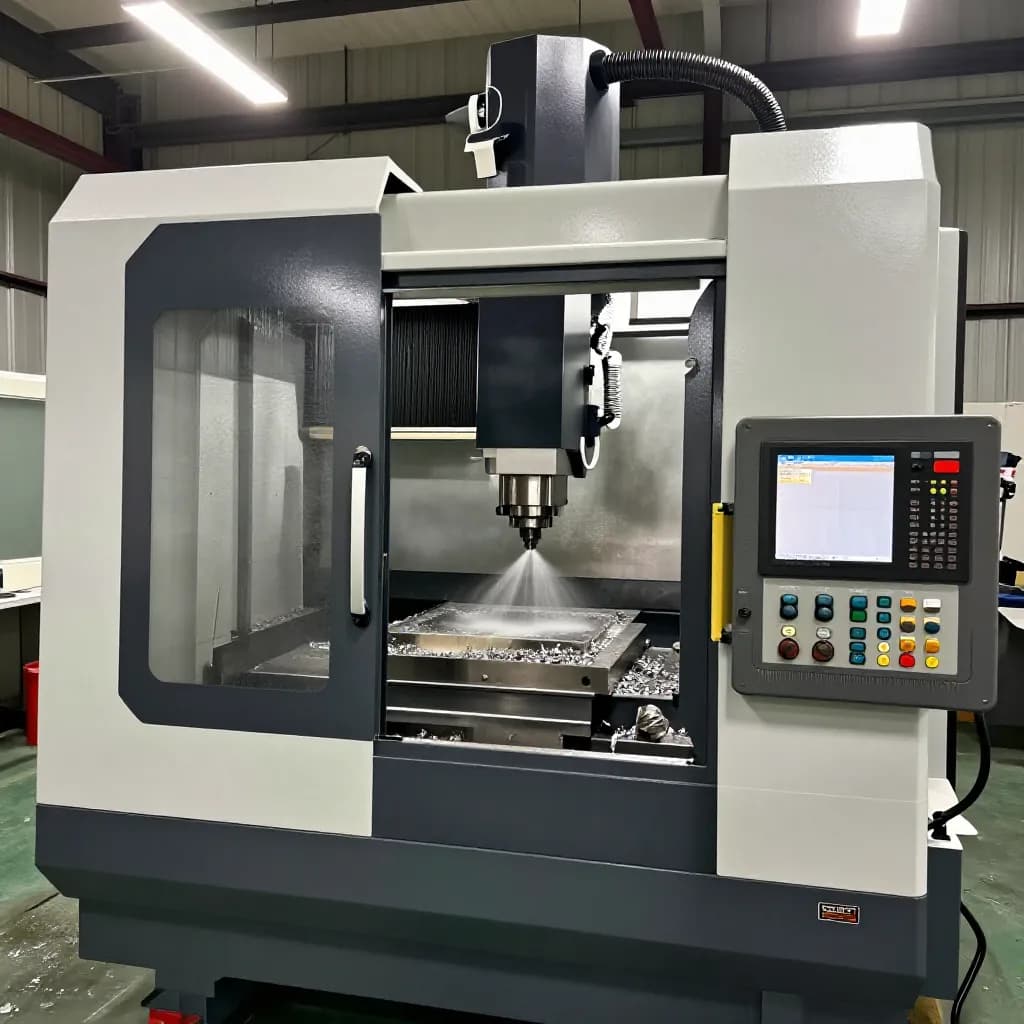
Modern CNC machines use enclosed work areas to contain coolant spray, metal chips, and mist generated during cutting operations. These enclosures are fabricated from steel sheet metal — typically 1.5-3 millimeter cold-rolled or galvanized steel — formed into panels, doors, and structural frames. The interior surfaces face direct exposure to coolant, chips, and heat, while exterior surfaces must maintain a clean, professional appearance and communicate safety information through standardized colors.
Ready to Start Your Project?
From one-off customs to 15,000-part production runs — get precise pricing in 24 hours.
On This Page
The Demanding Environment of CNC Machine Enclosures
The coolant environment is particularly challenging for coatings. Water-soluble coolants are alkaline solutions with pH values of 8.5-9.5 that attack many coating systems over time. Neat cutting oils can soften polymer coatings through plasticization. Coolant additives including biocides, corrosion inhibitors, and extreme-pressure agents create a complex chemical cocktail that varies between machine shops and even between machines in the same shop. The coating must resist all of these chemical exposures simultaneously.
Metal chip impact adds a mechanical dimension to the challenge. High-speed machining operations generate chips at velocities of 10-50 meters per second, and these hot, sharp projectiles strike enclosure surfaces with enough force to chip or penetrate inadequate coatings. The coating must absorb chip impact without cracking or delaminating, maintaining its protective barrier even after thousands of impacts over the machine's service life.
Coolant and Chemical Resistance Specifications
Specifying powder coating for CNC machine enclosures requires understanding the specific chemical exposures the coating will face and selecting formulations that resist those chemicals without degradation. The primary chemical threats are water-soluble metalworking coolants, neat cutting oils, way lubricants, hydraulic fluids, and cleaning solvents used during machine maintenance.
Water-soluble coolants are the most common and most aggressive chemical exposure. These coolants are typically diluted 5-10 percent in water, creating alkaline solutions that attack coating adhesion at the coating-substrate interface. The alkaline environment can undermine the conversion coating layer, causing blistering and delamination even when the powder coating film itself remains intact. Epoxy-polyester hybrid powder coatings provide the best resistance to alkaline coolant exposure, maintaining adhesion and appearance through thousands of hours of contact. Pure polyester coatings offer moderate coolant resistance but may show adhesion loss after prolonged immersion.
Neat cutting oils — used in operations like gun drilling, broaching, and some grinding processes — present a different chemical challenge. These petroleum-based or synthetic oils can penetrate and plasticize some powder coating formulations, causing softening, swelling, and eventual adhesion failure. Epoxy-based powder coatings offer the best resistance to oil penetration due to their dense crosslink structure, but their poor UV resistance limits them to interior surfaces. For exterior surfaces that may contact oil during maintenance, epoxy-polyester hybrids provide a reasonable compromise between oil resistance and UV stability.
Chemical resistance testing for CNC enclosure coatings should include immersion testing in the specific coolants and oils used in the target application. Standard chemical resistance tests using generic reagents may not capture the behavior of proprietary coolant formulations. A practical test protocol involves applying the candidate coating to test panels, immersing them in the actual coolant at operating concentration and temperature for 500-1000 hours, and evaluating adhesion, hardness, and appearance at intervals. This application-specific testing provides more reliable performance prediction than generic chemical resistance data.
The pretreatment system is equally important for chemical resistance. Zinc phosphate conversion coating on steel provides superior coolant resistance compared to iron phosphate, creating a heavier, more crystalline conversion layer that better anchors the powder coating against alkaline attack. The additional process complexity and cost of zinc phosphate is justified for CNC enclosure applications where coolant exposure is continuous and aggressive.
Chip Impact and Mechanical Durability
Metal chips generated during CNC machining operations impact enclosure surfaces with significant force, and the powder coating must absorb these impacts without chipping, cracking, or delaminating. The severity of chip impact depends on the machining operation, workpiece material, cutting speed, and the distance between the cutting zone and the enclosure surface.
High-speed milling and turning operations generate the most aggressive chip impact conditions. Aluminum chips from high-speed machining are relatively soft but can be propelled at velocities exceeding 30 meters per second. Steel and stainless steel chips are harder and can cut into the coating surface. Cast iron machining produces abrasive graphite-laden chips that erode coating surfaces through repeated low-energy impacts. Each chip type creates a different damage mechanism, and the coating must resist all of them.
Impact resistance testing per ASTM D2794 provides a standardized measure of coating toughness, but the standard test using a falling weight does not perfectly simulate the high-velocity, low-mass impact of machining chips. CNC enclosure coatings should achieve a minimum of 120 inch-pounds direct impact resistance on the standard test, with 160 inch-pounds preferred for enclosures close to the cutting zone. Supplementary testing using actual chip impact — directing machining chips at coated test panels under controlled conditions — provides more realistic performance data.
Film thickness directly affects impact resistance. Thicker coatings absorb more impact energy before the substrate is reached, but excessive thickness can make the coating brittle and more susceptible to cracking. The optimal film build for CNC enclosure interior surfaces is 80-120 microns — thick enough to absorb chip impact but not so thick that flexibility is compromised. Exterior surfaces that do not face direct chip impact can be coated at standard 60-80 microns.
Edge and corner protection is critical on enclosure panels because chips tend to strike panel edges at oblique angles, concentrating stress at the coating's weakest points. Proper edge preparation — radiusing all cut edges to a minimum of 1 millimeter — combined with powder formulations that provide good edge coverage ensures adequate protection at these vulnerable locations. Laser-cut edges, which are sharper than sheared or punched edges, require particular attention to edge radiusing before coating.
Safety Color Standards for Machine Tool Enclosures
Machine tool enclosures use color as a critical safety communication system, and the powder coating must deliver precise, durable safety colors that comply with international standards. The color scheme of a CNC machine is not merely aesthetic — it communicates hazard information, identifies functional zones, and guides operator interaction with the machine.
ISO 12100 and ANSI/NFPA 79 establish the framework for machine safety, including color coding requirements. The specific color assignments for machine tool enclosures follow established conventions: the main machine body is typically finished in a neutral color — RAL 7035 light gray, RAL 7032 pebble gray, or the manufacturer's brand color. Moving parts and areas requiring caution are marked in safety yellow (RAL 1003 or equivalent). Emergency stop buttons and their surrounding areas use red on yellow backgrounds. Electrical enclosures are often finished in RAL 7035 light gray or RAL 2004 orange depending on regional conventions.
Interior enclosure surfaces are typically finished in light colors — white or light gray — that maximize visibility of the workpiece, tooling, and chips during operation. Light interior colors also make coolant leaks, chip accumulation, and other maintenance issues more visible, supporting good housekeeping practices. Some manufacturers use a contrasting color on the interior floor or chip pan area to make chip accumulation patterns visible for optimizing chip evacuation.
The durability of safety colors under the chemical and mechanical exposure inside CNC enclosures is a legitimate concern. Coolant exposure can cause color shift in some pigment systems, and chip impact can remove coating from safety-marked areas. Safety-critical color markings should use inorganic pigments with high chemical resistance and should be inspected regularly as part of the machine's maintenance program. If safety markings become illegible due to coating damage, they must be restored promptly.
Brand identity colors are increasingly important for machine tool manufacturers competing in a market where showroom appearance influences purchasing decisions. The powder coating must deliver consistent brand colors across production runs and maintain that color accuracy through years of shop floor service. Spectrophotometric color verification at incoming inspection and during production ensures batch-to-batch consistency that supports brand standards.
Pretreatment Systems for CNC Enclosure Steel
The pretreatment system for CNC machine enclosure steel is the foundation of long-term coating performance, and the aggressive chemical environment of machining operations demands a higher-quality pretreatment than many general industrial applications. The investment in thorough pretreatment pays dividends through extended coating life and reduced maintenance over the machine's 15-25 year service life.
Zinc phosphate conversion coating is the recommended pretreatment for CNC enclosure steel, providing superior adhesion and corrosion resistance compared to iron phosphate. The zinc phosphate crystal structure creates a dense, interlocking layer that mechanically anchors the powder coating and provides a secondary corrosion barrier if the coating is breached. Coating weights of 2-4 grams per square meter are typical for zinc phosphate on cold-rolled steel, producing a visible gray crystalline surface that indicates proper conversion.
The pretreatment sequence for CNC enclosure panels begins with alkaline cleaning to remove forming oils, welding flux residues, and shop contamination. This is followed by a water rinse, then an activation step using titanium-based conditioner that seeds the surface for uniform zinc phosphate crystal growth. The zinc phosphate stage deposits the conversion coating at 50-60 degrees Celsius for 2-3 minutes. A post-rinse with chromium-free sealer fills any gaps in the phosphate crystal structure and enhances corrosion resistance. Final rinse with deionized water removes any residual chemicals that could interfere with powder adhesion.
For enclosure components fabricated from galvanized steel, the pretreatment must address the zinc coating on the steel surface. Galvanized surfaces require a modified cleaning sequence that removes zinc oxide and zinc carbonate surface films without excessively attacking the zinc layer. Alkaline cleaning at reduced concentration and temperature, followed by a mild acid activation and zinc phosphate conversion coating, provides good adhesion on galvanized substrates. The zinc phosphate chemistry is compatible with the zinc substrate, forming a coherent conversion layer that bridges the galvanized surface and the powder coating.
Weld areas on fabricated enclosures require special attention during pretreatment. Welding produces heat-affected zones with different surface chemistry than the parent metal, and weld spatter, flux residues, and discoloration must be removed before conversion coating. Mechanical preparation — grinding weld spatter smooth and blending weld beads — followed by the standard chemical pretreatment sequence ensures uniform coating adhesion across welded assemblies.
Application and Curing for Heavy Gauge Enclosures
CNC machine enclosures are fabricated from heavy-gauge steel that presents specific challenges during powder coating application and curing. The high thermal mass of thick steel panels requires longer oven dwell times to reach cure temperature, and the large panel sizes can exceed the capacity of standard coating equipment. Understanding these challenges and adapting the coating process accordingly is essential for consistent quality.
Panel size is often the first constraint. CNC machine enclosures can measure 2-3 meters in length and 1.5-2 meters in height, requiring large spray booths and curing ovens. Overhead conveyor systems with adequate load capacity are necessary to transport heavy enclosure assemblies through the coating line. For very large enclosures that exceed standard equipment capacity, batch processing in walk-in spray booths and batch ovens provides an alternative, though at lower throughput.
Powder application on large flat panels requires attention to film thickness uniformity. Automatic reciprocating guns provide consistent coverage on flat surfaces, but panel edges, corners, and formed features need manual touch-up to achieve specified film builds. The electrostatic wrap-around effect that helps coat edges on small parts is less effective on large flat panels, where the electric field is relatively uniform across the surface. Manual application at panel edges and inside corners ensures complete coverage.
Curing heavy steel panels requires patience. A 3-millimeter steel panel has significantly more thermal mass than a 1-millimeter sheet metal part, and it takes longer to reach cure temperature throughout its thickness. The cure specification for powder coating is based on substrate temperature, not oven air temperature, and the substrate temperature of a heavy panel may lag the oven air temperature by 10-15 minutes. Oven dwell time must be calculated from the point when the substrate reaches the minimum cure temperature, not from the time the part enters the oven. Thermocouple monitoring of substrate temperature during cure validation confirms that all areas of the panel reach and maintain cure temperature for the required duration.
Large panels are also susceptible to thermal distortion during curing. Uneven heating can cause panels to warp, particularly if they have asymmetric features or are not properly supported in the oven. Fixture design that supports panels at multiple points and allows free thermal expansion minimizes distortion risk.
Maintenance, Repair, and Recoating Strategies
CNC machine enclosures accumulate coating damage over their service life from chip impact, chemical exposure, and mechanical wear. A proactive maintenance and repair strategy extends the protective life of the coating and maintains the machine's professional appearance and safety compliance.
Routine inspection should be incorporated into the machine's preventive maintenance schedule. Monthly visual inspection of interior enclosure surfaces identifies areas where chip impact has breached the coating, allowing timely touch-up before corrosion establishes. Particular attention should be paid to areas directly in the chip stream path, door seal contact zones, and the enclosure floor where coolant pools. Any bare metal exposure should be treated with a corrosion-inhibiting primer and touch-up coating within the maintenance cycle.
Touch-up repair of localized coating damage can be performed with aerosol touch-up paint matched to the original powder coating color. While aerosol touch-up does not provide the same performance as the original powder coating, it restores the corrosion barrier and maintains appearance between major maintenance intervals. For larger damaged areas, two-component epoxy touch-up coatings applied by brush or small spray gun provide better durability than aerosol products.
Complete recoating of CNC enclosure panels may be necessary after 8-15 years of service, depending on the severity of the operating environment and the quality of the original coating. Recoating requires disassembly of the enclosure, removal of the old coating by chemical stripping or abrasive blasting, repair of any substrate corrosion, and reapplication of the full pretreatment and powder coating system. This is a significant maintenance operation but is far less disruptive and wasteful than replacing the entire enclosure.
For machine tool manufacturers, designing enclosures for coating maintainability improves the long-term ownership experience. Removable panels that can be individually recoated without disassembling the entire enclosure, standardized panel sizes that fit common coating equipment, and accessible interior surfaces that can be inspected and touched up without special tools all contribute to practical coating maintenance. Providing touch-up paint kits matched to the original coating color as part of the machine's accessory package enables end users to perform minor repairs promptly.
Frequently Asked Questions
What powder coating resists CNC coolant best?
Epoxy-polyester hybrid powder coatings provide the best resistance to water-soluble metalworking coolants, which are typically alkaline with pH 8.5-9.5. Zinc phosphate pretreatment on steel further enhances coolant resistance by providing a robust adhesion foundation. Testing with the specific coolant used in your operation is recommended for critical applications.
How thick should powder coating be on CNC enclosure interiors?
Interior surfaces facing direct chip impact should be coated at 80-120 microns for adequate impact absorption. Exterior surfaces that do not face chip impact can use standard 60-80 micron film builds. Excessive thickness above 120 microns can make the coating brittle and more susceptible to cracking under impact.
What safety colors are required on CNC machines?
ISO 12100 and ANSI/NFPA 79 guide machine safety colors. The main body is typically RAL 7035 light gray. Moving parts and caution areas use safety yellow. Emergency stops use red on yellow backgrounds. Interior surfaces are usually white or light gray for workpiece visibility. Specific requirements vary by market and manufacturer standards.
How long does powder coating last on a CNC machine enclosure?
With proper zinc phosphate pretreatment and epoxy-polyester hybrid coating at 80-120 microns, the coating on CNC enclosure interiors typically lasts 8-15 years before major recoating is needed. Exterior surfaces last longer due to less aggressive exposure. Regular touch-up of chip impact damage extends the overall coating service life.
Can you recoat a CNC machine enclosure?
Yes. Enclosure panels can be stripped of old coating by chemical stripping or abrasive blasting, any substrate corrosion repaired, and the full pretreatment and powder coating system reapplied. Designing enclosures with removable panels simplifies recoating by allowing individual panels to be processed without disassembling the entire machine.
Ready to Start Your Project?
From one-off customs to 15,000-part production runs — get precise pricing in 24 hours.