Classic car restoration is a labor of love that demands attention to every detail — from the body panels and paint to the smallest bracket and fastener in the engine bay. The undercarriage, suspension components, engine accessories, and chassis hardware may not be the first things people notice on a restored classic, but they are the elements that separate a casual restoration from a truly exceptional one. Powder coating has become an essential tool for restorers seeking durable, high-quality finishes on these components.
Automotive
Powder Coating for Classic Car Restoration: Chassis, Suspension, Engine Bay, and Concours Preparation
Sundial Powder Coating·April 22, 2026·14 min
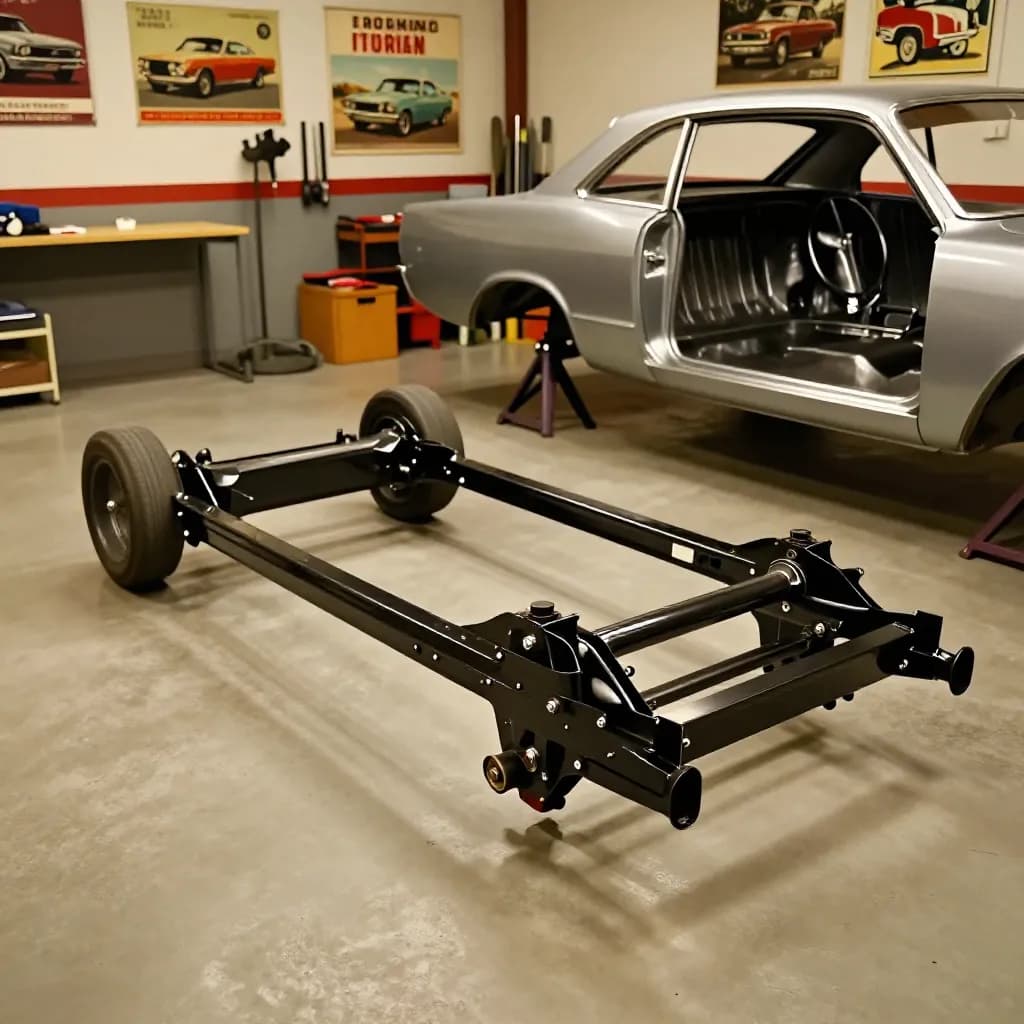
The appeal of powder coating for restoration work is straightforward: it provides a finish that is more durable, more uniform, and more resistant to the chemicals and conditions that underbody and engine bay components face than the original factory finishes ever were. A powder coated suspension arm will resist road salt, brake fluid, and stone chips far better than the thin enamel or lacquer that the factory applied in the 1960s or 1970s. For a car that will be driven and enjoyed — not just displayed — this durability is a genuine advantage.
Ready to Start Your Project?
From one-off customs to 15,000-part production runs — get precise pricing in 24 hours.
On This Page
Powder Coating's Role in Classic Car Restoration
However, powder coating in the restoration context comes with a caveat that does not apply to other applications: authenticity. For concours-level restorations where the goal is to replicate the car exactly as it left the factory, the use of powder coating — a technology that did not exist when most classic cars were built — is a departure from originality. Understanding when powder coating is appropriate, when it is not, and how to use it in ways that respect the car's heritage is essential knowledge for serious restorers.
Chassis and Subframe Coating
The chassis or subframe is the foundation of any classic car, and it is typically the first major component to be restored. Decades of road salt, moisture, mud, and stone impacts take a heavy toll on chassis components, and thorough restoration requires stripping the chassis to bare metal, repairing any corrosion damage, and applying a protective finish that will last for decades.
Powder coating is an excellent choice for chassis restoration. The thick, uniform film (80 to 120 microns is typical for chassis applications) provides a robust barrier against the moisture, salt, and chemical exposure that chassis components face. The crosslinked polymer matrix resists chipping from stone impacts and abrasion from road debris. And the complete encapsulation of the metal surface — including inside box sections and hard-to-reach areas — provides corrosion protection that brush-applied or spray-can finishes cannot match.
Chassis preparation is demanding. The entire chassis must be stripped to bare metal — by media blasting, chemical stripping, or a combination — and every trace of rust, old undercoating, and contamination must be removed. Weld repairs for corroded areas should be completed before coating. All threaded holes, mounting surfaces, and alignment points must be masked to maintain dimensional accuracy during reassembly.
For chassis coating, semi-gloss or satin black is the most common choice, as it closely approximates the appearance of original factory chassis finishes. Epoxy or hybrid (polyester-epoxy) powder coatings are preferred for chassis applications because of their excellent adhesion, chemical resistance, and corrosion protection. UV resistance is not a concern for chassis components that are hidden beneath the car body. Film thickness should be generous — 80 to 120 microns — to provide maximum protection in this demanding environment.
Suspension Components: Arms, Springs, and Hardware
Suspension components — control arms, trailing arms, anti-roll bars, spring perches, shock absorber brackets, and steering linkages — are prime candidates for powder coating during a restoration. These parts are exposed to the same harsh underbody environment as the chassis, and they are visible enough (particularly on cars displayed on lifts at shows) to warrant a quality finish.
The preparation process for suspension components follows the same principles as chassis work: strip to bare metal, repair any corrosion or damage, and ensure all mating surfaces and threaded holes are masked. Suspension components often have press-fit bushings that must be removed before coating — the cure oven temperature will destroy rubber bushings and may affect polyurethane bushings. Plan the restoration sequence so that bushing removal and replacement brackets the coating step.
Coil springs present a specific challenge. Springs are under constant stress in service, and the coating must be flexible enough to withstand the repeated compression and extension cycles without cracking. Standard powder coatings perform well on springs because the crosslinked film has sufficient flexibility to accommodate the small surface strains that spring deflection produces. However, the coating should be applied at moderate thickness (60 to 80 microns) rather than heavy thickness, as excessively thick coatings are more prone to cracking under cyclic stress.
Color selection for suspension components depends on the restoration philosophy. For concours-correct restorations, research the original factory finish — many manufacturers used specific colors for suspension components (semi-gloss black, natural metal with clear coat, or even specific colors like the red used on some European sports car suspension parts). For driver-quality restorations where absolute authenticity is not required, semi-gloss or satin black is the universal choice that looks clean and professional under any classic car.
Engine Bay Components and Heat Management
The engine bay of a classic car contains a diverse collection of components with varying heat exposure levels, and the coating specification must account for these differences. Components far from the engine and exhaust — inner fenders, shock towers, firewall brackets, battery trays, and wiper motor mounts — operate at moderate temperatures and can be coated with standard polyester or hybrid powder coatings in any color.
Components closer to the engine — valve covers, intake manifolds, alternator brackets, and engine mount brackets — experience higher temperatures and may require heat-resistant formulations. The temperature threshold depends on the specific location and the engine type. As a general guide, components that reach sustained temperatures above 150°C should use high-temperature powder coatings rated for their operating range.
Exhaust manifolds and headers operate at temperatures far beyond the capability of any organic powder coating — 500 to 800°C or more. These components require ceramic thermal barrier coatings or high-temperature header paint rather than powder coating. Some restorers choose to leave exhaust manifolds in their natural cast iron state, allowing them to develop the characteristic heat patina that is period-correct for many classic cars.
For concours-level engine bay restoration, the finish on every visible component matters. Brackets, pulleys, and hardware should be finished to match the original factory appearance. Many factories used a combination of finishes in the engine bay — semi-gloss black on some brackets, natural cadmium or zinc plating on fasteners, cast aluminum left natural on some components, and specific colors on others. Researching the original finish specification for each component and replicating it accurately is what distinguishes a concours-quality engine bay from a merely clean one.
Period-Correct Colors and Factory Finish Replication
Achieving period-correct colors is one of the most challenging aspects of using powder coating in classic car restoration. The original factory finishes were applied using technologies — solvent-based enamels, lacquers, and early electrophoretic coatings — that produce a different visual character than modern powder coating. Replicating the exact appearance of a 1960s factory finish in a 2020s powder coating requires careful color matching, gloss control, and sometimes deliberate imperfection.
Color matching for period-correct restoration starts with identifying the original color specification. Factory paint codes, service bulletins, and marque-specific reference materials provide the starting point. However, original factory colors often varied between production batches, and the same paint code might look slightly different on cars built weeks apart. Finding an unrestored reference — an original paint sample, an unrestored component, or a factory color chip — provides the most reliable matching target.
Gloss level is as important as color for period correctness. Many factory underbody and engine bay finishes were semi-gloss or satin rather than the high-gloss finish that modern powder coating naturally produces. Specifying the correct gloss level — typically 30 to 50 GU at 60° for most factory semi-gloss finishes — is essential for an authentic appearance. A high-gloss powder coat on a component that was originally semi-gloss will look obviously wrong to knowledgeable judges and enthusiasts.
Some factory finishes had characteristics that are difficult to replicate in powder coating. The thin, slightly orange-peeled texture of factory spray enamel, the slight color variation between components coated in different batches, and the specific sheen of factory primer finishes all contribute to the authentic factory appearance. Skilled restoration coaters can approximate these characteristics through careful formulation selection and application technique, but perfect replication of every factory finish nuance is not always achievable with powder coating.
Show Quality and Concours Preparation
Concours d'elegance competitions judge restored cars against the standard of factory-original condition, and the finish quality of every visible component contributes to the overall score. For restorers preparing cars for concours competition, the powder coating must not only be technically excellent but must also be appropriate for the judging standards of the specific concours class.
Different concours organizations have different rules regarding the use of modern finishing technologies on classic cars. Some organizations judge strictly on factory-original appearance and may deduct points for finishes that are obviously superior to what the factory produced — a mirror-perfect powder coat on a component that was originally finished with a rough factory spray job might actually lose points for being too good. Other organizations judge on overall quality and presentation, rewarding the best possible finish regardless of the technology used.
Understand the judging standards of your target concours before specifying finishes. For strict factory-original classes, consider whether powder coating is appropriate for each component, or whether a period-correct liquid finish would be more authentic. For quality-judged classes, powder coating's superior uniformity and durability are advantages that contribute to a higher-scoring presentation.
For show-quality powder coating, every detail matters. The surface preparation must be flawless — no pitting, no grinding marks, no weld imperfections visible through the coating. The powder application must be uniform with no orange peel, no dry spray, and no contamination. The color and gloss must match the specification exactly. And the masking must be precise, with clean boundaries and no powder on surfaces that should be bare metal.
After coating, show-quality components benefit from careful handling and storage. Wrap each component individually in soft, non-abrasive material. Store in a clean, dry environment. Handle with clean cotton gloves to prevent fingerprints and contamination. The effort invested in protecting the finish after coating preserves the quality achieved during the coating process.
Practical Restoration Workflow and Planning
Integrating powder coating into a classic car restoration project requires planning and coordination to ensure that components are coated at the right time in the restoration sequence and that the coating specification is correct for each component.
Create a coating schedule that lists every component to be powder coated, organized by the order in which they will be needed during reassembly. Group components by color and finish type to minimize color changes at the coater and reduce cost. Identify components that require special treatment — degassing for cast aluminum, high-temperature coating for engine bay parts, specific period-correct colors for concours preparation.
Batch components for coating efficiency. Rather than sending individual parts to the coater as they are prepared, accumulate groups of components that share the same color and finish specification and send them together. This reduces the number of color changes the coater must perform and may qualify for batch pricing. However, do not delay the restoration timeline excessively to accumulate larger batches — balance efficiency with project momentum.
Document everything. Photograph each component before and after coating. Record the powder manufacturer, product code, color, gloss level, and film thickness for each batch. Keep the coater's certificate of conformance and any test data. This documentation supports warranty claims if coating issues arise, provides a reference for future touch-up or recoating, and — for concours cars — demonstrates the quality and specification of the restoration work.
Budget realistically for coating costs. A comprehensive classic car restoration may involve coating 50 to 100 or more individual components, from large chassis sections to small brackets and hardware. The cumulative coating cost is a significant line item in the restoration budget. Get quotes from the coater early in the project, based on a complete list of components and specifications, to avoid budget surprises later. Quality powder coating is an investment that pays dividends in the durability and appearance of the finished restoration — it is not the place to cut corners.
Common Mistakes in Restoration Powder Coating
Experience in the classic car restoration community has identified several common mistakes that restorers make when using powder coating. Avoiding these mistakes saves time, money, and frustration.
Coating components that should not be coated is a frequent error. Brake drums and rotors should never be powder coated on their friction surfaces — the coating prevents proper brake function. Flywheel friction surfaces, clutch pressure plate contact areas, and any surface that relies on metal-to-metal contact for function must be masked or left uncoated. Threaded holes coated with powder will not accept fasteners without chasing the threads, adding unnecessary work during reassembly.
Using the wrong resin system for the application is another common mistake. Epoxy powder coatings are excellent for underbody and chassis components but will chalk and fade rapidly if used on components exposed to sunlight — such as engine bay parts visible when the hood is open. Polyester coatings resist UV but may not provide the chemical resistance needed for components exposed to brake fluid or fuel. Match the resin system to the specific exposure conditions of each component.
Applying powder coating too thick causes problems that are not immediately apparent. Excessively thick coatings (above 150 microns) can crack during thermal cycling, interfere with component fitment, and add unnecessary weight. On springs and other flexing components, thick coatings are more prone to fatigue cracking. Specify appropriate thickness for each component type and verify with measurements.
Neglecting pretreatment is the most consequential mistake. Some restorers, eager to see their components in their new finish, skip or shortcut the pretreatment step. The result is a beautiful finish that begins to peel or blister within months because the coating has no chemical bond to the substrate. Insist on proper multi-stage pretreatment with conversion coating, even if it adds time and cost to the process. The pretreatment is invisible in the finished product, but it determines whether the coating lasts 2 years or 20 years.
Frequently Asked Questions
Is powder coating appropriate for concours-level classic car restoration?
It depends on the judging standards. For strict factory-original classes, powder coating may be too perfect and could lose points for not matching the original factory finish character. For quality-judged classes, powder coating's superior uniformity and durability are advantages. Research the specific concours rules before deciding.
What parts of a classic car should be powder coated?
Chassis, subframes, suspension arms, anti-roll bars, spring perches, brackets, engine bay hardware, and other metal components that need durable protection. Avoid coating brake friction surfaces, flywheel faces, threaded holes (mask them), and components that cannot withstand 180-200°C cure temperatures.
Can I get period-correct colors in powder coating?
Yes, powder manufacturers can custom-match period-correct colors from physical reference samples. Specify the correct gloss level (many factory finishes were semi-gloss, not high-gloss) and discuss the desired surface character with the coater. Perfect replication of every factory finish nuance may not be achievable, but skilled coaters can get very close.
Should I use epoxy or polyester powder coating for restoration?
Use epoxy or hybrid (polyester-epoxy) for underbody and chassis components where chemical resistance and corrosion protection are priorities and UV exposure is minimal. Use polyester for engine bay components and any parts visible when the hood is open, as polyester resists UV fading. Match the resin system to each component's exposure conditions.
How do I handle springs and flexing components?
Springs and other flexing components can be powder coated successfully. Apply at moderate thickness (60-80 microns) rather than heavy builds, as thinner coatings are more flexible and less prone to fatigue cracking under cyclic stress. Standard polyester powder coatings have sufficient flexibility for spring applications.
How many components typically need coating in a full restoration?
A comprehensive classic car restoration may involve 50-100 or more individual components, from large chassis sections to small brackets. Group components by color and finish type for coating efficiency. Budget for coating costs early in the project, as the cumulative cost is a significant restoration expense.
Ready to Start Your Project?
From one-off customs to 15,000-part production runs — get precise pricing in 24 hours.