Cinema and theater seating operates in a unique commercial environment where hundreds of people occupy the same seats multiple times per day, each leaving behind traces of food, beverages, body oils, and general wear. A busy multiplex cinema may turn over its auditoriums 4-6 times daily, with each screening bringing a new audience that interacts with armrests, cup holders, seat mechanisms, and structural frames. Over a year, a single seat may serve 1,500-2,500 individual occupants, creating cumulative wear that tests any finish.
Commercial
Powder Coating for Cinema and Theater Seating: Durability, Fire Ratings, Cup Holders, and Cleaning
Sundial Powder Coating·April 22, 2026·10 min
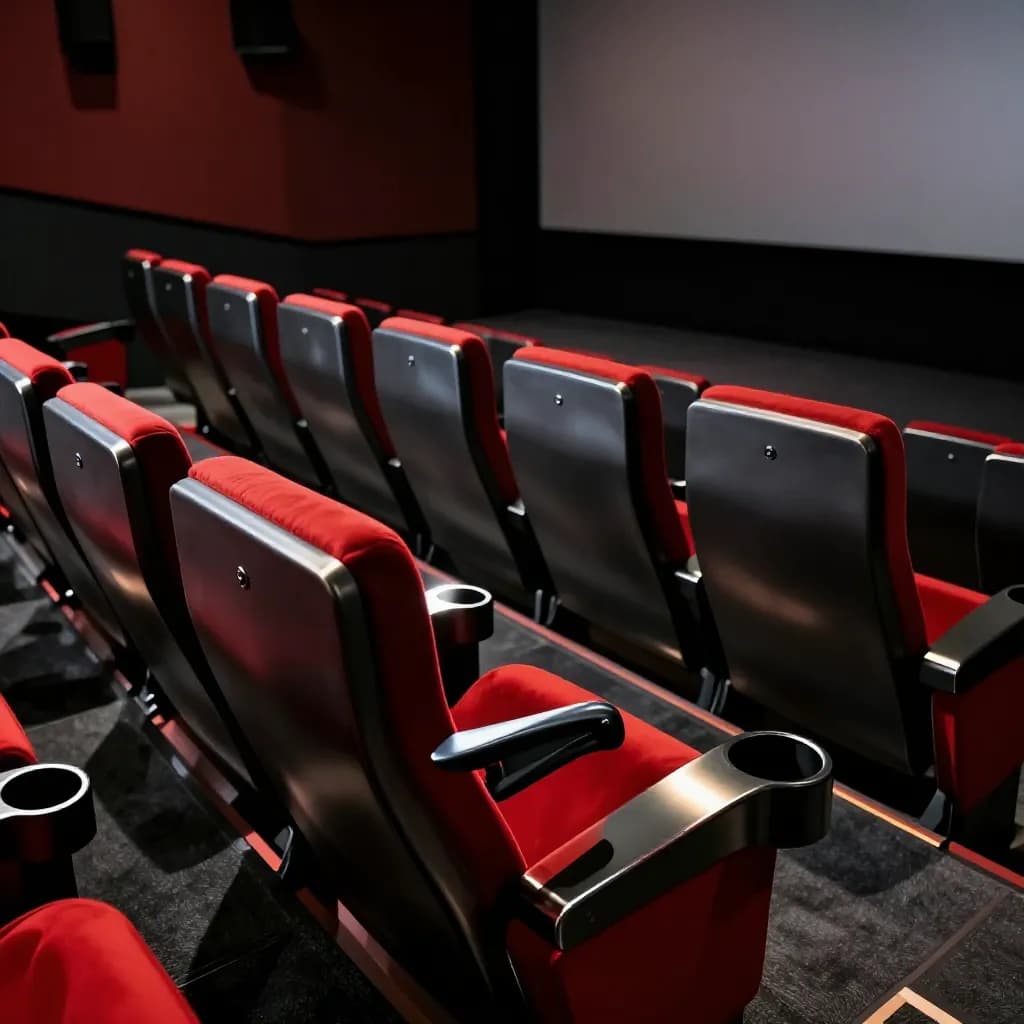
The metal components of cinema and theater seating — including armrest frames, cup holder assemblies, seat mounting pedestals, row end standards, and structural cross-members — must withstand this intense use while maintaining the appearance standards that entertainment venues require. Powder coating provides the combination of durability, cleanability, and aesthetic quality that cinema seating demands, outperforming liquid paint and plated finishes in the high-volume entertainment environment.
Ready to Start Your Project?
From one-off customs to 15,000-part production runs — get precise pricing in 24 hours.
On This Page
Cinema and Theater Seating: High Volume, High Expectations
Fire safety is a paramount concern in assembly occupancies where large numbers of people gather. Building codes and fire regulations impose strict requirements on materials used in cinema and theater construction, including the finishes applied to seating components. Powder coating's thermoset chemistry and its performance in fire testing make it a compliant choice for assembly occupancy seating, but specific formulations and testing requirements must be addressed in the specification.
The cinema industry's ongoing investment in premium formats — luxury recliners, dine-in theaters, and boutique screening rooms — has elevated the aesthetic expectations for seating finishes. These premium formats command higher ticket prices and require seating that communicates luxury through every detail, including the quality and finish of metal components. Powder coating's ability to deliver luxury metallic effects, custom colors, and refined textures makes it the preferred finish for premium cinema seating programs.
Fire Safety Compliance for Assembly Occupancies
Cinema and theater buildings are classified as assembly occupancies under building codes, subjecting them to the most stringent fire safety requirements for interior finishes and furnishings. The powder coating on seating components must comply with applicable fire testing standards to ensure that the finish does not contribute to fire spread or generate toxic smoke in a fire event.
ASTM E84 (Standard Test Method for Surface Burning Characteristics of Building Materials) is the primary fire test for interior finishes in North American building codes. This test measures flame spread index and smoke developed index, with Class A (Class I) ratings requiring a flame spread index of 0-25 and smoke developed index of 0-450. Powder coatings on metal substrates typically achieve Class A ratings because the thin organic coating on a non-combustible metal substrate contributes minimal fuel to a fire.
California Technical Bulletin 133 (TB 133) addresses the fire performance of seating furniture in public occupancies. While TB 133 primarily tests the complete seat assembly including upholstery and foam, the metal frame finish contributes to the overall fire performance. Powder coating's thermoset chemistry means it does not melt and drip like thermoplastic finishes, reducing the risk of flaming drip ignition of materials below the seat.
European fire classification under EN 13501-1 applies to cinema seating in European markets. Powder-coated metal components typically achieve Euroclass A1 or A2 ratings (non-combustible) when the coating thickness is within normal ranges on non-combustible metal substrates. This classification satisfies the most demanding European fire safety requirements for assembly occupancy furnishings.
Smoke toxicity is an increasingly important consideration in fire safety for assembly occupancies. Powder coatings produce significantly less toxic smoke than many alternative finishes because they contain no solvents, plasticizers, or halogenated flame retardants. The combustion products of standard polyester and epoxy powder coatings are primarily carbon dioxide and water, with minimal generation of the toxic gases that pose the greatest threat to occupants in a fire event.
Documentation of fire test results should be maintained for all powder-coated seating components and made available to building officials, fire marshals, and insurance inspectors. The coating manufacturer should provide fire test certificates specific to the formulation used, and the seating manufacturer should maintain records linking specific production lots to the tested coating formulation.
Armrests and High-Contact Surface Finishing
Armrests are the highest-contact metal surfaces on cinema seating, with every occupant resting their arms, hands, and elbows on the armrest surface throughout the screening. This continuous skin contact deposits body oils, perspiration, and hand cream residues that accumulate on the surface and must be removed during cleaning between screenings. The powder coating on armrests must resist these deposits while providing a comfortable tactile experience.
The tactile quality of armrest powder coating directly affects the guest experience. The finish should feel smooth and warm — not cold like bare metal or sticky like some liquid paint finishes. Satin powder coating finishes at 30-50 gloss units provide the optimal tactile experience for armrest applications, with enough smoothness for comfort but sufficient micro-texture to prevent the slippery feel that high-gloss finishes can create.
Shared armrests between adjacent seats experience double the contact frequency of individual armrests, as both neighboring occupants use the same surface. The coating on shared armrests should be specified with enhanced wear resistance and film thickness of 80-100 microns to account for this increased use rate. The armrest design should also consider the ergonomic division of the shared surface to minimize friction between neighboring occupants.
Armrest-mounted controls for reclining mechanisms, heating systems, and personal lighting add complexity to the armrest coating specification. The coating must accommodate the integration of control buttons, switches, and USB charging ports without interfering with their function. Masking these features during the coating process requires precision, and quality control should verify that all controls operate freely after coating.
Antimicrobial powder coating on armrests provides hygiene benefits in the high-turnover cinema environment where cleaning time between screenings is limited. Antimicrobial formulations reduce bacterial populations on the armrest surface between cleanings, providing an additional layer of hygiene protection for the hundreds of guests who contact each armrest daily.
Color selection for armrests should consider both the auditorium design scheme and practical maintenance. Dark colors — black, dark gray, dark bronze — are the standard choice for cinema armrests because they conceal the minor marks and wear that accumulate between deep cleaning cycles. Light-colored armrests in premium formats require more frequent cleaning to maintain their appearance.
Cup Holders and Beverage Contact Surfaces
Cup holders are among the most abused components on cinema seating, subjected to beverage spills, sticky residues from soft drinks and candy, the impact of cups and bottles being placed and removed, and the aggressive cleaning needed to remove accumulated food residue. The powder coating on cup holder assemblies must withstand this combination of chemical, mechanical, and cleaning stress while maintaining a hygienic, attractive appearance.
Beverage spill resistance is the primary chemical challenge for cup holder coatings. Soft drinks contain phosphoric acid (cola) or citric acid (fruit-flavored drinks) that can etch or stain some coating systems. Alcoholic beverages in dine-in theaters add ethanol exposure. Butter-flavored popcorn topping contains oils and artificial flavoring compounds that create greasy, sticky residues. The powder coating must resist all these substances without staining, softening, or adhesion loss.
The interior geometry of cup holders creates cleaning challenges because the cylindrical shape and bottom corners trap residue that is difficult to reach with standard cleaning methods. Smooth, high-gloss powder coating on cup holder interiors facilitates cleaning by preventing residue from adhering to the surface. The coating should extend completely to the bottom of the cup holder with no uncoated areas where residue could accumulate and harbor bacteria.
Cup holder inserts — removable liners that can be extracted for cleaning or replacement — simplify maintenance and extend the service life of the cup holder assembly. Powder-coated metal inserts provide a durable, cleanable surface that can be removed, cleaned in a dishwasher or sanitizing solution, and replaced. This approach is more hygienic and cost-effective than attempting to deep-clean fixed cup holders in place.
Retractable and swing-out cup holder mechanisms add mechanical complexity to the coating specification. The coating at pivot points and detent mechanisms must withstand the friction of repeated operation without wearing through or developing the stiffness that occurs when some coatings build up at mechanical interfaces. Low-friction powder coating formulations or the use of mechanical bushings at pivot points ensures smooth operation throughout the cup holder's service life.
Dine-in theater cup holders and tray table mechanisms face more intense food and beverage exposure than standard cinema cup holders. These components may contact hot food, sauces, and a wider range of beverages including wine and cocktails. The coating specification for dine-in theater components should address this expanded chemical exposure profile with enhanced chemical resistance testing.
Seat Pedestals and Structural Components
Seat mounting pedestals and structural cross-members are the hidden infrastructure of cinema seating, anchoring seats to the auditorium floor and providing the structural framework that supports occupant weight. While these components are largely concealed from view, their coating is essential for corrosion protection and long-term structural integrity in an environment where spilled beverages regularly reach the floor and contact pedestal surfaces.
Floor-mounted pedestals are exposed to the beverages, food debris, and cleaning solutions that accumulate at floor level. Spilled soft drinks create a sticky, acidic residue that attacks unprotected metal, while the cleaning chemicals used to address these spills add alkaline exposure. Powder coating on pedestals must resist this dual acid-alkali exposure while providing the corrosion protection needed for structural components with a 20-25 year expected service life.
Row end standards — the visible structural elements at the end of each seating row — serve both structural and aesthetic functions. These components are visible to guests entering and exiting the row and should be finished to the same aesthetic standard as the seating itself. Powder coating on row end standards in coordinated colors with the seat finish creates a cohesive visual presentation while providing the durability needed for components that are bumped and contacted by every guest entering the row.
Structural cross-members that connect seats within a row and provide lateral stability are typically concealed beneath the seat but may be visible from certain angles. The coating on these components prioritizes corrosion protection over aesthetics, with epoxy or epoxy-polyester formulations providing the moisture and chemical resistance needed for components in the spill zone beneath the seats.
Anchor bolt covers and floor plate trim conceal the mechanical connections between the seating and the auditorium floor. Powder coating these trim pieces in colors that match the carpet or the seat finish creates a finished appearance that conceals the utilitarian mounting hardware. These small details contribute to the overall quality perception of the auditorium environment.
Accessibility features including wheelchair companion seating hardware, removable armrests for transfer access, and companion seat fold-down mechanisms require powder coating that withstands the specific use patterns of accessible seating. Removable armrest mechanisms experience more frequent operation than standard armrests and require enhanced wear resistance at pivot and latch points.
Cleaning and Sanitation Between Screenings
The time available for cleaning between cinema screenings is typically 15-30 minutes, during which staff must clean every seat, armrest, cup holder, and tray table in the auditorium. This tight cleaning window demands surfaces that can be cleaned quickly and effectively with minimal effort. Powder coating's smooth, non-porous surface enables the rapid wipe-down cleaning that cinema operations require.
Cleaning protocols for powder-coated cinema seating should use food-safe sanitizing solutions applied with soft cloths or disposable wipes. Avoid abrasive cleaning pads that scratch the coating surface, creating micro-scratches that harbor bacteria and accelerate wear. Spray-and-wipe application of sanitizing solution is the most efficient method for the high-volume cleaning that cinema operations demand.
Sticky residue removal from soft drink and candy spills is the most time-consuming cleaning task in cinema auditoriums. Powder coating's non-porous surface prevents sticky residues from bonding to the finish, allowing them to be removed with warm water and mild detergent. For stubborn residues, a brief soak with cleaning solution softens the deposit for easy removal without scrubbing.
Deep cleaning schedules should supplement the between-screening cleaning with more thorough periodic cleaning. Weekly deep cleaning should address areas that quick cleaning misses — cup holder bottoms, armrest undersides, and pedestal surfaces. Monthly deep cleaning should include inspection of coating condition and identification of any damage requiring repair.
Sanitization requirements have intensified in the post-pandemic cinema environment, with guests expecting visible cleaning between screenings and enhanced disinfection protocols. Powder coating's compatibility with EPA-registered disinfectants — including quaternary ammonium compounds, hydrogen peroxide solutions, and electrostatic disinfection systems — supports these enhanced sanitation protocols without coating degradation.
Spill containment design in seating components reduces the cleaning burden by preventing spills from spreading to adjacent seats and floor areas. Cup holders with raised rims, armrests with drainage channels, and seat designs that direct spills toward easily cleaned surfaces all contribute to faster, more effective cleaning. Powder coating on these containment features must be continuous and free from defects that could trap spilled liquids.
Premium Format and Luxury Recliner Finishing
Premium cinema formats — including luxury recliners, dine-in theaters, and boutique screening rooms — command ticket prices 2-3 times higher than standard formats and require seating finishes that justify the premium positioning. The metal components of premium seating — recliner mechanisms, tray table hardware, personal lighting fixtures, and decorative trim — must be finished to a standard that communicates luxury through visual quality and tactile refinement.
Recliner mechanism housings and actuator covers are visible when the seat is in the reclined position and must present a finished, quality appearance from all viewing angles. Powder coating in dark metallic finishes — gunmetal, dark bronze, or black chrome effect — provides the sophisticated appearance appropriate for premium seating while concealing the mechanical components within.
Tray table mechanisms in dine-in theaters combine the food contact requirements of restaurant furniture with the mechanical demands of a folding, rotating mechanism. The powder coating on tray table surfaces should be NSF-listed for food splash zone compliance, while the coating on the mechanism hardware must withstand the friction and wear of daily deployment and stowage cycles.
Personal reading lights and USB charging port housings are small but important details that contribute to the premium experience. Powder coating these components in coordinated finishes with the seat hardware creates the attention to detail that premium guests expect. The coating must accommodate the heat from lighting elements and the electrical connections of charging ports without interference.
Heated seat element covers and ventilation grilles require powder coating that does not impede heat transfer or air flow. Perforated or mesh covers with powder coating must maintain open perforations after coating — a quality control point that requires verification during production. The coating on heated seat components must withstand the operating temperature of the heating element (typically 35-45°C) without degradation.
Custom color and finish programs for premium cinema chains enable brand differentiation through unique seating aesthetics. Powder coating's custom color capability allows each cinema brand to develop signature finishes that distinguish their premium offering from competitors. These custom finishes become part of the brand identity, creating visual consistency across locations that reinforces brand recognition and loyalty.
Frequently Asked Questions
Does powder coating on cinema seating meet fire safety requirements?
Yes, powder coatings on metal substrates typically achieve Class A ratings under ASTM E84 and Euroclass A1/A2 under EN 13501-1 because the thin organic coating on non-combustible metal contributes minimal fuel load. Powder coating's thermoset chemistry prevents melting and dripping. Always verify fire test certificates for the specific formulation used.
How is powder-coated cinema seating cleaned between screenings?
Powder coating's smooth, non-porous surface enables rapid spray-and-wipe cleaning with food-safe sanitizing solutions in the 15-30 minute window between screenings. Sticky residues from drinks and candy wipe away without scrubbing. Avoid abrasive pads that scratch the surface. Weekly deep cleaning addresses areas that quick cleaning misses.
What powder coating finish works best for cinema armrests?
Satin finishes at 30-50 gloss units provide the optimal balance of comfort, appearance, and cleanability. Dark colors (black, dark gray, dark bronze) conceal minor wear between deep cleaning cycles. Antimicrobial formulations reduce bacterial populations between cleanings. Specify 80-100 micron film thickness for shared armrests.
How long does powder coating last on cinema seating?
Properly specified powder coating on cinema seating lasts 10-15 years under normal commercial use (1,500-2,500 occupants per seat per year). High-wear components like cup holders and shared armrests may need recoating or replacement sooner. Regular cleaning and prompt repair of damage maximize service life.
Can powder coating handle the food and beverage exposure in dine-in theaters?
Yes, polyester and polyester-epoxy hybrid powder coatings resist the acids in soft drinks, the oils in popcorn topping, and the alcohol in beverages served in dine-in theaters. Tray table surfaces should use NSF-listed formulations for food splash zone compliance. Prompt spill cleanup prevents any possibility of staining.
Ready to Start Your Project?
From one-off customs to 15,000-part production runs — get precise pricing in 24 hours.