Churches, cathedrals, synagogues, mosques, and other houses of worship contain metalwork that serves both functional and symbolic purposes. From ornate pew ends and altar railings to candle holders and memorial plaques, metal elements contribute to the sacred atmosphere and architectural character of worship spaces. The finish on this metalwork must honor the aesthetic traditions of the faith community while providing the durability needed for fixtures that may serve for generations.
Commercial
Powder Coating for Church Furniture: Pew Ends, Candle Holders, Railings, Heritage, and Restoration
Sundial Powder Coating·April 22, 2026·10 min
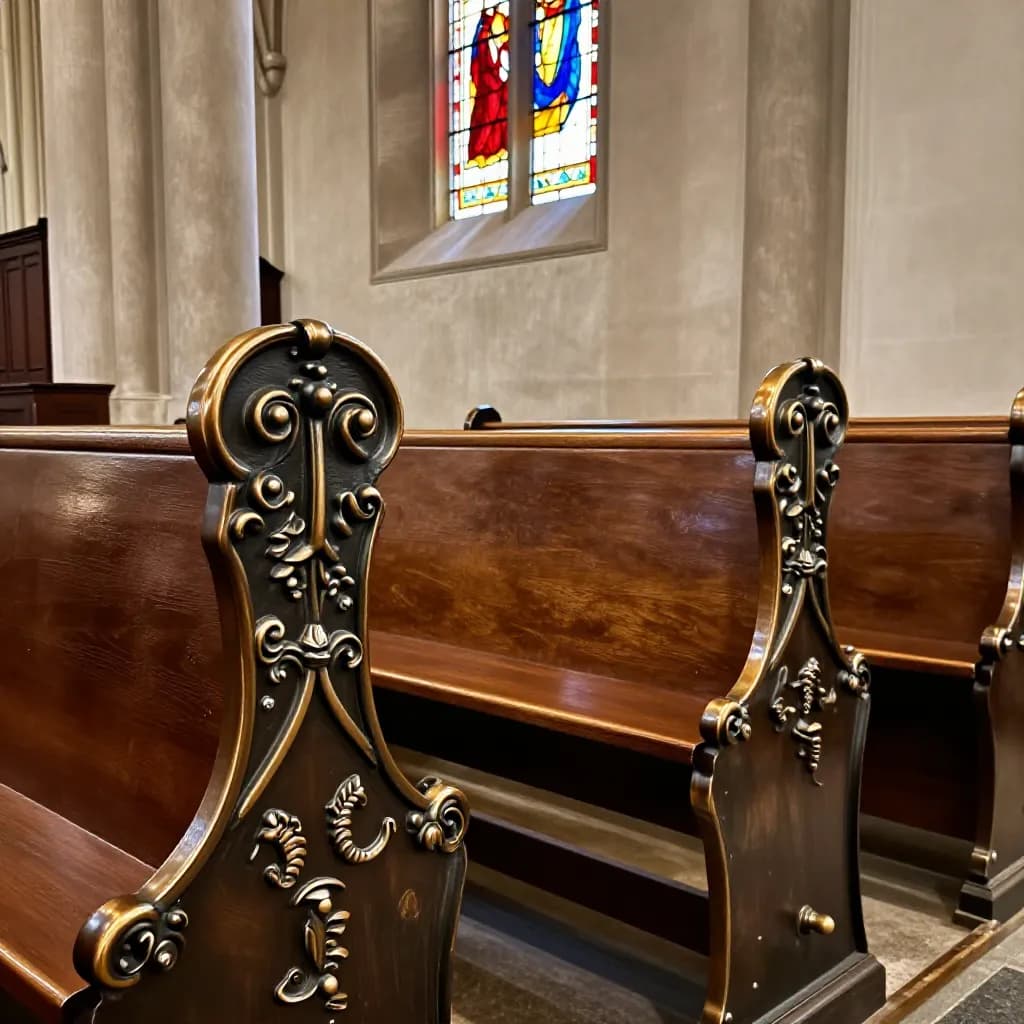
Religious buildings present unique finishing challenges. Many worship spaces are heated intermittently — warm during services but cold between them — creating temperature cycling and condensation that accelerate corrosion on unprotected metal. Candle smoke deposits a fine soot that dulls finishes over time. Incense smoke contains aromatic compounds that can affect some coatings. And the handling of metalwork by congregants during services — touching railings, holding candle holders, grasping pew ends when sitting and standing — creates wear patterns that accumulate over decades of use.
Ready to Start Your Project?
From one-off customs to 15,000-part production runs — get precise pricing in 24 hours.
On This Page
Sacred Spaces and the Role of Metal Finishing
Powder coating addresses these challenges while respecting the aesthetic sensibilities of religious architecture. The technology can replicate traditional metalwork finishes — aged bronze, wrought iron, gilded gold, patinated copper — with modern durability that eliminates the maintenance burden of traditional finishes. A powder-coated candle holder maintains its appearance for decades without the polishing, lacquering, or re-patinating that traditional metal finishes require.
The restoration of historic church metalwork presents particular opportunities for powder coating. Original finishes on century-old metalwork may have deteriorated beyond repair, and powder coating can restore these pieces to their original appearance while providing protection that extends their service life for another generation. This restoration approach preserves the original metalwork — often irreplaceable handcrafted pieces — while renewing its visual contribution to the worship space.
Pew Ends and Congregational Seating Hardware
Pew ends are among the most visible and frequently touched metal elements in a church. Congregants grasp pew ends when entering and exiting pews, lean against them during services, and children inevitably use them as handholds and playthings. The finish on pew ends must withstand this constant handling while maintaining the dignified appearance appropriate to a worship environment.
Cast iron pew ends — common in churches built from the Victorian era through the mid-20th century — are ideal candidates for powder coating. The complex, ornate castings that characterize traditional pew ends are difficult to finish consistently with liquid paint, but powder coating's electrostatic application achieves uniform coverage on the intricate relief patterns, scrollwork, and decorative details that make these castings architecturally significant.
The color and finish of pew end powder coating should respect the architectural character of the building. For traditional churches, dark finishes that simulate aged iron, bronze, or dark oak complement the historic aesthetic. Matte black with a slight brown undertone replicates the appearance of aged wrought iron. Dark bronze metallic finishes suggest traditional bronze casting. For contemporary worship spaces, the full powder coating palette is available, allowing pew hardware to coordinate with modern interior design schemes.
Book rack and hymnal holder hardware attached to pew backs experiences the specific wear of books being placed and removed during services. The powder coating on these components must resist the abrasion of book edges and the impact of hymnals being returned to the rack. Smooth, hard powder coating formulations minimize the friction that causes books to catch on the rack surface.
Kneeler hardware — the metal frames and hinges of fold-down kneelers — experiences mechanical stress from the folding action and the weight of kneeling congregants. The powder coating at hinge points must withstand the friction of repeated folding cycles without wearing through. Lubricating the hinge mechanism during maintenance reduces the stress on the coating at these wear points.
Pew numbering and memorial plaques attached to pew ends require powder coating that provides a suitable background for engraved or applied lettering. Dark matte finishes provide the best contrast for light-colored lettering, while the smooth powder coating surface accepts adhesive-backed lettering and plaques without the adhesion problems that can occur on textured or rough surfaces.
Candle Holders, Candelabra, and Liturgical Metalwork
Candle holders and candelabra are central to the liturgical life of many faith traditions, and their finish must withstand the unique challenges of candle use — wax drips, heat from flames, soot deposits, and the handling required for candle replacement and cleaning. Powder coating provides a practical alternative to traditional brass or bronze finishes that require constant polishing to maintain their appearance.
Heat resistance is the primary technical requirement for candle holder powder coating. While the flame itself does not contact the holder body in most designs, radiant heat from candle flames can raise the temperature of nearby metal surfaces to 60-100°C depending on the holder design and candle size. Standard polyester powder coatings handle temperatures up to 100°C without difficulty, but holders designed for large candles or multiple flames may require high-temperature formulations rated for 150°C or higher.
Wax removal from powder-coated surfaces is significantly easier than from bare metal or lacquered surfaces. The non-porous powder coating surface prevents wax from bonding to the metal, allowing cooled wax to be flexed and popped off the surface or removed with warm water. This ease of wax removal reduces the maintenance labor associated with candle holders and keeps them looking clean between services.
Soot and smoke deposits from candles and incense gradually dull metalwork finishes throughout the worship space. Powder coating resists soot penetration better than porous or micro-cracked finishes, allowing soot deposits to be wiped away during routine cleaning. The smooth, sealed surface of powder coating does not absorb the aromatic compounds in incense smoke that can permanently discolor some traditional finishes.
Processional crosses, thuribles (incense censers), and other liturgical implements that are handled during services require powder coating with excellent grip comfort and wear resistance. These items are carried, swung, and manipulated during liturgical ceremonies, creating handling wear that accumulates over years of regular use. Satin finishes provide comfortable grip without the slippery feel of high-gloss coatings.
Votive candle stands and prayer candle racks in Catholic and Orthodox churches hold dozens of small candles that generate cumulative heat and wax exposure. The powder coating on these stands must withstand sustained heat from multiple candles burning simultaneously and the heavy wax accumulation that occurs between cleaning cycles. Heat-resistant formulations with excellent wax release properties are essential for votive stand applications.
Railings, Gates, and Architectural Metalwork
Altar railings, communion rails, baptismal font surrounds, and choir screen gates are architectural metalwork elements that define sacred spaces within the worship environment. These elements serve both functional purposes — guiding movement, defining boundaries — and symbolic purposes — marking the transition between congregational and sacred spaces. The finish on this metalwork must communicate the significance of these boundaries while withstanding the handling and environmental exposure of the worship space.
Altar railings and communion rails are touched by every congregant who approaches for communion or prayer, creating a high-contact surface that accumulates hand oils and wear over time. Powder coating on railings provides a comfortable grip surface that resists the oils and moisture from hands while maintaining its appearance through decades of congregational use. The finish should be warm and inviting to touch, encouraging rather than discouraging the physical contact that is part of the worship experience.
Choir screens and decorative gates often feature intricate metalwork — scrolls, tracery, symbolic motifs — that showcases the craftsmanship of the original metalworker. Powder coating preserves and highlights this detail by providing a uniform finish that follows every contour of the metalwork without obscuring fine detail. The electrostatic application process ensures that powder reaches into recesses and behind projections that would be difficult to coat with brush or spray liquid paint.
Baptismal font surrounds and covers combine decorative metalwork with functional requirements for water resistance. The interior surfaces of font covers may contact baptismal water, requiring coating that resists prolonged water exposure without blistering or adhesion loss. Epoxy primer under the decorative topcoat provides the moisture barrier needed for water-contact applications.
Exterior metalwork including entrance gates, fence panels, and cemetery railings requires weather-resistant powder coating that maintains its appearance through years of outdoor exposure. Super-durable polyester formulations provide the UV and moisture resistance needed for exterior church metalwork, while traditional-looking finishes — aged iron, dark bronze, verdigris green — complement the architectural character of historic church buildings.
Memorial gates and dedication metalwork carry particular emotional significance for the faith community. The finish on these elements must be of the highest quality, reflecting the importance of the memorial and the respect due to those commemorated. Premium metallic powder coating finishes — deep bronze, antique gold, or custom colors specified by the donor — provide the visual quality appropriate for memorial metalwork.
Heritage Restoration and Historic Preservation
Restoring historic church metalwork requires a sensitive approach that preserves the original character of the pieces while providing modern protection against further deterioration. Powder coating is increasingly accepted by heritage conservation professionals as an appropriate restoration finish for historic metalwork, provided that the process is executed with proper care for the original material.
Assessment of historic metalwork before restoration should document the original finish, identify any areas of structural weakness or metal loss, and determine the appropriate level of intervention. Some pieces may require only cleaning and recoating, while others may need structural repair before finishing. Photographic documentation of the metalwork's condition before, during, and after restoration creates a permanent record for the church's archives.
Surface preparation for historic metalwork must be gentle enough to preserve original detail while thorough enough to ensure coating adhesion. Aggressive media blasting can erode fine detail on cast or wrought metalwork. Gentler methods — soda blasting, walnut shell blasting, or careful hand preparation — remove corrosion and old finish without damaging the original metal surface. The preparation method should be selected based on the metal type, condition, and detail level of each piece.
Color and finish matching for restoration work requires careful study of the original finish intent. Historic church metalwork may have been originally finished in colors and effects that differ from its current appearance — what appears to be black wrought iron may have originally been dark green or brown, and what appears to be plain bronze may have had gilded highlights. Historical research, paint analysis, and consultation with conservation professionals inform the restoration finish specification.
Reversibility is a principle of heritage conservation that requires restoration treatments to be removable without damaging the original material. Powder coating can be removed through chemical stripping or careful media blasting if future restoration requires a different approach, satisfying the reversibility requirement. Documenting the specific powder coating formulation and application parameters facilitates future removal if needed.
Congregational engagement in the restoration process builds community support and appreciation for the church's heritage metalwork. Sharing the restoration story — the history of the pieces, their deterioration, and their renewal through powder coating — connects the congregation to the building's history and generates support for ongoing maintenance of the restored metalwork.
Finish Options That Honor Tradition
The finish palette for church metalwork must balance aesthetic tradition with practical performance. Faith communities expect metalwork finishes that respect the architectural heritage and liturgical traditions of their worship space, and powder coating technology provides finishes that honor these traditions while delivering modern durability.
Aged iron and wrought iron effects replicate the dark, slightly textured appearance of traditional hand-forged ironwork. These finishes use dark gray or black base colors with subtle brown or rust-toned highlights that simulate the natural patina of aged iron. Textured powder coating formulations add the surface variation that characterizes hand-forged metalwork, distinguishing it from the uniform smoothness of machine-made components.
Bronze and antique bronze effects are among the most popular finishes for church metalwork, evoking the warmth and gravitas of traditional bronze casting. Metallic powder coatings with bronze-toned flakes create a convincing bronze appearance, while multi-coat systems with dark base colors and bronze metallic highlights replicate the depth and variation of naturally patinated bronze.
Gold and gilded effects are appropriate for liturgical metalwork in traditions that use gilding to signify sacred significance. While powder coating cannot replicate the mirror-like brilliance of gold leaf, metallic gold powder coatings provide a warm, luminous gold appearance that is far more durable than gold leaf and requires no maintenance. For the most authentic gold appearance, gold leaf can be applied over a powder-coated base, with the powder coating providing the protective barrier for the underlying metal.
Verdigris and patinated copper effects replicate the blue-green patina that develops naturally on copper and bronze exposed to weather. These effects are achieved through multi-step powder coating processes that layer green and blue-green tones over a copper or bronze metallic base. The result is a convincing patina effect that is permanently stable — unlike natural verdigris, which continues to develop and can stain adjacent surfaces.
Matte and satin finishes are generally preferred over high-gloss finishes for church metalwork. The soft light absorption of matte and satin surfaces complements the contemplative atmosphere of worship spaces, while high-gloss finishes can create distracting reflections, particularly in candlelit environments. Gloss levels of 10-30 units provide the subtle sheen that suggests quality without the visual distraction of high reflectivity.
Maintenance and Long-Term Stewardship
Church metalwork is often maintained by volunteer committees with limited budgets and technical expertise. Powder coating simplifies the maintenance burden by providing a finish that requires minimal care to maintain its appearance, freeing volunteer resources for other aspects of building stewardship.
Routine cleaning of powder-coated church metalwork requires only dusting with a soft cloth and occasional wiping with a damp cloth and mild soap solution. This simple maintenance regimen maintains the finish's appearance and removes the soot, dust, and hand oil deposits that accumulate during regular use. Avoid harsh chemicals, abrasive cleaners, and steel wool that can damage the powder coating surface.
Candle wax removal should be performed regularly to prevent heavy wax buildup that becomes increasingly difficult to remove. Allow wax to cool and harden completely, then gently flex or peel it from the powder-coated surface. Warm water softens any remaining wax residue for easy removal. The non-porous powder coating surface releases wax more easily than bare metal or lacquered surfaces.
Seasonal inspection of all church metalwork identifies coating damage or corrosion development early, allowing repair before the damage becomes visible to the congregation. Focus inspection on high-touch areas (railings, pew ends), high-exposure areas (exterior metalwork, candle holders), and structural connections where moisture might accumulate.
Touch-up procedures for minor coating damage should use color-matched liquid paint applied with a small brush. For heritage metalwork, touch-up should be performed carefully to blend with the surrounding finish without creating obvious repair marks. Maintaining a supply of touch-up paint matched to each metalwork finish in the building ensures that repairs can be made promptly when damage is identified.
Long-term stewardship planning should include budgeting for periodic professional assessment and maintenance of the church's metalwork collection. A conservation professional can evaluate coating condition, recommend maintenance priorities, and plan for eventual recoating of pieces that have reached the end of their coating service life. This proactive approach preserves the metalwork collection for future generations and avoids the costly emergency restoration that becomes necessary when maintenance is deferred.
Documentation of all metalwork — including photographs, finish specifications, restoration history, and maintenance records — creates an institutional memory that survives changes in volunteer leadership. This documentation ensures that future stewards have the information needed to maintain the metalwork according to the standards established during restoration.
Frequently Asked Questions
Can powder coating replicate traditional church metalwork finishes?
Yes, powder coating replicates aged iron, antique bronze, gilded gold, patinated copper, and verdigris effects with modern durability. Metallic formulations, textured finishes, and multi-coat systems create convincing traditional appearances that require no polishing or re-patinating, unlike actual brass, bronze, or copper finishes.
Is powder coating appropriate for restoring historic church metalwork?
Yes, powder coating is increasingly accepted by heritage conservation professionals for historic metalwork restoration. Gentle surface preparation methods preserve original detail, and the coating is reversible (removable) if future restoration requires a different approach. Document the original condition and restoration process for the church's archives.
How does powder coating handle candle wax and heat?
Standard polyester powder coatings withstand temperatures up to 100°C from candle heat. The non-porous surface releases cooled wax easily — flex or peel hardened wax, then wipe with warm water. For large candles or multiple flames generating higher heat, specify high-temperature formulations rated for 150°C or higher.
What maintenance does powder-coated church metalwork require?
Minimal maintenance — regular dusting with a soft cloth and occasional wiping with mild soap and water. Remove candle wax regularly before heavy buildup occurs. Inspect high-touch and high-exposure areas seasonally for coating damage. This simple regimen is well within the capability of volunteer maintenance committees.
How long does powder coating last on church furniture and metalwork?
Interior church metalwork with powder coating typically lasts 20-30 years with basic maintenance, reflecting the lower wear rate compared to commercial environments. Exterior metalwork with super-durable polyester lasts 15-20 years. High-touch items like railings and pew ends may show wear sooner but can be touched up to extend service life.
Ready to Start Your Project?
From one-off customs to 15,000-part production runs — get precise pricing in 24 hours.