Cast and forged metal components represent some of the most valuable and technically demanding substrates in industrial powder coating. Engine blocks, transmission housings, hydraulic manifolds, structural brackets, pump bodies, and architectural hardware — these components often represent hundreds or thousands of dollars in material and machining investment before they reach the coating line, making coating defects both costly and unacceptable.
Industrial
Powder Coating for Castings and Forgings: Managing Porosity, Outgassing, and Heavy Parts
Sundial Powder Coating·April 23, 2026·12 min
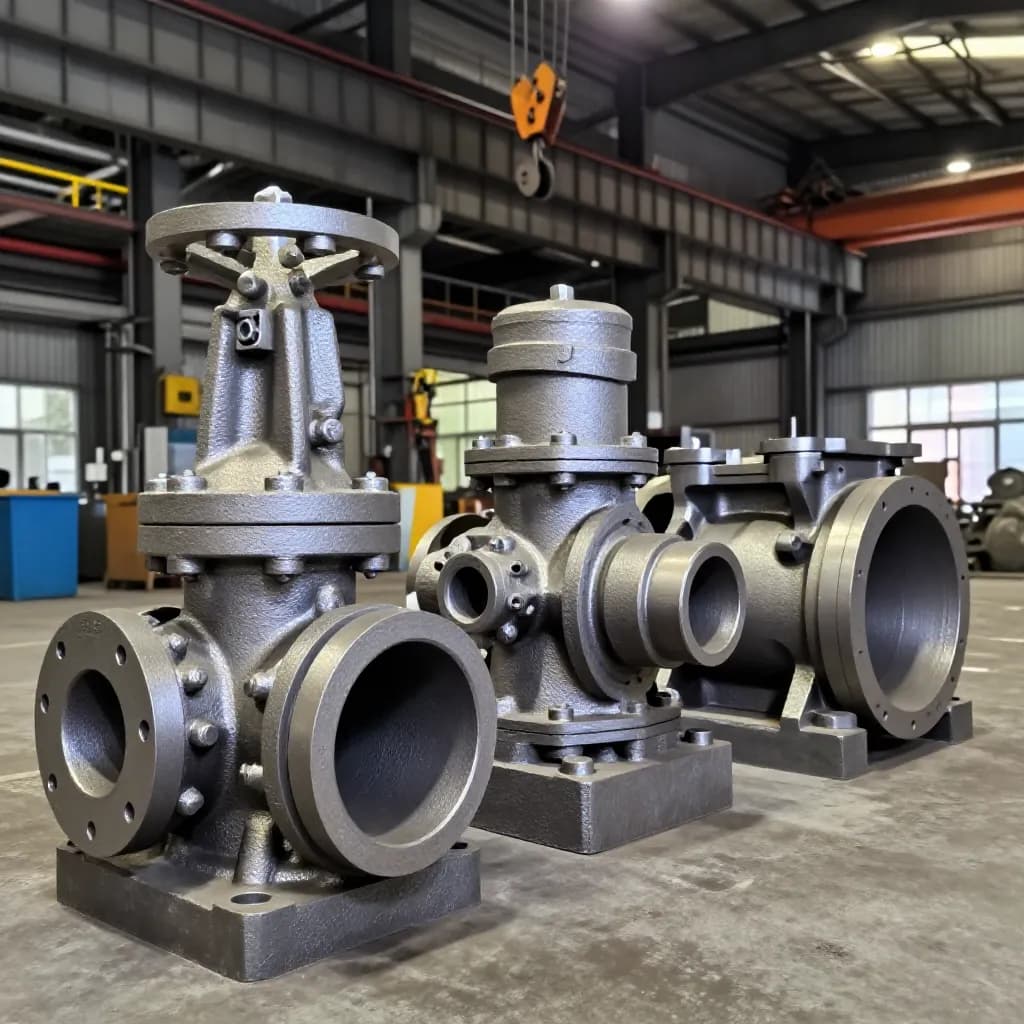
The fundamental challenge with castings is porosity. The casting process — whether sand casting, die casting, investment casting, or permanent mold casting — inevitably traps gases within the solidifying metal. These gas pockets range from microscopic pores invisible to the naked eye to visible voids several millimeters in diameter. The pores absorb moisture, oils, and contaminants during machining, storage, and handling, creating a reservoir of volatile material that escapes during the thermal curing cycle and disrupts the coating film.
Ready to Start Your Project?
From one-off customs to 15,000-part production runs — get precise pricing in 24 hours.
On This Page
Castings and Forgings: High-Value Substrates with Unique Coating Challenges
Forgings present different but related challenges. While the forging process compresses the metal and largely eliminates internal porosity, the surface condition of forgings — including scale from the forging temperature, die lubricant residues, and surface decarburization — requires thorough preparation before coating. Large forgings also present significant thermal mass challenges during curing.
Both castings and forgings are frequently heavy components — 10 kg to several hundred kilograms — that stress conveyor systems, require extended cure cycles, and demand robust hanging and fixturing solutions. The combination of substrate complexity, surface condition challenges, and physical handling requirements makes casting and forging coating a specialized discipline within the powder coating industry.
This article provides a comprehensive guide to the techniques, processes, and quality considerations for achieving defect-free powder coatings on cast and forged components.
Understanding and Managing Outgassing in Castings
Outgassing is the single most common and troublesome defect in powder coating of castings. When a porous casting enters the curing oven at 180-200°C, trapped gases, moisture, and volatile contaminants expand and migrate to the surface. If the powder coating has already melted and begun to flow, these escaping gases create pinholes, craters, and bubbles in the coating film that compromise both appearance and corrosion protection.
The severity of outgassing depends on several factors: the casting method (sand castings are generally more porous than die castings), the alloy (aluminum castings tend to have more distributed microporosity than iron castings), the section thickness (thicker sections trap more gas), and the contamination history (castings that have been machined with water-soluble coolants absorb more moisture than dry-machined parts).
The pre-bake or degas cycle is the primary defense against outgassing. The casting is heated to a temperature above the powder curing temperature — typically 230-260°C for standard powder coatings — and held at temperature for 15-45 minutes to drive out trapped volatiles. The required time depends on the casting's porosity level and wall thickness; heavily porous sand castings may need 30-45 minutes, while relatively dense die castings may need only 15-20 minutes.
The degas temperature must exceed the powder curing temperature to ensure that all volatiles that would escape during curing have already been released. If the degas temperature is only marginally above the cure temperature, some volatiles may remain trapped and escape during the cure cycle. A margin of 30-50°C above the cure temperature is recommended.
After the degas cycle, the casting is cooled to the appropriate application temperature. For electrostatic spray application, the part should be cooled to near ambient temperature (20-40°C) to allow normal electrostatic powder deposition. For hot-coat application, the part is cooled to 150-180°C and powder is applied to the still-hot surface, where it melts on contact and flows into surface pores before significant outgassing can occur.
Powder formulations for castings incorporate degassing additives — most commonly benzoin (2-hydroxy-2-phenylacetophenone) at 0.5-1.5% by weight — that modify the surface tension of the molten coating to allow gas bubbles to escape and the film to heal before gelation occurs. These additives are standard in casting-grade powder coatings and should always be specified when coating porous substrates.
Surface Preparation for Cast Substrates
Effective surface preparation for castings must address multiple contaminant types — foundry residues, machining fluids, handling oils, surface oxides, and the inherent surface roughness of the as-cast surface — while preparing the surface for optimal coating adhesion.
Sand castings retain residual sand and binder material in surface pores and at the casting-mold interface. Mechanical cleaning by shot blasting or tumbling removes adhered sand and foundry residues while simultaneously creating a surface profile for coating adhesion. Steel shot or grit blasting to SSPC-SP 6 (Commercial Blast Cleaning) or SSPC-SP 10 (Near-White Blast Cleaning) is standard for iron and steel castings. Aluminum castings require non-ferrous media — aluminum oxide, glass bead, or plastic media — to avoid iron contamination that could cause galvanic corrosion.
Die castings typically have smoother surfaces than sand castings but may have die lubricant residues that are difficult to remove. Silicone-based die lubricants are particularly problematic because even trace amounts can cause cratering and fisheye defects in the powder coating. Alkaline cleaning with silicone-specific surfactants, followed by thorough rinsing, is essential for die castings. In severe cases, a light abrasive blast after cleaning removes any remaining silicone contamination from the surface.
Machined surfaces on castings present a different preparation challenge. Machining operations leave cutting fluid residues in the surface texture, and these fluids can be driven deep into surface pores by the machining pressure. Water-soluble cutting fluids are particularly problematic because they absorb into the porous casting structure and are difficult to remove completely. Thorough alkaline cleaning followed by a degas bake is the most reliable approach for machined castings.
Chemical conversion coating follows mechanical cleaning for most casting applications. Iron phosphate is the standard conversion coating for ferrous castings, while chromate-free alternatives (zirconium or titanium-based) are used for aluminum castings. The conversion coating must be applied uniformly despite the variable surface roughness of castings — areas with different surface textures may react differently with the conversion chemistry, requiring careful process optimization.
For investment castings (lost-wax process), the surface is typically smoother and less porous than sand castings, but ceramic shell residues may remain in surface recesses. Acid pickling or aggressive alkaline cleaning may be needed to remove these residues, followed by standard conversion coating.
Forging-Specific Preparation and Coating Considerations
Forgings present a distinct set of surface preparation challenges compared to castings. While forgings are essentially free of internal porosity (the forging process compresses and consolidates the metal structure), their surface condition after forging requires careful treatment before powder coating.
Forging scale — the thick oxide layer that forms on steel surfaces at forging temperatures (900-1250°C) — must be completely removed before coating. This scale is typically a multi-layered structure of iron oxides (wustite, magnetite, and hematite) that varies in thickness from 50 to 500 microns depending on the forging temperature, time at temperature, and cooling rate. Incomplete scale removal leaves a poorly adherent substrate that will cause coating delamination in service.
Abrasive blast cleaning is the standard method for scale removal on forgings. Steel grit blasting to SSPC-SP 10 (Near-White Blast Cleaning) removes scale effectively and creates the surface profile needed for coating adhesion. For large forgings, wheel-blast machines that propel abrasive at high velocity using centrifugal wheels provide the throughput needed for production volumes.
Die lubricant residues on forgings — typically graphite-based or molybdenum disulfide-based compounds — must be removed before coating. These lubricants are applied at high temperatures and can become baked onto the forging surface, making them resistant to standard alkaline cleaning. A combination of thermal cleaning (burning off organic components at 400-450°C) followed by abrasive blasting to remove residual inorganic compounds is often the most effective approach.
Surface decarburization — the loss of carbon from the surface layer of steel forgings due to exposure to oxidizing atmospheres at forging temperature — creates a soft, low-carbon surface layer that may affect coating adhesion and corrosion resistance. For critical applications, the decarburized layer may need to be removed by machining or aggressive blasting before coating.
Large forgings present significant thermal mass challenges during powder curing. A forging weighing 200 kg may require 45-60 minutes in the curing oven to bring the entire mass to curing temperature, compared to 15-20 minutes for a typical sheet metal part. Oven profiling with thermocouples on the thickest and thinnest sections establishes the minimum cure time. The extended oven dwell means that thin sections of the forging may be exposed to curing temperature for much longer than necessary, potentially causing overcure and embrittlement of the coating on these areas.
Automotive Casting and Forging Applications
The automotive industry is one of the largest consumers of powder-coated castings and forgings, with applications ranging from engine and drivetrain components to suspension parts and structural brackets. Automotive specifications demand consistent quality at high production volumes, with zero tolerance for coating defects on visible components.
Aluminum die-cast components — including transmission housings, engine covers, intake manifolds, and structural nodes — are powder coated for both corrosion protection and appearance. The automotive industry's transition to aluminum-intensive vehicle architectures has dramatically increased the volume of aluminum castings requiring powder coating. These components must meet automotive corrosion specifications (typically 1000+ hours salt spray per ASTM B117 or 60+ cycles of cyclic corrosion per SAE J2334) while maintaining the precise dimensional tolerances required for assembly.
Cast iron components — brake calipers, exhaust manifolds, differential housings — present the full range of outgassing challenges described earlier. Brake calipers are a particularly high-profile application where coating appearance is critical (visible through wheel spokes) and operating temperatures can reach 200-300°C during heavy braking. High-temperature powder coatings based on silicone-modified polyester or pure silicone chemistry are specified for brake caliper applications.
Forged suspension components — control arms, steering knuckles, connecting rods — require coatings that withstand stone chip impacts, road salt exposure, and the cyclic stresses of suspension operation. Epoxy and epoxy-polyester powder coatings at 60-100 microns provide the combination of adhesion, flexibility, and corrosion resistance needed for these demanding applications.
The automotive industry's quality expectations for coated castings and forgings are defined by OEM-specific specifications (such as Ford WSS-M1P83, GM GMW14668, or Volkswagen TL 211) that specify pretreatment requirements, coating thickness ranges, adhesion criteria, corrosion resistance, and appearance standards. These specifications are regularly updated to reflect evolving performance requirements and environmental regulations.
First-article qualification for automotive casting coating typically requires submission of coated samples with full documentation of the coating process, material certifications, and test results. Production Part Approval Process (PPAP) documentation per AIAG standards is standard for automotive suppliers, and ongoing production quality is monitored through statistical process control and periodic requalification testing.
Heavy Industrial and Infrastructure Casting Applications
Beyond automotive, powder-coated castings and forgings serve critical functions in heavy industrial equipment, infrastructure, and energy systems. These applications often involve very large, heavy components that push the limits of coating equipment and processes.
Hydraulic valve bodies and manifolds — typically cast from ductile iron or cast steel — require powder coating for corrosion protection in outdoor and marine environments. These components have complex internal passages that must be masked during external coating, and the machined port faces and mounting surfaces require precise masking to maintain dimensional tolerances. Film thicknesses of 80-120 microns in epoxy or polyester powder provide adequate protection for most hydraulic applications.
Pump and compressor housings, as discussed in the dedicated pump housing article, are among the most challenging casting coating applications due to their combination of internal and external coating requirements, complex geometry, and demanding service environments.
Structural castings for construction equipment — track shoes, bucket teeth, ripper shanks — require coatings that withstand extreme abrasion and impact. While powder coating alone cannot provide the wear resistance needed for ground-engaging surfaces, it serves as corrosion protection on non-wear surfaces and as a base for identification marking and safety color coding.
Architectural castings — decorative brackets, lamp post bases, bollards, and ornamental ironwork — represent a growing market for powder-coated castings where appearance is the primary requirement. These components are typically sand cast from gray iron or aluminum and require careful surface preparation and degas processing to achieve the defect-free finish expected for architectural applications. Super-durable polyester powder coatings in custom colors provide the weathering resistance and aesthetic quality needed for building-mounted and landscape applications.
Railway castings — bogie frames, coupler housings, brake components — must meet railway-specific corrosion and fire safety standards. EN 45545-2 fire safety requirements for railway vehicles specify limits on heat release, smoke density, and toxicity that the coating must satisfy. Powder coatings formulated for railway applications incorporate flame-retardant additives to meet these requirements while providing the corrosion protection needed for vehicles operating in all weather conditions.
Defect Prevention and Troubleshooting Guide
Despite best efforts in preparation and application, coating defects on castings and forgings can occur. Understanding the root causes of common defects enables rapid diagnosis and corrective action.
Pinholes and craters are the most common defects on castings, caused by outgassing from substrate porosity. If pinholes appear despite a degas bake, the degas temperature or time may be insufficient. Increasing the degas temperature by 20-30°C or extending the hold time by 10-15 minutes typically resolves the issue. If pinholes persist, the casting may have unusually high porosity requiring a more aggressive degas cycle or a switch to hot-coat application.
Fisheyes — circular defects with a raised rim and depressed center — indicate surface contamination, most commonly silicone from die lubricants, mold release agents, or contaminated compressed air. The solution is improved cleaning with silicone-specific surfactants, verification of compressed air purity (oil-free, silicone-free), and potential light abrasive blasting after cleaning to remove embedded contaminants.
Orange peel — a textured surface resembling orange skin — can result from several causes on castings: insufficient powder flow during cure (powder too reactive or oven temperature too high), excessive film thickness causing the coating to sag before gelling, or substrate temperature variations causing uneven flow. Adjusting cure parameters and ensuring uniform substrate temperature typically resolves orange peel issues.
Poor adhesion on castings often traces to inadequate surface preparation — residual foundry sand, machining oils trapped in pores, or incomplete conversion coating coverage on rough surfaces. A systematic review of each preparation step, with adhesion testing after each stage, identifies the weak link in the preparation sequence.
Color variation between castings in the same batch can result from differences in substrate temperature at application (affecting powder flow and leveling), variations in film thickness (thicker films appear darker for many colors), or inconsistent cure (undercured coatings may appear different from fully cured coatings). Standardizing part temperature, controlling film thickness within tight tolerances, and verifying cure with differential scanning calorimetry (DSC) or solvent rub testing eliminates color variation.
For forgings, the most common defect is coating delamination at areas where forging scale was incompletely removed. Even a thin residual scale layer provides a weak boundary that fails under thermal stress or mechanical impact. Verification of blast cleaning quality using visual standards (SSPC-VIS 1) and surface cleanliness testing (tape pull or soluble salt measurement) before coating prevents this defect.
Frequently Asked Questions
What causes pinholes in powder coating on castings?
Pinholes are caused by outgassing — trapped gases, moisture, and volatile contaminants escaping from the porous casting during the curing cycle. The solution is a pre-bake degas cycle at 230-260°C for 15-45 minutes before powder application, combined with powder formulations containing degassing additives like benzoin.
How long should castings be degassed before powder coating?
Degas time depends on casting porosity and wall thickness. Die castings typically need 15-20 minutes at 230-260°C, while heavily porous sand castings may require 30-45 minutes. The degas temperature should be 30-50°C above the powder curing temperature to ensure complete volatile removal.
Can forged parts be powder coated without special preparation?
No. Forgings require removal of forging scale (thick oxide layer) by abrasive blast cleaning to SSPC-SP 10, removal of die lubricant residues (often requiring thermal cleaning at 400-450°C), and standard chemical conversion coating. Incomplete scale removal causes coating delamination in service.
What powder coating is used for automotive brake calipers?
Brake calipers use high-temperature powder coatings based on silicone-modified polyester or pure silicone chemistry that withstand operating temperatures of 200-300°C during heavy braking. The coating must also meet automotive corrosion specifications (1000+ hours salt spray) and provide the appearance quality expected for a visible component.
How do you handle the thermal mass of heavy castings during curing?
Heavy castings (100+ kg) require extended oven dwell times — 45-60 minutes or more — to bring the entire mass to curing temperature. Oven profiling with thermocouples on the thickest and thinnest sections establishes minimum cure time. The risk of overcure on thin sections must be managed through careful temperature control.
Ready to Start Your Project?
From one-off customs to 15,000-part production runs — get precise pricing in 24 hours.