BMW vehicles have one of the most active aftermarket and customization communities in the automotive world, and powder coating is a cornerstone of BMW modification and restoration. From refreshing curb-rashed factory wheels to building show-quality engine bays, powder coating serves BMW owners across the full spectrum from daily drivers to concours competitors.
Automotive
Powder Coating for BMW Wheels and Parts: M-Sport Colors, Wheel Restoration, Engine Bay, and Trim
Sundial Powder Coating·April 22, 2026·13 min
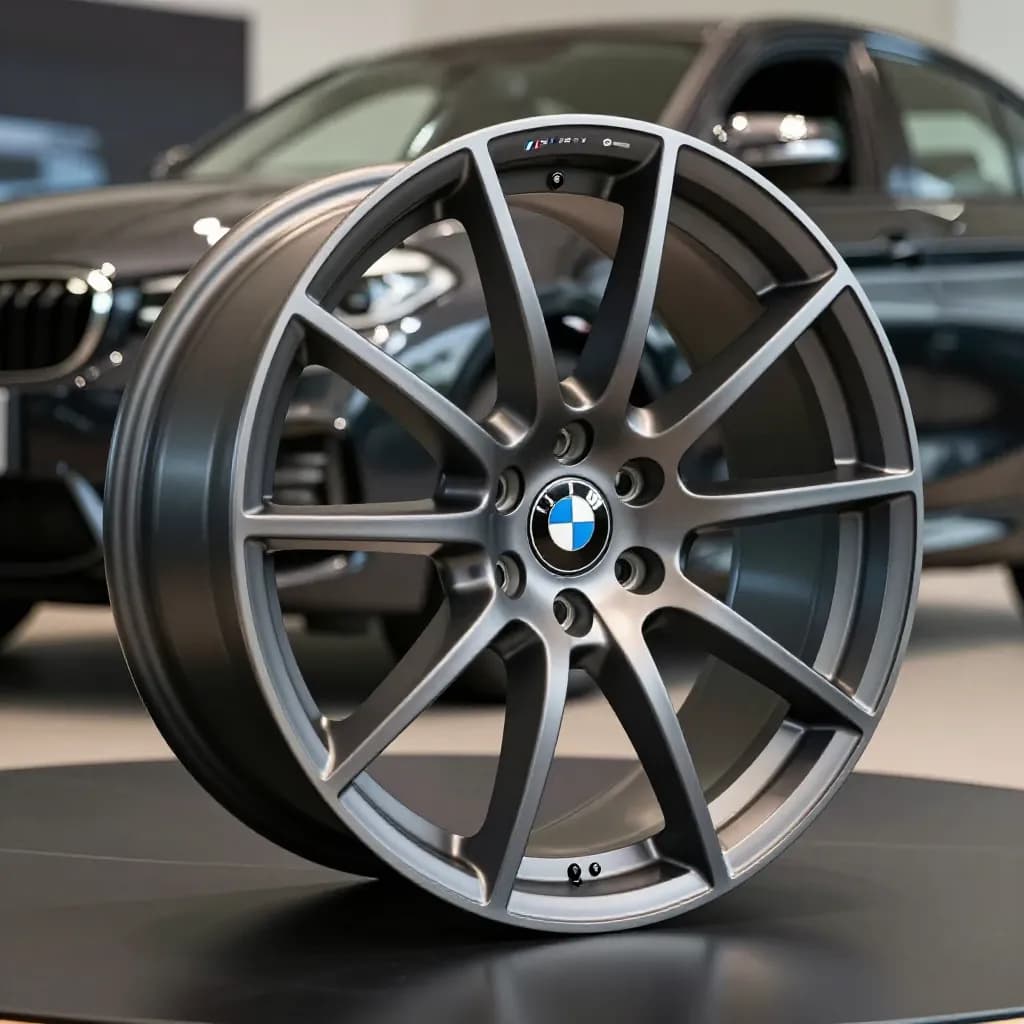
BMW's extensive wheel catalog — with dozens of distinct designs across the Style numbering system — means that wheel powder coating is the single most common BMW application. BMW wheels are particularly susceptible to curb damage due to the low-profile tires fitted to many models, and the factory wheel finishes can deteriorate from brake dust exposure, road salt, and UV degradation. Powder coating provides a durable restoration option that can either replicate the original finish or transform the wheel's appearance entirely.
Ready to Start Your Project?
From one-off customs to 15,000-part production runs — get precise pricing in 24 hours.
On This Page
BMW Owners and the Powder Coating Opportunity
The M-sport and M Performance ecosystem creates additional powder coating demand. BMW's M division colors — including the iconic M-sport tri-color scheme and model-specific accent colors — are frequently requested for brake calipers, engine covers, and interior trim. Matching these specific BMW colors in powder coating format requires careful color development and high-temperature formulations for brake components.
BMW's heritage of inline-six and V8 engines with visible engine bays has created a culture of engine bay detailing where powder-coated components play a prominent role. Valve covers, intake manifolds, strut tower braces, and various brackets and covers are commonly powder coated to create clean, color-coordinated engine bays that showcase the mechanical engineering BMW is known for.
BMW Wheel Styles and Color Matching
BMW identifies its wheel designs using a Style number system that spans hundreds of distinct designs across decades of production. Each Style number corresponds to a specific wheel design, and many styles have been produced in multiple finishes over their production life. Understanding the specific Style and finish of your BMW wheels is the starting point for accurate color matching.
Common BMW factory wheel finishes include Silver (the most common standard finish), Ferric Grey (a dark grey metallic used on M-sport and M Performance wheels), Jet Black (gloss black), Orbit Grey (a medium grey metallic), and Bicolor (a two-tone finish with machined face and painted spokes). The specific finish varies by Style number, model year, and option package.
BMW wheel color codes can be identified through the BMW parts catalog using the wheel's part number, which is stamped on the inner barrel of the wheel. Common finish codes include those for Reflex Silver, Ferric Grey, and Orbit Grey. Providing the part number and finish code to the powder coating manufacturer enables the most accurate color match.
The Bicolor finish — featuring a machined or diamond-cut face with painted spoke recesses — is one of BMW's most popular wheel finishes and presents specific powder coating challenges. Replicating this two-tone effect requires masking the machined face during powder coating of the recesses, or powder coating the entire wheel and then machining the face afterward. The latter approach provides a cleaner transition line but requires access to a CNC wheel lathe.
For classic BMW models — E30, E36, E46, and earlier — original wheel finishes may differ from current production colors. Matching vintage BMW wheel colors requires reference to original parts or period documentation, as the factory finishes have evolved over the decades. The iconic BBS Style 5 cross-spoke wheel, for example, was produced in several silver variations that differ subtly from current BMW silver finishes.
M-Sport and M Performance Color Matching
BMW's M division colors are among the most frequently requested color matches in automotive powder coating. These distinctive colors — used on brake calipers, engine covers, badges, and accent pieces — are central to the M-sport aesthetic and are highly valued by BMW enthusiasts.
M Performance brake calipers come in several signature colors depending on the model and brake package. Standard M-sport calipers are typically finished in blue with the M logo. M Performance calipers are available in red, orange, or gold depending on the model and option package. The M Carbon Ceramic brakes feature gold calipers. Each of these colors has a specific BMW color specification that can be matched in high-temperature powder coating.
Matching BMW caliper colors requires high-temperature powder coating formulations rated for sustained temperatures of 300-500 degrees Celsius. Standard decorative powder coatings will discolor and fail at brake caliper operating temperatures. The color match must be developed in the high-temperature formulation, not in a standard formulation — the same pigments may produce different colors in different resin systems.
BMW M engine covers — the distinctive covers on M3, M4, M5, and other M models — are typically finished in a specific carbon-fiber-look or painted finish. Powder coating replacement engine covers or aftermarket covers to match the M aesthetic requires matching both the color and the surface texture of the original. Some M engine covers feature a textured or soft-touch finish that can be replicated in powder coating using appropriate formulations.
The M-sport tri-color stripe — blue, dark blue, and red — appears on various BMW accessories and can be replicated on powder-coated components using multi-color masking techniques. This requires applying each color separately with precise masking between colors, which is labor-intensive but achievable for skilled applicators.
BMW Individual colors — the extended palette available through BMW's Individual program — include unique colors not found in the standard range. These colors can be matched in powder coating using the BMW Individual color code, though some of the more exotic Individual colors (such as multi-layer effects) may be challenging to replicate precisely in powder format.
Engine Bay Components and Detailing
BMW engine bay powder coating has become a significant niche within the BMW enthusiast community, driven by the desire to create clean, show-quality engine presentations. The visibility of BMW's engine bays — particularly on models with inline-six engines — makes engine bay detailing a rewarding modification that enhances the vehicle's overall presentation.
Valve covers are the most prominent engine bay component for powder coating. BMW's aluminum valve covers on inline-six and V8 engines provide a large, visible surface that sets the tone for the entire engine bay. Popular finishes include wrinkle black (replicating the factory texture on many BMW engines), gloss black, satin black, and custom colors that match the vehicle's exterior or interior color scheme.
Intake manifolds on naturally aspirated BMW engines are another popular powder coating target. The large aluminum intake manifold on engines like the S54 (E46 M3) and S52 provides a substantial canvas for color customization. Intake manifolds must be thoroughly cleaned of all oil and fuel residue before coating, and all gasket surfaces, sensor ports, and injector bores must be carefully masked.
Strut tower braces, chassis braces, and aftermarket engine bay dress-up components are commonly powder coated to create a coordinated engine bay appearance. These components are typically aluminum or steel and are straightforward to coat. Matching the finish across all engine bay components creates the cohesive, detailed appearance that show judges and enthusiasts appreciate.
Heat shields, exhaust manifold covers, and turbo-adjacent components require high-temperature powder coatings. Standard powder coatings will discolor and degrade when exposed to the heat generated by exhaust components and turbochargers. Ceramic-modified or silicone-based high-temperature formulations are necessary for these applications.
When planning an engine bay powder coating project, photograph the engine bay before disassembly and label all components and their mounting hardware. BMW engine bays contain numerous small brackets, clips, and fasteners that are easy to lose or misidentify during reassembly. A systematic approach to disassembly and documentation prevents frustration during the reassembly process.
Exterior Trim and Body Accessories
BMW exterior trim pieces offer additional powder coating opportunities for owners seeking to customize their vehicle's appearance. The trend toward blacked-out or color-matched trim has made powder coating a popular alternative to vinyl wrapping or replacement trim pieces.
Kidney grille surrounds on BMW models are available in chrome, gloss black, and various other finishes from the factory. Powder coating the grille surround in gloss black, satin black, or body color is a common modification. The grille surround must be carefully removed from the vehicle and stripped of any existing chrome plating before powder coating. Chrome removal requires chemical or electrochemical stripping followed by media blasting.
Mirror caps on BMW models are typically plastic and cannot be powder coated. However, aftermarket metal mirror caps are available for some models and can be powder coated in any color. For plastic factory mirror caps, alternative finishing methods such as vinyl wrapping or automotive paint are more appropriate.
Exhaust tips can be powder coated in high-temperature formulations for a custom appearance. BMW's factory exhaust tips are typically chrome-plated stainless steel, which requires chrome removal before powder coating. High-temperature satin black or dark chrome powder coatings are popular choices that complement the blacked-out aesthetic many BMW owners pursue.
Roof rails, window trim, and door handle covers are additional trim pieces that may be candidates for powder coating, depending on whether they are metal or plastic. Metal trim pieces can be powder coated after removal and stripping of any existing finish. Plastic pieces require alternative finishing methods.
For BMW owners pursuing a complete exterior transformation, coordinating the powder coating of wheels, calipers, grille, and trim pieces creates a dramatic visual change. Planning the color scheme across all components before beginning work ensures a cohesive result. Many BMW owners create digital mockups using photo editing software to visualize different color combinations before committing to powder coating.
Wheel Restoration: Bringing BMW Wheels Back to Life
BMW wheel restoration through powder coating is one of the most cost-effective ways to dramatically improve a BMW's appearance. Factory BMW wheels are expensive to replace, and many owners find that powder coating damaged or worn wheels is significantly more economical than purchasing new replacements.
Curb rash is the most common form of BMW wheel damage, caused by contact with curbs during parking. The low-profile tires fitted to many BMW models provide minimal sidewall protection, making curb contact more likely and more damaging. Minor curb rash can be repaired by filling and sanding the damaged area before powder coating. More severe damage — deep gouges, bent lips, or cracked spokes — may require professional wheel repair before coating.
Brake dust staining is another common issue on BMW wheels, particularly on models with high-performance brake packages. Years of brake dust accumulation can permanently stain factory wheel finishes, creating a mottled, discolored appearance that cannot be restored through cleaning alone. Powder coating provides a complete surface renewal that eliminates brake dust staining and provides a fresh, uniform finish.
Corrosion is a concern for BMW wheels in salt-belt climates. Road salt can penetrate damaged areas of the factory finish and cause corrosion of the aluminum substrate. If corrosion is present, the affected areas must be thoroughly cleaned and treated before powder coating. Severe corrosion may compromise the wheel's structural integrity and should be evaluated by a wheel repair specialist before coating.
The restoration process begins with tire removal, followed by inspection for structural damage. The wheel is then chemically stripped to remove all existing coatings, media blasted to create a uniform surface profile, and treated with a conversion coating for adhesion and corrosion resistance. Any curb damage is repaired at this stage. The wheel is then powder coated, cured, inspected, and returned for tire mounting and balancing.
For BMW owners with multiple sets of wheels — summer and winter sets are common in northern climates — powder coating the winter wheels in a durable, dark finish provides excellent protection against road salt and makes cleaning easier during the winter months. Textured or satin dark finishes are practical choices for winter wheels that will be exposed to harsh conditions.
Selecting a Shop for BMW Powder Coating Work
Choosing a powder coating shop for BMW work requires evaluating the shop's experience with automotive applications, their understanding of BMW-specific requirements, and their ability to deliver the finish quality that BMW owners expect.
Automotive wheel experience is the primary qualification. Ask the shop how many wheels they coat per month, whether they have experience with BMW-specific wheel designs, and whether they can show examples of completed BMW projects. BMW wheels feature complex spoke patterns and deep dishes that require skilled spray technique for uniform coverage.
Color matching capability is essential for BMW work. The shop should have access to a powder coating manufacturer's color matching service or maintain their own spectrophotometric color matching capability. Ask specifically about experience matching BMW factory wheel colors and M-sport caliper colors.
For engine bay work, the shop should understand the masking requirements for engine components — gasket surfaces, sensor ports, threaded holes, and bearing surfaces must all be protected. Ask whether the shop has experience with engine component powder coating and whether they understand the specific masking requirements for BMW engines.
Quality control standards should match the expectations of BMW owners. Ask about the shop's inspection process, their standards for surface quality, and their policy for handling defects. A shop that inspects every wheel under directional lighting and recoats any wheel with visible defects demonstrates the quality commitment that BMW work demands.
Turnaround time for BMW wheel powder coating typically ranges from 5-10 business days. Some shops offer expedited service for an additional fee. For engine bay projects involving multiple components, allow two to four weeks for the complete process including disassembly documentation, preparation, coating, and quality inspection.
The BMW enthusiast community — active on forums like Bimmerpost, Bimmerfest, and regional BMW club chapters — is an excellent resource for shop recommendations. Ask for recommendations from other BMW owners in your area and check forum threads for reviews of local powder coating shops.
Frequently Asked Questions
Can powder coating match BMW Ferric Grey wheel color?
Yes. BMW Ferric Grey is a dark grey metallic that can be matched using bonded metallic powder formulations. Provide the BMW wheel part number and finish code for the most accurate match. Request a sample panel and evaluate it alongside your vehicle in natural daylight before committing to production.
What powder coating is needed for BMW M-sport brake calipers?
BMW M-sport caliper colors require high-temperature powder coating formulations rated for 300-500 degrees Celsius. Standard decorative powders will fail at caliper operating temperatures. The color match must be developed specifically in the high-temperature formulation, as pigments may produce different colors in different resin systems.
Can BMW Bicolor wheels be replicated in powder coating?
Yes. The two-tone Bicolor effect can be achieved by masking the machined face during powder coating of the spoke recesses, or by powder coating the entire wheel and then diamond-cutting the face on a CNC lathe. The latter provides a cleaner transition line but requires specialized equipment.
Is powder coating BMW valve covers a good idea?
Yes. Aluminum valve covers are excellent candidates for powder coating. Popular finishes include wrinkle black (replicating factory texture), gloss black, and custom colors. All gasket surfaces and bolt holes must be carefully masked. The valve cover must be thoroughly cleaned of oil residue before coating.
How much does BMW wheel powder coating typically cost?
Powder coating costs vary by region, wheel size, and finish complexity. A single-color finish on a standard BMW wheel typically falls within a moderate range per wheel. Two-coat systems with clear coat, metallic finishes, and custom colors cost more. Contact local shops for specific quotes based on your wheel style and desired finish.
Ready to Start Your Project?
From one-off customs to 15,000-part production runs — get precise pricing in 24 hours.