Powder coating is the dominant finishing technology for architectural aluminum, yet many architects have only a surface-level understanding of how it works, what performance levels are available, and how to specify it correctly. This knowledge gap can lead to specifications that are either too vague to ensure quality or too restrictive to be practical, color selections that do not translate well from screen to substrate, and project coordination problems that cause delays and cost overruns.
Architecture
Powder Coating for Architects and Specifiers: A Complete Guide
Sundial Powder Coating·April 22, 2026·13 min
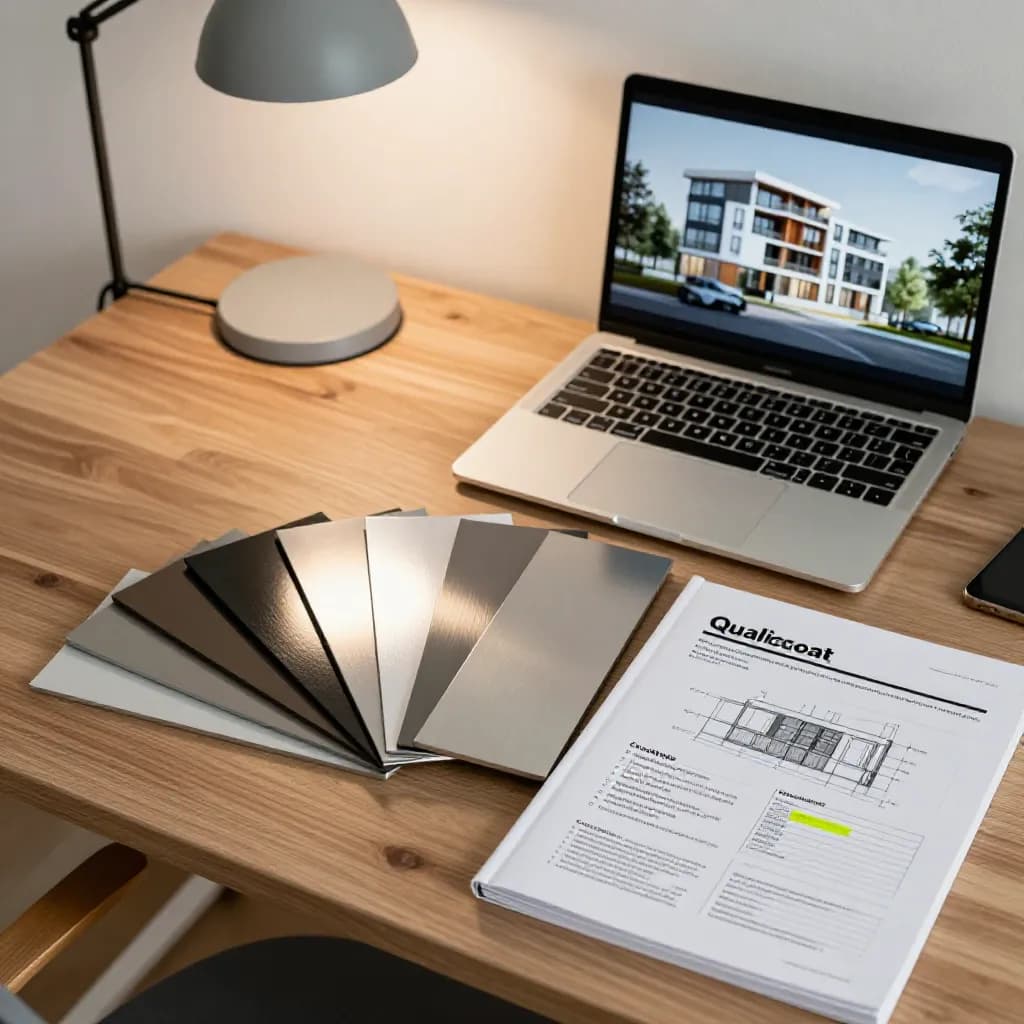
For architects, powder coating is not just a protective layer — it is a design element that defines the visual character of a building's exterior. The color, gloss, and texture of coated aluminum facades, window frames, curtain walls, and entrance systems create the first impression of a building and must maintain that impression for decades. Getting the coating specification right is therefore both a technical and an aesthetic responsibility.
Ready to Start Your Project?
From one-off customs to 15,000-part production runs — get precise pricing in 24 hours.
On This Page
Why Architects Need to Understand Powder Coating
This guide is written specifically for architects and specifiers who need to understand powder coating well enough to make informed decisions and write effective specifications. It covers the specification language used in the industry, the performance tier systems that define quality levels, the color standard systems available, the sample approval process, and the project coordination practices that ensure the coating specification is translated accurately from drawing to finished building.
Understanding Performance Tiers and Specification Language
Architectural powder coatings are classified into performance tiers that define their expected durability and weathering resistance. In Europe, the Qualicoat system defines three classes: Class 1 uses standard polyester powder and is suitable for most urban and suburban environments. Class 2 uses superdurable polyester with enhanced UV resistance for more exposed locations. Class 3 uses fluoropolymer coatings (PVDF or FEVE) for the most demanding applications requiring maximum long-term color and gloss retention.
In North America, the AAMA specification system serves a similar function. AAMA 2603 covers basic performance for interior and sheltered exterior use. AAMA 2604 provides intermediate performance for standard exterior exposure. AAMA 2605 is the premium tier, requiring ten years of South Florida weathering data and typically met only by fluoropolymer coatings. Understanding which tier to specify for each project is one of the most important decisions an architect makes regarding the building envelope.
The specification language should be precise and reference recognized standards. Rather than writing 'high-quality powder coating,' specify 'polyester powder coating to Qualicoat Class 2' or 'fluoropolymer coating compliant with AAMA 2605.' This precision eliminates ambiguity, ensures that all bidding contractors are quoting to the same standard, and provides a clear benchmark for quality verification during construction. Include the performance tier in the project specification, the facade schedule, and the relevant drawing details.
Color Systems: RAL, NCS, Pantone, and Custom Matching
Architects have access to multiple color standard systems for specifying powder coating colors, each with different strengths and applications. RAL Classic is the most widely used system in the European powder coating industry, with 215 standardized colors that are universally available from all major powder manufacturers. RAL Design extends this to 1,825 colors organized by hue, lightness, and chroma, providing a more systematic approach to color selection.
The Natural Color System (NCS) is based on human color perception and is widely used in Scandinavian countries and increasingly across Europe. NCS colors can be matched by powder manufacturers, though not all NCS references have direct RAL equivalents. Pantone, while dominant in graphic design and printing, is less commonly used for powder coating specification because Pantone colors are defined for ink on paper, and the translation to powder on metal can produce noticeable differences.
For projects requiring colors outside standard systems, custom color matching is available from all major powder manufacturers. The process involves submitting a physical color reference (a painted sample, fabric swatch, or other material) to the powder manufacturer, who formulates a custom powder to match. Custom matching typically requires two to four weeks for development and approval, and minimum order quantities for custom colors are higher than for standard catalog colors. When specifying custom colors, always provide a physical reference rather than a digital color file — screen colors are unreliable for coating specification due to variations in display calibration and the fundamental difference between additive (screen) and subtractive (coating) color mixing.
The Sample Approval Process for Architectural Projects
The sample approval process is where the architect's color vision meets the reality of powder coating production, and managing this process well is essential for project success. Start by requesting initial color samples from the coating applicator or powder manufacturer as early as possible in the project timeline — ideally during the design development phase rather than waiting until construction documentation.
Samples should be produced on the same substrate material and alloy as the production components. A color sample on a flat aluminum panel may look different from the same color on an extruded profile due to differences in surface texture, alloy composition, and coating thickness distribution. For critical facade applications, request samples on actual profile sections rather than flat panels to assess how the color and finish appear on the three-dimensional geometry of the real product.
Evaluate samples under multiple lighting conditions — direct sunlight, overcast daylight, and the artificial lighting that will illuminate the building at night. Color appearance changes significantly under different light sources, and a color that looks perfect in the architect's studio under fluorescent lighting may appear quite different on the building facade in natural daylight. If possible, view large-format samples (at least 300mm x 300mm) at the actual viewing distance to assess how the color reads at scale.
Formalize the approval with a signed sample approval document that records the color reference, gloss measurement, texture description, powder product code, and the names and signatures of all approving parties. Retain the approved sample panel in a protected location as the reference standard for production quality control. For multi-phase projects, ensure that the same approved reference is used throughout all phases to maintain color consistency.
Specifying Texture, Gloss, and Special Finishes
Beyond color, the texture and gloss of a powder coating significantly affect the visual character of a building facade. Gloss level is measured in gloss units (GU) at a 60° angle and ranges from dead matte (below 10 GU) through satin (20-40 GU) and semi-gloss (40-70 GU) to high gloss (above 80 GU). Lower gloss levels tend to hide surface imperfections and reduce glare, while higher gloss levels create a more reflective, contemporary appearance but show surface irregularities more readily.
Texture options include smooth, fine texture, medium texture, coarse texture, and various structured finishes such as wrinkle, leatherette, and sand effects. Textured finishes are practical as well as aesthetic — they hide minor surface imperfections, reduce the visibility of fingerprints and handling marks, and can improve scratch resistance compared to smooth finishes. However, textured surfaces are more difficult to clean and may accumulate dirt more readily in polluted environments.
Special finishes available in powder coating include metallic effects (incorporating aluminum or mica flakes for a sparkling appearance), anodic-look finishes that replicate the appearance of anodized aluminum without the color limitations, wood-grain effects achieved through sublimation transfer technology, and multi-tone finishes that create color variation across the surface. When specifying special finishes, always evaluate physical samples rather than relying on catalog images or digital renderings, as the visual effect of metallic and textured finishes is highly dependent on viewing angle and lighting conditions.
Project Coordination: From Specification to Installation
Successful powder coating on an architectural project requires coordination between multiple parties — architect, facade consultant, main contractor, aluminum fabricator, coating applicator, and powder manufacturer. Each party has a role in ensuring that the coating specification is correctly interpreted and executed, and communication failures between any two parties can result in quality problems or project delays.
The architect's specification should flow through to the fabricator's purchase order to the coating applicator without loss of critical information. In practice, specifications are often simplified or misinterpreted as they pass through the supply chain. To prevent this, consider specifying the coating requirements in a standalone coating specification document that is referenced by all parties, rather than burying requirements in general specification clauses that may be overlooked.
Establish a clear approval chain for color and quality decisions. Define who has authority to approve color samples, who conducts quality inspections at the coating facility, and who makes acceptance decisions on delivered components. For large or complex projects, consider appointing a coating consultant or facade specialist to oversee the coating quality process from specification through production to installation. This independent oversight provides an additional layer of quality assurance and can identify problems before they become costly to resolve.
Maintenance Specifications and Warranty Considerations
Architects should include maintenance requirements in the project specification to ensure that the coating's long-term performance is not compromised by inappropriate cleaning methods or neglect. Standard maintenance for powder-coated architectural aluminum involves periodic cleaning with mild, pH-neutral detergent and clean water, typically at six to twelve month intervals depending on the pollution level of the environment.
Specify the cleaning method, frequency, and acceptable cleaning agents in the building maintenance manual. Avoid abrasive cleaners, strong solvents, and high-pressure washing, all of which can damage the coating film. For buildings in coastal or industrial environments, more frequent cleaning may be necessary to remove salt deposits or chemical contaminants before they cause permanent staining or coating degradation.
Warranty provisions should be addressed in the project specification and the coating applicator's supply agreement. Typical architectural powder coating warranties range from ten to twenty-five years, depending on the performance tier specified. Warranty terms should define the specific performance criteria covered (color retention, gloss retention, adhesion, chalking, cracking, peeling), the measurement methods used to assess warranty claims, and any exclusions or conditions (such as maintenance compliance requirements). Ensure that warranty obligations are backed by both the coating applicator and the powder manufacturer, providing dual recourse in the event of a coating failure.
Frequently Asked Questions
Which Qualicoat class should I specify for a building facade?
For most urban and suburban locations, Qualicoat Class 1 is appropriate. For exposed or coastal sites, specify Class 2 with superdurable polyester. For premium projects requiring maximum long-term performance, specify Class 3 with fluoropolymer coatings. Consider the building's orientation, exposure, and the client's expectations for maintenance-free appearance.
Can I specify a Pantone color for powder coating?
Pantone colors can be matched in powder coating, but the result may differ from the Pantone reference because Pantone is designed for ink on paper. Always evaluate a physical powder-coated sample rather than relying on the Pantone swatch. For best results, provide a physical color reference and specify an acceptable Delta E tolerance.
How long does the color sample approval process take?
For standard RAL colors, sample panels can typically be produced in one to two weeks. Custom color development takes two to four weeks for initial samples, with additional time for revisions if needed. Allow adequate time in the project schedule for sample production, evaluation, and formal approval by all stakeholders.
What gloss level should I specify for an exterior facade?
Satin finishes (20-40 GU at 60°) are the most popular choice for architectural facades because they balance visual appeal with practical performance — hiding minor surface imperfections while providing a refined appearance. Matte finishes are increasingly popular for contemporary designs, while high gloss is used for accent elements.
How do I ensure color consistency across a multi-phase building project?
Retain approved sample panels as reference standards for all phases. Specify a maximum Delta E tolerance for batch-to-batch variation. Request that the powder manufacturer reserves material from a single production batch or provides a color matching guarantee across batches. Conduct side-by-side comparisons of new production against retained references.
Ready to Start Your Project?
From one-off customs to 15,000-part production runs — get precise pricing in 24 hours.