Food halls have emerged as one of the most dynamic formats in contemporary hospitality, bringing together multiple food vendors under one roof in a curated, design-driven environment. The industrial aesthetic that defines most food halls — exposed structure, raw materials, and honest finishes — relies heavily on metal elements that must look intentionally designed while surviving the intense demands of a multi-vendor food service operation.
Hospitality
Powder Coating for Food Halls and Market Stalls
Sundial Powder Coating·April 20, 2026·9 min
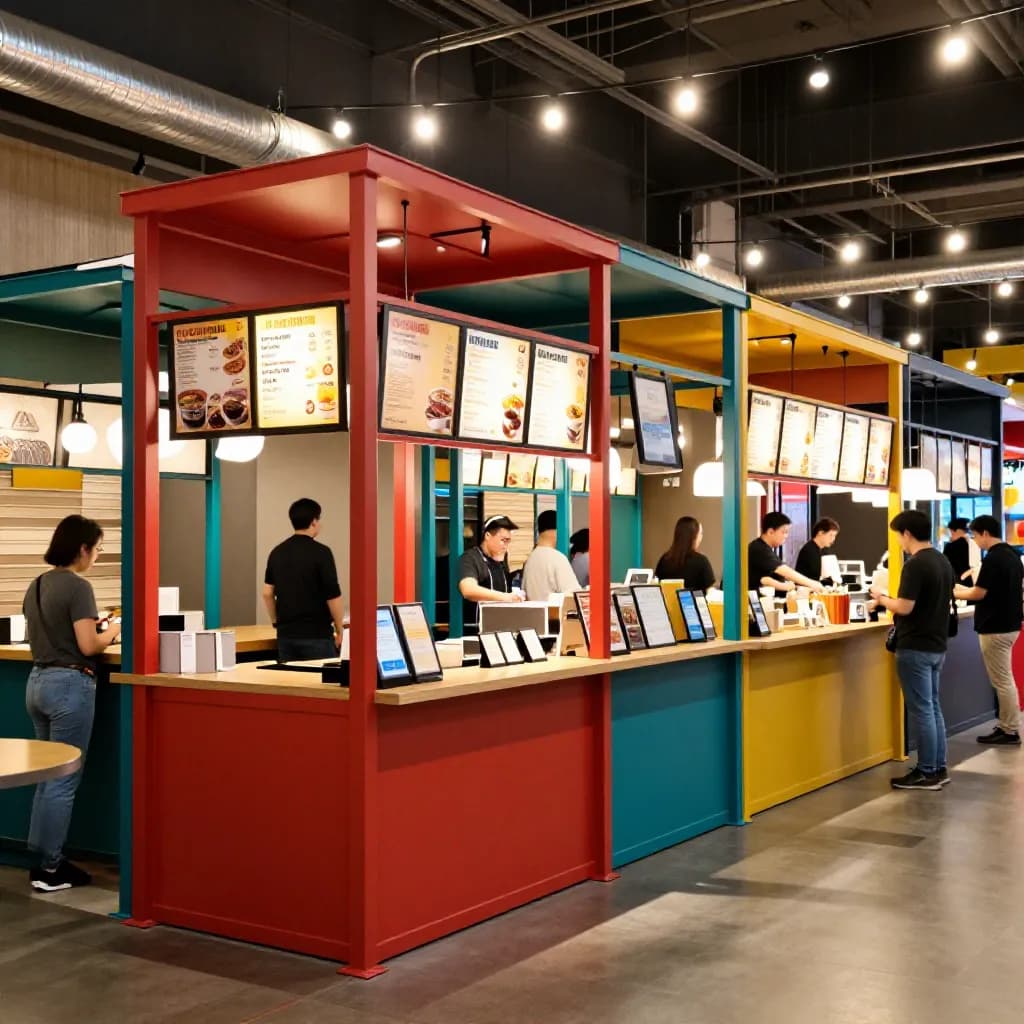
The design challenge of a food hall is unique: creating a cohesive environment that unifies diverse vendors while allowing each stall to express its individual identity. The shared infrastructure — structural elements, common seating, wayfinding systems, and boundary treatments — must establish a consistent design language that ties the space together. Metal fixtures and their finishes are central to achieving this cohesion.
Ready to Start Your Project?
From one-off customs to 15,000-part production runs — get precise pricing in 24 hours.
On This Page
Food Hall Design
High traffic volumes compound the design challenge with operational demands. Food halls attract hundreds or thousands of visitors daily, and the shared spaces between vendor stalls see constant foot traffic, furniture movement, and cleaning activity. The finishes on shared infrastructure must maintain their appearance under this heavy use while supporting the curated, intentional aesthetic that distinguishes a food hall from a conventional food court.
Stall Fixtures and Shared Infrastructure
Individual stall fixtures — counters, display shelving, menu board frames, and service equipment housings — define each vendor's presence within the food hall. These fixtures must be durable enough to withstand the demands of commercial food service while contributing to the vendor's brand identity. Powder coating provides the design flexibility for each vendor to express their brand through color and finish while ensuring the durability that food hall operations demand.
Shared infrastructure elements are the backbone of food hall design. Common seating frames, communal table bases, waste station housings, and wayfinding signage systems serve all visitors and must maintain their appearance despite being used by everyone and maintained by no single vendor. Powder coating's durability is particularly valuable for these shared elements, which receive heavy use but may not receive the attentive maintenance that individual vendors give their own fixtures.
Partition systems and boundary treatments between stalls define the spatial organization of the food hall. These elements — metal screens, half-walls with metal frames, and suspended dividers — are both functional and decorative. Powder coating allows these partitions to be finished in a consistent palette that unifies the hall while providing the structural protection needed for elements that are bumped, leaned against, and cleaned by multiple operators daily.
Industrial Finishes for Food Hall Aesthetics
The raw steel look is a defining finish in food hall design, evoking the industrial heritage of the warehouse and market buildings that many food halls occupy. Powder coating can replicate this raw steel aesthetic — complete with the visual warmth and texture of unfinished metal — while providing a sealed, protected surface that does not rust, stain, or transfer residue. The result is an authentic industrial look with practical commercial performance.
Matte black is the workhorse finish of food hall design, providing a versatile, contemporary backdrop that works with any vendor's brand colors and any food type. Matte black structural elements, seating frames, and signage systems create a cohesive visual framework that unifies the diverse vendor offerings without competing with them. The finish's ability to hide fingerprints and minor wear is a practical bonus in high-traffic environments.
Textured grey finishes bridge the gap between raw industrial and refined contemporary, offering a sophisticated neutral that complements both the exposed concrete and timber of industrial spaces and the polished surfaces of more refined food hall designs. These textured finishes also provide practical benefits — the raised surface profile disguises scratches and wear marks that would be visible on smooth finishes, extending the visual service life of fixtures in demanding multi-vendor environments.
Durability for Multi-Vendor Environments
Multi-vendor environments present a unique durability challenge: the shared infrastructure is used by everyone but owned by no one. Individual vendors focus on maintaining their own stalls, while common areas and shared fixtures may receive less attentive care. Powder coating's inherent durability compensates for this maintenance gap, providing a finish that maintains its appearance even when cleaning and care are inconsistent.
Different vendors bring different operational demands. A barbecue stall generates grease vapor that settles on nearby surfaces. A juice bar creates splashes of acidic fruit pulp. A bakery produces flour dust. The shared infrastructure near each vendor must withstand these varied exposures without showing differential wear or damage. Powder coating's broad chemical resistance handles this diversity of food service exposures without selective vulnerability.
Turnover is a reality of food hall operations — vendors change, stalls are reconfigured, and the hall evolves over time. The shared infrastructure must accommodate these changes without requiring refinishing every time a vendor transitions. Powder coating's long service life and resistance to the physical demands of stall reconfiguration — moving partitions, reinstalling fixtures, and adapting shared elements — ensures that the hall's design integrity survives vendor turnover.
Unifying Design Through Consistent Powder-Coated Infrastructure
The most successful food halls achieve a sense of place — a cohesive identity that transcends the individual vendors and creates a destination in its own right. Consistent powder-coated infrastructure is a powerful tool for creating this identity. When every structural element, every piece of common furniture, and every wayfinding sign shares a coordinated finish palette, the space reads as a unified, intentionally designed environment.
This design consistency does not mean uniformity. A food hall might use matte black for structural elements, textured grey for seating frames, and a signature accent color for wayfinding and signage. This layered palette creates visual interest and hierarchy while maintaining cohesion. Powder coating enables this approach because each finish in the palette is precisely defined and consistently reproducible across all elements and production batches.
As food halls expand, renovate, or refresh their spaces, the ability to match existing finishes exactly is essential. New infrastructure elements must integrate seamlessly with existing ones, and refurbished areas must match adjacent original sections. Powder coating's formulation-based consistency makes this ongoing design management straightforward, ensuring that the food hall's visual identity remains cohesive as it evolves over time.
Frequently Asked Questions
What powder coating finish is best for food hall infrastructure?
Matte black and textured grey are the most popular choices for food hall shared infrastructure, providing versatile, industrial-appropriate finishes that complement diverse vendor brands. Raw steel effect coatings are also popular for spaces seeking an authentic industrial warehouse aesthetic.
How does powder coating handle the varied demands of multiple food vendors?
Powder coating's broad chemical resistance withstands the diverse exposures of a multi-vendor environment — grease from barbecue stalls, acidic splashes from juice bars, flour dust from bakeries, and the varied cleaning chemicals each vendor uses. The finish maintains its appearance across all of these different food service conditions.
Can individual food hall stalls have different powder coating colors?
Yes. Powder coating can be specified in any color for individual stall fixtures, allowing each vendor to express their brand identity. The shared infrastructure can maintain a consistent finish palette that unifies the hall while individual stalls use custom colors for their own fixtures and signage.
How durable is powder coating in high-traffic food hall environments?
Powder coating is well-suited to the high-traffic demands of food halls. The thick, hard film resists the scratches, scuffs, and impacts from hundreds of daily visitors, and the chemical resistance handles the diverse food and cleaning exposures of multi-vendor operations. Shared infrastructure typically maintains its appearance for 5-8 years of heavy commercial use.
Ready to Start Your Project?
From one-off customs to 15,000-part production runs — get precise pricing in 24 hours.