Powder coatings used on surfaces that contact food, beverages, or potable water must comply with a complex regulatory framework that varies by jurisdiction but shares common principles: the coating must not transfer harmful substances to food in quantities that could endanger human health, alter the food's composition in an unacceptable way, or deteriorate the food's organoleptic properties (taste, odor, appearance). Meeting these requirements demands specific powder formulations, controlled manufacturing processes, and documented compliance testing.
Technical
Powder Coating for Food Contact Surfaces: FDA Compliance, NSF Certification, and Food-Safe Formulations
Sundial Powder Coating·April 22, 2026·14 min
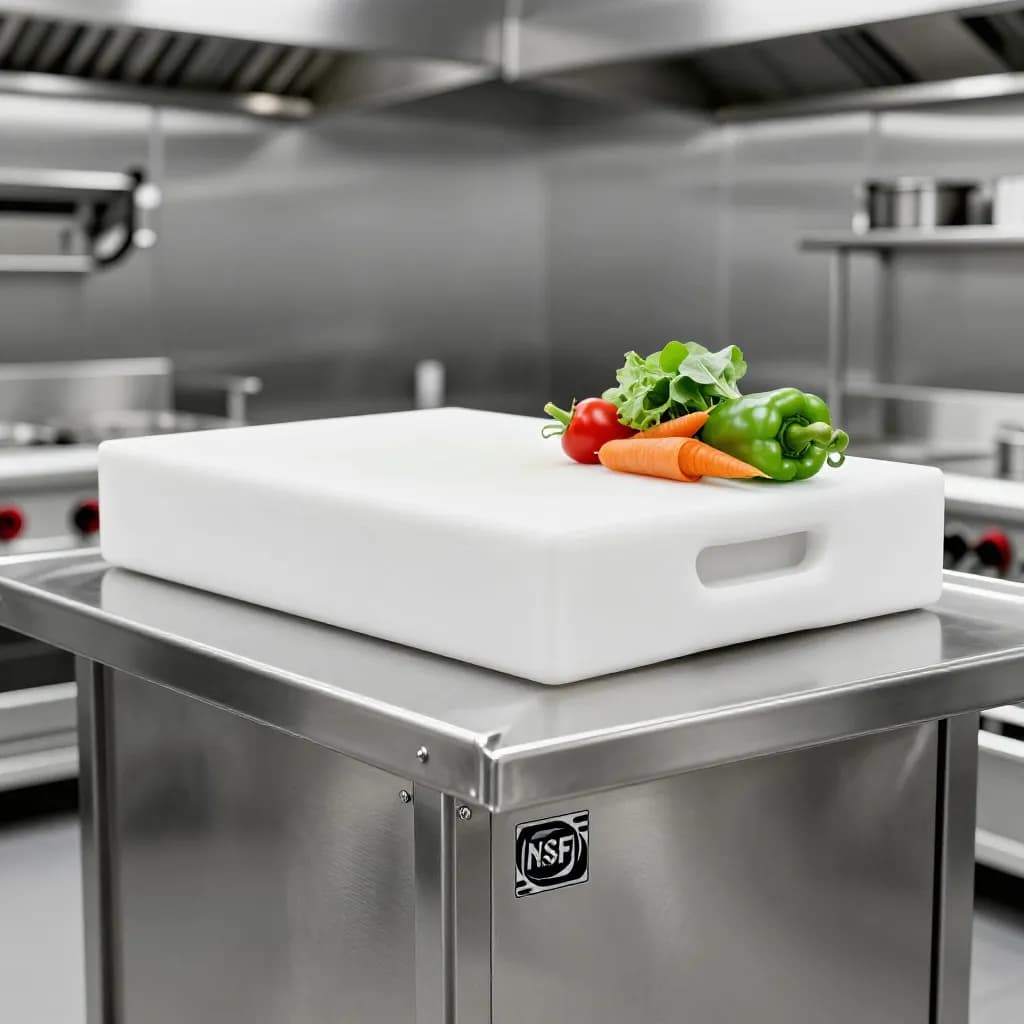
In the United States, the Food and Drug Administration (FDA) regulates food contact materials under Title 21 of the Code of Federal Regulations (21 CFR). The relevant sections for powder coatings include 21 CFR 175.300 (Resinous and polymeric coatings), which lists approved resin systems, crosslinkers, pigments, and additives that may be used in food contact coatings, along with extraction limits for specific substances. Compliance requires that every component of the powder formulation — resin, crosslinker, pigments, fillers, flow agents, and any other additives — be listed in the applicable FDA regulation and used within the specified conditions of use (temperature, food type, contact duration).
Ready to Start Your Project?
From one-off customs to 15,000-part production runs — get precise pricing in 24 hours.
On This Page
Food Contact Powder Coating: Regulatory Landscape
In the European Union, food contact materials are regulated under Framework Regulation (EC) No 1935/2004 and specific measures including Regulation (EU) No 10/2011 for plastic materials (which applies to organic coatings). The EU framework requires that food contact coatings undergo migration testing — measuring the quantity of substances that transfer from the coating to food or food simulants under defined conditions of time and temperature. Overall migration must not exceed 10 mg/dm² of food contact surface, and specific migration limits apply to individual substances of concern. The EU approach is generally considered more prescriptive than the US FDA framework, requiring positive-list compliance for all starting substances and migration testing for the finished article.
FDA-Compliant Powder Coating Formulations
Developing FDA-compliant powder coatings requires careful selection of every raw material in the formulation against the applicable FDA regulations. The base resin must be an approved polymer — common FDA-compliant resins include specific grades of polyester, epoxy, epoxy-polyester hybrid, and acrylic resins that are listed in 21 CFR 175.300 or other applicable sections. Not all commercial powder coating resins are FDA-compliant; manufacturers must verify compliance for each specific resin grade with the resin supplier.
Crosslinkers (curing agents) must also be FDA-listed. TGIC (triglycidyl isocyanurate), the most common crosslinker for outdoor polyester powders, is FDA-compliant for food contact use under specified conditions. HAA (hydroxyalkylamide) crosslinkers, increasingly used as TGIC alternatives, are also FDA-compliant. Blocked isocyanate crosslinkers used in some low-cure formulations require individual compliance verification. Pigments present particular challenges — many common pigments contain heavy metals (lead, cadmium, chromium) that are restricted or prohibited in food contact applications. FDA-compliant pigments are typically organic pigments or inorganic pigments based on iron oxide, titanium dioxide, or carbon black.
Flow agents, degassing additives, texture agents, and other processing aids must all be verified against FDA regulations. Benzoin, a common degassing additive in powder coatings, is FDA-compliant. Acrylic flow agents are generally compliant, but specific grades must be verified. Wax additives used for texture and slip resistance must be food-grade waxes listed in the applicable regulations. The formulation development process for FDA-compliant powders is more constrained than for general industrial powders because the raw material palette is limited to approved substances, which can restrict the achievable range of colors, textures, and performance properties.
NSF International Certification
NSF International (formerly the National Sanitation Foundation) provides third-party certification for products used in food service, food processing, and water treatment applications. NSF certification is widely recognized by health authorities, food processors, and equipment manufacturers as evidence that a product meets public health and safety standards. For powder coatings, the relevant NSF standards include NSF/ANSI 51 (Food Equipment Materials) and NSF/ANSI 61 (Drinking Water System Components).
NSF/ANSI 51 certification requires that the coating material be evaluated for its suitability for food contact, including formulation review against FDA regulations, extraction testing to verify that the coating does not release harmful substances into food or food simulants, and evaluation of the coating's resistance to the cleaning and sanitizing chemicals used in food service environments. The certification process involves submission of the complete formulation (including all raw materials and their concentrations) to NSF for review, followed by extraction testing of cured coating samples under conditions representative of the intended use.
NSF/ANSI 61 certification is required for coatings used on components of drinking water systems — pipes, valves, tanks, and fittings. This standard is more stringent than NSF 51, requiring extraction testing with water at multiple temperatures and pH levels, with maximum allowable concentrations for a comprehensive list of regulated substances including metals, volatile organic compounds, and semi-volatile organic compounds. The testing protocol simulates the long-term contact between the coating and drinking water, with extraction periods of up to 14 days. Powder coatings certified to NSF 61 are used for water storage tanks, pipe interiors, valve bodies, and water treatment equipment where the coating is in continuous contact with potable water.
Antimicrobial Powder Coatings for Food Environments
Antimicrobial powder coatings incorporate biocidal additives that kill or inhibit the growth of bacteria, mold, and other microorganisms on the coated surface. In food processing and food service environments, antimicrobial coatings provide an additional layer of hygiene protection beyond standard cleaning and sanitizing protocols. While antimicrobial coatings do not replace proper cleaning practices, they reduce the microbial load on surfaces between cleaning cycles and provide protection against cross-contamination.
The most common antimicrobial additives for powder coatings are silver-based compounds (silver ions, silver zeolite, silver phosphate glass), copper-based compounds, and zinc-based compounds. Silver-based antimicrobials are the most widely used because they are effective against a broad spectrum of bacteria (including MRSA, E. coli, Salmonella, and Listeria), have low toxicity to humans, and maintain their effectiveness over the coating's service life. The silver ions are released slowly from the coating surface, disrupting microbial cell membranes and metabolic processes. Typical silver loading in antimicrobial powder coatings is 0.5-3.0% by weight, providing surface antimicrobial activity for the life of the coating.
Antimicrobial efficacy is tested per ISO 22196 (Measurement of antibacterial activity on plastics and other non-porous surfaces) or JIS Z 2801 (the Japanese equivalent). These tests measure the reduction in viable bacteria on the coated surface compared to an untreated control surface after a defined contact period (typically 24 hours). A log reduction of 2 or greater (99% kill rate) is generally considered effective antimicrobial performance. For food contact applications, the antimicrobial additive must itself be FDA-compliant and approved for food contact use — not all antimicrobial technologies meet this requirement, and formulation compliance must be verified for each specific additive and concentration.
Food Processing Equipment Coating
Food processing equipment — conveyors, mixers, hoppers, chutes, tanks, and packaging machinery — operates in environments that aggressively challenge coating systems. The combination of food acids (citric, acetic, lactic), cleaning chemicals (caustic soda, chlorinated cleaners, quaternary ammonium compounds), high-pressure washdown (up to 80 bar), steam sterilization (121-134°C), and mechanical abrasion from food products and processing operations creates a demanding service environment that few coating systems can withstand long-term.
Epoxy powder coatings are the most commonly specified chemistry for food processing equipment interiors, providing excellent chemical resistance to both food acids and cleaning chemicals, good adhesion to steel and aluminum substrates, and mechanical toughness to resist abrasion and impact. FDA-compliant epoxy formulations are available from major powder manufacturers, with film thickness targets of 80-150 micrometers for single-coat applications and 150-250 micrometers for heavy-duty applications. Novolac epoxy formulations offer enhanced chemical and thermal resistance for the most demanding applications, including hot-fill processing and CIP (clean-in-place) systems that use caustic solutions at 80-90°C.
Surface finish requirements for food processing equipment are defined by hygienic design principles — the coating must be smooth, non-porous, and free of cracks, crevices, or defects that could harbor bacteria or food residues. Surface roughness targets of Ra < 0.8 micrometers are typical for food contact surfaces, requiring smooth powder formulations with excellent flow and leveling. The coating must be continuous and defect-free — any pinhole, crater, or chip creates a potential harborage point for microorganisms and a corrosion initiation site. Quality control for food processing equipment coatings includes 100% visual inspection, holiday (pinhole) detection using a wet sponge or high-voltage spark tester, and surface roughness measurement.
Beverage and Potable Water Applications
Powder coatings for beverage and potable water contact applications face the most stringent regulatory requirements because the coating is in prolonged contact with a consumable liquid. Water storage tanks, beverage processing vessels, water treatment equipment, and drinking water pipe linings must use coatings that meet NSF/ANSI 61 (for potable water) or equivalent national standards, with extraction testing demonstrating that the coating does not release harmful substances into the water at concentrations exceeding regulatory limits.
Epoxy powder coatings are the dominant chemistry for potable water applications, with specific formulations developed and certified for NSF 61 compliance. These formulations use FDA-compliant resins, crosslinkers, and pigments, with careful exclusion of any additives that could leach into water. Film thickness for water tank linings is typically 200-400 micrometers, applied in one or two coats to ensure a continuous, pinhole-free barrier. The thick film build provides both corrosion protection for the steel substrate and a robust barrier against substance migration into the water.
Cure verification is particularly important for potable water coatings because under-cured epoxy can release unreacted components (bisphenol A, epichlorohydrin, and amine crosslinker residues) into the water at levels that may exceed regulatory limits. Differential scanning calorimetry (DSC) testing of cured coating samples verifies that the crosslinking reaction has reached completion — a residual cure exotherm of less than 5% of the total reaction enthalpy is typically required. Solvent extraction testing (MEK rub test per ASTM D5402 or acetone extraction) provides a practical production-level check of cure completeness. For potable water applications, the coated vessel or pipe is typically flushed with water for a defined period (24-72 hours) before being placed in service, to remove any residual surface substances from the curing process.
Cleaning Resistance and Long-Term Durability
The long-term durability of food contact powder coatings depends critically on their resistance to the aggressive cleaning and sanitizing regimes used in food processing and food service environments. Commercial kitchens and food processing plants use cleaning chemicals that would rapidly degrade standard industrial powder coatings — caustic soda (sodium hydroxide) at 2-5% concentration and 60-80°C, chlorinated cleaners at 200-1000 ppm available chlorine, peracetic acid at 0.1-0.5%, and quaternary ammonium compounds at 200-400 ppm. These chemicals are applied daily or multiple times per day, often at elevated temperatures and with mechanical scrubbing or high-pressure spray.
Chemical resistance testing for food contact coatings should simulate actual cleaning conditions rather than relying solely on standard immersion tests. Cyclic cleaning tests — repeated exposure to cleaning chemicals at use concentration and temperature, followed by rinsing and drying — provide the most realistic assessment of long-term durability. A typical test protocol involves 500-1000 cycles of exposure to the specific cleaning chemicals used in the target application, with adhesion, gloss, and color evaluated at defined intervals. Coatings that maintain adhesion classification 0-1 and show less than 20% gloss loss after 1000 cleaning cycles are considered suitable for commercial food service environments.
Mechanical durability is equally important — food processing equipment surfaces are subject to abrasion from food products (grains, sugar, salt), impact from utensils and tools, and erosion from high-pressure washdown. Abrasion resistance testing per ISO 7784 (Taber abrasion) and impact resistance testing per ISO 6272 provide quantitative data on mechanical durability. For food processing equipment, the coating must maintain its integrity — no cracking, chipping, or delamination — throughout the equipment's service life, which may be 10-20 years. Any coating damage creates a hygiene risk (bacterial harborage) and a food safety risk (coating fragments contaminating food), making coating durability a food safety issue rather than merely an aesthetic concern.
Frequently Asked Questions
Is powder coating FDA approved for food contact?
Specific powder coating formulations can be FDA-compliant for food contact under 21 CFR 175.300, but not all powder coatings are suitable. Every component — resin, crosslinker, pigments, and additives — must be listed in the applicable FDA regulation. Manufacturers must provide FDA compliance documentation for each specific formulation. NSF certification provides additional third-party verification.
What is NSF certification for powder coatings?
NSF International certifies powder coatings under NSF/ANSI 51 (food equipment materials) and NSF/ANSI 61 (drinking water components). Certification involves formulation review against FDA regulations, extraction testing to verify the coating doesn't release harmful substances, and evaluation of cleaning chemical resistance. NSF 61 for potable water is the most stringent, requiring multi-day extraction testing.
Can powder coatings be antimicrobial for food environments?
Yes, antimicrobial powder coatings containing silver, copper, or zinc-based additives kill bacteria on contact. Silver-based antimicrobials at 0.5-3.0% loading are most common, effective against E. coli, Salmonella, Listeria, and MRSA. Efficacy is tested per ISO 22196, requiring 99%+ kill rate. The antimicrobial additive must itself be FDA-compliant for food contact applications.
What powder coating chemistry is best for food processing equipment?
Epoxy powder coatings are the standard choice, providing excellent resistance to food acids, caustic cleaners, and chlorinated sanitizers. FDA-compliant epoxy formulations are applied at 80-150 micrometers for standard use and 150-250 micrometers for heavy-duty applications. Novolac epoxy offers enhanced chemical and thermal resistance for hot-fill processing and CIP systems at 80-90°C.
How do you verify powder coating is safe for drinking water contact?
NSF/ANSI 61 certification is the standard verification, requiring extraction testing with water at multiple temperatures and pH levels over 14 days. Cure completeness must be verified by DSC testing (less than 5% residual cure) or solvent extraction testing. Coated vessels are flushed with water for 24-72 hours before service to remove residual surface substances from curing.
How durable are food-safe powder coatings against commercial cleaning?
High-quality FDA-compliant epoxy coatings withstand 1000+ cycles of commercial cleaning with caustic soda (2-5%, 60-80°C), chlorinated cleaners (200-1000 ppm), and high-pressure washdown while maintaining adhesion and integrity. Cyclic cleaning resistance testing simulating actual use conditions is the most reliable durability predictor. Coating damage is a food safety concern, not just aesthetic.
Ready to Start Your Project?
From one-off customs to 15,000-part production runs — get precise pricing in 24 hours.